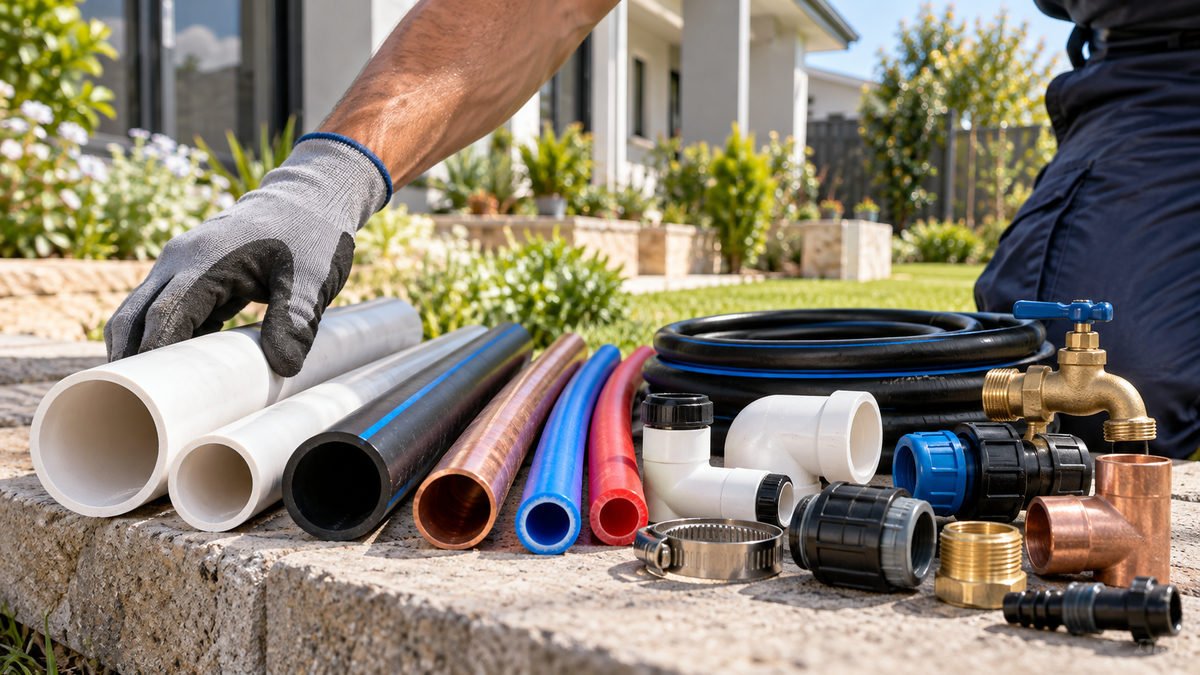
Need a compact water line for a garden, appliance, rainwater tank or DIY plumbing project? Choosing the wrong diameter, material or pressure rating can cause weak flow, leaks, blockages and early UV damage. In some cases, it can also create a non-compliant drinking-water installation. This guide compares small water pipes Australia-wide by size, material, fittings, cost and application.
1. Small Water Pipes Australia: Sizes and Applications
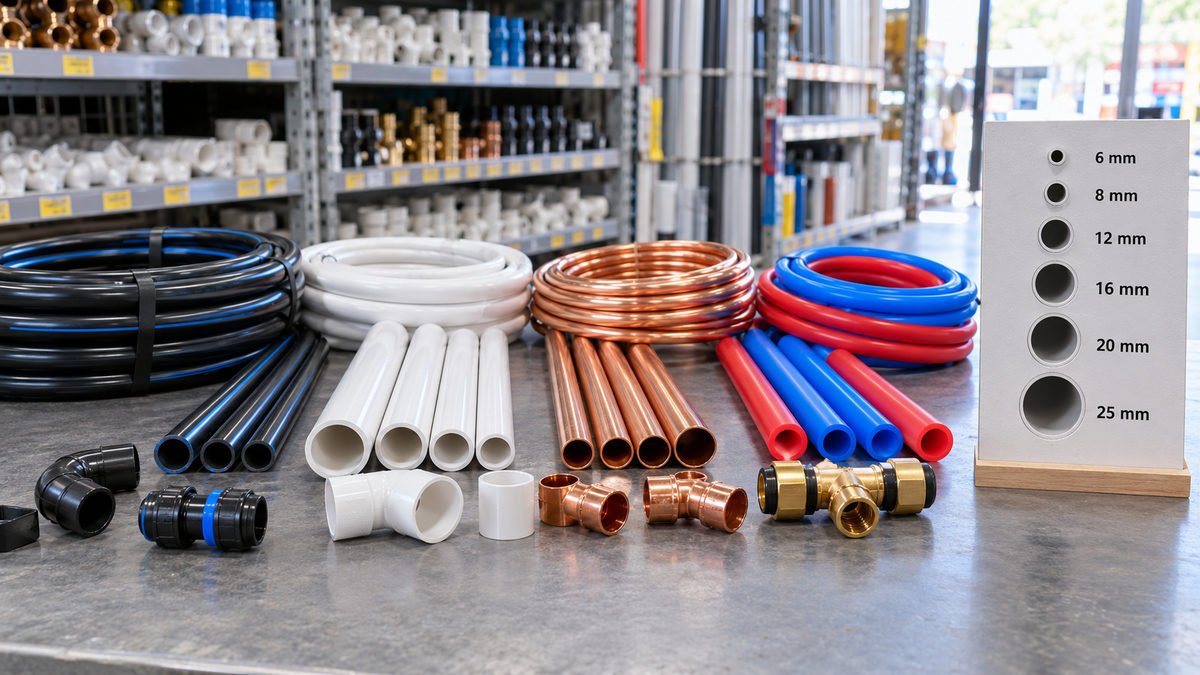
Small water pipes include small-bore pipe, mini poly pipe, flexible tubing and compact plumbing lines. They commonly serve individual fixtures, irrigation branches, pumps, tanks and low-flow equipment. However, “small” describes the application rather than one universal pipe size.
Australian suppliers commonly stock sizes such as 6 mm, 8 mm, 10 mm, 12 mm, 13 mm, 16 mm, 19 mm, 20 mm and 25 mm. These measurements may describe outside diameter, nominal size or a supplier’s product range. Therefore, always read the technical specifications before buying fittings.
Nominal pipe size gives a general identification, while outside diameter measures the pipe across its exterior. Inside diameter determines the available water passage. Meanwhile, wall thickness affects strength, pressure capacity and the final internal diameter.
| Common size | Approximate internal diameter | Typical pressure use | Common applications |
|---|---|---|---|
| 6–8 mm | About 4–6 mm | Low-flow applications | Filters, aquaponics, misting and appliance branches |
| 10–13 mm | About 7–10 mm | Low to moderate pressure | Drippers, bubblers, small appliances and short branches |
| 16 mm | About 12–14 mm | Moderate pressure | Garden irrigation and emitter lines |
| 19–20 mm | About 15–17 mm | Moderate to higher pressure | Garden taps, tank branches and small supply lines |
| 25 mm | About 20–22 mm | Higher flow requirements | Longer irrigation runs and small distribution mains |
Internal diameters vary between brands, wall thicknesses and pressure classes. Additionally, fittings must match the pipe’s actual outside diameter and material. A 16 mm poly pipe fitting may not suit 16 mm PEX, PVC or flexible tubing.
For example, 4 mm or 6 mm lines can feed individual garden drippers and small bubblers. A 13 mm or 16 mm line usually suits shorter irrigation branches, while 19 mm or 25 mm pipe supports higher flow across longer distances. Aquaponics systems, livestock watering and tank outlets may need larger delivery pipe than expected.
Small pipe can work well for a short branch line. However, a narrow pipe may restrict flow across a long run, especially with multiple outlets, elevation changes or a high-flow pump. Therefore, calculate the required litres per minute before selecting the smallest available option.
2. Compare Poly, PVC, Copper, PEX and Flexible Water Pipe
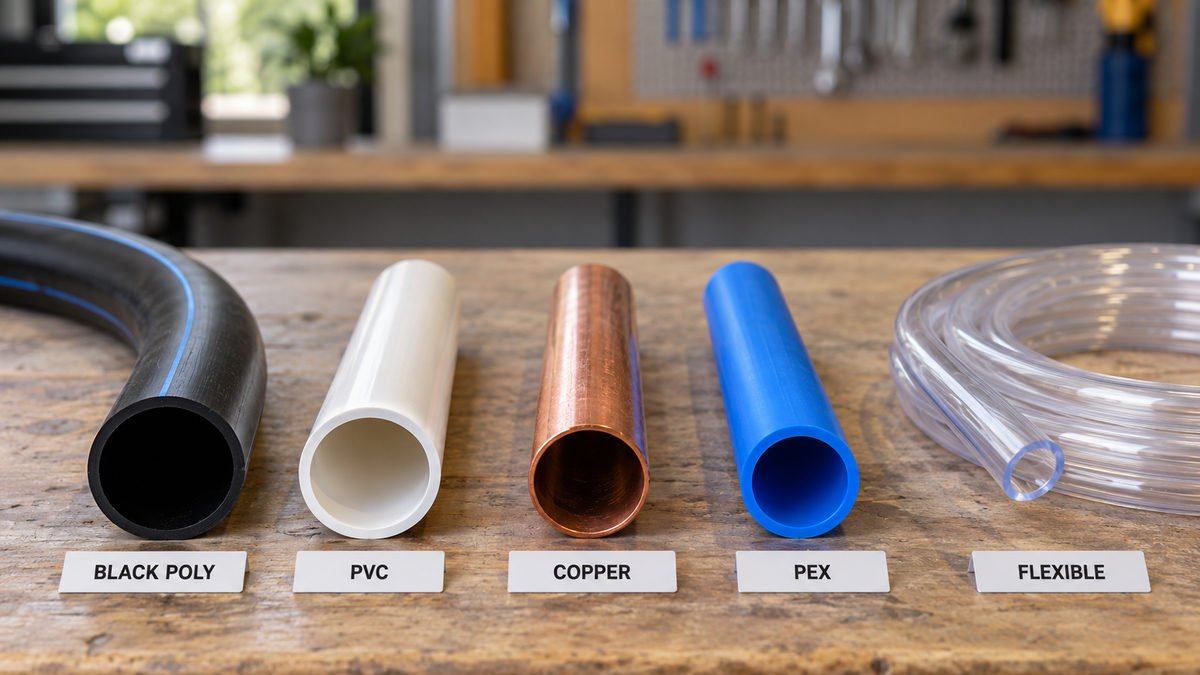
Poly water pipe remains popular across Australia because it bends easily, resists corrosion and costs less than many rigid alternatives. Black poly pipe often includes UV resistance for outdoor use. It suits irrigation, rainwater tanks, livestock watering and many buried runs.
However, poly pipe still needs the correct pressure class and compatible fittings. Sharp bends, excessive sunlight and poorly supported joints can shorten its service life. Compression fittings, barbed joiners and clamps make repairs relatively straightforward.
PVC water pipe offers a rigid shape and a smooth internal surface. Solvent-welded joints create neat connections when installers use compatible pipe and cement correctly. Therefore, PVC suits cold-water lines, irrigation, pool systems and some drainage-related applications.
PVC does not bend like poly, and exposed sections can become brittle over time. It also requires careful cutting, cleaning and alignment. Always confirm that the product suits pressure water rather than drainage-only use.
Copper water pipe provides a durable, tidy finish and handles heat well. It remains useful for exposed plumbing, hot-water services and areas requiring strong mechanical resistance. In contrast, copper usually costs more and takes longer to install.
Water chemistry can also affect copper. Corrosive or aggressive water may require specialist advice, compatible fittings or treatment. Soldered and press-fit systems both require correct tools and careful preparation.
PEX water pipe bends easily and can reduce the number of joints inside walls or cabinets. It resists many scaling problems and suits hot and cold potable-water plumbing when the product carries the required certification. Crimp, clamp and push-fit systems make installation efficient.
Flexible tubing works well for filters, appliances, pumps, aquaponics and short connections. Nevertheless, it can kink, collapse or exceed its pressure limit when unsupported. Use it for the intended application, rather than substituting it for a permanent distribution line.
- Poly: Choose it for irrigation, tanks, outdoor branches and buried runs.
- PVC: Choose it for rigid cold-water lines and compatible irrigation systems.
- Copper: Choose it for exposed, durable work and heat-resistant installations.
- PEX: Choose it for certified indoor hot and cold potable-water plumbing.
- Flexible tubing: Choose it for short, low-flow connections and equipment branches.
Before purchasing, compare pressure rating, temperature limit, UV resistance, expected service life and repair method. Additionally, consider whether you can cut, join and support the pipe easily at the installation site.
3. Choose the Right Pipe for Drinking Water, Irrigation and Mains Supply
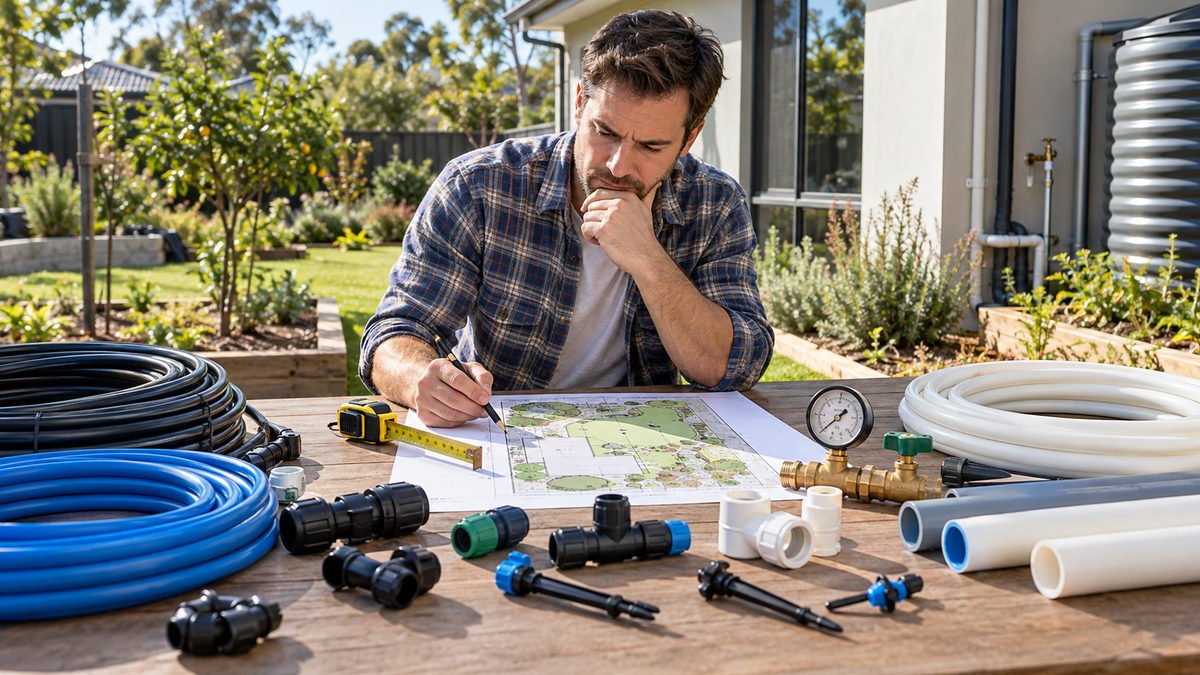
Drinking-water installations need products specifically approved for potable water. Irrigation-grade or unmarked tubing should never be assumed safe for drinking-water use. Check the product markings, technical documents and certification requirements before connecting it to a potable supply.
The Australian WaterMark product database helps users check certified plumbing and drainage products. However, certification requirements vary by product type and installation. Therefore, confirm the application with a licensed plumber when necessary.
Garden irrigation depends on outlet pressure, run length, elevation and the number of emitters. A short line feeding three drippers may need only small tubing. Conversely, a long line feeding sprinklers may require 19 mm, 20 mm or 25 mm pipe to reduce friction losses.
Rainwater tanks introduce additional considerations. Suction lines must suit the pump, while delivery lines must handle the pump’s flow and pressure. Filters, foot valves, non-return valves and stored-water compatibility also affect performance.
For appliances, compact connections may serve water filters, ice makers, dishwashers, washing machines, coffee equipment and evaporative systems. However, appliance manufacturers often specify exact connection sizes and pressure limits. Follow those instructions before choosing a reducer or adapter.
Low-pressure systems can use small-bore pipe for short, low-flow applications. Gravity-fed systems may need larger pipe because available pressure is limited. A larger internal diameter reduces friction and helps maintain useful flow at the outlet.
Small pipes can serve short mains branches or individual fixtures. Whole-property mains supplies usually require a larger diameter, suitable pressure capacity and compliant installation. A narrow main may cause poor showers, slow tank filling and noticeable pressure drops.
Temperature matters just as much as pressure. Approved PEX, copper and flexible connectors may suit hot water, while many poly and PVC products suit cold water only. Never connect cold-water pipe to a hot-water system without confirming its temperature rating.
- What flow do you need in litres per minute?
- How far must the water travel?
- What supply or pump pressure is available?
- How many outlets may operate together?
- Will the system expand later?
- Will the pipe carry drinking water?
- Will it face heat, sunlight, chemicals or vehicle traffic?
4. Fittings, Connectors and Installation Methods
Common components include barbed joiners, compression fittings, push-fit connectors, elbows, tees, reducers, valves, adapters, clamps and end caps. Select each component for the pipe material, outside diameter, pressure and temperature. Matching only the printed size can still produce an incompatible connection.
Compression fittings commonly suit poly pipe when the fitting matches the exact diameter. PVC joints usually require compatible solvent cement and properly prepared surfaces. PEX systems use approved crimp, clamp or push-fit connections, while copper systems use soldered or press-fit methods.
Start by measuring the route, including bends, valves and connection points. Mark a straight cut and use a suitable pipe cutter or fine-tooth saw. A square cut helps the pipe seat evenly inside compression, push-fit and crimp fittings.
Next, remove burrs and clean the pipe end. Insert the pipe fully into the fitting, then tighten or secure it according to the manufacturer’s instructions. Meanwhile, support flexible lines so movement does not stress the joint.
Buried pipe needs suitable bedding, protection and depth for its location. Use conduit where machinery, traffic or sharp materials could damage the line. Warning tape, isolation valves and protection from rodents can make future maintenance much easier.
Protect exposed plastic pipe from unnecessary sunlight and heat. Black UV-resistant poly performs better outdoors, but fittings and lighter-coloured tubing may still need shielding. Avoid placing pipe where tools, garden machinery or building movement can crush it.
After installation, pressure-test the line before covering it. Flush debris from the system, inspect every joint and operate valves gradually. For buried work, complete staged commissioning before replacing soil or permanent surfaces.
Wear eye protection when cutting pipe and follow adhesive safety instructions. Keep solvents away from flames and provide ventilation during use. Additionally, isolate the water supply before cutting an existing line.
Never force a fitting onto the wrong diameter. Mixing incompatible materials, skipping inserts or overtightening nuts commonly causes leaks. If a line carried contaminated water, flush and disinfect it appropriately before reconnecting it to a potable system.
5. Australian Standards, Pressure Ratings and Buying Costs
Australian plumbing requirements apply differently across states and territories. Some plumbing products require WaterMark certification, while other products may need evidence of suitability. The National Construction Code and local rules also influence installation requirements.
Therefore, confirm current requirements with the relevant water authority, building regulator or licensed plumber. This step matters most for drinking water, mains connections, concealed plumbing, backflow prevention and hot-water work.
Pressure ratings usually appear in kPa or PN classifications. The maximum working pressure must exceed normal supply pressure, pump pressure and possible pressure surges. A safety margin helps protect joints and pipe during changing operating conditions.
Temperature ratings are equally important. Cold-water pipe may soften, deform or fail when exposed to hot water. Always check the stated temperature range before connecting pipe to a heater, boiler, dishwasher or hot-water appliance.
Pricing depends on material, diameter, pressure class, certification, brand and length. Fittings, valves, delivery and whether the pipe comes by the metre or roll also affect the final cost.
- Small tubing and basic connectors are generally the lowest-cost options.
- Standard irrigation poly and PVC usually offer affordable mid-range choices.
- Certified PEX and complete fitting systems cost more but simplify indoor plumbing.
- Copper, heavy-duty poly and specialist pressure pipe usually command higher prices.
- Large rolls may lower the metre price but create more storage and delivery costs.
These ranges are buying guides rather than fixed quotes. Prices change between suppliers, regions, brands and project quantities. Compare Australian plumbing merchants, irrigation suppliers, hardware stores and specialist water-pipe suppliers.
Look beyond the ticket price. Technical support, certification records, warranty terms, fitting availability and delivery coverage can prevent expensive mistakes. Additionally, buying all components from a compatible system may simplify repairs later.
- Measure the pipe’s actual outside diameter.
- Confirm the intended application and required flow.
- Check pressure and temperature ratings.
- Verify potable-water certification where required.
- Assess UV exposure, burial conditions and water quality.
- List every fitting, valve, clamp and adapter.
- Buy enough pipe for the route, testing and future repairs.
- Check local compliance before installation.
6. Prevent and Troubleshoot Leaks, Low Flow and Pipe Damage
For leaks, isolate the line before touching a fitting. Inspect joints, clamps, O-rings, cuts and damaged sections. Replace distorted components instead of repeatedly tightening them.
Low pressure often begins with undersized pipe, excessive length or a kinked section. However, blocked filters, failing pumps, partly closed valves and crushed pipe can create similar symptoms. Check the system from the water source towards the outlet.
Blockages may affect filters, emitters, valves and narrow tubing. Flush the line, clean filters and inspect for crushed sections. Avoid sharp bends that trap sediment or place stress on fittings.
UV exposure and heat can make plastic brittle over time. Replace cracked or chalky sections and protect exposed tubing where required. Black UV-resistant poly generally handles outdoor conditions better than unprotected flexible tubing.
Corrosion and scaling depend on the material and water chemistry. Copper may face corrosion in aggressive water, while some fittings can scale or seize. Use compatible materials, suitable filtration and professional advice where water quality creates recurring problems.
Cold weather can damage water trapped inside vulnerable lines. Drain seasonal systems, insulate exposed sections or bury pipe below the local frost risk where relevant. Meanwhile, protect tanks, pumps and above-ground fittings from extreme weather.
Call a licensed plumber for mains connections, concealed plumbing, hot-water work, backflow prevention and potable-water alterations. Recurring leaks, unexplained pressure loss and repeated pipe failures also deserve professional diagnosis.
- Measure the pipe route and outside diameter.
- Calculate the required flow, pressure and distance.
- Verify certification, temperature rating and application suitability.
- Select compatible fittings, valves and protective materials.
- Compare suppliers, pricing, support and delivery.
- Install carefully, pressure-test and flush the completed line.
Conclusion
The best small water pipe depends on flow, distance, pressure, temperature, water quality, location and compliance requirements. Poly, PVC, copper, PEX and flexible tubing each suit different Australian applications. Correct sizing and compatible fittings remain essential for reliable performance.
Before purchasing, confirm the pipe’s outside diameter, pressure rating, temperature rating and potable-water certification. Check every fitting for material and size compatibility. For mains, concealed, hot-water or regulated plumbing work, consult a licensed Australian plumber.
For related product categories, accessories and practical buying information, visit Sweet Puff Australia. Always confirm that any product suits your intended plumbing application before purchase or installation.