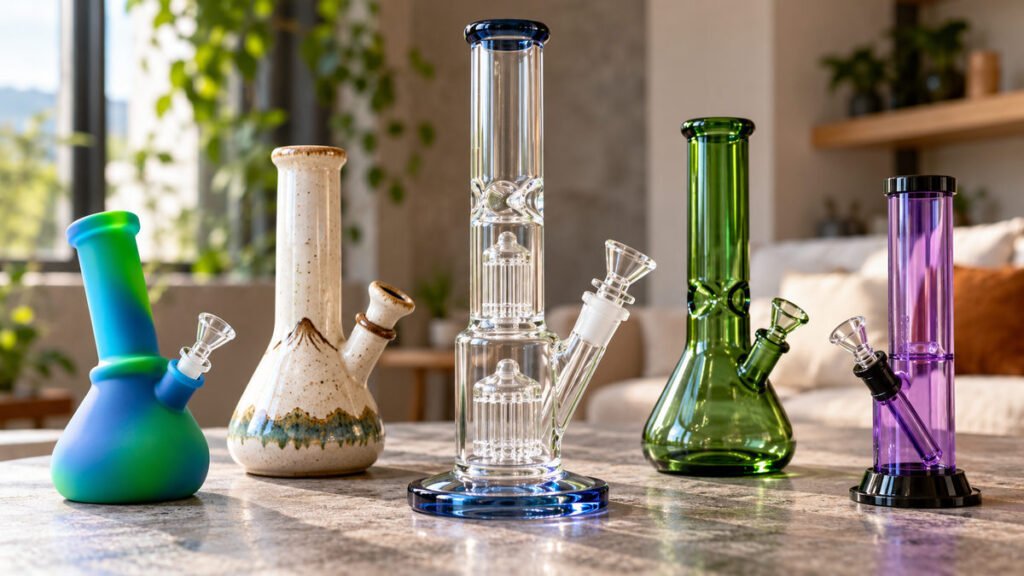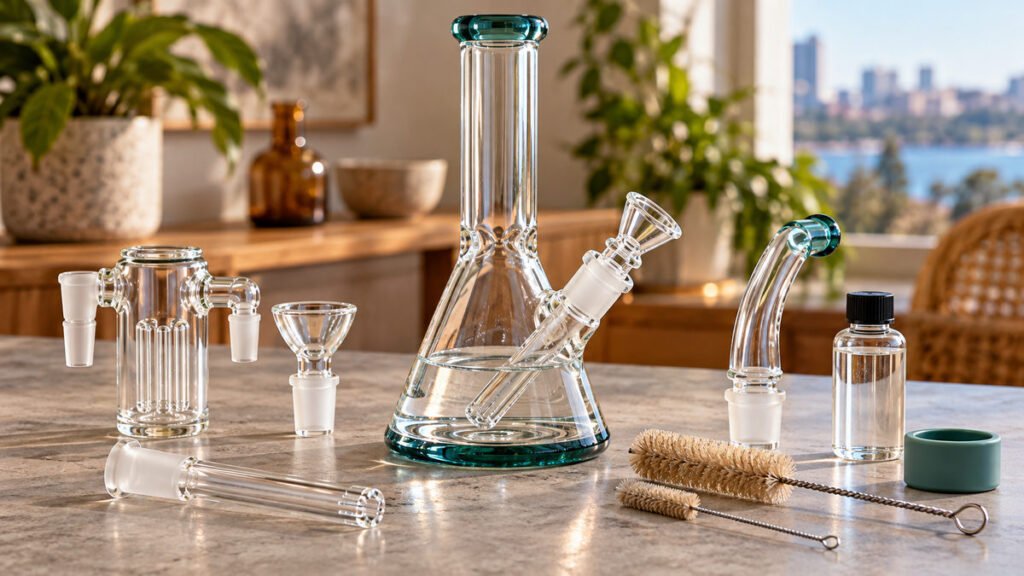
A glass bong can break in seconds when left near an edge, packed without padding, or knocked over by a pet. Learning how to store glass bongs safely helps prevent cracks, broken joints, dust, unpleasant odours, and unsafe access. With the right routine, you can protect your glass at home, during long-term storage, while travelling, or when moving house.
How to Store Glass Bongs Safely: The Essential Method
Safe storage protects more than the glass itself. It also keeps the bong cleaner, reduces lingering odours, and lowers the risk of accidents around children, pets, visitors, and shared household spaces.
Start with a clean, empty bong. Remove old water and any visible residue before storage, because stagnant water can create smells, stains, discolouration, and difficult-to-remove buildup.
Next, rinse or clean the bong according to the manufacturer’s care guidance. Pay attention to the chamber, base, neck, joints, openings, and any percolator areas that may hold moisture.
Most importantly, allow every part to dry completely. Water can remain inside small openings even when the outside feels dry, so leave the glass in a clean, ventilated area before packing it away.
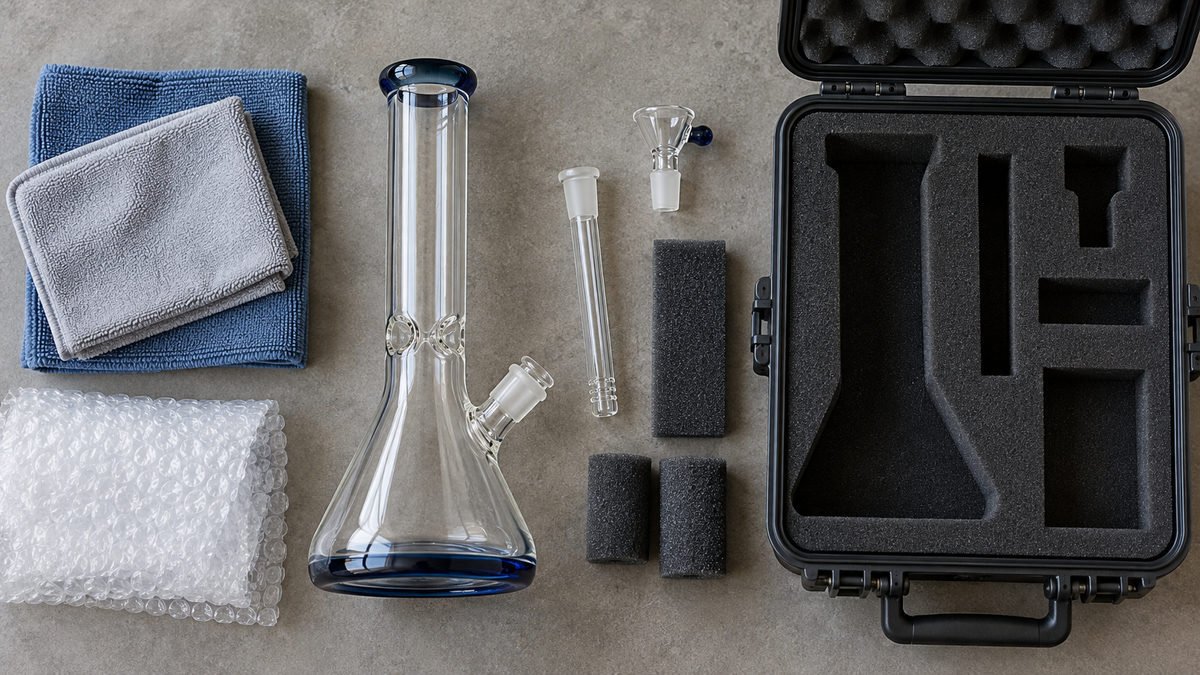
Remove detachable components before storing the main piece. These may include the bowl, downstem, ash catcher, reclaim catcher, mouthpiece, and other removable accessories.
Separating these parts prevents them from falling inside the bong or putting pressure on delicate joints. Additionally, separate storage makes each component easier to inspect and clean.
Store the bong upright on a stable, level, cushioned surface. This position allows the base to carry the weight while reducing stress on the neck, joints, and protruding glass features.
A non-slip mat can help keep the base steady. However, avoid soft surfaces that allow the bong to lean, sink, or roll into nearby objects.
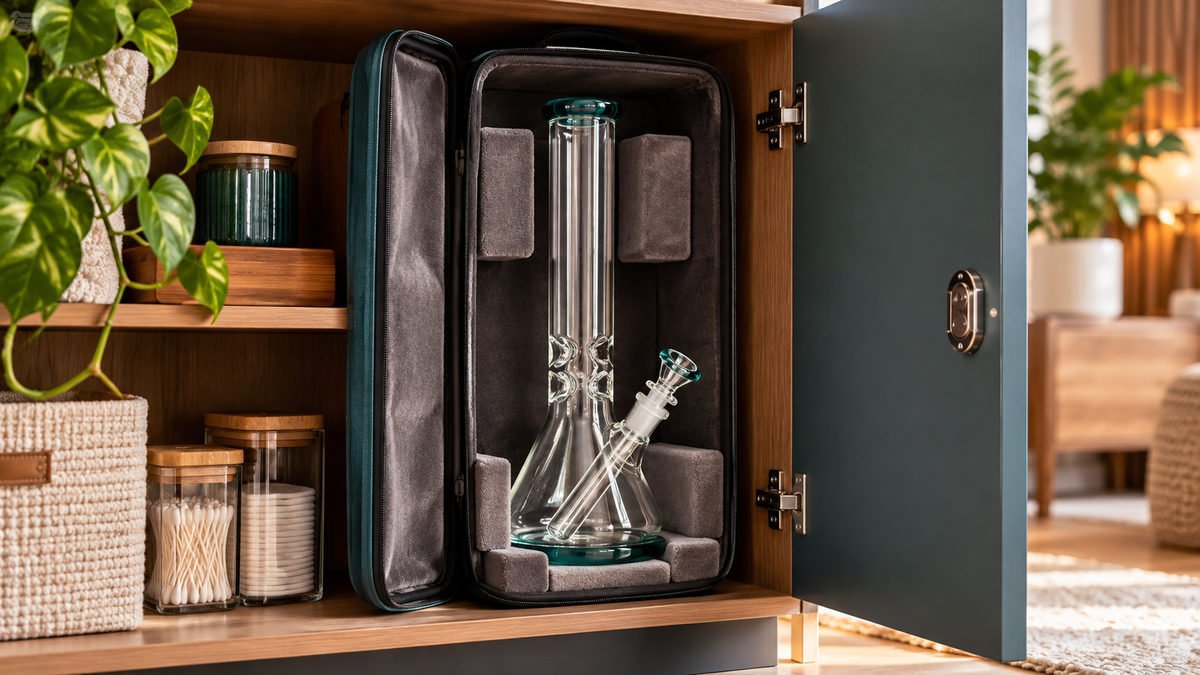
For maximum protection, use a padded, hard-sided case or a dedicated bong storage box. This option works particularly well in busy homes, shared spaces, and rooms with frequent movement.
Add soft padding around the glass without pressing against fragile areas. Never squeeze the neck, percolators, joints, or decorative glass details inside a case.
- Clean the bong thoroughly.
- Empty every water chamber.
- Dry every opening completely.
- Separate the detachable parts.
- Cushion the glass gently.
- Secure the bong upright.
- Keep it away from children and pets.
That simple routine prevents many common storage mistakes. Therefore, make it your standard process every time you put the bong away.
Choosing the Best Location for Safe Glass Bong Storage
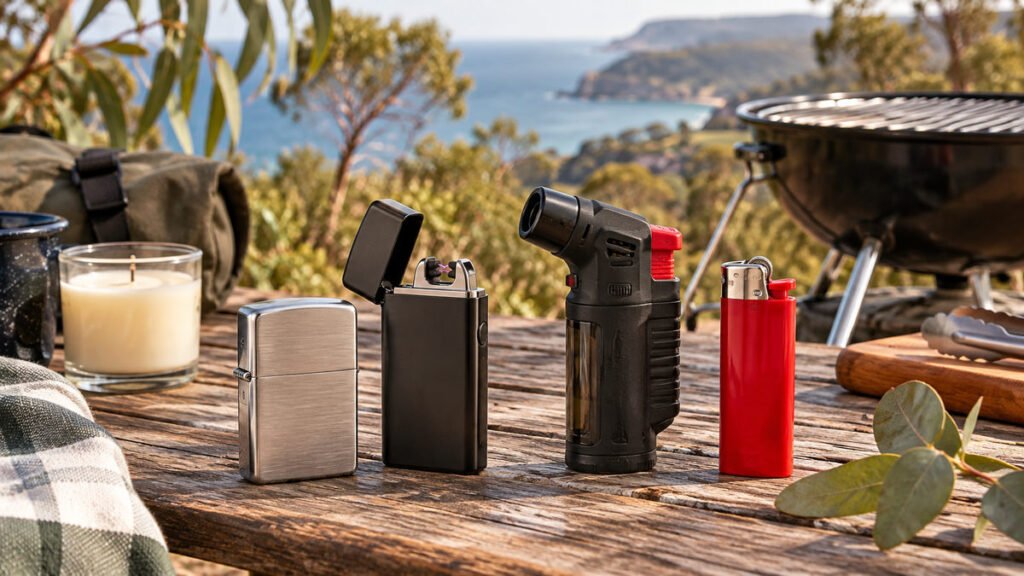
The storage location matters as much as the container. Choose a cool, dry, low-traffic area away from direct sunlight, radiators, heating vents, ovens, and appliances. Store lighters separately too; see lighter safety and storage.
Sudden temperature changes can place stress on glass. Meanwhile, sunlight and heat can warm the piece unevenly, especially when it sits near a window or other hot surface.
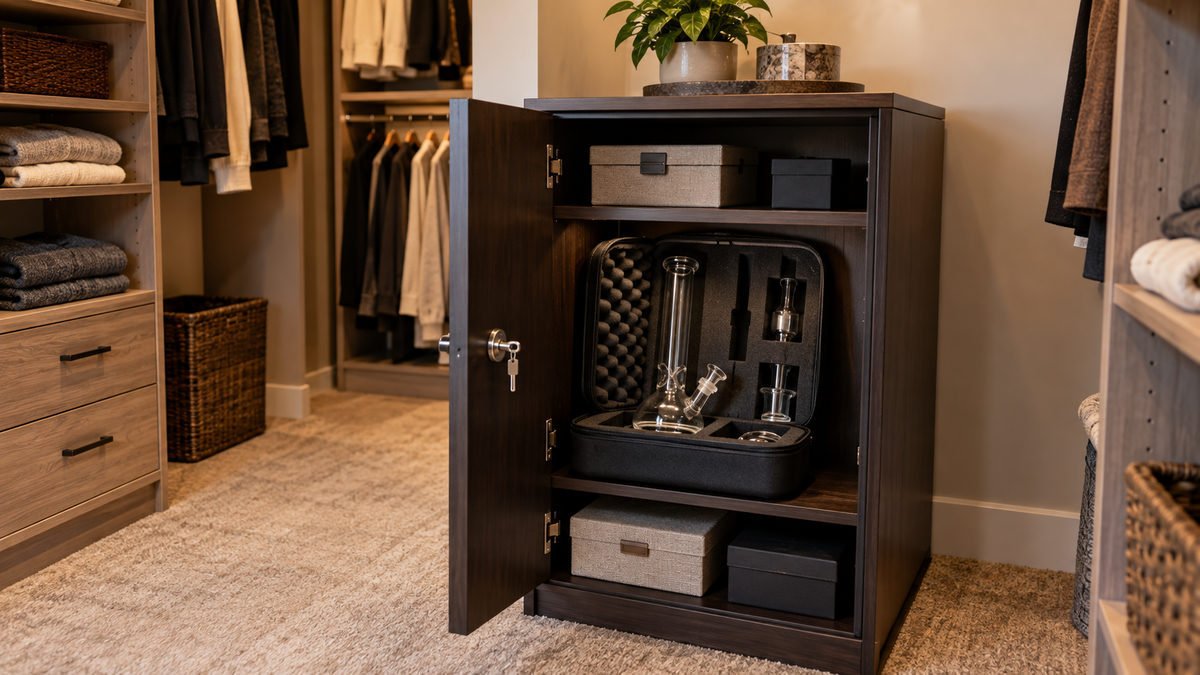
A cabinet, drawer, closet, or lockable container can work well. The space must remain large enough to hold the bong upright without compression, crowding, or accidental contact.
Before using a cabinet or drawer, add a non-slip liner beneath the bong. Then place nearby objects securely so they cannot shift, fall, or strike the glass when the drawer opens.
A desk edge creates an obvious fall risk. Similarly, sinks, window ledges, walkways, unstable shelves, and busy bedside tables expose the bong to knocks and accidental movement.
For dustproof storage, choose a case, lidded box, or clean fabric cover. The cover should not shed fibres into the mouthpiece, joints, downstem opening, or percolator.
A sealed container can help control odours, but only when the bong is completely dry. Otherwise, you may trap moisture inside and create a stale smell or residue.
Childproof storage requires more than placing the bong on a high shelf. Use a high, locked cabinet or lockable container, and keep keys, codes, and spare access tools away from children.
Additionally, avoid visible or easily identifiable packaging. A plain, secure container draws less attention and reduces the chance of curious handling.
Pet-safe storage protects the glass and its small components. Dogs and cats may knock over a bong, chew packaging, or swallow detachable pieces that fall onto the floor.
Keep the bowl, downstem, and other small parts inside the same secured storage area. Never leave accessories loose on a low shelf, coffee table, or open drawer.
Finally, follow applicable local laws, housing policies, and household safety requirements. Australian rules can differ between states and territories, so check current government guidance where necessary.
For example, Queensland provides information about restrictions and storage requirements for smoking-related products through its smoking laws guidance.
How to Prevent a Bong from Breaking During Storage
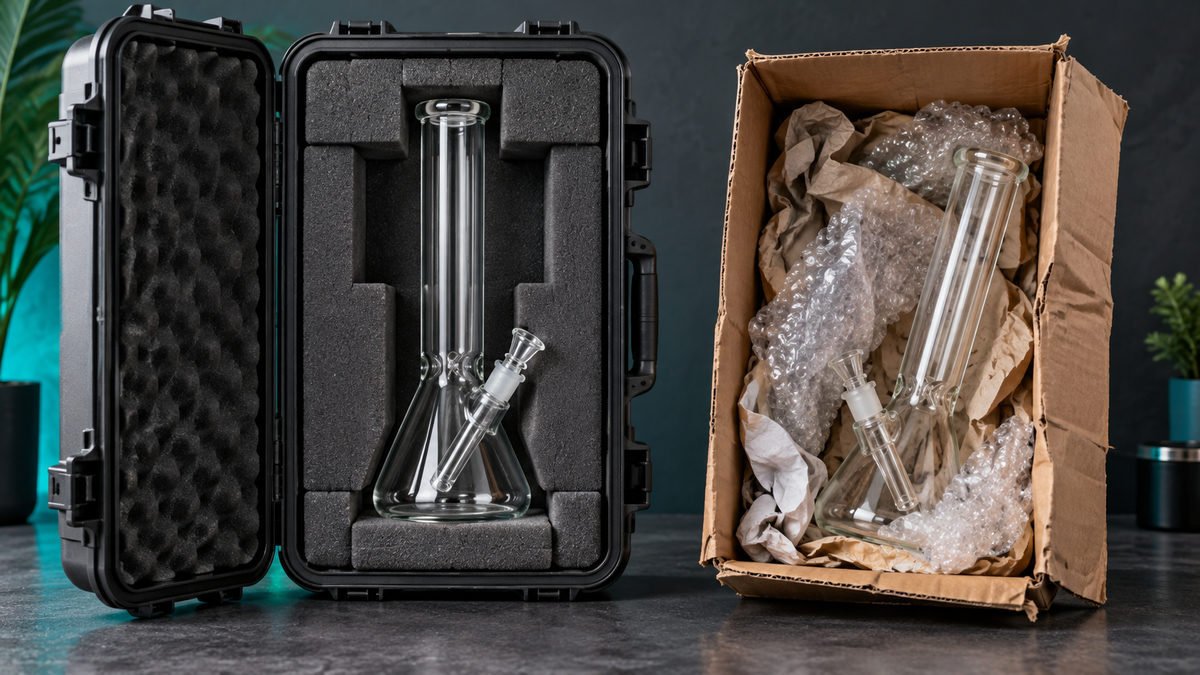
The strongest protection usually comes from a padded, hard-sided case. It resists crushing and impact better than a loose tote bag, thin cardboard box, or unpadded backpack. If breakage is a worry, consider thick glass bongs.
A dedicated bong storage box can also work well at home. It usually offers better organisation, separate compartments, and a practical shape for storing the main piece and accessories together.
The ideal interior feels snug but never tight. Closed-cell foam or soft dividers should support the base and protect the neck without squeezing the glass.
When padding a bong, wrap it in a clean, soft, lint-free material. Then fill empty spaces around the piece instead of pressing packing material directly against fragile features.
Bubble wrap can provide useful short-term cushioning. However, avoid allowing it to touch damp glass for extended periods, because it can trap moisture against the surface.
Place a clean, dry protective layer between the bong and packing materials. This barrier reduces scuffing and helps keep the glass free from dust, fibres, and packing residue.
Store the bowl, downstem, ash catcher, and other accessories separately. Individual sleeves, pouches, or padded compartments stop small parts from touching or scratching the main piece.
Never stack books, boxes, clothing, or other objects on top of the bong. You should also avoid placing heavy items on its case unless the case specifically supports stacked weight.
Prevent sliding with fitted dividers, non-slip padding, or carefully filled gaps. The bong should remain stable when the container moves gently from side to side.
Common breakage causes include loose storage, unsupported necks, pressure on percolators, sharp packing materials, overfilled drawers, and repeated handling.
Another frequent mistake involves packing too tightly. Extra pressure may not break the glass immediately, but it can weaken joints or create stress points over time.
Before using stored glass, inspect it under good lighting. Look for chips, hairline cracks, loose joints, cloudy stress marks, or unusual movement between connected parts.
Do not use damaged glass. Even a small chip can worsen during handling, cleaning, heating, or normal use.
Long-Term, Clean, and Dustproof Bong Storage
Long-term storage needs a more careful sequence. First, empty the water, clean residue, rinse thoroughly, dry every opening, remove the parts, inspect the glass, and pack everything securely. Compare cases and bags in our guide to bong storage accessories.
Leaving water inside the bong creates avoidable problems. Stagnant water can develop unpleasant odours, residue, discolouration, and buildup that becomes harder to remove later.
Store the main bong and detachable components separately. Each part should remain dry and protected from contact with other glass, metal tools, or rough accessories.
Before closing the container, check the base, mouthpiece, joints, and internal chambers. A single trapped drop can create moisture inside an otherwise clean storage box.
Open the container occasionally in a dry environment. Check for moisture, odour, shifted padding, dust, chips, cracks, and any signs that the case has compressed the glass.
Long-term storage should avoid attics, garages, sheds, bathrooms, and damp cupboards. These areas often experience heat, humidity, freezing temperatures, or large temperature swings.
A clean, lidded storage box or fitted case usually offers better protection. Where appropriate, use breathable protective materials rather than sealing damp glass inside an airtight container.
Odour control starts with proper cleaning and drying. Avoid masking smells with fragrances, loose powders, cleaning chemicals, or other substances that could contaminate the glass.
Additionally, keep dirty water, wet accessories, and residue-covered components away from clean glass. One damp or dirty item can affect the entire storage space.
If the bong has remained stored for an extended period, clean it again before use. Dust may enter openings even inside a closed container, especially when the case opens regularly.
Likewise, inspect every accessory before reconnecting it. Replace or discard any part with damage, persistent residue, corrosion, or a joint that no longer fits securely.
Bong Storage for Travel, Moving, and Transport
Travel storage needs more protection than ordinary cupboard storage. Use a rigid, padded, well-fitted bong carrying case instead of a loose tote bag, thin box, or unpadded backpack. Moving? Here is how to pack glass water pipes safely.
Clean and dry the bong before packing. Then remove the bowl, downstem, ash catcher, and every other detachable accessory.
Wrap the main body in a soft protective layer and support the base. Add separate padding around the neck and vulnerable areas without compressing the glass.
Place small components in individual sleeves, pouches, or compartments. This prevents them from striking the main piece when the case moves.
Fill empty spaces with soft, non-abrasive packing material. The goal is to stop movement without creating pressure points or forcing the glass into an unnatural position.
Test the case gently before travelling. If the bong shifts, rattles, or touches the case walls, adjust the padding before leaving.
A waterproof outer layer or secondary container can help protect the case during transport. However, ensure the glass remains fully dry before sealing it inside.
When moving house, label the container discreetly. Keep it away from heavy boxes, furniture, tools, and anything that could fall onto or crush the case.
Place the case where it will not slide during vehicle movement. Never put it beneath heavy luggage or inside a crowded boot where other items can press against it.
For air or public transport, check current carrier rules and local laws before travelling with smoking accessories. Requirements may vary depending on the carrier, destination, and item.
Before unpacking, inspect the glass carefully. Look for cracks, chips, loose joints, scratches, or movement damage before using or cleaning the piece again.
Common Bong Storage Mistakes and a Safe-Storage Checklist
Many storage problems come from small shortcuts. The following mistakes can damage glass, create unpleasant odours, or increase safety risks.
- Leaving water inside: Always empty and dry the bong before storage.
- Storing it on its side: Upright storage usually works better when the neck or percolator makes sideways storage unstable.
- Using a risky location: Avoid edges, crowded drawers, unstable shelves, walkways, and areas accessible to children or pets.
- Using weak padding: Do not wrap joints tightly or allow the bong to move inside its case.
- Leaving parts attached: Remove the bowl, downstem, ash catcher, and other components before packing.
- Stacking objects above it: Heavy books, boxes, and equipment can crush the bong or its container.
- Choosing the wrong container: Avoid containers that are too small, too large, damp, dirty, or difficult to secure.
- Masking odours: Clean and dry the bong instead of using sprays, powders, or chemicals inside the storage container.
Use this checklist before putting your bong away:
- Clean the bong and remove all residue.
- Empty every water chamber.
- Dry every opening and internal area.
- Remove and separate detachable parts.
- Inspect the glass for chips or cracks.
- Wrap the bong without applying pressure.
- Keep it upright on a stable, padded surface.
- Secure the case, drawer, or cabinet.
- Store accessories in separate protective sleeves.
- Choose a cool, dry, childproof, and pet-safe location.
Good storage protects the glass and preserves cleanliness. Most importantly, it reduces access risks without creating new moisture, pressure, or handling hazards.
Conclusion
The safest approach is simple and consistent. Clean and completely dry the bong, remove detachable parts, store it upright on a cushioned surface, and protect it with a fitted case or storage box.
Keep the storage area cool, dry, locked, and away from children, pets, heat, moisture, and heavy objects. Also, inspect the glass before use after long-term storage or transport.
Use the checklist before putting your bong away. Then choose a padded hard-sided case or lockable storage container that fits your setup without squeezing the glass.
For practical glassware, accessories, and care-focused product options, visit Sweet Puff Australia. Choose storage that keeps your setup organised, protected, and safely out of reach between uses.