Could a lighter left in a hot car or near a sunny window become a serious fire hazard? Absolutely. Lighters seem harmless, yet heat, damaged fuel systems, children, and flammable materials can quickly create danger. Good lighter safety and storage prevents leaks, burns, fires, and accidental ignition. This guide explains safe storage for disposable, refillable, electric, butane, and torch lighters. You will also learn how to recognise damage, handle heat exposure, travel responsibly, and dispose of unwanted lighters.
1. Lighter Safety and Storage: Why It Matters
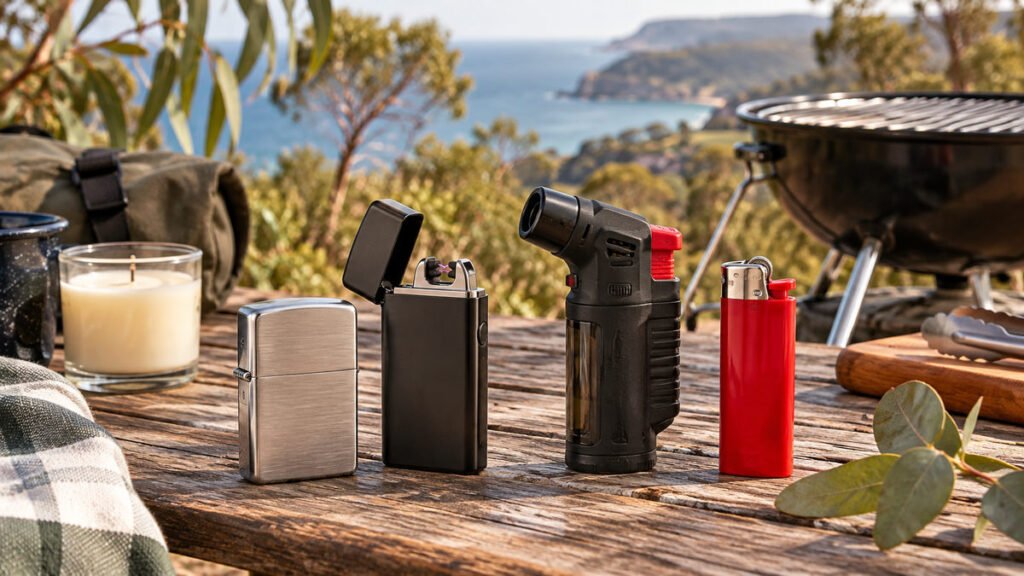
A lighter combines fuel, an ignition source, and heat in one small object. When flammable materials sit nearby, one careless moment can start a fast-moving fire. Therefore, storage matters even when you use a lighter only occasionally. Compare every type in our guide to lighters in Australia.
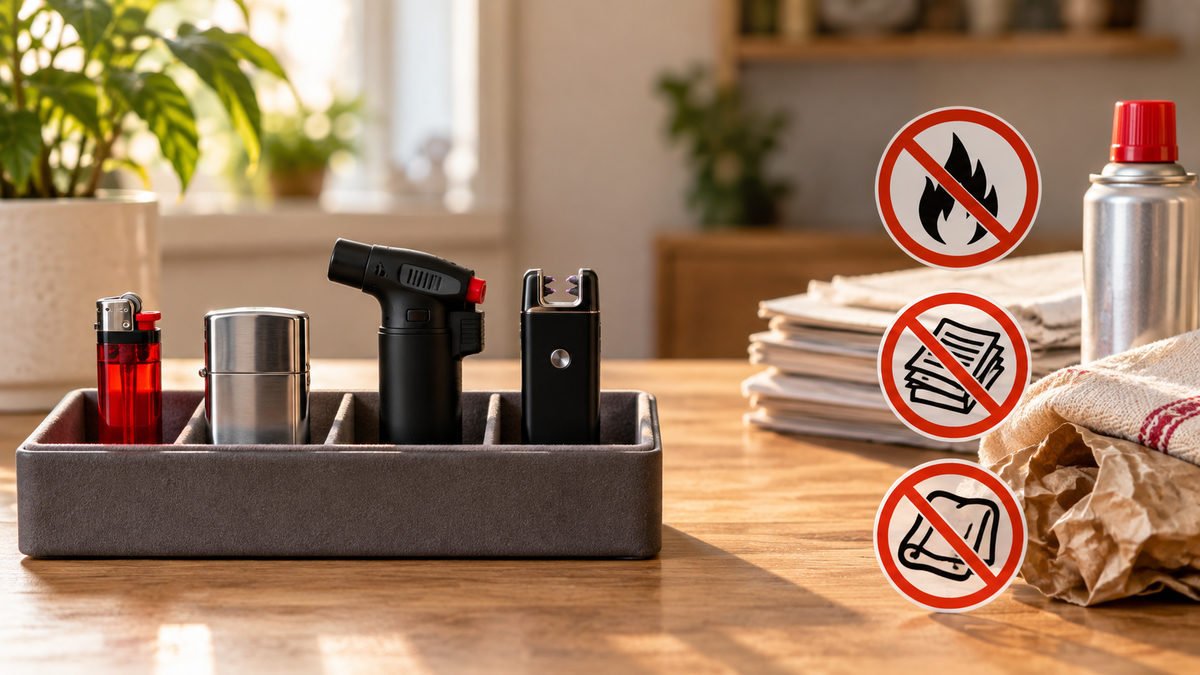
Disposable and refillable butane lighters contain fuel under pressure. Refillable wick lighters use liquid fuel that can spill and release flammable vapours. However, electric arc lighters contain batteries and electrical components instead of liquid fuel.
Butane torch lighters create a hotter, more concentrated flame than standard lighters. Butane refill canisters contain pressurised fuel and need extra care. Meanwhile, damaged seals, blocked valves, cracked housings, or faulty ignition parts can increase the risk.
Improper storage may cause accidental ignition, burns, fuel leaks, pressure buildup, or rupture. In addition, a lighter can ignite nearby paper, fabric, cardboard, chemicals, or dry vegetation. Once those materials catch fire, the flames may spread before anyone notices.
Child-resistant features reduce the chance of accidental use, but they do not make a lighter childproof. A determined child may still operate some mechanisms, especially after repeated practice. Additionally, novelty or toy-like designs can attract children more strongly.
Australian consumers can review the ACCC cigarette lighter safety guide for product warnings and child-safety information. Most importantly, keep every lighter cool, dry, secure, and away from flames, heat, children, pets, and combustible materials.
Know which lighter you own
- Disposable lighters: These usually contain a limited supply of pressurised butane.
- Refillable wick lighters: These use liquid fuel absorbed into a wick and packing material.
- Butane torch lighters: These produce a hotter, focused flame and often contain pressurised fuel.
- Electric arc lighters: These create an electrical arc and require battery-safe storage.
- Butane refill canisters: These store pressurised fuel and need careful separation from ignition sources.
2. How to Store Lighters Safely at Home
Choose a cool, dry, well-ventilated storage location away from direct sunlight. Keep lighters far from stoves, heaters, fireplaces, radiators, candles, barbecues, and other ignition sources. Furthermore, avoid areas where temperatures change sharply during the day. Keep glassware safe too; see how to store glass bongs safely.
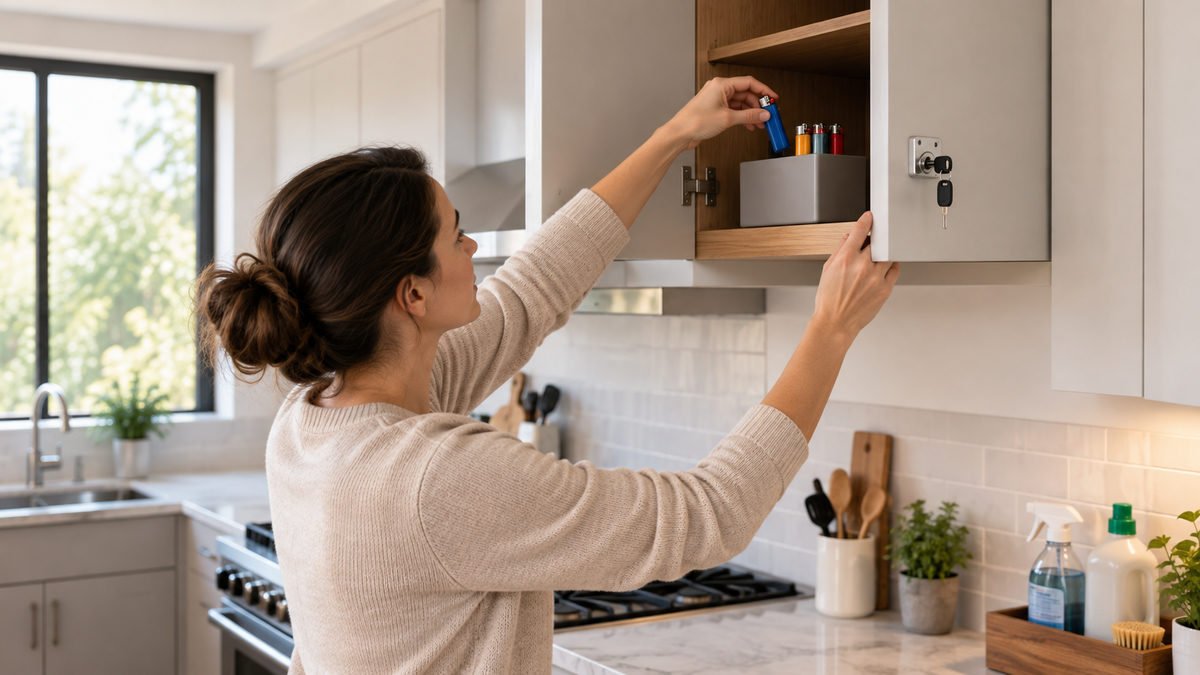
Store lighters out of reach and sight of children and pets. A locked or secured cabinet usually provides better protection than an open drawer. Therefore, choose a cabinet adults can access easily without leaving the key or code available to children.
A storage drawer does not replace secured storage if a child can open it. Children often explore ordinary household items without understanding the danger. Moreover, a lighter left behind towels, toys, or clothing can become difficult to notice.
Keep lighters separate from gasoline, paint thinner, aerosols, cleaning chemicals, paper, fabric, cardboard, bedding, and other combustible items. For example, do not place a lighter beside spray paint in a garage cabinet. A small leak near flammable vapours can create a serious ignition risk.
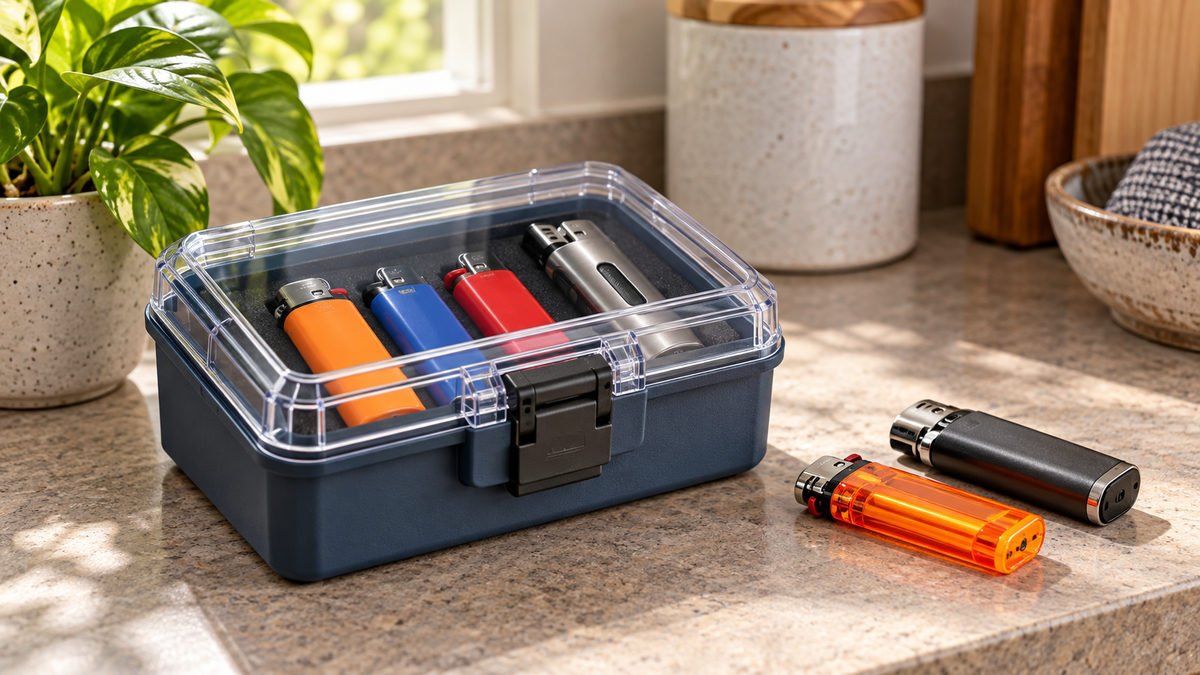
Use a suitable storage container that prevents accidental activation, crushing, and contact with sharp or metallic objects. However, never seal a leaking lighter inside an airtight container. Trapped fuel vapour can build pressure and create a dangerous atmosphere.
Instead, move away from flames, switches, sparks, and people. Contact local fire authorities or a household hazardous-waste service for instructions. Do not carry a leaking lighter through the house unless a safety professional gives you clear guidance.
Places to avoid
- Windowsills exposed to afternoon sun.
- Garages containing fuel containers or chemical products.
- Sheds that become extremely hot during summer.
- Damp areas where corrosion may affect metal parts.
- Bathrooms or outdoor areas where moisture may damage electric lighters.
- Bedside tables accessible to children.
- Toolboxes containing loose keys, coins, blades, or sharp tools.
Keep electric arc lighters dry and switched off during storage. Additionally, protect their charging ports from moisture and metal objects. Follow the manufacturer’s instructions for battery charging, storage, and cleaning.
Finally, avoid storing several different fuels together without checking their labels. Butane canisters, petrol containers, aerosols, and other flammable products need suitable separation. Safe storage limits the chance that one damaged item will affect everything nearby.
3. Heat Exposure, Direct Sunlight, and Hot Cars
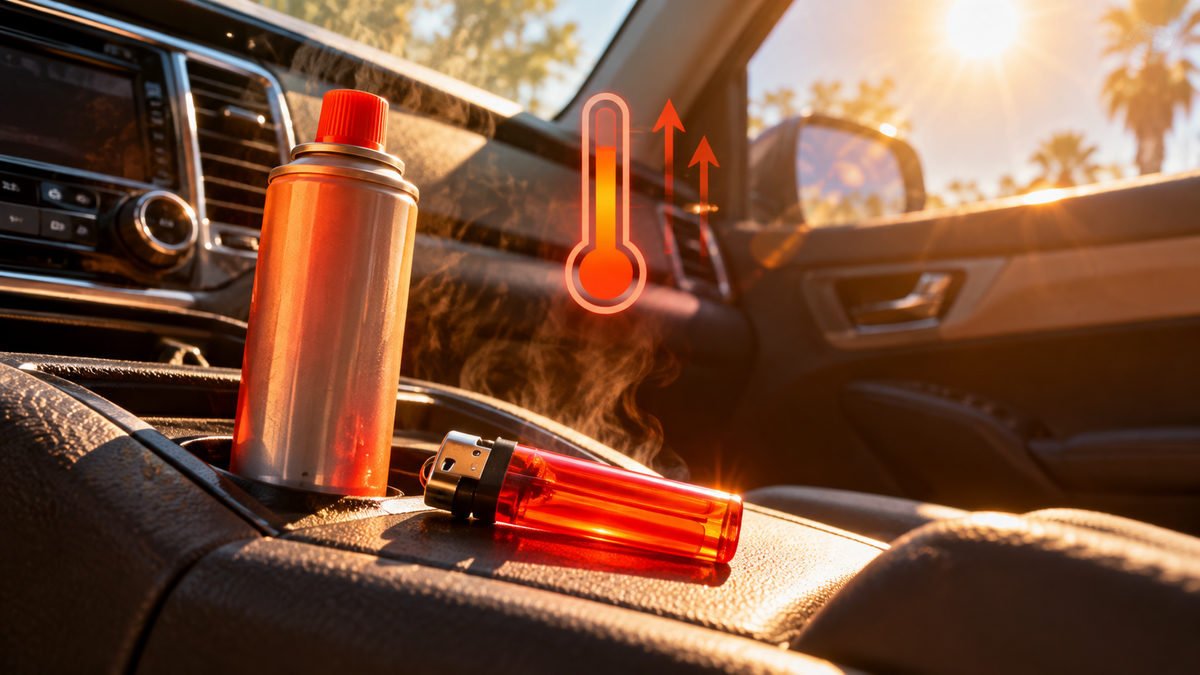
Heat can make lighter storage dangerous, especially when the lighter contains pressurised butane. Rising temperatures increase internal pressure and may soften plastic housings. Additionally, heat can damage seals, evaporate fuel, and increase the chance of leakage.
Can lighters explode? Pressurised butane lighters and refill canisters can rupture or release fuel violently when overheated. The danger becomes greater when the product is damaged, exposed to flames, or trapped inside a hot enclosed space.
Many lighter and butane-fuel labels warn against temperatures above approximately 120°F, or 49°C. However, temperature limits vary between products. Always follow the specific manufacturer instructions printed on the lighter, canister, or packaging.
Never leave a disposable, refillable, torch, or electric lighter in a parked car. A glove compartment, boot, dashboard, or centre console can heat rapidly under direct sunlight. Even a shaded vehicle may reach unsafe temperatures during warm weather.
Direct sunlight through glass can concentrate heat onto a small surface. As a result, a lighter near a windscreen or side window may become hotter than the surrounding air. The same risk applies to tents, caravans, sheds, and enclosed outdoor storage boxes.
Outdoor users should keep lighters shaded and away from hot metal surfaces. Do not place one on a barbecue, camp stove, vehicle bonnet, rock, or picnic table exposed to strong sun. Furthermore, keep lighters away from dry grass, leaves, paper, and camping fuel.
What to do after heat exposure
If a lighter has been sitting in heat, move people away from ignition sources first. Do not test it, ignite it, shake it, or press the ignition repeatedly. Instead, allow it to cool without unnecessary handling in a safe, ventilated location.
Once the lighter has cooled, inspect it only when no fuel odour or visible damage remains. Look for swelling, cracks, softened plastic, leakage, or a distorted valve. If anything seems unusual, stop using it and follow manufacturer or hazardous-waste guidance.
Never cool a hot lighter with water, ice, or a refrigerator. Sudden temperature changes may damage components or create additional handling risks. Therefore, let the product return to a safer temperature naturally, away from people and combustible materials.
4. Butane Lighter Safety and Refillable Fuel Storage
Store butane lighters and refill canisters upright when the product instructions require it. Keep them in a cool, dry, ventilated location away from flames, sparks, sunlight, and heat sources. Never place a canister beside a heater or cooking appliance. Learn how to refill a butane lighter without leaks.
Keep butane refill canisters separate from ignition devices when practical. Do not store them beside gasoline, propane cylinders, aerosols, solvents, or other flammable products. Additionally, keep every container closed and labelled according to its instructions.
Before use, check the refill valve, seals, fuel port, and cap. Stop using a canister or lighter that hisses, smells strongly of fuel, leaks, or has a damaged valve. A strong odour can indicate escaping gas, even when liquid fuel is not visible.
Never refill a lighter near a flame, cigarette, pilot light, electrical spark, heater, or running motor. Choose a well-ventilated area away from enclosed rooms, drains, and ignition sources. Moreover, follow the refill instructions carefully and use only compatible fuel.
Do not modify a lighter or bypass its safety lock. Avoid increasing the flame beyond manufacturer recommendations. Using incompatible fuel, forcing a valve, or replacing parts with unsuitable components can create unpredictable pressure and ignition problems.
Extra care for torch lighters
Torch lighters produce hotter flames than many standard lighters. Their flames may also become difficult to see in bright daylight. Therefore, users can underestimate the heat and accidentally touch clothing, skin, tents, dry vegetation, or nearby fuel.
Keep torch lighters pointed away from people and materials that can burn. Use them only in suitable conditions, with enough clearance around the flame. Never use one inside a tent, vehicle, shed, or poorly ventilated enclosure.
Refillable wick lighter precautions
Prevent overfilling a refillable wick lighter. Excess fuel can spill into the casing, onto your hands, or onto surrounding surfaces. If fuel spills, wipe it away carefully and allow vapours to disperse before lighting anything.
Close the lid securely after filling and keep the lighter upright during storage. Do not carry it immediately after a spill. Additionally, wash fuel from your hands before touching cigarettes, cooking equipment, electrical switches, or other ignition sources.
5. Inspecting, Handling, and Transporting Lighters
Inspect lighters regularly, especially before placing them in a bag, vehicle, emergency kit, or camping box. Check for cracks, swelling, corrosion, loose parts, blocked valves, broken ignition mechanisms, unusual odours, hissing, or visible fuel residue. Follow our lighter maintenance tips.
Treat a leaking, swollen, cracked, overheated, or malfunctioning lighter as unsafe. Do not shake it, puncture it, disassemble it, or test it repeatedly. Also, never place it near a drain, flame, electrical switch, or warm appliance.
Keep lighters away from loose coins, keys, tools, and other metal objects. These items may activate an ignition mechanism or damage a fuel system. Therefore, avoid carrying a lighter loose in a pocket, backpack, glove compartment, or mixed equipment bag.
Use a protective case when carrying a lighter outdoors. The case should prevent accidental activation while allowing ventilation if the product leaks. However, do not use a case to hide or continue carrying a lighter that already shows damage.
Camping, hiking, and emergency kits
For camping and hiking, keep the lighter dry, shaded, and away from fuel bottles and cooking equipment. Store it where crushing, friction, and accidental ignition are unlikely. Furthermore, carry a backup ignition method separately and protect it from moisture.
Inspect emergency-kit lighters periodically. Replace items that show corrosion, battery damage, weak ignition, fuel loss, or cracked housings. Emergency equipment often sits untouched for months, so a lighter may fail when you need it most.
Do not leave a camping lighter inside a hot tent, car, rooftop storage box, or closed trailer. Temperature changes can affect seals and fuel pressure. Instead, choose a shaded, ventilated storage location that remains away from cooking flames.
Transport rules
During travel, follow current airline, transport, and local regulations. Never assume a lighter or butane canister is permitted in checked luggage, carry-on luggage, public transport, or a private vehicle.
Rules can vary by product type, fuel quantity, destination, and transport provider. Therefore, check the carrier’s official guidance before packing. If the rules are unclear, contact the carrier or relevant authority before travelling.
6. Fire Response, Disposal, and a Quick Safety Checklist
If a lighter-related fire starts, move people away immediately. Call emergency services on triple zero in Australia. Use an appropriate extinguisher only when the fire is small, accessible, and you can act without risking injury.
Never pick up a burning lighter or attempt to move a heated canister. Leave the area if flames grow, fuel containers become involved, or smoke affects breathing. Most importantly, personal safety matters more than saving property.
If you smell strong butane or suspect a leak, avoid flames, smoking, switches, motors, and anything that may create a spark. Leave the area and warn others without operating electrical devices. Contact emergency services or local fire authorities when necessary.
Dispose of unwanted lighters carefully
Never puncture, crush, burn, or incinerate disposable lighters or butane canisters. Do not place them in a fireplace, campfire, ordinary fire, or household recycling bin unless local guidance specifically permits it.
Used or empty lighters may still contain residual fuel. Therefore, contact your local council, household hazardous-waste service, transfer station, or manufacturer-approved disposal programme. Follow their instructions for transport and drop-off.
Do not throw a damaged lighter into a general rubbish bin without checking local requirements. Waste collection equipment can compact containers and create ignition risks. Additionally, recycling facilities may not accept pressurised or fuel-containing items.
Quick lighter safety checklist
- Store every lighter in a cool, dry, shaded location.
- Keep lighters away from direct sunlight, flames, heaters, and hot surfaces.
- Secure them from children and pets.
- Separate them from paper, fabric, chemicals, fuel, and other combustibles.
- Store fuel canisters upright when the label requires it.
- Check for cracks, swelling, corrosion, leaks, hissing, or unusual odours.
- Never leave lighters inside parked vehicles or enclosed hot spaces.
- Use only compatible fuel and follow the product instructions.
- Dispose of unwanted lighters through approved local channels.
Always follow product labels, manufacturer instructions, local fire codes, transport rules, and hazardous-waste regulations. Child-resistant does not mean childproof. Likewise, empty does not always mean fuel-free.
Conclusion
Store lighters in a cool, dry, shaded, secure location away from heat, children, pets, flames, and flammable materials. Never leave them in vehicles or direct sunlight. Inspect them for leaks and damage, handle butane carefully, and dispose of unwanted lighters through approved local channels.
Review every lighter and fuel canister in your home, car, camping kit, and emergency supplies today. Then move, secure, replace, or dispose of anything that fails the safety checklist. A few minutes of attention can prevent burns, fires, leaks, and accidental ignition.
For practical product information and care guidance, visit Sweet Puff Australia. Keep safety central when choosing, storing, carrying, and maintaining lighters and related accessories in your everyday setup.