Buying the wrong bong joint size can leave you with a bowl, downstem, or ash catcher that simply will not fit. Many buyers also wonder whether 14mm or 18mm works better, and how male and female joints connect. This guide compares 14mm vs 18mm bong joints by fit, airflow, capacity, cleaning, durability, and accessories. You will also learn how to measure your bong and choose compatible replacement parts.
14mm vs 18mm Bong Joints: Key Differences at a Glance
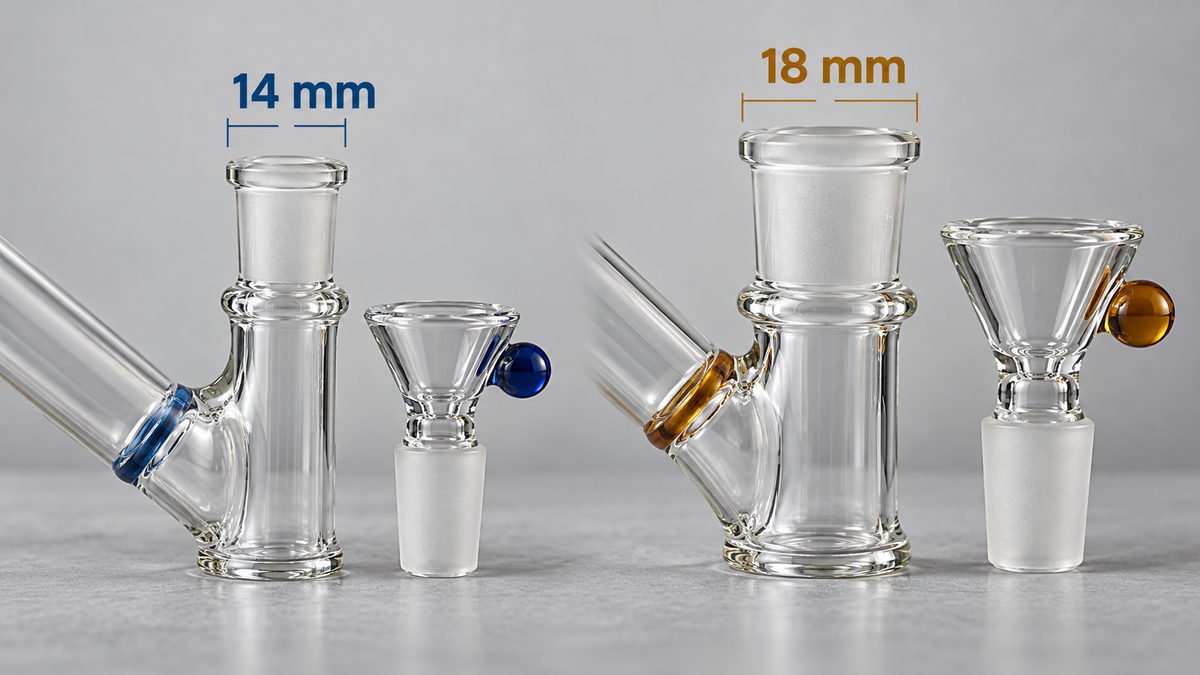
Most bong joint sizes use millimetres to describe the approximate diameter of the glass connection. Therefore, a 14mm joint is smaller than an 18mm joint. These measurements usually describe nominal joint sizing rather than an exact measurement of every glass surface. For 10mm and gender basics, see bong joint sizes explained.
Both sizes appear on glass bongs, rigs, downstems, bowls, ash catchers, and adapters. However, the joint must match both the accessory diameter and its male or female design. A 14mm bowl will not directly fit an 18mm bong joint.
| Feature | 14mm joint | 18mm joint |
|---|---|---|
| Physical size | More compact connection | Larger glass connection |
| Typical bong size | Small and medium bongs | Medium and large bongs |
| Airflow potential | Efficient for everyday setups | Greater open-draw potential |
| Bowl capacity | Usually smaller loads | Usually larger loads |
| Accessory availability | Very broad selection | Broad selection, often larger accessories |
| Cleaning | Smaller parts handle easily | Wider openings can simplify some cleaning tasks |
| Common use | Solo sessions and compact pieces | Large bongs and higher-volume setups |
Joint size affects airflow, but it does not control performance alone. Bong height, downstem length, percolators, water level, chamber design, and bowl shape also change the draw.
Additionally, 14mm and 18mm parts are not directly interchangeable. You need the correct adapter when the joint sizes differ. Neither size is universally better, because the right choice depends on your bong, preferred draw, and available accessories.
14mm Bong Joints: Benefits, Limitations, and Best Uses
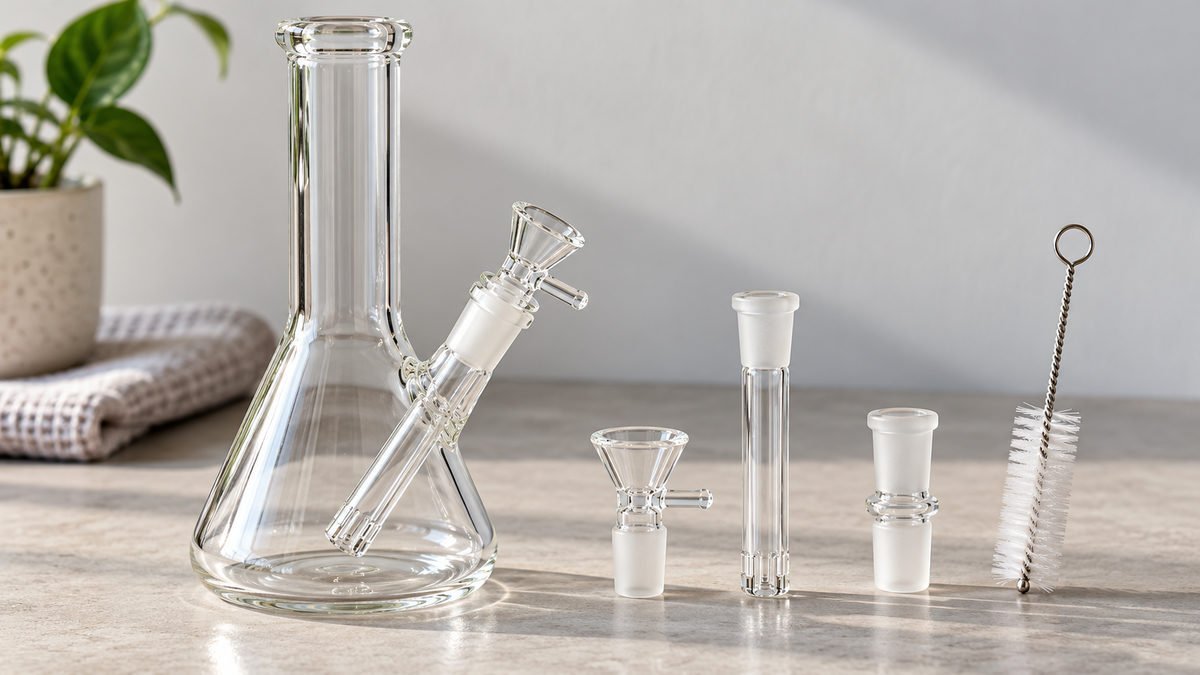
14mm joints are compact fittings commonly found on small and medium-sized glass bongs. They also suit rigs, portable pieces, and setups where easy handling matters. Their smaller proportions help accessories match the overall scale of the bong. Match your stem with our bong downstem guide.
One major advantage involves accessory availability. You can usually find 14mm bowls, downstems, ash catchers, and adapters in many different shapes. Moreover, smaller bowls weigh less and can feel easier to handle during regular use.
A 14mm bowl often supports a smaller load size. Therefore, it can suit solo users, beginners, or anyone who prefers shorter, more controlled sessions. Smaller bowls can also make routine cleaning and storage more convenient.
For many everyday bongs, a 14mm joint provides efficient airflow. However, the narrower opening may create more draw resistance than a comparable 18mm design. The difference often feels subtle when the bong has a simple chamber and a short downstem.
Large bongs with several percolators may benefit from a larger joint. In contrast, a 14mm connection can keep a compact bong balanced and easier to carry. The bong’s complete design matters more than the joint number alone.
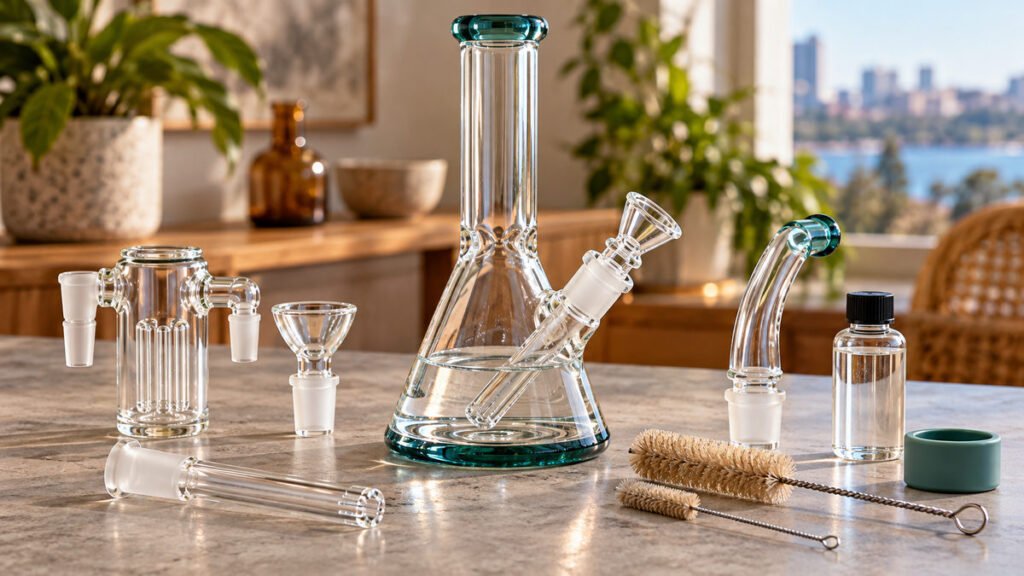
Common 14mm accessories include:
- 14mm bowls with male joints
- 14mm female joint pieces
- 14mm male joint pieces
- 14mm downstems
- 14mm ash catchers
- 14mm adapters
Choose 14mm when you want smaller bong dimensions, lower material use, and simple accessory replacement. It also works well when compact sessions and easy handling matter most.
18mm Bong Joints: Benefits, Limitations, and Best Uses
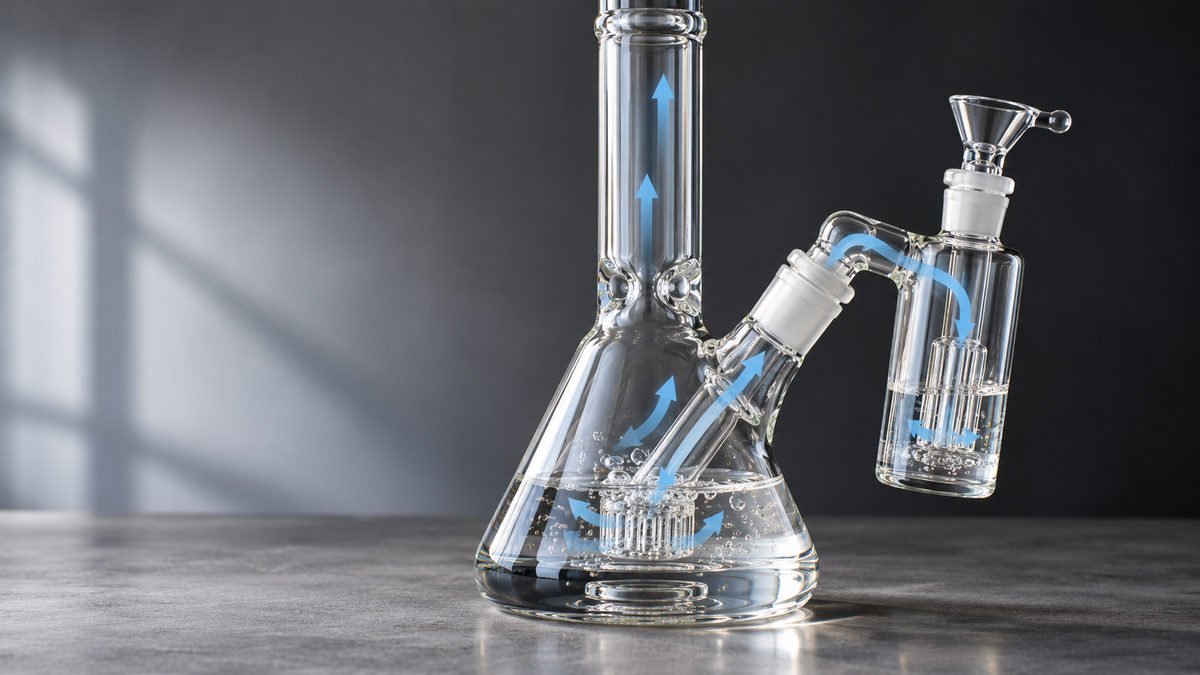
18mm joints are larger fittings often found on medium-to-large bongs and high-volume glass pieces. They suit larger bowls, wider accessories, and setups designed around a more open draw. Their proportions usually look balanced on taller or heavier bongs.
The larger opening can offer greater airflow potential. As a result, some 18mm setups feel less restricted during a strong draw. However, an 18mm joint does not automatically create stronger hits or better filtration.
Percolator design, water level, chamber volume, downstem shape, and drawing technique usually influence performance more strongly. Therefore, changing from 14mm to 18mm may not transform an otherwise restrictive bong.
18mm bowls can suit users who prefer larger loads or shared sessions. Nevertheless, larger bowls can use more material and may produce more residue. A bigger bowl also adds weight, which can affect balance on smaller bongs.
The larger glass connection may feel more substantial. However, durability depends mainly on glass quality, joint construction, and careful handling. An 18mm joint can still crack when accessories receive sideways pressure.
Typical 18mm accessories include:
- 18mm bowls with male joints
- 18mm female joint pieces
- 18mm male joint pieces
- 18mm downstems
- 18mm ash catchers
- 18mm adapters
Choose 18mm when you have a larger bong or prefer an open draw. It also suits frequent ash catcher use and higher-capacity accessories. Before buying, check that the extra weight matches your bong’s base and overall balance.
Bong Joint Compatibility: Bowls, Downstems, and Adapters
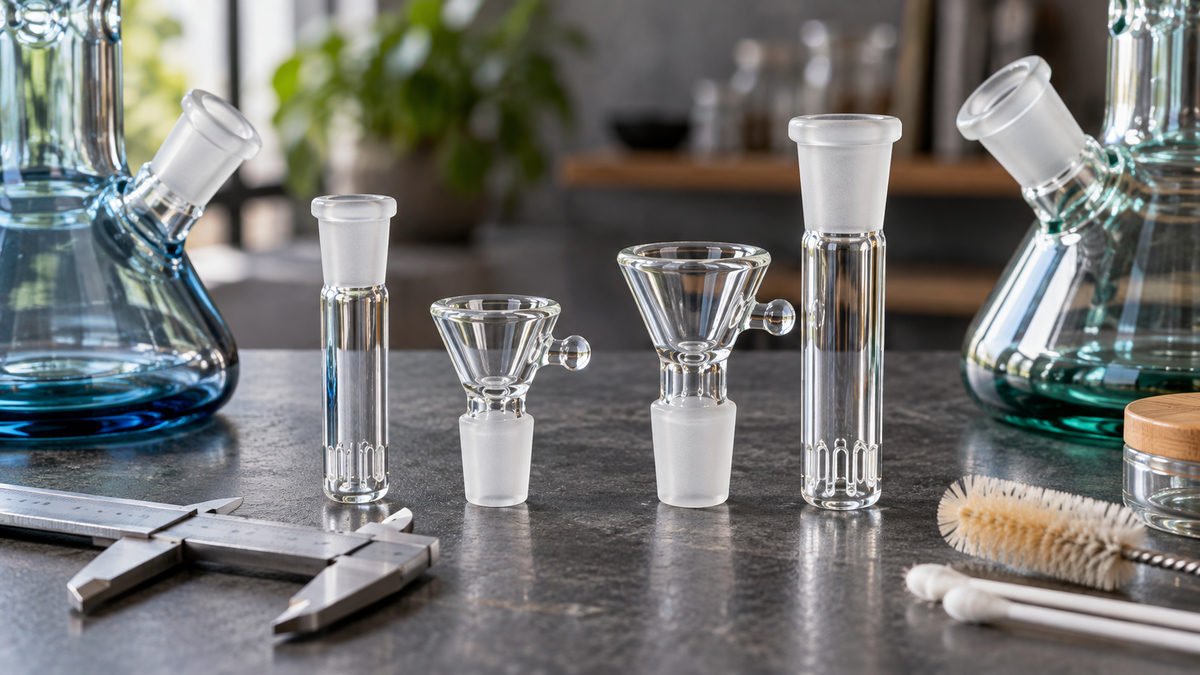
Joint gender matters just as much as joint diameter. A male accessory inserts into a female bong joint. Meanwhile, a female accessory receives a male joint from the bong or another accessory. See which bowls fit in bong bowls explained.
For a direct connection, both details must match. The diameter must be correct, and the male or female design must face the right direction. A matching number alone does not guarantee compatibility.
Do 14mm and 18mm Bowls Fit Each Other?
A 14mm bowl does not directly fit an 18mm bong joint. You need a correctly sized adapter that changes the connection from 18mm to 14mm. The adapter must also match the bong’s joint gender and bowl’s joint gender.
Likewise, an 18mm bowl does not directly fit a 14mm bong joint. An adapter can connect the two sizes, but its direction must match the setup. Always inspect the product diagram before ordering.
Downstem and Ash Catcher Compatibility
Downstem compatibility requires more than diameter. You must check the joint size, joint gender, downstem length, and the bong’s joint position. The angle also matters when the bong uses a fixed side joint.
A downstem that is too long may touch the bong’s base. Conversely, a short downstem may sit above the correct water level. Therefore, measure the original part before buying a replacement.
Ash catchers need the correct size and gender on both connections. One side connects to the bong, while the other side accepts the bowl. The ash catcher’s angle and height should also suit the bong.
| Part | Direct-fit requirement | When an adapter helps |
|---|---|---|
| 14mm bowl | 14mm male bowl into a 14mm female joint | Connecting to an 18mm bong |
| 18mm bowl | 18mm male bowl into an 18mm female joint | Connecting to a 14mm bong |
| Downstem | Matching diameter, gender, length, and angle | Changing a bong’s joint size |
| Ash catcher | Matching bong and bowl connections | Adapting either connection size |
| Replacement joint part | Matching size and construction | Replacing an uncommon fitting |
For example, a 14mm female bong may need an adapter with a 14mm male side and an 18mm female side. An 18mm female bong may need an 18mm male side and a 14mm female side.
Adapters can add height, weight, cleaning points, and stress on the glass. Therefore, direct-fit accessories usually provide the simplest setup. Never force mismatched glass fittings together, because pressure can damage the joint.
How to Measure Bong Joint Size Accurately
The easiest method involves checking the bong’s product specifications or original packaging. Manufacturer listings and replacement-part descriptions may also state the joint size and gender. Start there before measuring the glass yourself.
You can compare the joint with a known 14mm or 18mm accessory. However, visual estimates often prove unreliable, especially when thick glass or unusual joint shapes affect appearance.
If the joint remains accessible, measure its opening with a ruler or vernier caliper. Measure carefully and avoid pressing hard against the glass. Nominal measurements can differ slightly from the exact inside or outside glass dimension.
Joint gender is usually easy to identify. If the accessory inserts into the bong, the bong has a female joint. If the bong inserts into the accessory, the accessory has a female joint.
Before ordering a replacement part, confirm each detail:
- Joint diameter, such as 14mm or 18mm
- Male or female joint gender
- Accessory function, such as bowl or downstem
- Downstem length and diffuser style
- Joint angle and position
- Adapter size and direction
- Whether the product includes an adapter
Additionally, photograph the bong joint beside a ruler when the size remains unclear. A seller may identify the fitting from the image and product details. This step can prevent an avoidable return.
Do not rely on labels such as small, large, standard, or universal. Those descriptions vary between sellers. Instead, match the stated diameter, gender, function, and dimensions before purchasing.
Choosing the Best Bong Joint Size for Your Setup
For beginners, 14mm often provides the most straightforward starting point. It suits smaller or medium bongs, solo sessions, compact handling, and broad accessory availability. Smaller parts also make routine cleaning feel less awkward. Browse compatible bong accessories in Australia.
Choose 18mm for larger bongs, bigger bowls, and users who prefer a more open draw. It also works well for frequent ash catcher use and higher-volume setups. However, larger accessories may add weight and require more storage space.
An 18mm joint may reduce restriction compared with a similar 14mm design. Nevertheless, percolation usually affects the draw and filtration more dramatically. A complex percolator can feel restrictive, even with a larger joint.
Cleaning requirements differ slightly between sizes. 14mm accessories are often smaller and easier to hold. Meanwhile, 18mm pieces may offer wider openings, but larger bowls can collect more residue.
Neither size is automatically more durable. Glass thickness, joint construction, and handling habits matter more. Avoid sideways pressure, overloading accessories, and forcing parts that do not match.
For ash catchers, the correct size and gender matter more than choosing the larger joint. A properly fitted 14mm ash catcher can work better than an unsuitable 18mm model. Always check the bong connection, bowl connection, angle, and overall height.
Joint size can influence draw resistance and accessory capacity. However, it does not determine smoke volume or filtration by itself. Chamber size, water level, percolator design, bowl shape, and draw technique all contribute.
Use this decision framework:
- Choose 14mm for compact bongs and smaller sessions.
- Choose 18mm for larger bongs and a more open draw.
- Choose 14mm when easy handling and broad accessory choice matter.
- Choose 18mm when larger bowls or frequent ash catcher use matter.
- Choose direct-fit parts when you want fewer cleaning points.
- Choose an adapter when your preferred accessory does not match.
Before checkout, confirm the joint diameter, joint gender, accessory type, and product dimensions. Check whether the setup needs an adapter. Finally, review the seller’s return policy before buying uncertain glass parts.
Conclusion
A 14mm bong joint usually suits smaller or medium bongs, compact sessions, and widely available accessories. An 18mm joint often suits larger pieces, bigger bowls, and users who prefer a more open draw.
Neither size is universally better. Correct compatibility depends on diameter, male or female gender, accessory type, downstem dimensions, and the bong’s overall design.
Therefore, check your bong’s joint diameter and gender before purchasing. Then browse compatible 14mm or 18mm bowls, downstems, ash catchers, adapters, and replacement parts. When uncertain, measure carefully and use a purpose-built adapter instead of forcing mismatched glass.
Learn more about bong design and terminology before comparing different glass setups and accessories.
Sweet Puff Australia makes it easier to explore bong accessories and replacement parts that match your setup. Visit Sweet Puff Australia to compare compatible options and check product details before ordering.