
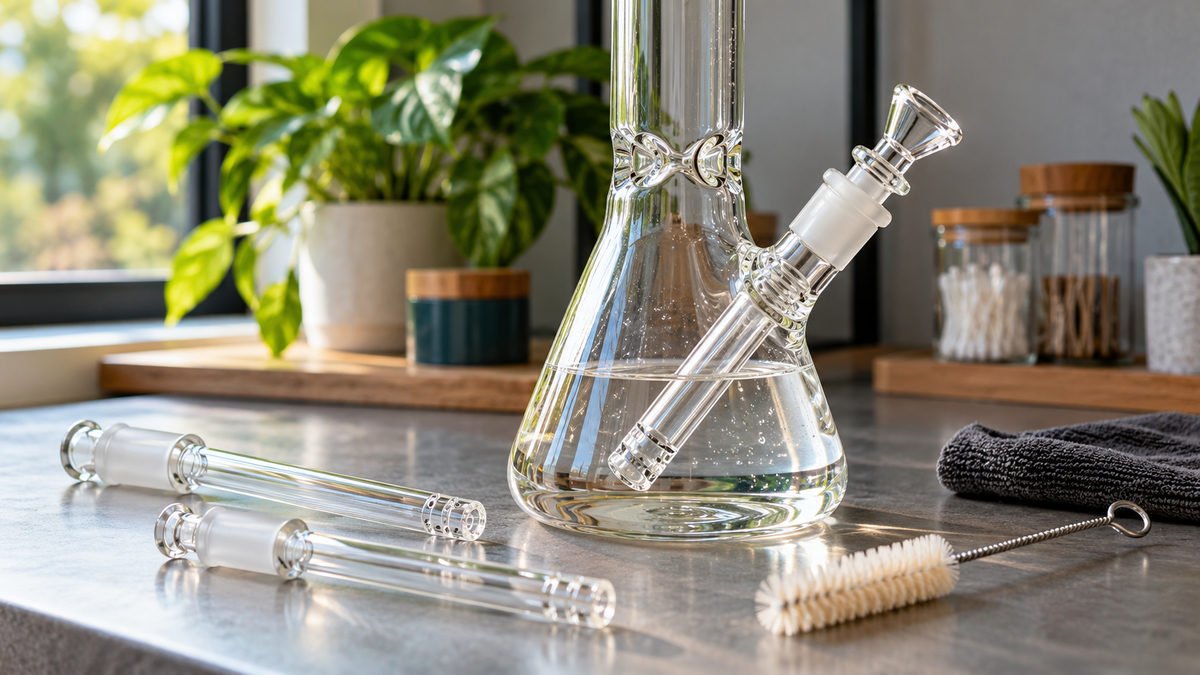
Is your bong bubbling poorly, pulling too hard, or leaking around the joint? The downstem may be responsible. This bong downstem guide explains how to choose the correct size, fit, length, diffuser style, and replacement option.
Choosing the wrong downstem can cause weak filtration, excessive drag, poor sealing, clogging, or glass damage. Therefore, you need to match the downstem carefully with the bong, bowl, joint, water level, and chamber shape.
Additionally, this guide covers installation, cleaning, troubleshooting, and safe replacement. Adults should also follow local laws and age restrictions for bong-related products and use. Australian readers can review official Australian cannabis information before making decisions about use.
1. Bong Downstem Guide: What It Is and How It Works

A bong downstem is the tube connecting the bowl joint to the water chamber. It directs smoke below the waterline before the smoke travels towards the mouthpiece. This simple component controls how smoke enters the water.
When you draw through the bong, air moves through the bowl and into the downstem. The downstem then releases smoke below the water surface. As a result, smoke breaks into bubbles and contacts more water.
That bubbling increases agitation inside the chamber. It can cool the smoke, add moisture, and help trap some particulate matter in the water. However, water filtration does not remove every harmful substance from smoke.
The downstem also contributes to the bong’s percolation. A basic open-ended tube creates larger bubbles and generally offers open airflow. A diffused downstem uses slits or holes to create smaller bubbles and greater water contact.
Downstem diameter affects air volume and draw resistance. A wider tube usually allows stronger airflow, while a narrower tube can feel more restricted. However, diffuser design, water depth, and bowl size also affect the result.
What a Downstem Does to Smoke
A downstem cools smoke through water contact and chamber agitation. It also humidifies the smoke slightly, which can change how the draw feels. Furthermore, bubbling provides basic water filtration by capturing some ash and residue.
Still, a downstem alone cannot guarantee a smooth hit. The water level must suit the diffuser openings. The bowl must seal correctly, and the joint must remain airtight.
Dirty glass can also reduce performance. Resin, reclaim, ash, and mineral deposits restrict the passageway over time. Therefore, cleaning remains just as important as choosing the correct downstem.
Common airflow terms include drag, restriction, leak points, and draw resistance. Drag describes the effort required to pull air through the piece. A leak point allows air around a joint instead of through the downstem.
2. Downstem Types, Designs, and Diffusion Styles
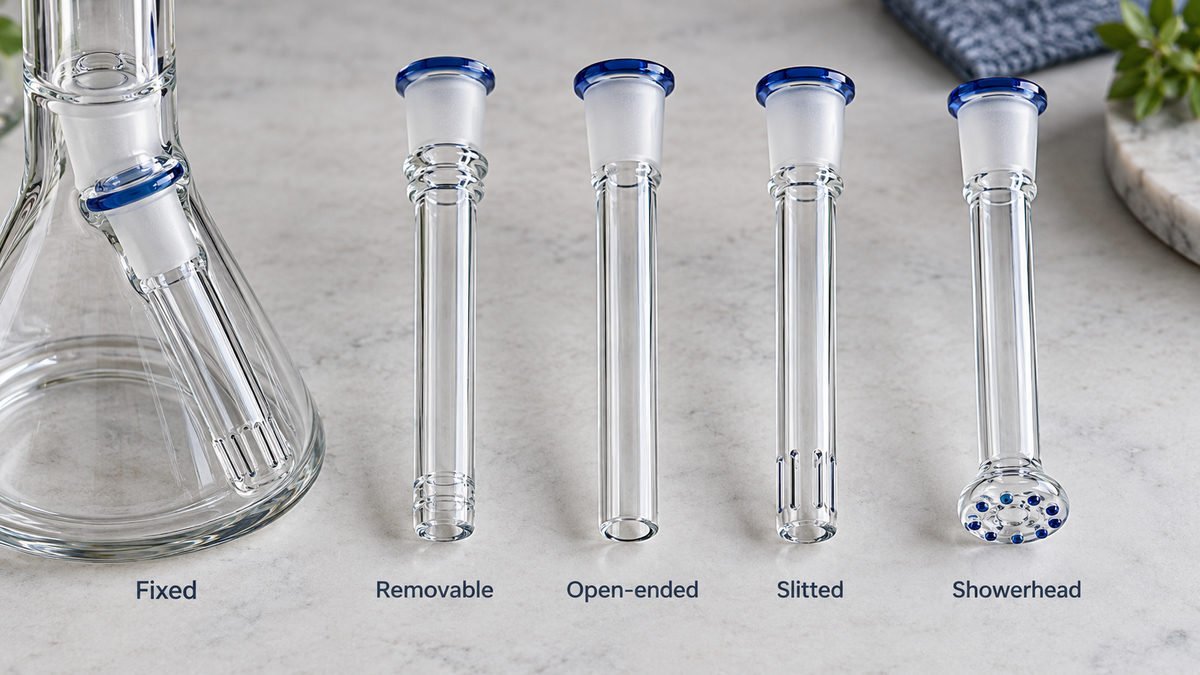
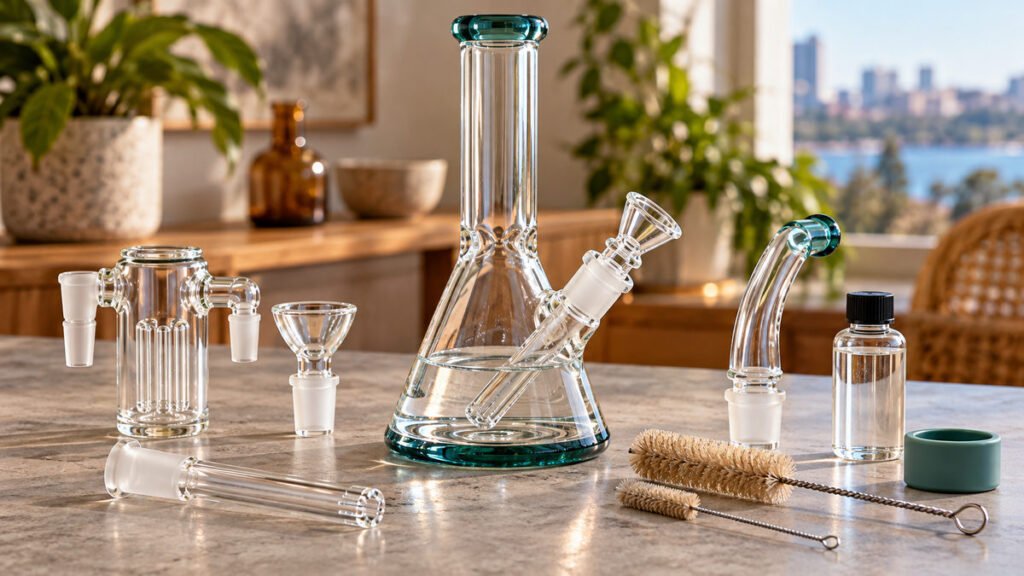
Downstems generally fall into two categories: fixed and removable. A fixed downstem forms part of the bong’s permanent glass structure. Manufacturers often use this design for compact pieces or custom-made chambers. Diffused stems work like those in percolator bongs.
Removable downstems fit through a joint and can come out for cleaning or replacement. Therefore, they provide greater serviceability when the glass becomes clogged, cracked, or unsuitable. They also allow some owners to change diffuser styles.
However, removable designs depend on accurate sizing and a reliable joint seal. A poorly matched replacement can wobble, leak, sit too high, or touch the bong base. Fixed downstems avoid some fit issues but offer fewer upgrade options.
Diffuser Styles
An open-ended downstem releases smoke from one larger opening. It usually creates larger bubbles, lower restriction, and simpler cleaning. This style suits users who prefer direct airflow and modest water agitation.
Slitted downstems divide smoke through several narrow cuts. Multi-slit versions increase bubbling and contact with the water. Showerhead designs release smoke through openings around the lower section.
More diffusion can cool smoke and increase agitation. However, finer diffusion can also add drag, water splash, and cleaning difficulty. Narrow slits collect reclaim quickly when the bong receives frequent use.
The diffuser position also changes performance. Openings near the base may create strong bubbling but require careful water control. Openings higher on the tube may reduce splashback but need less water coverage.
Glass and Manufacturing Considerations
Glass bong downstems often use borosilicate glass. This material handles normal temperature changes better than ordinary glass. Nevertheless, it can still crack from impact, sudden temperature changes, or pressure.
Clear glass makes buildup easy to inspect. It also allows you to check diffuser openings, water coverage, and alignment. However, clarity does not indicate that the glass can withstand careless handling.
Removable downstems are usually better for maintenance and replacement. Fixed downstems may offer stronger structural integration and fewer loose parts. Ultimately, the bong’s original design matters more than one style being universally superior.
3. Bong Downstem Sizes, Measurements, and Compatibility
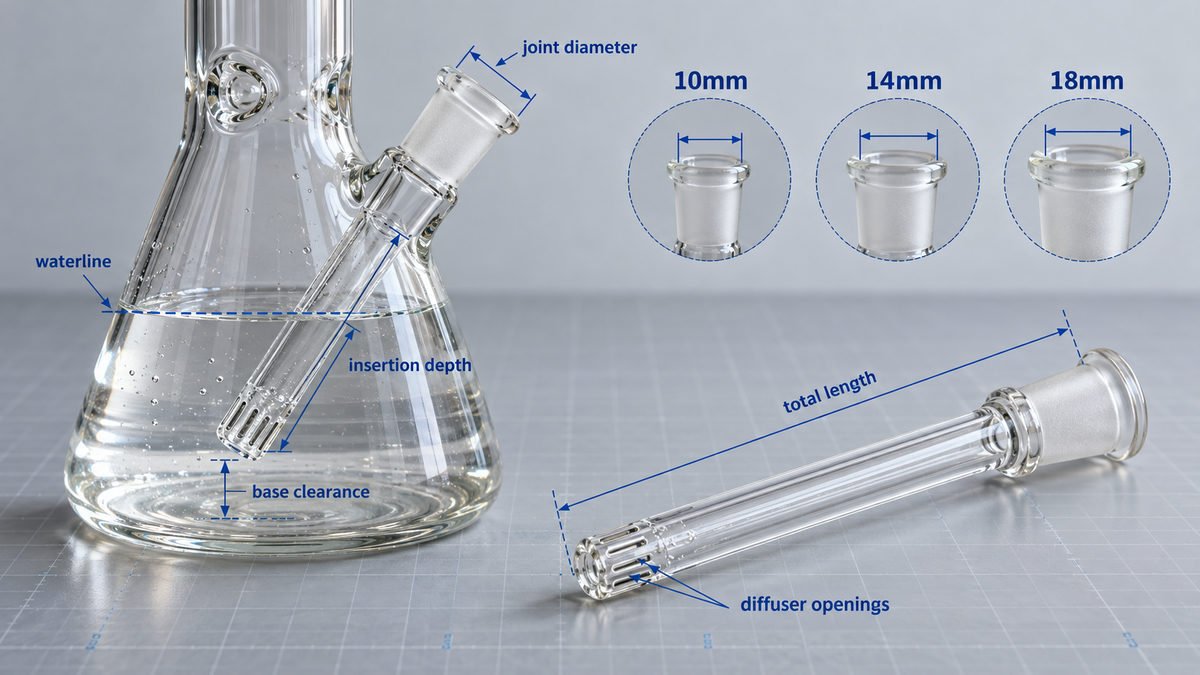
The three common nominal bong joint sizes are 10mm, 14mm, and 18mm. These measurements describe the joint size used by the bong, bowl, or downstem. Manufacturing tolerances and product naming conventions can vary. Most stems follow one of two standards; compare 14mm vs 18mm bong joints.
10mm downstems suit compact pieces and smaller chambers. They can provide a neat fit but may offer less airflow than larger designs. Meanwhile, 14mm remains a common general-purpose size across many bong styles.
18mm downstems suit larger bongs and higher-airflow setups. They can move more air through the chamber, especially with a wider bowl. However, a larger joint does not automatically create smoother or better performance.
Joint size mainly refers to diameter. You must still check the bowl connection, downstem gender, overall length, and diffuser position. A correctly sized diameter can still produce a poor fit if the connection style differs.
Joint Gender and Configuration
Joint gender describes how two glass components connect. A male joint inserts into a female joint. A female joint accepts a male joint or a compatible adapter.
Downstems can use different connection configurations. The bong opening, downstem end, and bowl connection must all match. Therefore, never rely on the number alone when ordering a replacement.
For example, a 14mm downstem may still be unsuitable for a 14mm bong. It could have the wrong gender, an incompatible bowl connection, or an unsuitable insertion length.
How to Measure a Downstem
Measure the downstem while it is dry and removed from the bong. Record the total glass length, joint diameter, insertion depth, and diffuser position. Also note the distance from the joint edge to the diffuser openings.
Use a ruler for a basic measurement. Calipers provide greater accuracy around the joint and tube diameter. Measure straight along the tube, not along a curved edge or angled opening.
To measure the bong joint, identify whether you need the internal or external diameter. Measure across the joint opening at its widest usable point. Avoid measuring the outer rim when the product description requires the inner diameter.
Downstem Length and Water Clearance
Measure from the bottom of the bong joint to the position you want inside the chamber. The downstem should extend below the waterline without touching the base. It also should not sit so low that it creates excessive drag.
The diffuser openings must remain submerged during use. At the same time, leave clearance between the openings and the chamber floor. This space helps water move around the diffuser and reduces splashback.
- Check the bong joint size and configuration.
- Confirm the downstem gender and bowl connection.
- Measure total length and insertion depth.
- Check diffuser position and opening style.
- Allow clearance above the bong base.
- Confirm the water chamber can accommodate the tube.
4. Choosing the Best Downstem for a Bong
Start with the bong joint size before considering diffusion style or material. A perfect diffuser cannot compensate for an incorrect diameter or connection. Therefore, verify the bong opening first. Your stem must suit your bowl; see bong bowls explained.
Next, match the downstem length to the joint location and chamber depth. A side joint may require a different length than a joint near the base. The base shape also affects how much clearance the diffuser needs.
Consider the balance between filtration and airflow. Larger diameters and simpler openings usually support a more open draw. Finer diffusion can create more bubbling, but it may also increase drag.
A 10mm setup generally suits a compact bong. A 14mm option offers versatile compatibility. An 18mm setup may suit a larger chamber and a user who prefers stronger airflow.
Adapters, Bowls, and Mismatches
A downstem adapter can convert joint sizes or accommodate another bowl configuration. It may help when the bong remains useful but replacement parts are difficult to find. However, every added connection creates another possible leak point.
Check compatibility between the bowl, downstem, bong, and adapter. Common mismatch problems include two male joints, two female joints, incorrect diameter, or a bowl that sits loosely.
Replacing the downstem usually costs less than purchasing a new bong. However, an adapter may offer better availability when the original size is uncommon. A new bong may make more sense when the chamber, joint, or base already has damage.
Choose a replacement when the original downstem is lost, cracked, permanently clogged, or no longer seals. Also replace it when the diffuser slits are damaged or the length creates poor water coverage.
- Joint size and joint gender
- Total length and insertion depth
- Diffuser style and opening position
- Glass type and construction quality
- Bowl compatibility
- Water clearance inside the chamber
- Return policy for incorrect fit
Read product descriptions carefully. Nominal sizes do not always explain gender, length, diffuser position, or connection style. When details remain unclear, compare the listed measurements with your original part.
5. How to Install, Remove, and Test a Removable Downstem
Prepare a stable, padded workspace before handling glass. Ensure the bong, downstem, and bowl are cool, empty, and free from loose debris. A folded towel can reduce movement during installation.
Inspect the downstem for cracks, chips, and rough edges. Then check its orientation before inserting it through the bong joint. The diffuser openings should face the water chamber and sit below the intended waterline.
Insert the downstem gently using straight, controlled movement. Do not force the joint or twist aggressively. Once seated, add water gradually and watch the diffuser openings.
The openings should remain submerged during a normal draw. Excessive bubbling or splashback usually means the water level is too high. Conversely, weak bubbling may indicate insufficient water coverage.
Install the bowl only after checking the downstem seal. The bowl should fit securely without wobbling. Additionally, inspect the joint for gaps, chips, or visible misalignment.
Testing Airflow and Removing the Downstem
Test airflow with the bong empty and cool. Check whether air moves through the downstem rather than around the joint. Water movement should respond smoothly without obvious leakage.
To remove the downstem, use gentle straight-line movement. Controlled rotation may help only when the joint design allows it. Keep one hand supporting the bong and avoid pulling at an angle.
If the downstem sticks, empty the bong first. Apply a suitable glass-safe lubricant around the joint and allow time for it to work. Then use gradual movement without force.
Never use pliers, metal tools, sudden twisting, impact, or open flames. These methods can chip, stress, or shatter the glass. Avoid hot water on cold glass and cold water on recently heated glass.
If the downstem remains stuck, stop escalating force. A professional glass repair service may provide safer guidance. Thermal shock can occur even when the glass appears visually intact.
6. Cleaning, Troubleshooting, and Downstem Replacement
Regular cleaning prevents resin and mineral buildup from restricting airflow. Buildup can weaken bubbling, create odours, and make a removable downstem difficult to remove. Water quality and diffuser complexity affect cleaning frequency. Find a matching stem among bong replacement parts.
Clean the downstem when buildup becomes visible or airflow changes noticeably. Frequent users may need more regular maintenance. Hard water can also leave deposits faster than filtered water.
For a glass downstem, begin with warm water rather than boiling water. Add a suitable glass-cleaning solution and allow the part to soak. Then agitate it gently before rinsing thoroughly.
Narrow slits need patience. Allow the solution to soften residue instead of forcing sharp tools through fragile openings. Cotton swabs, soft brushes, or suitable cleaning accessories may help without damaging the diffuser.
Avoid boiling, abrasive metal objects, harsh incompatible chemicals, and sudden temperature changes. Never seal cleaning chemicals inside a container that could build pressure. Always follow the cleaner’s instructions and rinse completely.
Common Downstem Problems
Poor bubbling often comes from incorrect water coverage. First, confirm the diffuser openings sit below the waterline. Then check the bowl seal, joint fit, downstem blockage, and possible air leaks.
Excessive drag may indicate resin buildup or a blocked bowl. It can also result from an overly fine diffuser, water that sits too deep, or a narrow downstem. Reduce one variable at a time during testing.
Leaks usually indicate incorrect sizing, mismatched joint gender, chips, cracks, or worn seals. Incorrect adapter use can create another leak point. Misaligned components may also prevent the joint from sealing fully.
Common clogging materials include reclaim, ash, and hard-water deposits. Insufficient rinsing can leave residue inside narrow diffuser openings. Therefore, inspect the downstem under good lighting before reinstalling it.
When to Replace a Downstem
Replace the downstem if you find cracks, chips, recurring leaks, or damaged diffuser slits. Persistent blockage also justifies replacement when cleaning no longer restores airflow.
A loose fit or unsuitable length can reduce performance even without visible damage. Choose a different part when the diffuser sits too low, remains above the water, or causes constant splashback.
- Joint size and joint gender
- Total downstem length
- Insertion depth
- Diffuser position and design
- Clearance above the bong base
- Bowl connection
- Required adapter
Handle used glass hygienically and keep it away from children and pets. Dispose of cracked glass carefully in a suitable container. Finally, follow local laws and age restrictions governing bong-related products and use.
Conclusion
A bong downstem controls how smoke enters the water. Its size, length, diffuser design, and position influence bubbling, cooling, filtration, airflow, and draw resistance.
The correct replacement depends on joint size, joint gender, insertion depth, water level, bowl compatibility, and chamber geometry. Careful measurement prevents poor fit, weak bubbling, excessive drag, and avoidable glass damage.
Measure your bong’s joint, downstem length, and water clearance before buying a replacement. Then compare compatible 10mm, 14mm, or 18mm options and adapters from a reputable, legally compliant retailer.
Sweet Puff Australia offers a useful starting point for exploring bong accessories and related glassware. Compare product measurements carefully, and choose parts that suit your existing setup rather than relying on size labels alone.


Comments (2)
[…] Removable bong slides remain popular because they offer flexibility. You can remove them for cleaning, replace them easily, or swap compatible designs. The bowl sits in the downstem; see our bong downstem guide. […]
[…] bag. Add enough isopropyl alcohol to cover it, followed by a small amount of coarse salt. See our bong downstem guide for removing stems […]