
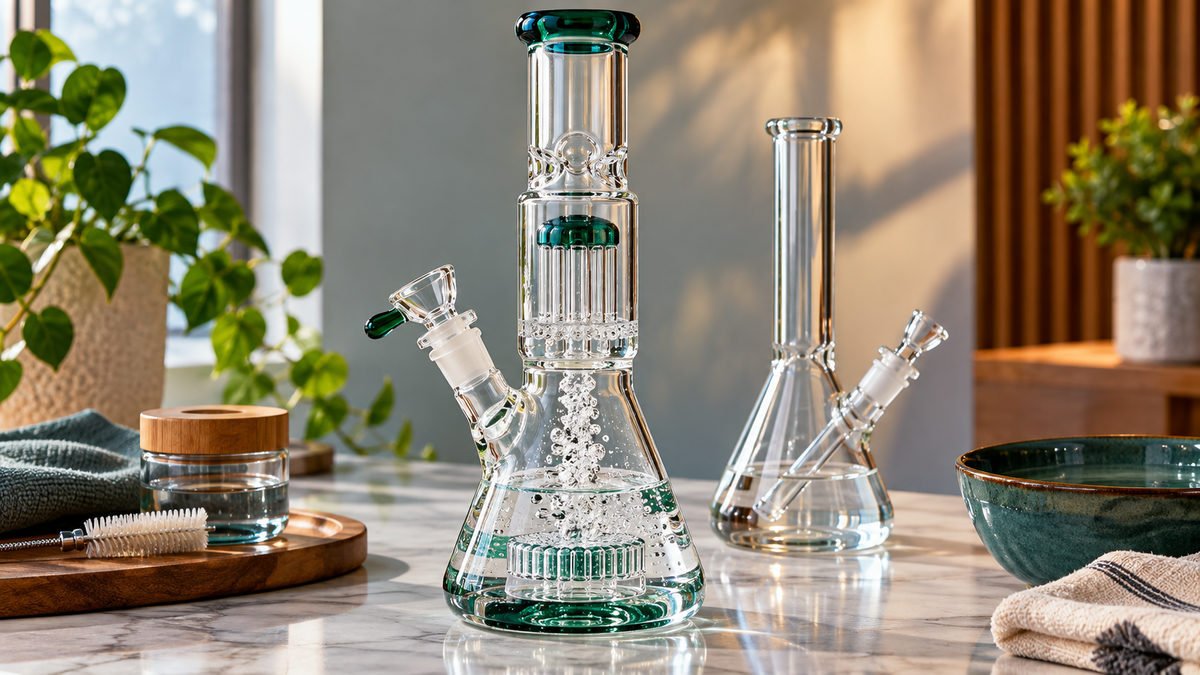
Why do some water bongs deliver noticeably cooler, smoother hits than a basic straight-tube design? The answer often involves specialised internal diffusion. For beginners, “percolator bongs explained” means understanding how these extra chambers change airflow, water contact and overall comfort.
However, more bubbling does not automatically mean better performance. Complex glass can also create extra drag, collect residue or become difficult to clean. This guide explains how percolators work, compares popular designs, and helps Australian adults choose and maintain a practical setup.
Percolator Bongs Explained: What They Are and What They Do
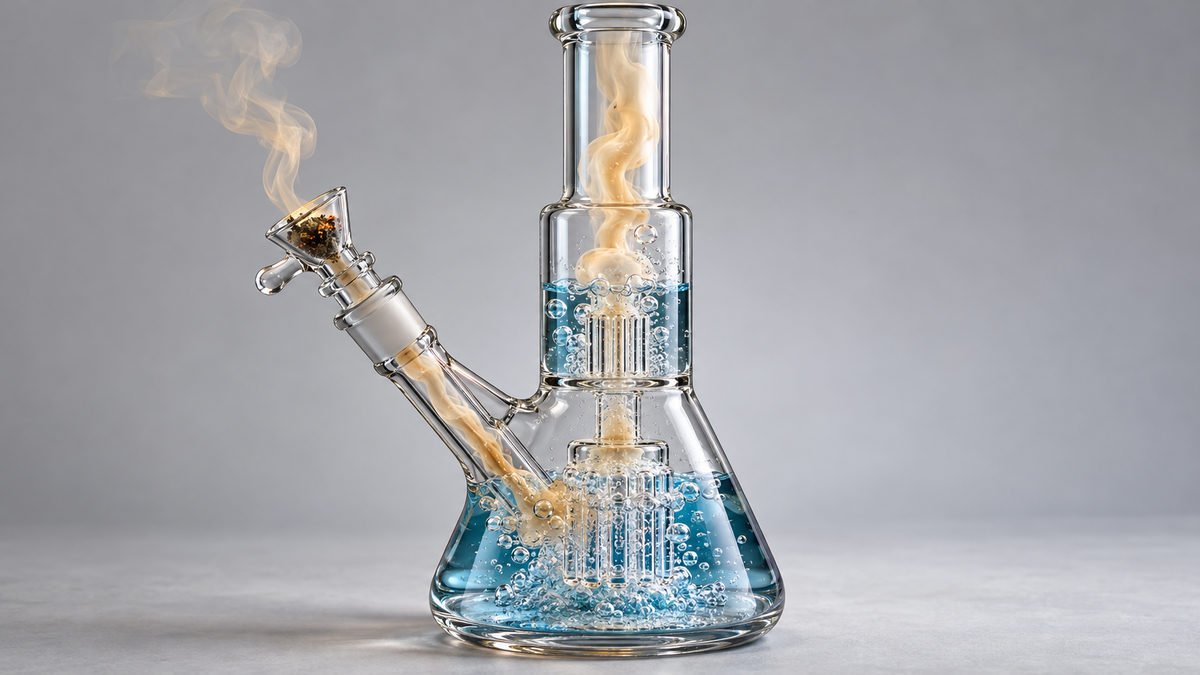
A percolator bong is a water bong with an internal diffusion component called a percolator, or perc. This glass structure breaks smoke into smaller bubbles before it reaches the mouthpiece. Common designs include slits, holes, arms, discs and multi-chamber pathways. For other styles, see bong types explained.
In simple terms, a bong percolator increases contact between smoke and water. That contact helps disperse heat and can reduce the sensation of harshness. The smoke usually travels from the bowl through the downstem, into the perc chamber, through water, and towards the mouthpiece.
Water diffusion fundamentals
When smoke passes through small openings, it divides into many bubbles. Smaller bubbles expose more smoke surface to the surrounding water. Therefore, diffusion can improve cooling and moisture transfer during the draw.
However, water does not remove every potentially harmful compound. It also does not make inhalation risk-free. The Australian Alcohol and Drug Foundation’s cannabis guidance discusses smoking risks and the importance of keeping equipment clean.
Smoothness versus filtration
People often use “filtration” as a broad term, but several different effects occur inside a bong. Water can cool smoke, capture some particles, add moisture and change airflow. These effects may make a hit feel more comfortable, though they do not guarantee cleaner smoke.
Performance also depends on glass thickness, joint size, chamber volume and perc geometry. Water level, draw speed and cleanliness matter just as much. As a result, a well-designed single-perc bong may outperform a poorly made multi-perc model.
So, what does a percolator do in a bong? It divides smoke into bubbles, increases water contact and changes the balance between cooling, airflow and resistance. The best result comes from matching the perc design with your preferred draw and maintenance routine.
How Percolator Bongs Work: Diffusion, Airflow, and Hit Smoothness
Smoke diffusion
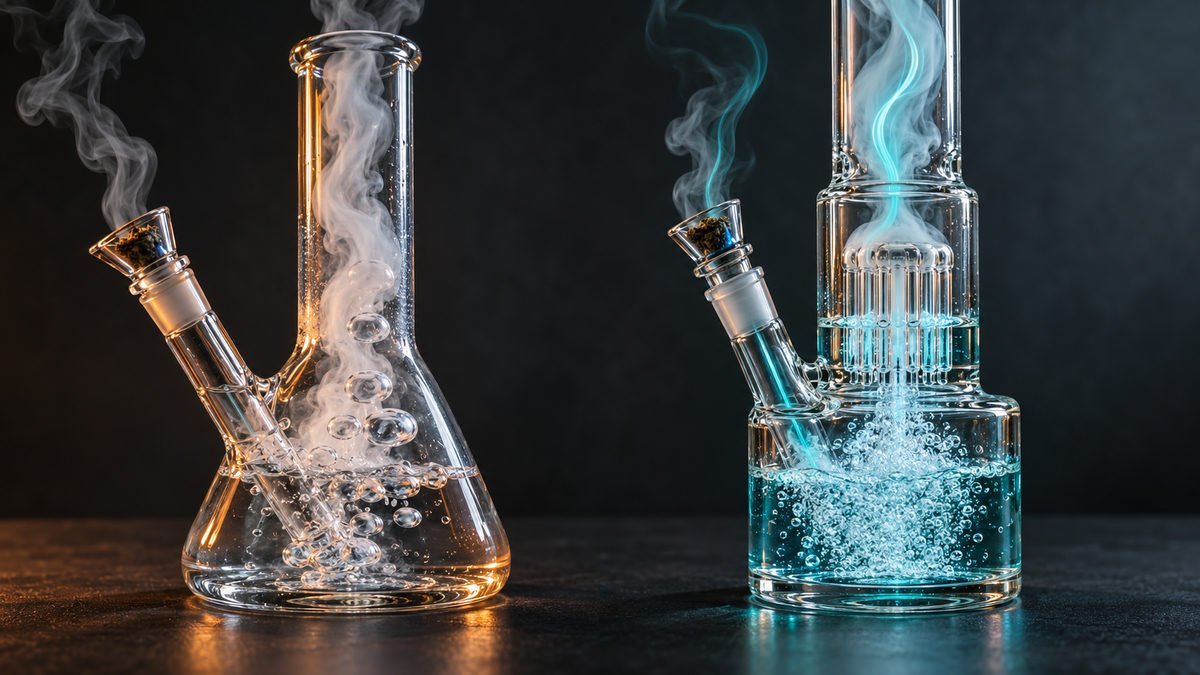
Percolators divide smoke by forcing it through carefully placed openings. Slits create elongated streams, while holes produce smaller individual bubbles. Arms, grids and chambers add further diffusion stages.
A showerhead perc usually sends smoke through a central tube and outlet ring. A honeycomb uses a flat disc with many small openings. Meanwhile, inline and matrix designs spread smoke horizontally or across multiple surfaces.
Cooling and moisture
Smoke transfers some heat to the surrounding water during bubbling. The water also adds moisture, which can make smoke feel less dry. Therefore, a diffused hit may feel gentler than smoke travelling directly through one downstem.
Cooling does not depend on bubble count alone. Chamber volume, water temperature, glass thickness and draw duration also influence the result. A larger chamber may provide more space, but it can also require a stronger pull.
Airflow and drag
Low-diffusion bongs usually offer direct airflow and quick clearing. They often feel simple, responsive and easy to understand. However, they may provide less cooling than a well-designed perc.
High-diffusion bongs create more bubbling and water contact. They can feel smoother, but each slit, hole or chamber adds resistance. Excessive restriction may make the bong feel slow or difficult to clear.
Draw speed changes the experience too. A gentle pull encourages controlled bubbling and helps reduce splashback. Conversely, an aggressive pull can force water upwards, especially when the chamber contains too much water.
Why more bubbles are not always better
Dense bubbling can look impressive, but visual activity does not prove superior filtration. Tiny openings may create more drag, reduce flavour clarity and trap residue quickly. Some users prefer moderate diffusion because it balances cooling with a more open draw.
Clean water and unobstructed air paths are essential. Dirty water can affect flavour, while resin may partially block slits or downstems. Therefore, even an advanced perc can perform poorly without regular maintenance.
Are percolator bongs smoother than regular bongs? Generally, they can reduce perceived harshness through cooling and diffusion. However, load size, temperature, water height, draw speed and glass design still determine the final experience.
Do percolator bongs filter smoke better? They often increase particulate contact with water, but results vary between designs. No perc removes every hazard, and heavier diffusion does not eliminate the risks associated with inhaling smoke.
Best Percolator Bong Types and How They Compare
Tree perc
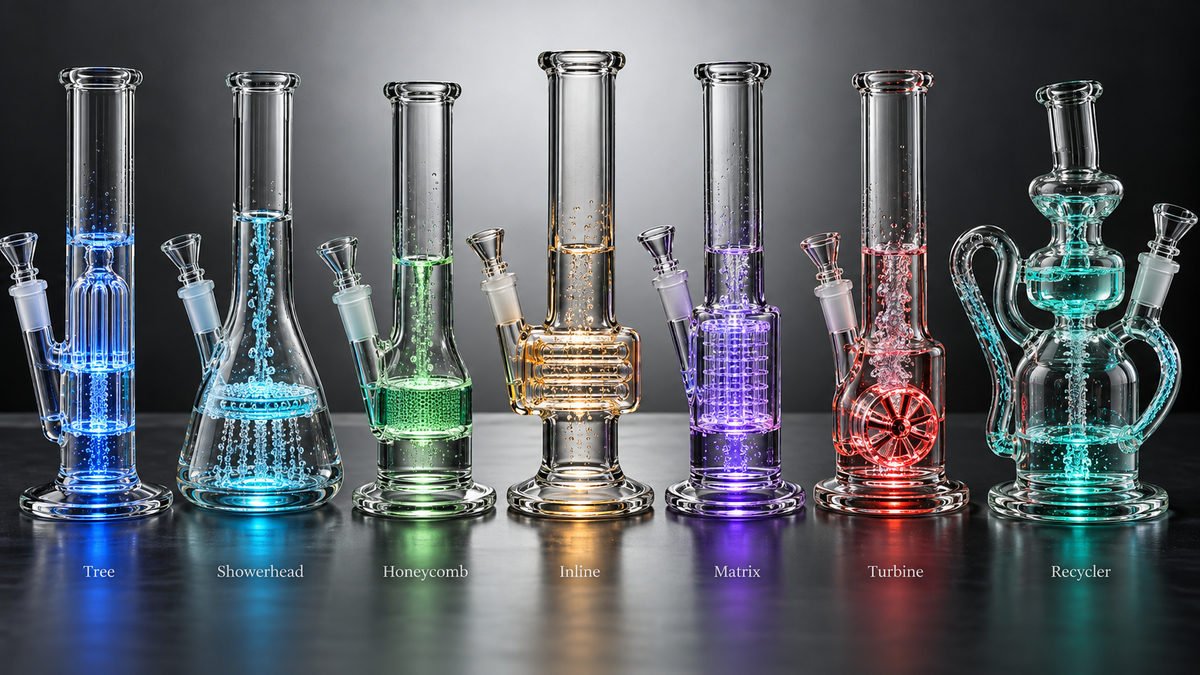
A tree perc uses several vertical arms, each with openings for smoke and water contact. This creates multiple diffusion paths within a relatively compact chamber. Tree percs can offer strong cooling, but their narrow arms often collect residue.
They suit buyers who value dense bubbling and visual movement. However, cleaning each arm may require careful soaking and gentle rinsing. A blocked arm can also create uneven bubbling.
Showerhead perc
A showerhead perc normally features a central tube with a circular, slotted or flared outlet. Smoke spreads evenly before entering the water. This design often balances diffusion, airflow and cleanability effectively.
For many beginners, a showerhead offers a practical starting point. It provides noticeable bubbling without the narrow internal maze found in some advanced percs.
Honeycomb perc
A honeycomb perc is a flat, perforated disc with many small holes. It produces dense bubbling and strong diffusion across the chamber. As a result, the smoke may feel particularly cool and moisturised.
However, the small openings can create higher drag. They may also become difficult to rinse when residue dries inside the disc. Honeycomb designs suit experienced users who accept more maintenance.
Inline perc
An inline perc uses a horizontal tube with slits along its underside. Smoke travels through the tube before dispersing into the water. This design often offers efficient pre-diffusion and relatively open airflow.
Inline percs can work well in both straight-tube and beaker-style bongs. Their main weakness involves resin buildup along the horizontal tube. Regular rinsing helps prevent restricted airflow.
Matrix perc
A matrix perc uses multiple rows of holes or slits across a cylindrical or layered structure. It can produce dense bubbles in several directions. Therefore, matrix designs often prioritise smoothness and visual diffusion.
The trade-off involves cleaning effort and drag. More internal surfaces create more places for residue to settle. Buyers should check whether the chamber allows easy access for soaking and rinsing.
Turbine perc
A turbine perc uses angled slits to create a spinning water and smoke effect. The swirling movement gives the bong a distinctive appearance. It usually offers moderate-to-high diffusion, depending on the number and size of slits.
Some turbine designs feel fairly open, while others create noticeable resistance. Their angled pathways can also make cleaning less straightforward than a simple showerhead.
Recycler bong
A recycler bong uses external or internal loops to cycle water and smoke repeatedly. This extended pathway can provide strong cooling and substantial diffusion. Recyclers often deliver a smooth, airy experience when correctly filled.
However, they usually require more space and careful maintenance. Multiple joints, tubes and chambers can complicate cleaning. They may suit experienced users who want specialised performance rather than maximum simplicity.
| Percolator type | Airflow | Cooling | Cleaning effort | Beginner suitability |
|---|---|---|---|---|
| Tree | Moderate | High | High | Moderate |
| Showerhead | Balanced | Moderate to high | Moderate | High |
| Honeycomb | Moderate to restricted | High | High | Low to moderate |
| Inline | Open to balanced | Moderate | Moderate | High |
| Matrix | Moderate | High | High | Moderate |
| Turbine | Variable | Moderate to high | Moderate to high | Moderate |
| Recycler | Variable | Very high | High | Low to moderate |
A simple showerhead or inline perc usually makes a sensible first purchase. Honeycomb, matrix, turbine and recycler designs may suit experienced users seeking specialised airflow.
Remember that perc labels are not standardised across every manufacturer. Inspect the actual hole pattern, chamber layout, joint quality and available user feedback. The name alone cannot predict performance.
Percolator Bong vs. Regular Bong: Benefits and Drawbacks
A straight-tube bong usually offers direct airflow, compact handling and quick clearing. It also contains fewer internal parts, making cleaning easier. However, it may provide less diffusion and cooling than a comparable percolator bong. Base shape also matters; compare beaker vs straight tube designs.
Beaker bongs offer a wider base, greater water capacity and increased stability. Their larger chamber can provide a cooler-feeling draw, but the extra water may increase splashback risk. They also tend to be less portable than compact straight tubes.
Main percolator bong benefits
- Smoother perceived hits through additional diffusion.
- Cooler smoke with more water contact.
- Distinctive bubbling and airflow characteristics.
- More design choices for different preferences.
- Potentially better comfort for adults sensitive to harsh smoke.
Main percolator bong drawbacks
- Higher prices for complex glasswork.
- More fragile internal structures.
- Greater drag in heavily diffused models.
- More difficult cleaning and maintenance.
- Possible loss of flavour with very dense diffusion.
The main trade-off involves filtration, airflow and maintenance. More diffusion may improve cooling, but it can also increase resistance and cleaning time. Meanwhile, simpler designs often provide stronger airflow and easier care.
Do percolator bongs reduce harshness? They can, but they cannot correct every problem. Poor water levels, overheated material, large loads and dirty glass can still create harsh hits.
Are percolator bongs worth buying? They may suit adults who use a bong regularly, value smoother airflow and maintain glass carefully. A basic bong may offer better value for occasional users or people who prioritise easy cleaning.
Most importantly, construction quality matters more than the number of percs. A stable, well-made single-perc bong may outperform a poorly designed multi-perc model.
How to Choose the Right Percolator Bong
Start by matching the bong to your experience level. Beginners usually benefit from a stable model with one accessible perc. Experienced users may prefer multi-chamber designs after learning their preferred airflow and cleaning tolerance. Use our glass bong buying guide to compare features.
Next, match the size to your routine. Compact models suit portability and limited storage. Medium bongs offer a useful balance, while larger models provide more chamber volume and cooling potential.
Assess airflow before focusing on appearance. Look at perc opening size, the number of slits or holes and the length of the smoke path. A visually complex bong may feel restrictive if its openings are too small.
Consider flavour priorities as well. Lighter diffusion often preserves more character from the material. Dense diffusion usually prioritises cooling and smoothness instead.
Cleaning tolerance should influence the decision. Accessible showerhead and inline designs are generally easier to maintain. Matrix, honeycomb and recycler systems may require more soaking, rinsing and careful inspection.
- Choose borosilicate glass for better resistance to ordinary temperature changes.
- Check the joint fit and downstem design.
- Look for a stable base and comfortable mouthpiece.
- Confirm the bowl size and replacement-part availability.
- Consider storage space before choosing a tall or wide model.
Set a realistic budget that includes cleaning supplies and replacement parts. A cheaper bong may become expensive if its bowl or downstem is difficult to replace. Retailer support can also matter when a delicate component needs changing.
For a first percolator bong, choose a stable medium-sized model with one easy-to-reach showerhead or inline perc. Moderate water volume and straightforward chamber access make setup easier.
Compare models using airflow, diffusion, maintenance, durability, portability and support. Marketing claims matter less than actual geometry, glass quality and practical access.
Water Levels, Cleaning, Maintenance, and Responsible Use
Finding the best water level
Begin with the manufacturer’s guidance, then add enough water to cover the perc openings. Leave enough space for active bubbling without allowing water to reach the mouthpiece. Percs need regular cleaning; follow our bong care and maintenance guide.
Underfilling can reduce diffusion and increase heat. Overfilling may cause bubbling into the mouthpiece, restricted airflow and accidental water inhalation. Therefore, small adjustments work better than filling the chamber quickly.
Assemble the bong and draw gently without a lit bowl. Adjust the water until bubbling looks active but controlled. If water rises sharply, remove a small amount and test again.
Incorrect bubbling may indicate more than a water-level problem. Check for clogged slits, blocked downstems, loose connections, resin buildup and an uneven surface.
Routine cleaning and maintenance
Empty and rinse the bong after use whenever practical. Use a suitable glass-safe cleaning solution and soak removable parts separately. Brushes, swabs and gentle rinsing can help reach perc openings without damaging delicate glass.
Perform a deeper clean regularly according to usage frequency. Clean immediately when residue begins restricting airflow or changing the flavour. Dirty water can undermine airflow, hygiene and the intended performance of the perc.
- Rinse after each use when possible.
- Replace stagnant water before the next session.
- Soak removable parts separately.
- Avoid scraping delicate internal structures.
- Store the bong upright on a stable surface.
- Protect glass from freezing conditions and sudden temperature changes.
Common mistakes include overfilling, underfilling, aggressive pulling and ignoring early resin buildup. Complex chambers are harder to clean because residue can hide inside narrow paths and multiple joints.
Responsible use matters too. Adults should follow local laws and avoid driving or operating equipment while impaired. Keep glass and substances away from children and pets, and consider avoiding shared mouthpieces when appropriate.
Conclusion
Percolator bongs use internal diffusion to divide smoke into bubbles. This increases water contact and often creates cooler, smoother-feeling hits. Tree, showerhead, honeycomb, inline, matrix, turbine and recycler designs each balance airflow, drag, flavour, cooling and maintenance differently.
The best choice balances diffusion with practical cleaning, stable construction, correct water level and experience. Percolator bongs may suit adults who value smoother airflow and accept more involved maintenance. Beginners often benefit most from a simple, accessible single-perc model.
Use this buying checklist when comparing models:
- Perc design and opening pattern.
- Airflow and draw resistance.
- Size, stability and portability.
- Cleaning access and water capacity.
- Budget and replacement parts.
Choose a percolator bong that fits your routine rather than selecting the most complex design. For practical water pipes, glass bongs and care essentials, explore Sweet Puff Australia and compare options that suit your setup, storage space and maintenance habits.

Comment (1)
[…] Water filtration cools and conditions smoke before it reaches the mouthpiece. It can reduce heat and catch some particles, although it does not remove every irritant or eliminate health risks. Learn more in percolator bongs explained. […]