
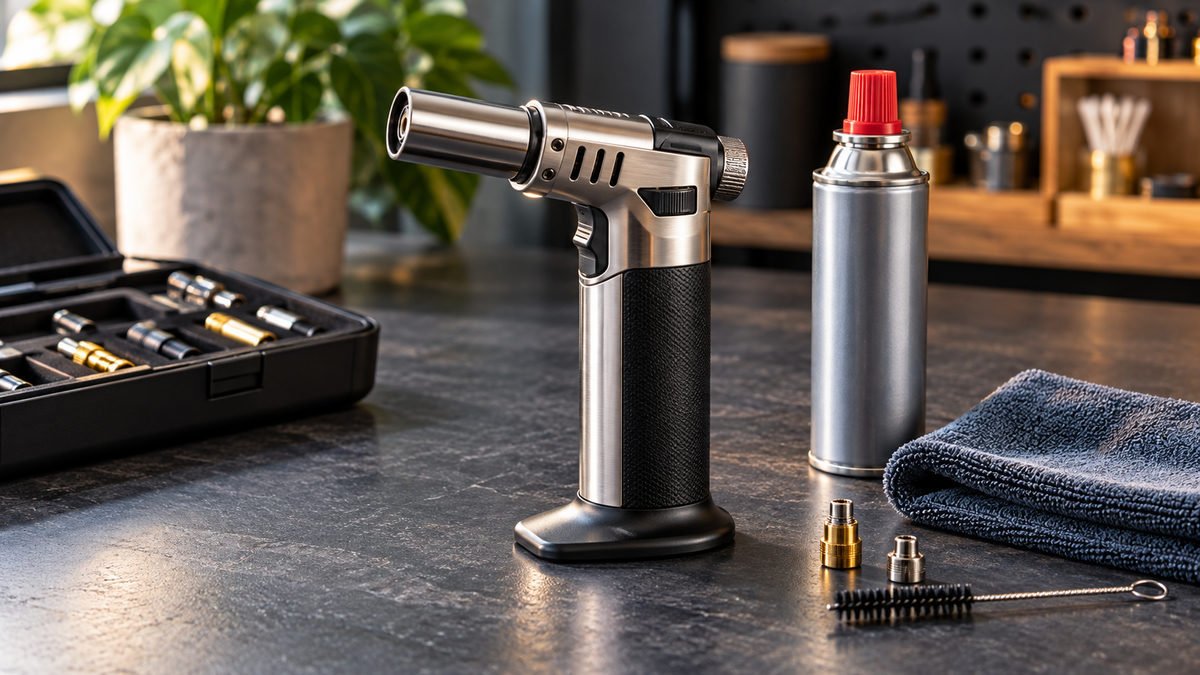
Choosing a butane lighter seems simple until you compare torch flames, soft flames, refill valves, fuel grades, and safety features. Many users struggle with weak flames, clogged jets, failed ignition, unsafe refilling, poor fuel choices, or storage questions.
This beginner-friendly butane lighters guide explains how these lighters work and which style suits each task. You will also learn how to refill, adjust, clean, store, and replace a lighter safely.
Butane Lighters Guide: How They Work and What to Know
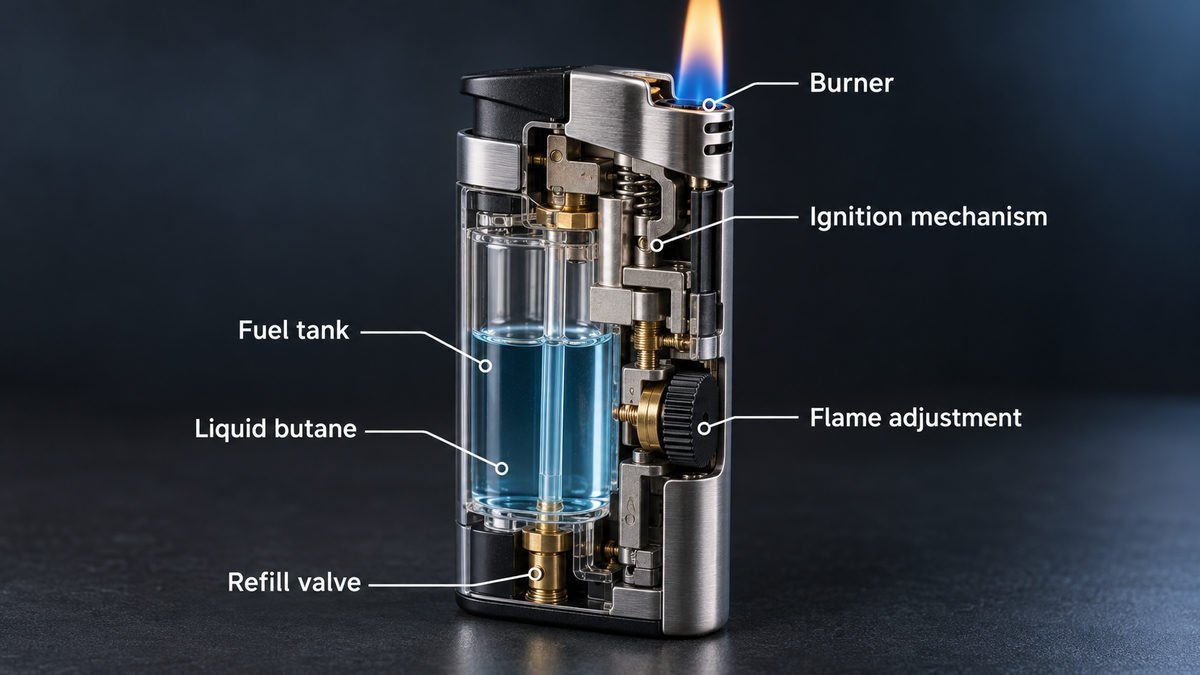
A butane lighter uses pressurised butane as its fuel. Inside the tank, butane stays liquid under pressure. When you open the gas valve, the liquid changes into a flammable gas as it leaves the reservoir.
That gas travels towards the burner or jet. The lighter then creates a spark, which ignites the gas and produces a flame. Most modern models use either a flint wheel or a piezoelectric ignition system.
Main Parts of a Butane Lighter
Although designs vary, most refillable butane lighters include several important parts. Understanding them makes troubleshooting much easier later.
- Fuel reservoir: Holds the liquid butane under pressure.
- Refill valve: Connects to the nozzle on a butane fuel can.
- Flame adjustment wheel: Controls how much gas reaches the burner.
- Gas release valve: Opens when you press the ignition or operating button.
- Burner or jet: Shapes and directs the flame.
- Ignition system: Creates the spark needed to light the gas.
A refillable lighter lets you add fuel when the tank becomes empty. A disposable lighter usually has a sealed fuel supply and should be replaced after it runs out.
Refillable models can create less waste over time. However, they need correct fuel, occasional cleaning, careful storage, and regular inspection.
Temperature affects performance because cold butane produces less pressure. Therefore, a lighter may struggle outdoors during winter or after sitting in a cold bag.
Altitude can also change flame behaviour because air pressure and oxygen levels differ. Strong wind may blow out a soft flame, while poor fuel can clog small jets.
Clean-burning butane offers convenience and usually produces less odour than some older fuel types. However, leaks, incorrect refilling, and damaged seals can create serious fire risks.
For general gas information, you can read the butane overview from Wikipedia. Always follow the lighter manufacturer’s instructions for your specific model.
Types of Butane Lighters and the Best Uses for Each
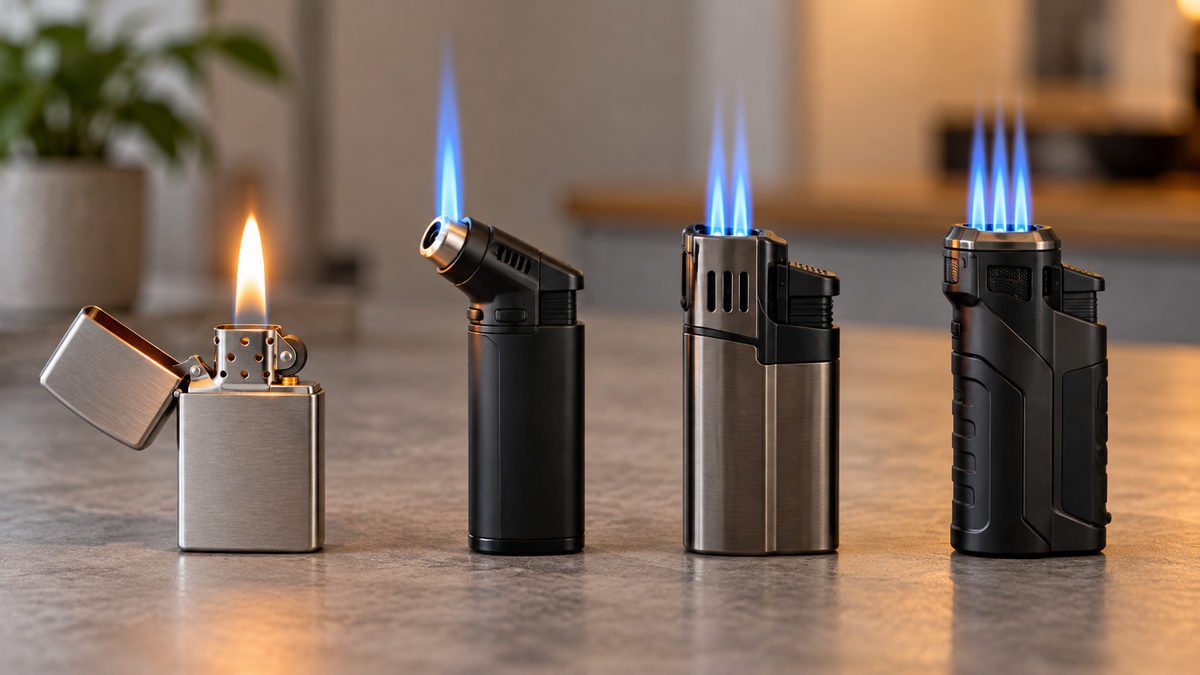
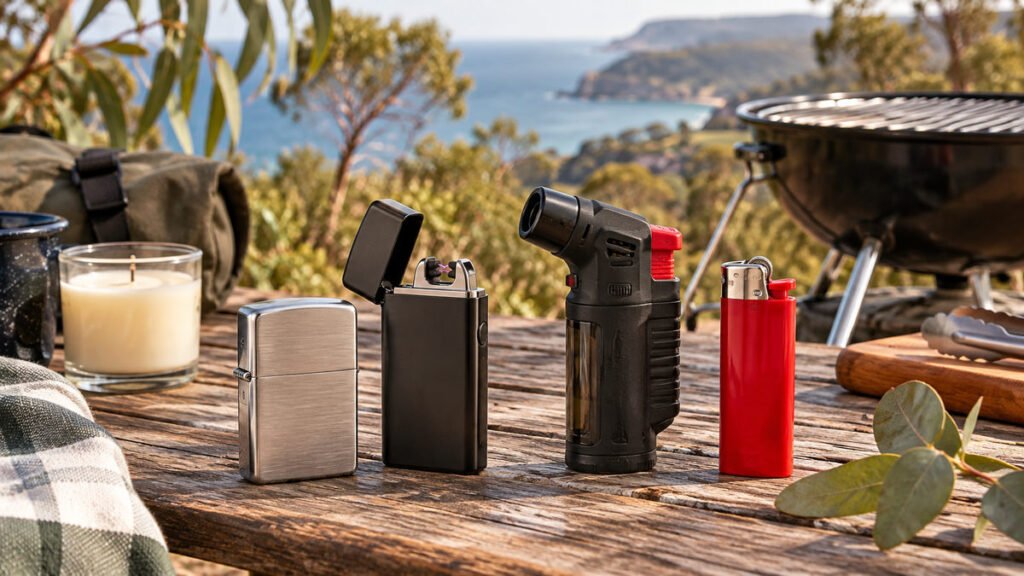
The flame style usually matters more than the lighter’s appearance. A gentle soft flame suits household tasks, while a torch flame handles wind and focused heat better. See our full torch lighter vs regular lighter comparison.
Soft Flame Lighters
A soft flame lighter produces a broad, candle-like flame. It feels familiar and works well for cigarettes, candles, fireplaces, incense, and everyday household use.
These lighters often provide simple controls and comfortable handling. However, their flames can blow out easily in breezy outdoor conditions.
Soft flames also spread heat across a wider area. That makes them useful for gentle lighting, but less suitable for precise heating or windy camping trips.
Torch or Jet Flame Lighters
A torch lighter creates a narrow blue flame with concentrated heat. The jet exits through a small burner and usually performs better around light wind.
For example, cigar smokers often prefer a torch flame because it reaches the tobacco evenly. Campers may also use torch lighters for fire starters, small repairs, and outdoor tasks.
However, windproof does not mean completely wind protected. Strong gusts can still extinguish the flame or make handling unsafe.
Single, Dual, and Triple Flames
A single-flame lighter provides the greatest control and usually uses the least fuel. It also stays compact, making it suitable for everyday carry.
A dual-flame lighter produces more heat across a wider area. Therefore, it can light larger cigars more quickly, although it usually consumes fuel faster.
A triple-flame design provides the broadest heat pattern. It can work well for large cigars and outdoor use, but it may feel heavier and less economical.
| Design | Main advantage | Common drawback | Best suited to |
|---|---|---|---|
| Soft flame | Gentle and familiar flame | Lower wind resistance | Candles, cigarettes, fireplaces |
| Single torch | Focused control | Smaller heating area | Everyday use, cigars, crafts |
| Dual torch | Faster, broader heating | Higher fuel use | Large cigars, outdoor tasks |
| Triple torch | Maximum heat coverage | More bulk and fuel consumption | Large cigars and demanding tasks |
For beginners, a single soft flame or single torch offers the easiest learning curve. Cigar smokers may prefer a dual torch, while campers often value wind resistance.
Home users usually need a soft flame or long-reach utility lighter. Emergency-kit owners should choose a compact, reliable model and store spare fuel separately and safely.
How to Choose the Best Butane Lighter for Your Needs
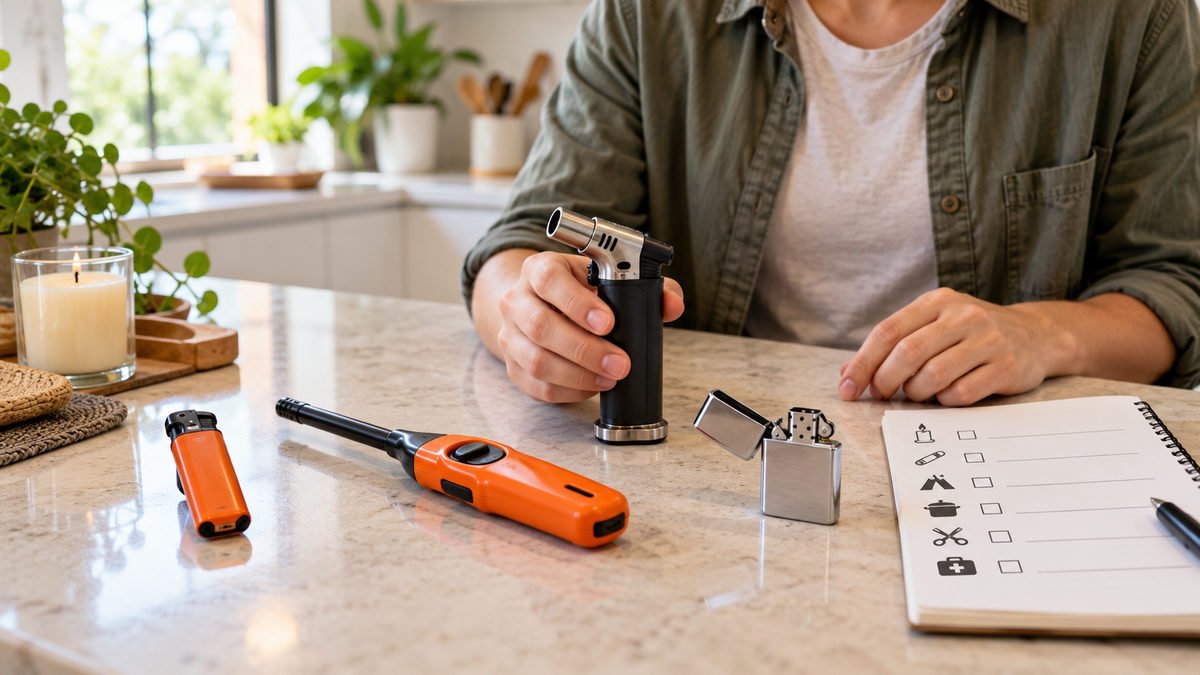
Start by deciding what you will light most often. A lighter for candles has different needs from one used for cigars, camping, cooking, crafts, or emergency preparation.
For example, a soft flame suits candles and fireplaces. A torch model works better for outdoor use, precise heating, and tasks requiring a more concentrated flame.
Features Worth Comparing
Consider the flame type, wind resistance, flame adjustment, fuel capacity, size, weight, and grip. A larger tank may last longer between refills, but it can make the lighter heavier.
Additionally, look for a reliable ignition that activates without excessive force. A visible fuel window helps you avoid unnecessary refilling and makes low fuel easier to identify.
- A sturdy protective cap or cover.
- A secure flame adjustment wheel.
- A well-fitted refill valve.
- A stable base for tabletop use.
- A comfortable, slip-resistant grip.
- A clear fuel level window.
A stable base matters when lighting candles, fireplaces, or camping stoves. It reduces the chance of the lighter tipping while the flame remains active.
Fuel quality also affects reliability. Choose clean, refined butane that matches the lighter’s instructions and uses a compatible nozzle.
Low-quality fuel may contain impurities that block small burner openings. As a result, the lighter may sputter, burn unevenly, or stop igniting.
Budget, Mid-Range, and Premium Choices
Budget lighters can work well for occasional use. However, they may have less accurate flame adjustment, weaker hinges, or limited support.
Mid-range models often provide better construction, clearer fuel windows, and more dependable ignition. They suit regular users who want durability without paying for decorative features.
Premium models may offer stronger materials, improved valves, better seals, and longer warranties. Nevertheless, price alone does not guarantee safer or better performance.
Before buying, check warranty coverage, replacement parts, user feedback, and repair options. A lighter with available seals or burners may remain useful for longer.
Quick Decision Guide
- Best for everyday use: A compact single-flame lighter with adjustable control.
- Best for cigars: A single or dual torch with a broad, even flame.
- Best for camping: A wind-resistant torch with a protective cap.
- Best for windy conditions: A quality jet flame, used with sensible wind protection.
- Best compact option: A small single-flame lighter with a visible fuel window.
How to Refill and Adjust a Butane Lighter Safely
Refilling requires patience and the correct fuel. Work in a well-ventilated area with no candles, cigarettes, stoves, heaters, sparks, or other ignition sources nearby. For detailed steps, read how to refill a butane lighter.
First, let the lighter cool completely. Then inspect it for cracks, dents, loose fittings, damaged seals, or signs of leakage.
Confirm that the fuel can matches the lighter’s instructions. Do not force an incompatible nozzle into the refill valve.
Refilling Steps
- Turn the lighter off and close any protective cover.
- Move the flame adjustment to its lowest setting.
- Hold the lighter upside down.
- Place the fuel nozzle firmly into the refill valve.
- Press down for short, controlled bursts.
- Stop when the manufacturer’s instructions indicate the tank is full.
- Remove the fuel can and check for visible spills.
Do not overfill the reservoir. Excess fuel can leak, create unstable flames, or escape when the lighter warms.
After refilling, wait several minutes before testing the lighter. This allows excess liquid and vapour to settle and dissipate safely.
Purging Trapped Air
Air trapped inside the tank can cause sputtering, weak flames, delayed ignition, or complete failure. Purging removes unwanted air before you add fresh fuel.
Only purge a cool lighter in a ventilated area away from ignition sources. Use the small tool recommended by the manufacturer on the refill valve.
Press the valve carefully until the remaining pressure releases. Stop immediately if the lighter shows damage, unusual odour, or signs of uncontrolled leakage.
After purging, refill the lighter using the normal procedure. Again, allow several minutes before attempting ignition.
Adjusting the Flame
Set the flame to a low level before testing. Ignite the lighter briefly, then increase the flame gradually if necessary.
Short tests help you find a useful setting without creating unnecessary heat. Keep your fingers, clothing, paper, and other flammable materials away from the flame.
Never smoke while refilling or test the lighter near spilled fuel. If fuel sprays onto a surface, move away from ignition sources and ventilate the area.
Butane Lighter Troubleshooting, Cleaning, and Maintenance
A lighter may fail for several simple reasons. The tank could be empty, the flame setting too low, or air may remain inside after refilling. Follow our lighter maintenance tips.
Cold fuel, clogged jets, unsuitable butane, weak ignition, and damaged seals can also cause trouble. Therefore, check the basic causes before assuming the lighter has failed permanently.
When the Lighter Hisses but Does Not Ignite
A hissing sound usually means gas is escaping, but the ignition system may not create a strong spark. Check whether you can see or hear the spark during a brief activation.
Excess gas can also prevent immediate ignition. Close the lighter, move it away from ignition sources, and allow vapour to disperse.
Inspect the burner for visible debris, but never insert sharp objects deep into the jet. A persistent hiss without ignition may indicate a leak or damaged valve.
Common Problems and Safe Checks
| Symptom | Likely cause | Safe check | Recommended action |
|---|---|---|---|
| No flame | Empty tank or weak ignition | Check fuel window and spark | Refill or replace the lighter |
| Weak flame | Low setting, cold fuel, or blocked jet | Warm naturally and inspect the setting | Adjust gradually and clean externally |
| Sputtering | Trapped air or poor fuel | Check recent refill history | Purge and refill according to instructions |
| Delayed ignition | Excess gas or dirty burner | Test briefly in a safe area | Stop use if the delay continues |
| Flame too high | Adjustment set too high | Turn the setting down | Use short tests and inspect the control |
| Constant hissing | Leak or damaged valve | Move away from ignition sources | Stop using and replace the lighter |
Cleaning and Maintenance
Clean the burner and exterior gently according to the manufacturer’s instructions. A soft brush or dry cotton swab can remove visible debris around the burner.
Do not pour water or aggressive chemicals inside the mechanism. Moisture and solvents can damage seals, ignition parts, or fuel controls.
- Inspect the tank and casing for cracks or dents.
- Test the ignition before important use.
- Clear visible debris around the burner.
- Check the refill valve for damage or leakage.
- Monitor flame height and colour.
- Store the lighter and fuel correctly.
Repair may be reasonable when the issue involves a replaceable part and the manufacturer supports servicing. However, persistent leaks, tank damage, worn seals, or unreliable ignition justify replacement.
Butane Lighter Safety, Storage, and Transportation
Keep every flame away from skin, clothing, paper, aerosols, fuels, curtains, grease, and combustible vapours. Use a lighter only when you have a clear, stable area. Read our guide to lighter safety and storage.
Indoor use requires ventilation and supervision. Place the lighter on a stable surface, and keep children and pets away from the flame.
Never use a damaged lighter, even if it still ignites. A cracked casing, leaking valve, broken cap, or uncontrolled flame can create a fire risk.
Safe Storage
Store lighters and butane fuel in a cool, dry, well-ventilated location. Keep them away from sunlight, heaters, sparks, open flames, and children.
Do not leave a lighter or fuel can inside a hot vehicle. Heat can increase internal pressure and cause leaks or container failure.
Store fuel containers upright where possible, with their caps secure. Follow the product label because storage temperatures and disposal requirements can differ.
Australian safety guidance recommends keeping lighters away from children. You can read the ACCC lighter safety guidance for additional information.
Cold Weather, Altitude, and Travel
Cold weather can reduce gas pressure and produce a smaller flame. Let the lighter reach room temperature naturally before testing it.
Altitude can also change flame behaviour. Follow the manufacturer’s instructions, and never compensate with unsafe flame settings or excessive refilling.
Transportation rules vary between airlines, airports, carriers, states, and countries. Before travelling, check current requirements with your airline and relevant authorities.
For Australian air travel, review the Civil Aviation Safety Authority guidance on banned items. Some torch lighters and butane fuel containers may face restrictions.
How Long Does a Butane Lighter Last?
Fuel duration depends on the tank size, flame height, ignition frequency, and flame design. A large torch flame usually consumes fuel faster than a small soft flame.
The lighter’s overall lifespan depends on seals, valves, ignition parts, casing quality, and maintenance. Regular refilling does not repair worn or damaged components.
Replace the lighter after repeated leaks, casing damage, unreliable ignition, worn seals, or unsafe flame control. Do not casually dismantle a pressurised lighter.
Conclusion
The right butane lighter depends on its purpose, flame type, wind resistance, construction, fuel capacity, and reliability. Soft flames suit household lighting, while torch flames provide focused heat and better outdoor performance.
Safe refilling, air purging, gradual flame adjustment, gentle cleaning, correct storage, and regular inspection can extend useful life. However, persistent leaks, damaged tanks, or unreliable ignition mean you should stop using the lighter.
Use the buying criteria and maintenance checklist in this guide to choose a suitable model. Then review the manufacturer’s instructions and local safety requirements before using or transporting it.
For related smoking accessories and lighter options, visit Sweet Puff Australia. Compare products carefully, choose equipment suited to your routine, and prioritise safe handling from the first use.
Comment (1)
[…] A lighter may fail because the tank is empty, air has entered the fuel system, or the nozzle has become blocked. Other causes include a low flame setting, worn flint, damaged piezo igniter, wet wick, poor fuel, or a faulty seal. Learn more in our butane lighters guide. […]