
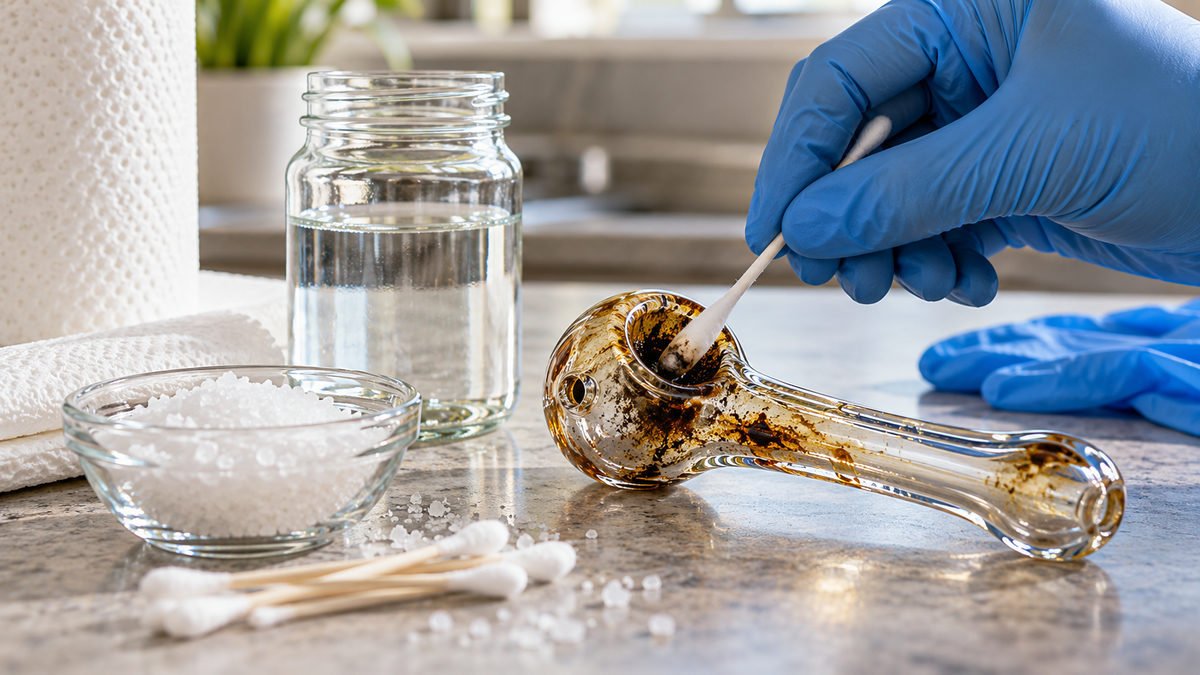
Does your glass pipe have a dark resin coating, an unpleasant odour, or restricted airflow? Residue builds quickly, making a pipe look dirty and harder to use. Incorrect cleaning methods can also crack the glass or leave harmful cleaner behind.
Learning how to clean a glass pipe helps remove resin, odour, ash, and stubborn buildup safely. This guide covers alcohol, salt, alcohol-free options, screen cleaning, drying, and ongoing maintenance. Therefore, you can choose a method that suits your pipe and cleaning supplies.
Why Regular Glass Pipe Cleaning Matters
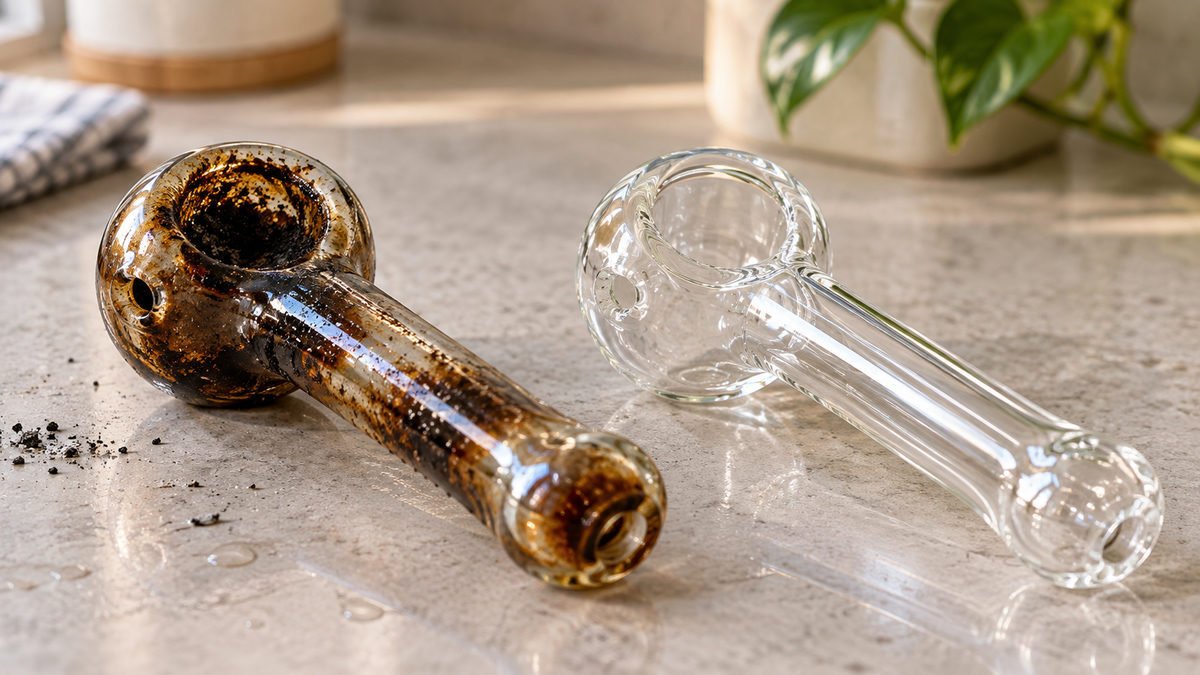
Resin, tar, ash, and moisture collect inside the bowl, stem, and small air openings. Each use can leave behind a thin layer of sticky residue. Over time, that layer becomes harder, darker, and more difficult to remove.
Regular cleaning improves hygiene and helps maintain smoother airflow. Additionally, a clean pipe usually produces less lingering odour around the glass. Clearer glass also makes cracks, chips, and blocked openings easier to spot.
Frequent light cleaning prevents residue from hardening inside narrow sections. For example, a quick rinse and gentle wipe can reduce the need for aggressive scrubbing later. Consequently, routine care often takes less time than occasional deep cleaning.
Always let the pipe cool completely before handling it. Remove loose ash and debris before adding water or cleaning solution. Sudden temperature changes can stress glass, especially when it moves from heat to cold water.
Your cleaning schedule depends on several practical factors. Heavy use, thick residue, frequent sharing, and restricted airflow all require more regular cleaning. Occasional personal use may require less frequent deep cleaning, but visible buildup remains the best guide.
Shared pipes deserve extra attention because residue and moisture can accumulate faster. However, cleaning cannot replace sensible hygiene practices between users. Keep the pipe dry, store it safely, and inspect it before every cleaning session.
Glass Pipe Cleaning Supplies and Safety Preparations
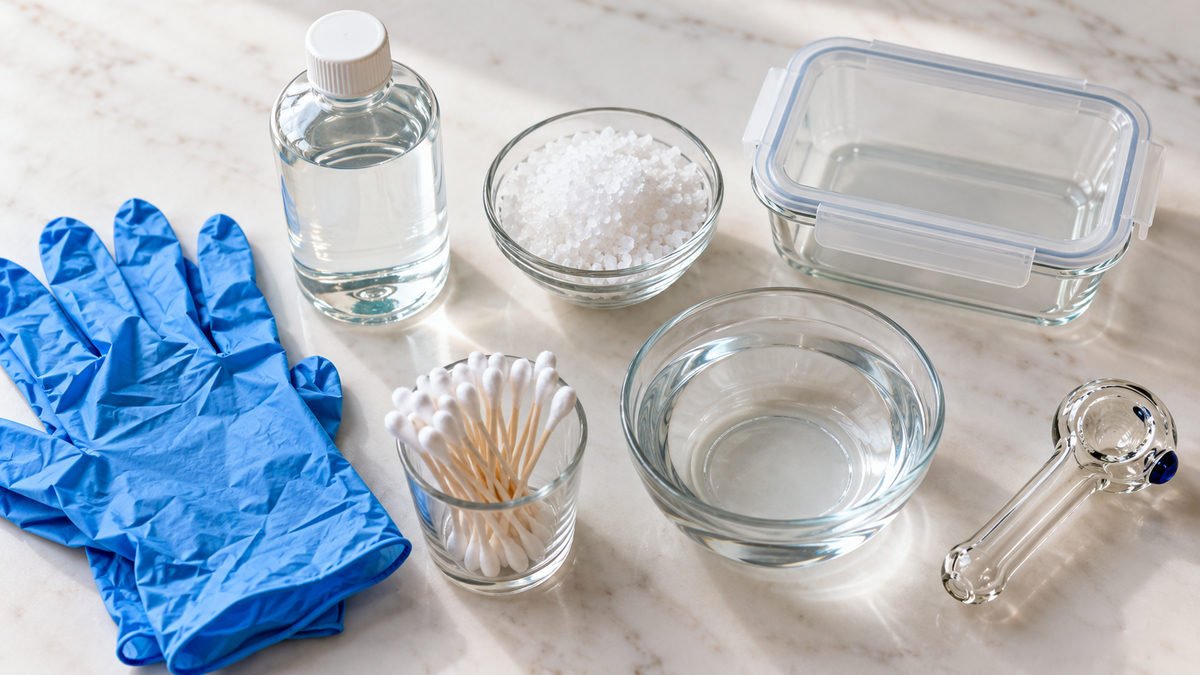
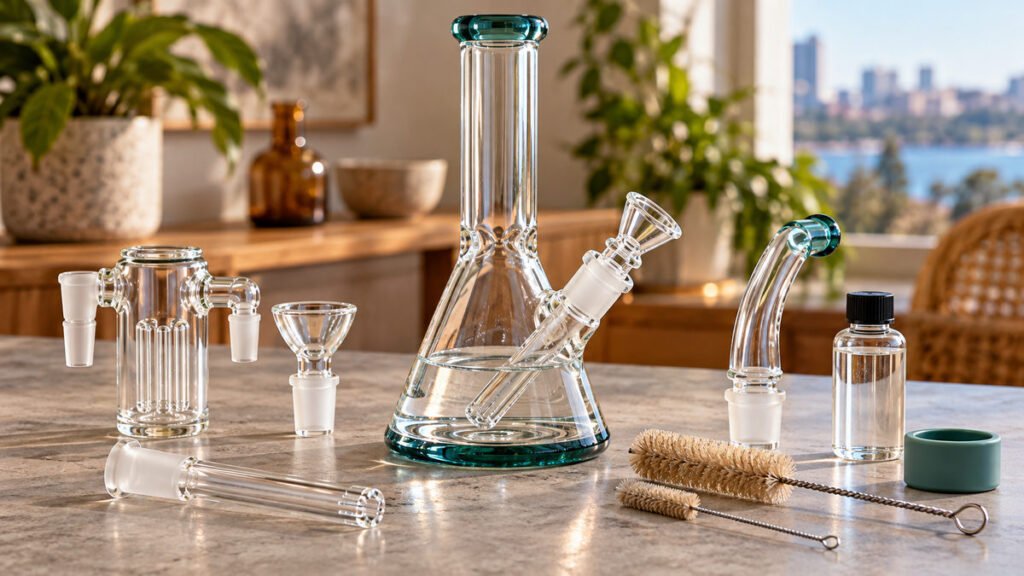
Prepare your supplies before touching the pipe. A simple setup prevents spills and reduces the temptation to use unsafe household chemicals. Gather the following items: Many bong cleaning accessories work for pipes too.
- Isopropyl alcohol suitable for cleaning
- Coarse salt
- Disposable or reusable protective gloves
- A sealable container with a secure lid
- Paper towels or an old clean towel
- Cotton swabs
- Flexible pipe cleaners
- Warm water
Coarse salt works better than fine salt because its larger grains provide gentle mechanical abrasion. The grains help loosen sticky residue as you rotate the container. Fine salt can dissolve too quickly and may provide less scrubbing action.
For an alcohol-free setup, use warm water, mild dish soap, baking soda, cotton swabs, pipe cleaners, and a suitable container. Alcohol-free methods generally need more time and repeated treatment. They can still help with light residue and surface haze.
Choose a container that cleaning liquid will not damage. It must also fit the pipe without forcing the glass against the sides. Most importantly, the container should allow enough liquid to cover all resin-coated areas.
Work in a well-ventilated area with a stable, protected surface. Keep isopropyl alcohol away from flames, sparks, cigarettes, hot appliances, and direct heat. For broader chemical handling advice, review chemical safety guidance from Safe Work Australia.
Wear gloves to protect your hands from resin and cleaning liquid. Place paper towels beneath the container to catch drips. Additionally, keep the work area away from children, pets, food, and drink.
Never mix cleaning chemicals. Avoid bleach, ammonia, acetone, drain cleaner, abrasive powders, and fragranced household cleaners. These products can damage glass, create irritating fumes, or leave unwanted residues inside the pipe.
How to Clean a Glass Pipe: Step-by-Step Method
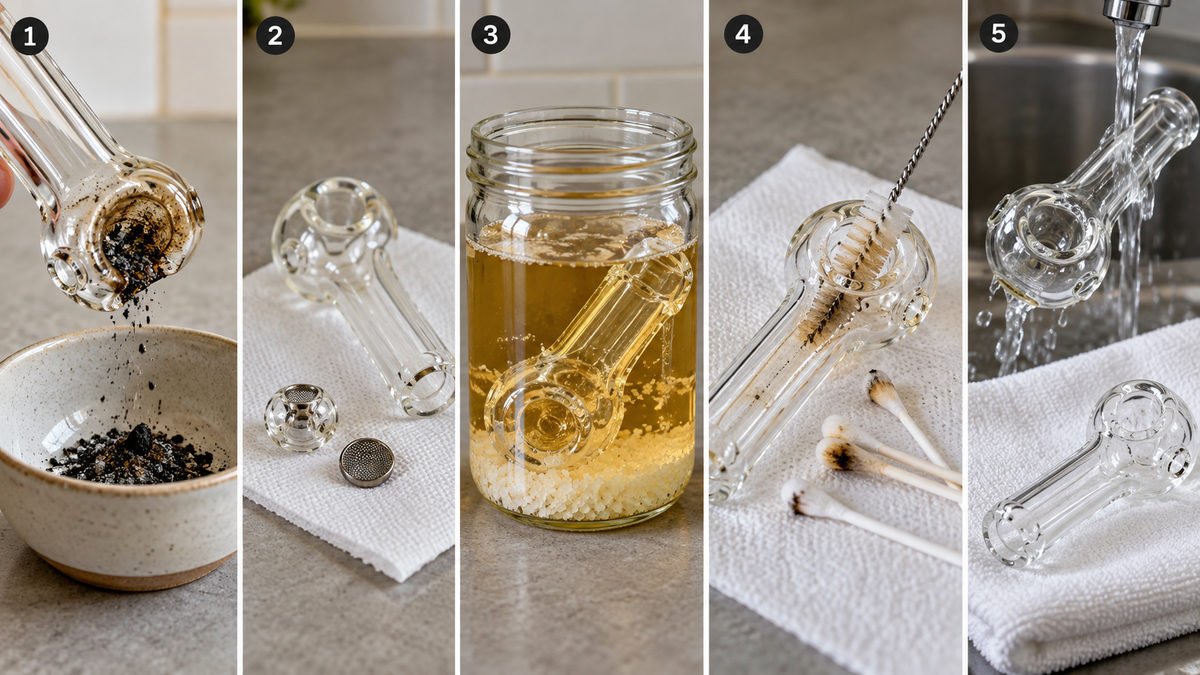
Step 1: Let the pipe cool completely
Allow the pipe to cool fully before cleaning. Heat trapped inside the glass can make cold or warm water dangerous. Therefore, wait until the pipe feels completely cool to the touch.
Empty loose ash and debris into appropriate household waste. Do not scrape aggressively while the glass remains warm. Loose material should come away easily with gentle tapping or turning.
Step 2: Remove detachable parts
Remove detachable screens or removable parts whenever possible. Set them aside for separate cleaning in a suitable container. Keep small parts together so they do not disappear during rinsing.
Do not force a screen, mouthpiece, or removable section from the glass. If a part feels stuck, soak the pipe first. Gentle treatment helps prevent chips around small openings.
Step 3: Add the pipe and isopropyl alcohol
Place the pipe inside a sealable container. Add enough isopropyl alcohol to cover the resin-coated bowl, stem, and openings.
You do not need to fill the entire container unnecessarily. Use enough liquid to reach the affected areas while leaving room for safe movement. Check that the pipe does not press against the container walls.
Step 4: Add coarse salt
Add a small amount of coarse salt to the alcohol. Close the container securely before moving it. A tight lid helps prevent spills and limits vapour escaping into the room.
Gently shake or rotate the container so the salt reaches the bowl and stem. Use controlled movement instead of forceful shaking. Glass can chip if it repeatedly strikes the container.
Step 5: Let the alcohol and salt work
Salt helps loosen residue through controlled mechanical abrasion. Meanwhile, isopropyl alcohol helps dissolve oily buildup and soften hardened resin. Together, they reach areas that cotton swabs cannot clean easily.
Do not push salt into openings with a rigid tool. Allow the liquid and gentle movement to loosen the material naturally. This approach reduces pressure on narrow glass sections.
Step 6: Soak the pipe
Soak a lightly soiled pipe for approximately 30 to 60 minutes. Rotate the container occasionally if residue remains around the bowl or stem.
Heavily coated pipes may need several hours or an overnight soak when appropriate. However, inspect the glass first for cracks or fragile sections. Never leave a damaged pipe unattended in cleaning liquid.
Step 7: Clean small openings
After soaking, remove the pipe carefully and work through the openings. Use cotton swabs for the bowl, air holes, and outer surfaces. Use flexible pipe cleaners for longer stems and narrow passages.
Move each tool gently and steadily. Do not force a blocked opening. If the residue resists, return the pipe to the solution for more soaking.
Step 8: Repeat when necessary
Repeat the soak if stubborn resin remains. Replace the solution when it becomes dark, cloudy, or saturated with residue. Fresh alcohol can work more effectively on areas that remain sticky.
Alternate soaking with gentle swabbing instead of increasing pressure. Therefore, you reduce the risk of scratching, chipping, or stressing the glass. Several mild cycles usually work better than one aggressive attempt.
Step 9: Rinse with warm water
Rinse the pipe thoroughly with warm, not scalding, water. Continue rinsing until no alcohol, salt, soap, or loosened residue remains.
Do not pour boiling water into cold glass. Sudden temperature changes can cause thermal shock and cracking. Hold the pipe securely while keeping water pressure moderate.
Step 10: Inspect and dry completely
Inspect the pipe against a light source. Look for remaining resin, cloudy film, blocked openings, chips, or hairline cracks.
Place the clean pipe on a fresh towel and let it air-dry completely. Drying may take several hours, depending on the pipe’s shape and airflow. Never use the pipe while alcohol, water, or cleaner remains inside.
Alternative Ways to Clean a Glass Pipe Without Alcohol
Alcohol-free cleaning can suit people who prefer household alternatives. However, these methods may require more time and repeated treatment. Hardened, tar-like residue often responds more slowly without a solvent. The same ideas apply when you clean a water pipe.
Warm water and dish soap
Soak the pipe in warm water with a small amount of mild dish soap. Allow the solution to soften residue before using cotton swabs or flexible pipe cleaners.
Work carefully around the bowl, stem, and air holes. Additionally, change the soapy water when it becomes cloudy or dirty. Repeat the soak if sticky material remains.
Baking soda paste
For exterior haze or light surface residue, mix baking soda with a small amount of warm water. Apply the paste gently with a soft cloth or cotton swab.
Avoid excessive pressure, especially around thin glass and decorative sections. Baking soda may help with surface film, but it will not always dissolve thick internal resin. Rinse the pipe thoroughly afterwards.
Commercial glass pipe cleaner
You can use a commercially formulated glass pipe cleaner when its label confirms suitability. Check that the product suits glass and explains how to rinse it safely.
Follow the label instructions carefully. Do not assume a cleaner suits every material, coating, screen, or removable part. Keep the product away from heat, children, pets, and food-preparation areas.
Boiling water is not recommended for glass pipe cleaning. Sudden temperature changes can create thermal shock and cause cracking. Always use comfortably warm water instead.
Rinse alcohol-free solutions until no soap, baking soda, or cleaner residue remains. Dry the pipe fully before use. Several cleaning cycles may be necessary when the buildup is thick.
Cleaning Screens, Openings, Odor, and Stubborn Resin
Cleaning pipe screens
Remove screens carefully when the design allows it. Soak compatible screens in isopropyl alcohol, then brush away loosened residue with a soft brush. The right bong maintenance tools help with narrow openings.
Rinse the screen thoroughly with warm water. Let it dry completely before reinstalling it. A damp screen can trap moisture and encourage fresh residue to stick.
Clearing clogged openings
Soak clogged sections before attempting to clear them. Use a wooden pick, cotton swab, or flexible pipe cleaner for softened material.
Never force a rigid metal object through the glass. Metal tools can chip edges, scratch surfaces, or apply uneven pressure. If the opening remains blocked, repeat the soak instead.
Removing stubborn resin
For stubborn resin, repeat the salt-and-alcohol soak. Refresh the solution when it becomes saturated or heavily discoloured.
Alternate soaking with gentle swabbing rather than applying more pressure. Therefore, you can gradually remove buildup while reducing stress on narrow glass sections.
Fixing cloudy glass and lingering odour
Cloudy glass may contain mineral film, soap residue, or remaining resin. Rinse the pipe again with warm water and inspect it against a bright light.
For persistent odour, wash every surface and rinse repeatedly. Then place the pipe in a well-ventilated area until it dries completely. Drying may take several hours or overnight, depending on its shape and remaining moisture.
- Cloudy glass: rinse again and check for mineral film or soap.
- Clogged stems: soak longer before using a flexible cleaner.
- Lingering smell: repeat washing and extend the drying time.
- Sticky residue: refresh the solution and repeat gentle soaking.
- Blocked screens: clean separately, rinse fully, and dry completely.
Glass Pipe Maintenance, Cleaning Frequency, and Safe Disposal
A quick rinse or wipe can help after regular use when appropriate. Deep-clean the pipe whenever visible residue, restricted airflow, or odour develops. Own a bubbler too? Read how to clean a bubbler.
Heavy use and shared pipes usually need more frequent cleaning. Occasional personal use may need less frequent deep cleaning. However, visible buildup should guide your routine more than a fixed calendar.
Simple prevention keeps residue from building inside the glass pipe. Empty ash promptly, keep the pipe dry between uses, and avoid overfilling the bowl.
- Store the pipe in a protective case.
- Clean small openings before residue hardens.
- Keep moisture from sitting inside the stem.
- Inspect the glass regularly for chips or cracks.
- Use a stable surface during cleaning and drying.
Routine maintenance helps keep airflow more consistent. It also reduces the need for aggressive scrubbing and long soaking sessions. Additionally, clean glass makes damage easier to notice.
Let solid resin cool before placing it in sealed household waste, following local disposal rules. Do not pour alcohol, resin slurry, or concentrated cleaning solution down a drain.
Allow liquids to evaporate only where legal and safe, or follow local hazardous-waste guidance. Keep used cleaning solution away from children, pets, flames, drains, and food-preparation areas.
Conclusion
The easiest glass pipe cleaning method combines isopropyl alcohol, coarse salt, soaking, gentle agitation, warm-water rinsing, and complete air-drying. Alcohol-free options remain available, but they may take longer and require several cleaning cycles.
Most importantly, avoid sudden temperature changes, harsh chemicals, rigid metal tools, and excessive force. Gather your supplies, choose the method that suits your needs, and create a regular routine before resin and odour become difficult to remove.
For practical pipe care and related accessories, explore Sweet Puff Australia. Keeping your glass clean helps protect its appearance, airflow, and everyday usability.






Comments (2)
[…] Residue can restrict airflow and change the flavour of legal dry herbs. It may also create harsher draws, unpleasant odours, and hygiene concerns. In fact, a clean pipe usually feels easier to use and simpler to inspect. For more detail, read how to clean a glass pipe. […]
[…] Regular cleaning keeps a glass pipe easier to inspect and use. Start by allowing the pipe to cool fully. Then rinse it with warm water before using an appropriate glass-cleaning solution and suitable tools. Follow our guide on how to clean a glass pipe. […]