
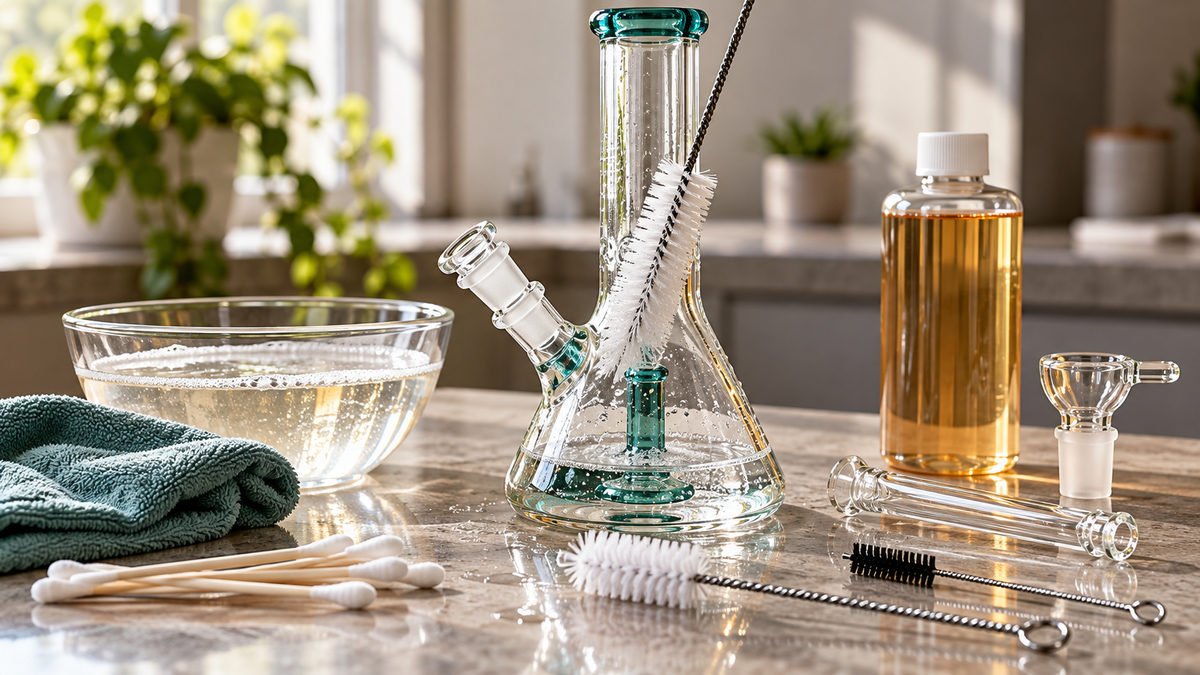
Is your bong developing cloudy glass, restricted airflow, or stubborn resin buildup? The right bong maintenance tools can make cleaning faster, safer, and far more thorough. Without them, glass may scratch, parts can wear early, and residue can harden inside difficult passages.
This guide explains which brushes, cleaning plugs, solutions, replacement parts, and care habits help protect your bong. You will also learn how to clean each component safely, remove stubborn resin, and store your equipment correctly.
1. Why Regular Bong Maintenance Matters
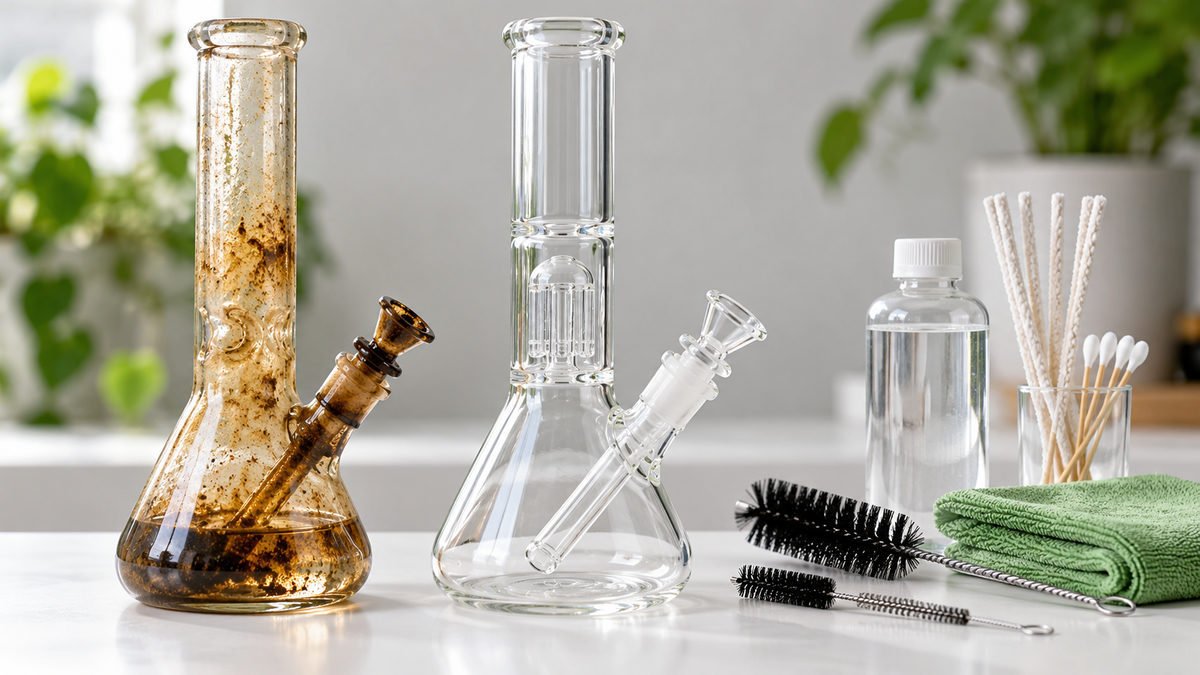
Regular maintenance keeps your bong cleaner, fresher, and easier to use. However, it also protects airflow by preventing resin from narrowing the chamber, downstem, bowl, and percolator. For the full routine, see our bong care and maintenance guide.
Clean glass can improve the overall experience because stale water, residue, and trapped particles no longer affect the airpath. Additionally, routine care helps preserve accessories, seals, screens, and removable joints.
Daily users usually need a simple rinse after every session. Meanwhile, weekly users can rinse after use and complete a deeper clean every one or two weeks.
Occasional users should still empty the water after each use. Therefore, clean the bong before storage, even if it only saw limited use.
- After each use: Empty dirty water and rinse the chamber with warm water.
- Every week: Clean frequently used bongs with a suitable solution and brushes.
- When buildup appears: Soak removable parts and inspect narrow passages.
- Before storage: Dry every component completely and store the bong upright.
Regular cleaning stops resin from hardening into thick, difficult layers. In fact, a short rinse often prevents hours of later scrubbing.
Common mistakes can still cause damage. Excessive force may crack thin glass, while sudden temperature changes can create thermal shock.
Furthermore, unsuitable household tools may scratch surfaces or become trapped inside small openings. Neglecting removable parts also allows odours, residue, and leaks to develop unnoticed.
2. Essential Bong Maintenance Tools and Accessories
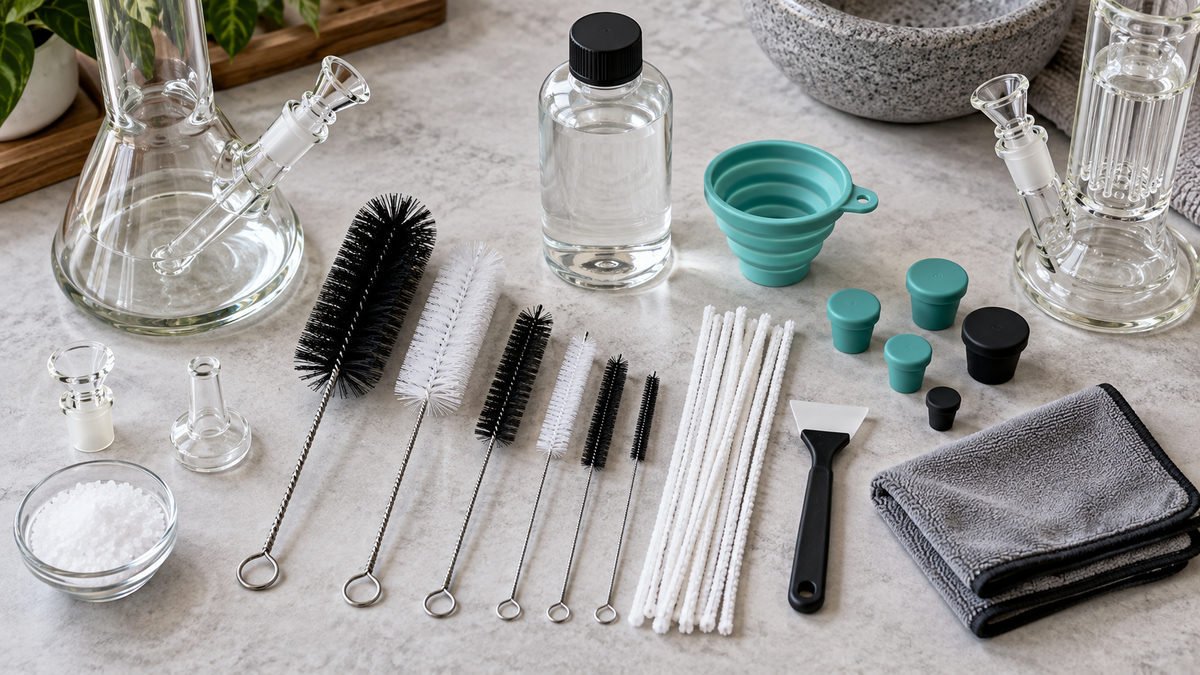
A complete cleaning setup should match your bong’s size, shape, joint design, and internal features. The best bong maintenance tools reach difficult areas without forcing or scratching the glass. See our list of the best bong cleaning accessories.
Brushes for Chambers and Narrow Passages
Long-handled bong brushes work well inside large chambers and straight tubes. Choose soft or medium-soft bristles that remove residue without damaging the glass.
Narrow downstem brushes reach internal channels and smaller openings. Additionally, flexible percolator brushes can bend through complex chambers and reach several angles.
Soft-bristle bong cleaning brushes suit delicate glass and frequent cleaning. However, avoid brushes with exposed metal tips around thin percolator arms.
Pipe Cleaners and Detail Tools
Pipe cleaners help clean bowl channels, downstems, mouthpieces, and other narrow openings. Their flexible shape makes them useful when a standard brush cannot pass through.
Detail tools can remove loose residue around joints and airpath openings. Therefore, choose tools with smooth edges and avoid forcing them through fragile glass.
Cleaning Plugs
Bong cleaning plugs seal the mouthpiece, downstem opening, and other ports during cleaning. This seal makes soaking and gentle shaking more controlled.
Silicone plugs usually provide a flexible fit across different opening sizes. Moreover, they reduce spills and help the cleaning solution contact more of the internal surface.
Scrapers and Resin Removers
Use non-abrasive scrapers only where hardened residue sits on a sturdy, accessible surface. Plastic or silicone tools provide more protection than metal picks.
Scraping should remain gentle and limited. In contrast, soaking often removes resin more safely than applying pressure near thin glass.
Microfibre Cloths
Microfibre cloths remove fingerprints, water spots, and exterior residue without leaving heavy lint. They also help dry joints and polished surfaces after rinsing.
Additionally, a clean cloth prevents fresh dust from sticking to damp glass. Use separate cloths for cleaning chemicals and final drying.
Building a Complete Maintenance Kit
Reusable bong cleaning tools offer better value for regular users. Washable brushes, durable silicone plugs, and sturdy detail tools can serve through many cleaning cycles.
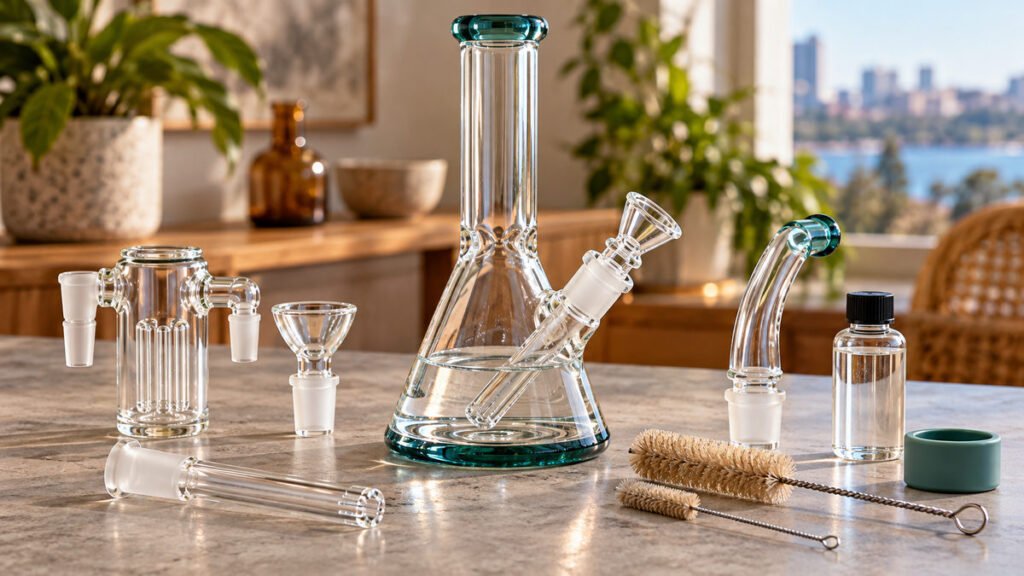
A practical kit should include:
- One long-handled chamber brush.
- One narrow downstem brush.
- Flexible brushes or pipe cleaners for percolators.
- Cleaning plugs for the main openings.
- A non-abrasive scraper or resin remover.
- A suitable cleaning solution and coarse salt.
- Microfibre cloths for drying and polishing.
- Compatible replacement screens, seals, or grommets.
3. Choosing the Best Bong Cleaning Kit and Solutions
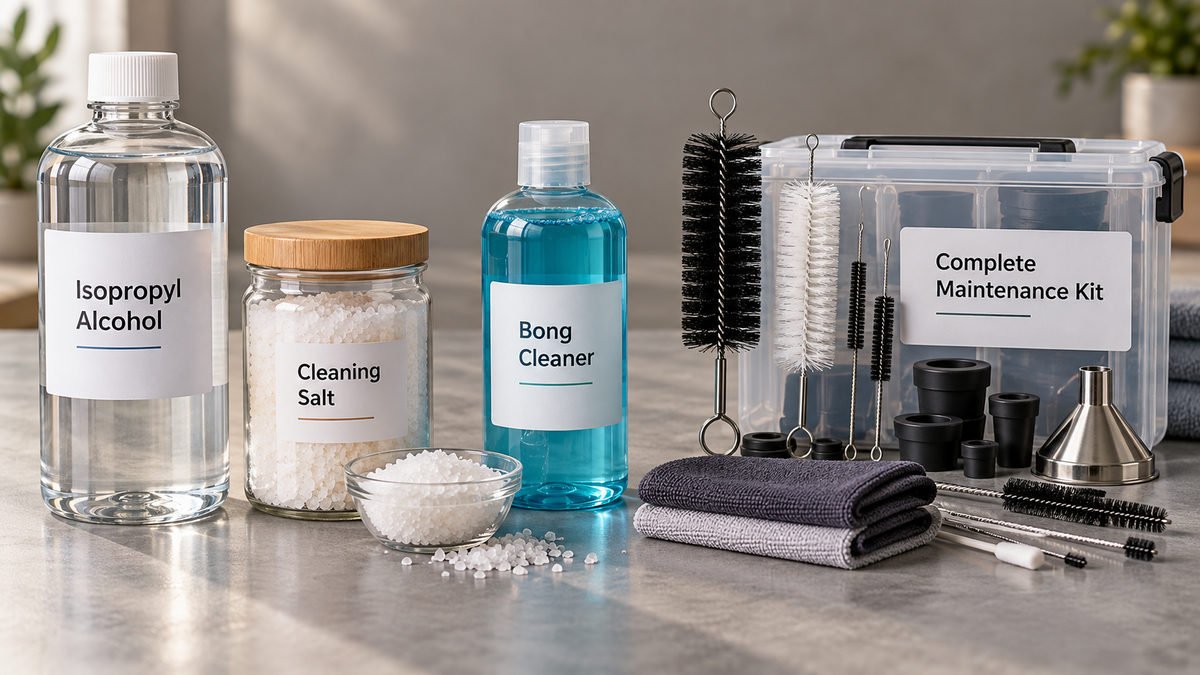
Individual tools work well when you already understand your bong’s design. However, a complete bong maintenance kit offers convenience when you need brushes, plugs, cloths, and accessories together.
Complete kits can also reduce compatibility problems because their parts often work as a system. Individual purchases may cost less initially, especially when you only need one replacement brush.
Isopropyl alcohol remains a common choice for dissolving resin. Use it in a ventilated area, keep it away from flames, and follow the product label carefully.
For chemical safety information, consult the PubChem information on isopropyl alcohol. Additionally, never mix cleaning chemicals unless the manufacturer specifically allows it.
Coarse salt provides gentle abrasive action when combined with a suitable liquid. It can help loosen film inside larger chambers, but excessive force may still damage delicate glass.
Warm water helps loosen fresh residue and rinse away cleaning solution. Nevertheless, warm water alone may not remove hardened resin or thick deposits.
Specialised bong cleaning solutions may suit difficult percolators, strong buildup, or users who prefer a ready-to-use formula. Some formulas also reduce odour or rinse more easily.
When comparing products, consider:
- Cleaning strength and suitability for glass.
- Odour during use and after rinsing.
- Residue left behind after cleaning.
- Rinsing time and ease of use.
- Reusable packaging or refill options.
- Brush and plug durability.
- Total cost per cleaning session.
Purpose-built tools usually offer better reach and safer materials than random household supplies. They also reduce the risk of scratching glass or snapping inside a narrow passage.
4. How to Clean a Bong Safely Step by Step
Start by preparing a ventilated workspace with towels, gloves, cleaning solution, brushes, plugs, and a safe area for loose glass parts. Keep the work surface stable and free from clutter. Follow our guide on how to clean a water pipe.
Additionally, keep alcohol-based cleaners far from candles, lighters, heaters, and other ignition sources. Wear protective gloves if the solution may irritate your skin.
Disassemble and Rinse the Parts
Remove the bowl, downstem, screens, clips, grommets, and O-rings carefully. Identify the chamber, mouthpiece, joints, and percolator before cleaning.
Rinse removable parts with warm, not boiling, water. Therefore, you loosen fresh residue while reducing the risk of thermal shock.
Never move cold glass directly into very hot water. Similarly, avoid placing hot glass on cold stone, metal, or wet surfaces.
Seal and Soak the Bong
Fit bong cleaning plugs over suitable openings. Add your chosen cleaning solution and coarse salt when appropriate.
Gently rotate or shake the bong over a towel. However, do not strike the glass against a sink, bench, or hard object.
Allow the solution to soak when resin feels thick or hardened. Longer contact often works better than aggressive movement.
Clean the Chamber, Downstem, and Bowl
Use a suitable bong brush to clean the chamber walls and base. Work slowly around joints, curves, and areas where residue collects.
Next, use a narrow brush or pipe cleaner inside the downstem. Additionally, clean the bowl separately, focusing on the airpath and joint area.
Do not force a tool through a fragile channel. Instead, soak the part again and use a smaller, softer tool.
Clean Percolators and Hard-to-Reach Areas
Percolators often need patience because residue can sit inside several small openings. Flexible brushes may help, but repeated soaking can work better.
Use gentle rinsing to move loosened particles through the percolator. Therefore, avoid aggressive scraping around delicate arms or slits.
Rinse, Dry, and Reassemble
Rinse every component thoroughly until no cleaner, salt, or loosened residue remains. Check the water for odour, cloudiness, or visible particles.
Dry the exterior with a clean microfibre cloth. Meanwhile, allow internal passages to air-dry fully before reassembly.
Inspect each seal before putting the bong back together. Replace cracked glass, stretched grommets, damaged screens, or loose O-rings.
Most importantly, never use alcohol near a flame, and never inhale cleaning vapours. Keep chemicals away from children, pets, food, and drink containers.
5. Cleaning Specific Bong Parts and Removing Stubborn Resin
The chamber usually collects cloudy film, settled resin, and water marks. Soaking followed by gentle shaking and a soft brush can remove most buildup.
For stubborn deposits, repeat the soak instead of increasing pressure. Additionally, rinse the chamber between attempts so you can see which areas still need attention.
Downstems need narrow brushes, pipe cleaners, or flexible cleaners. Place the part in a suitable soaking container, then rinse through both openings.
Never push a rigid tool through a downstem forcefully. Therefore, choose a brush that fits comfortably without bending or wedging inside.
Bowls need careful attention around the opening and airflow channel. Use a small detail tool to remove loose residue without forcing it through fragile glass.
Mouthpieces benefit from frequent rinsing because they contact moisture, lips, and airborne particles. A soft brush or pipe cleaner can remove residue near the opening.
Percolators require extra patience. Repeated soaking, flexible brushes, and careful rinsing usually provide safer results than aggressive scraping.
Bong resin remover products and isopropyl alcohol can address stubborn buildup when used according to their instructions. However, always rinse thoroughly after chemical cleaning.
Replace a part when it has a crack, a permanent leak, severe staining, or a damaged internal pathway. Aggressive cleaning cannot restore broken glass or degraded seals.
Matching the tool to the part helps prevent damage. Soft materials, correct brush sizes, and controlled pressure protect delicate glass more effectively.
6. Replacement Parts, Storage, and Long-Term Bong Care
Inspect downstems, bowls, grommets, screens, O-rings, clips, and removable seals during every deeper clean. Small parts often show wear before the main glass does. When parts wear out, see bong replacement parts.
Look for cracks, poor seals, loose joints, damaged screens, persistent leaks, and degraded silicone or rubber. Additionally, replace parts that no longer fit securely.
Check compatibility before buying replacements. Confirm joint size, joint gender, downstem length, bowl diameter, grommet dimensions, and percolator design.
Store bong cleaning tools dry, clean, and separate from chemical solutions. This approach helps prevent odours, mould, and cross-contamination between products.
Protect the bong with padding and stable upright storage. For transport, use a secure case that prevents movement and keeps glass away from hard objects.
Never store a bong with dirty water inside. Complete drying, regular water changes, and clean storage reduce stale smells and unwanted residue.
Reusable bong maintenance tools make sense for frequent users who clean often. Occasional users may prefer a smaller setup, provided the tools still fit correctly.
Before buying, check:
- Compatibility with your bong’s openings and joints.
- Brush durability and material safety.
- Ease of cleaning after each use.
- Reusability and replacement costs.
- Storage requirements and odour control.
- Overall price compared with expected use.
7. Bong Maintenance Tools FAQ
What tools are needed to clean and maintain a bong?
You need suitable brushes, pipe cleaners, cleaning plugs, a glass-safe solution, coarse salt, microfibre cloths, and replacement seals. Protect your gear with bong storage accessories.
What is the best bong cleaning kit for regular users?
Choose a reusable kit with several brush sizes, flexible cleaners, durable plugs, and a solution suited to your bong’s material.
Which brush works best for cleaning a bong?
A long-handled soft-bristle brush suits chambers, while narrow brushes work better for downstems and small airpaths.
Can isopropyl alcohol be used to clean a bong?
Yes, it can dissolve resin when used carefully. Keep it ventilated, away from flames, and rinse every part thoroughly.
How often should a bong be cleaned?
Rinse after every use and complete a deeper clean weekly for frequent use. Clean occasional-use bongs before storage.
How do you remove resin from a bong safely?
Soak the glass, use a suitable solution, add coarse salt when appropriate, and apply gentle movement without striking the glass.
What tools are needed to clean a bong downstem and bowl?
Use narrow brushes, pipe cleaners, a small detail tool, warm water, and a suitable soaking container.
Are bong cleaning plugs necessary?
They are not essential, but plugs make soaking and gentle shaking safer, cleaner, and more effective.
What should be included in a complete bong maintenance kit?
A complete kit should include chamber and downstem brushes, flexible cleaners, plugs, solution, salt, cloths, and compatible replacement parts.
How should bong cleaning tools be stored after use?
Rinse and dry them completely, then store them separately from chemicals in a clean, ventilated container.
Conclusion
The right bong maintenance tools make cleaning safer, faster, and more thorough. A practical setup should include correctly sized brushes, pipe cleaners, cleaning plugs, a suitable solution, microfibre cloths, and compatible replacement parts.
Consistent cleaning, careful handling, complete drying, and proper storage help preserve glass, airflow, flavour, and performance. Therefore, compare bong cleaning kits and individual tools before choosing a setup.
Match your choice to the bong’s size, design, cleaning frequency, and replacement-part needs. For related glassware and care accessories, explore Sweet Puff Australia and choose tools that suit your maintenance routine.


Comment (1)
[…] impacts, because thick glass can still break when it strikes a sink or hard bench. The right bong maintenance tools make stubborn resin […]