
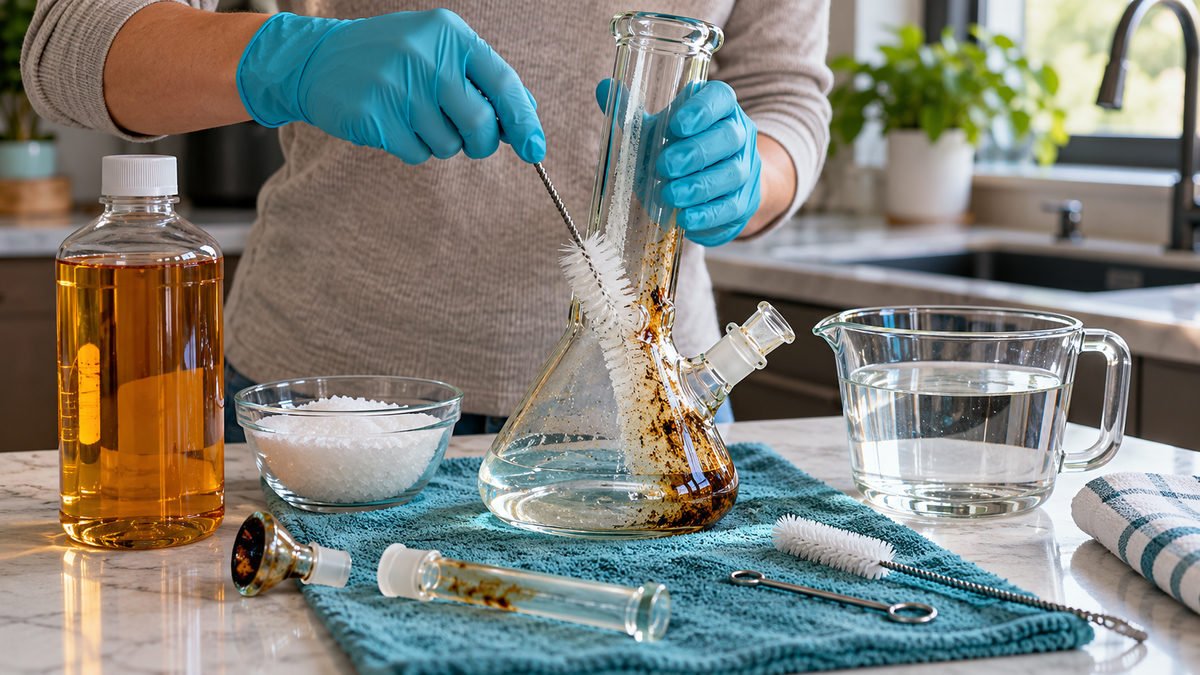
Is cloudy glass, stale water, or stubborn resin affecting your bong’s airflow and taste? Learning how to clean a glass bong helps remove buildup safely, without damaging delicate glass or removable parts.
Resin, ash, dirty water, mineral deposits, and odours can build up quickly. Improper cleaning may crack the glass, leave chemical residue, or damage fragile percolators. This guide explains the alcohol-and-salt method, alcohol-free alternatives, part-by-part cleaning, stain removal, rinsing, drying, troubleshooting, and ongoing maintenance.
Why Regular Glass Bong Cleaning Matters
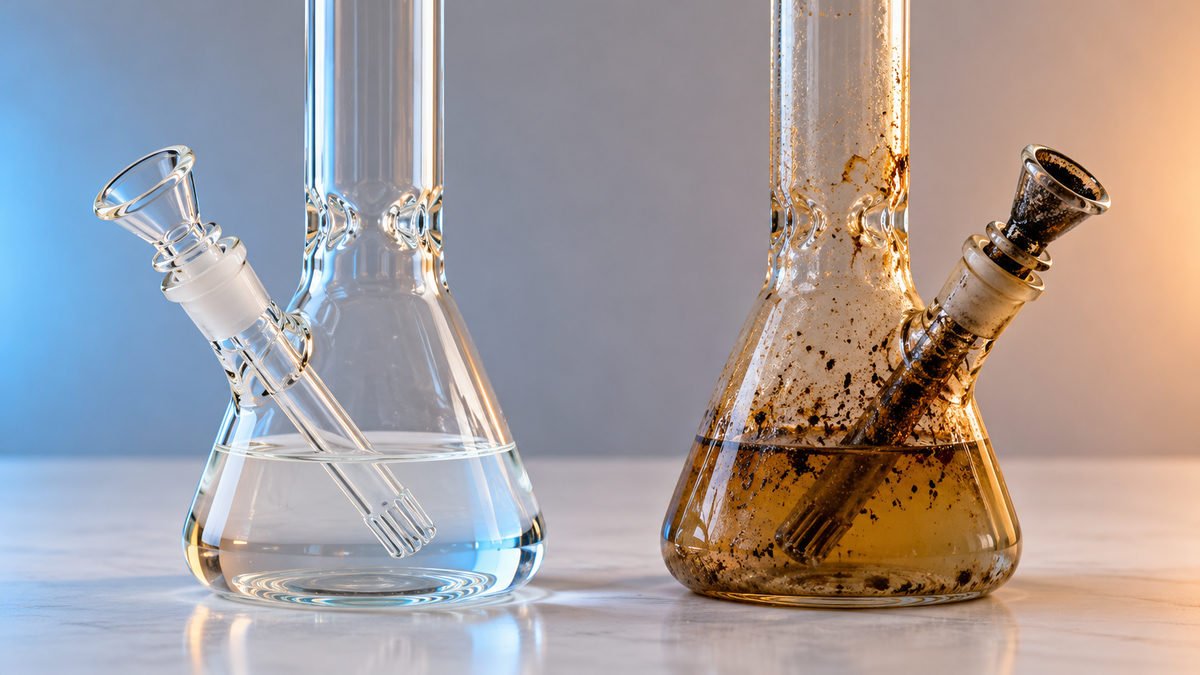
A clean glass bong usually offers clearer airflow and a fresher experience. However, resin and ash can narrow the airway, clog the downstem, and restrict bubbling through the water chamber. Dirty water may also leave unpleasant odours that linger between uses.
Moreover, mineral deposits from hard water can create cloudy patches and white stains. These deposits often collect around the water line, base, joints, and percolator openings. Over time, residue becomes harder to remove and requires longer soaking.
Common signs that your bong needs cleaning include:
- Cloudy or stained glass
- Sticky resin around the joint or mouthpiece
- Restricted airflow
- A clogged or slow downstem
- Unpleasant smells
- Dark or dirty bong water
- Visible ash inside the chamber
Regular cleaning prevents heavy buildup before it hardens. Therefore, a short rinse and frequent water changes can make future deep cleans much faster. A clean piece also allows you to inspect the glass for chips, cracks, or loose components.
This guide is intended for adults who own and clean their own glassware. Always empty the bong completely, let hot parts cool, and handle the piece carefully before cleaning. If you find a crack or sharp chip, stop using the bong and avoid handling the damaged area with bare hands.
Supplies and Safety Precautions for Bong Cleaning
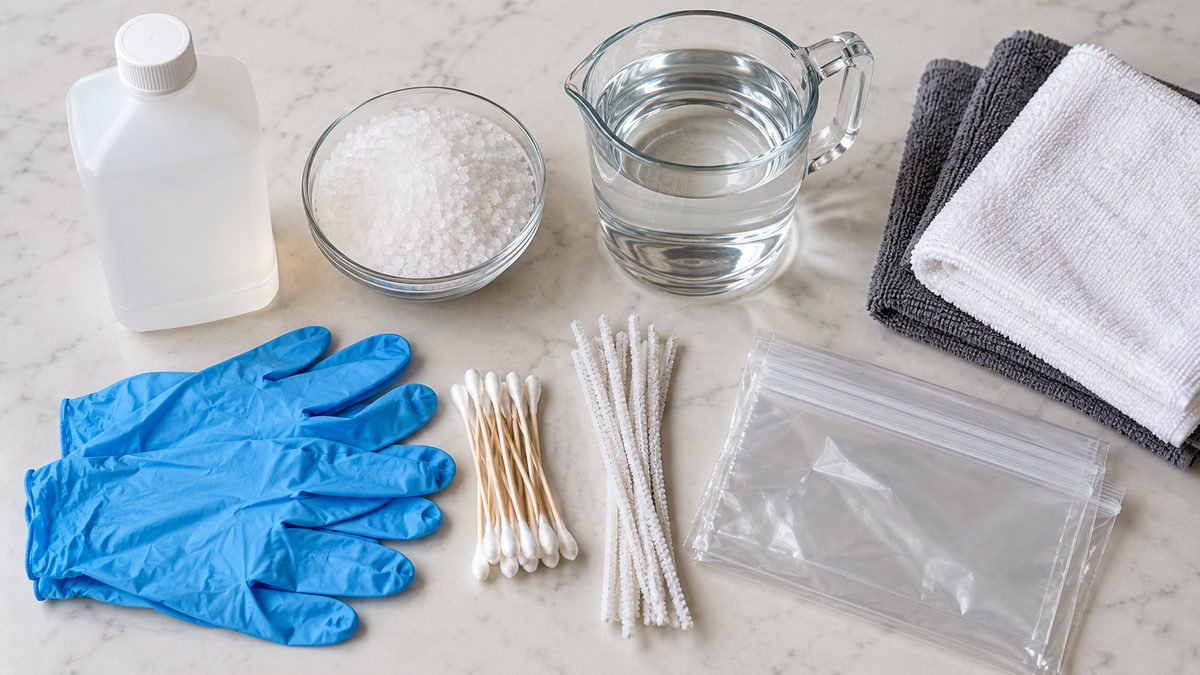
Gather your cleaning supplies before disassembling the bong. Having everything nearby reduces spills and prevents you from leaving a fragile piece unattended. For most resin buildup, the following supplies work well: See our list of the best bong cleaning accessories.
- 90% or higher isopropyl alcohol
- Coarse salt
- Warm, not boiling, water
- Rubber or nitrile gloves
- Cotton swabs
- Pipe cleaners
- Paper towels
- Sealable plastic bags or containers
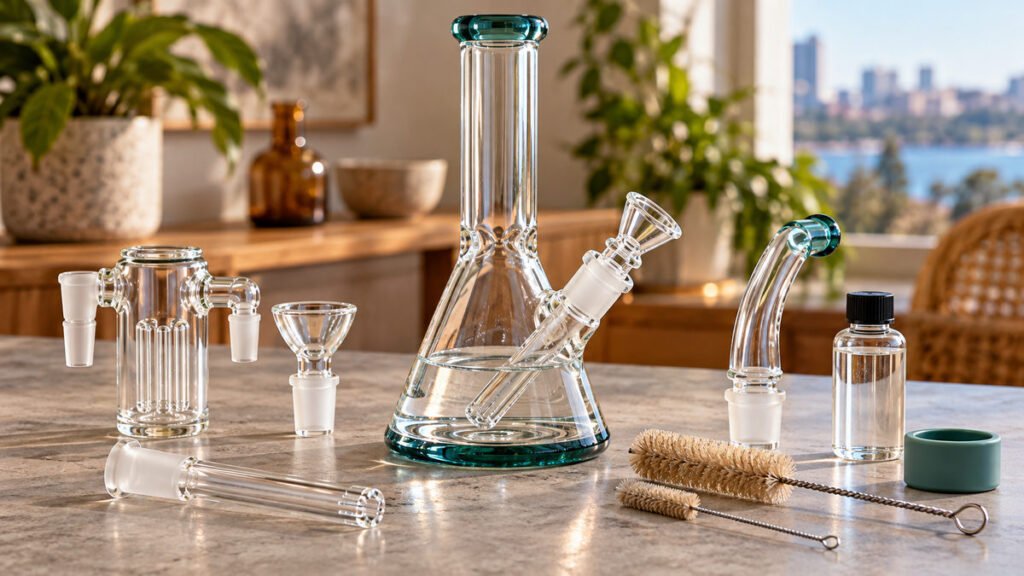
Additionally, you may find a bottle brush, silicone plugs, microfiber cloth, or non-abrasive sponge useful. Purpose-made bong cleaning solutions can also help, especially when the product suits glass and removable parts. Always follow the cleaner’s label instructions.
Work in a well-ventilated area away from flames, sparks, cigarettes, hot surfaces, children, and pets. Isopropyl alcohol is flammable, so keep its vapour away from ignition sources. The US Occupational Safety and Health Administration’s isopropyl alcohol information lists its flash point and flammability properties.
Furthermore, inspect the bong before adding liquid. Chips, hairline cracks, and damaged joints can worsen during cleaning. Wear gloves, protect your hands from sharp edges, and avoid sudden temperature changes between cold glass and hot water.
Never pour large amounts of alcohol near an ignition source. Keep the container closed when you are not using it, and store cleaning products clearly labelled in a secure place. Follow local disposal guidance for leftover alcohol and heavily contaminated cleaning liquid.
How to Clean a Glass Bong: Step-by-Step Method
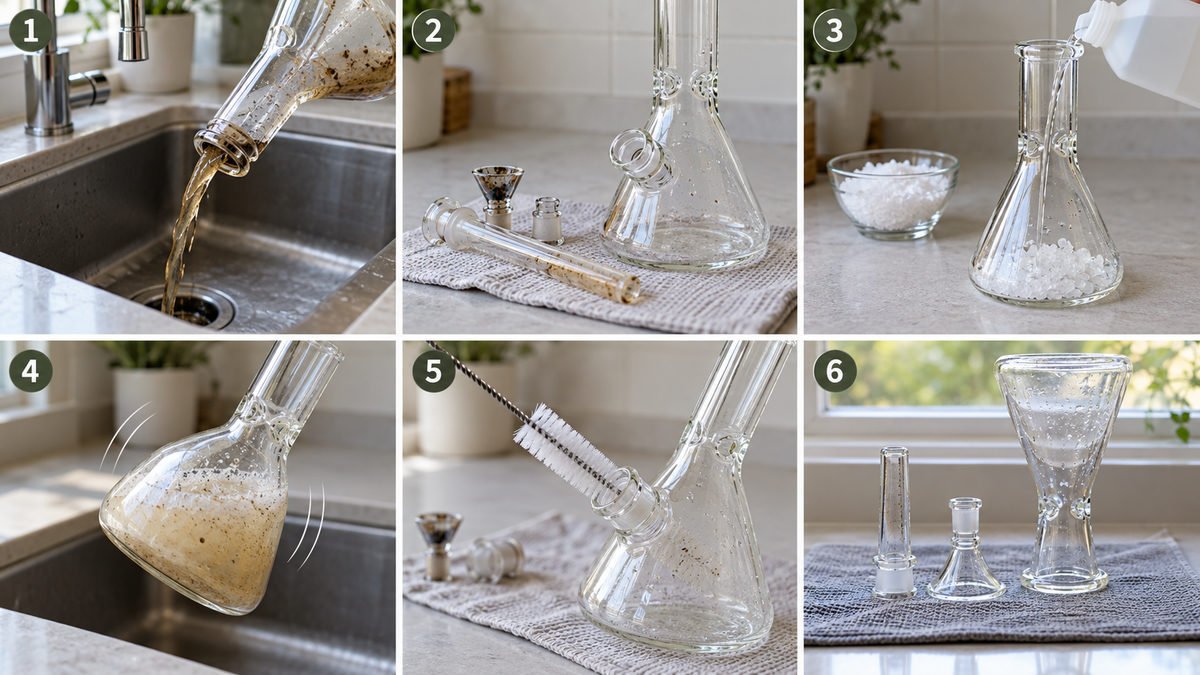
1. Empty the bong water
Start by pouring the old bong water into a suitable drain or waste container. Do not reuse dirty water, especially if it contains ash, resin, or visible debris. Rinse away loose residue promptly, because dried buildup becomes harder to dissolve.
2. Disassemble the bong
Remove the bowl, downstem, ash catcher, and other removable components. Place small parts on a clean towel so they cannot roll into the sink. Meanwhile, check each joint for chips, cracks, or stuck pieces.
3. Pre-rinse every part
Rinse the main chamber and removable parts with warm water. This step loosens loose ash and surface residue before the deeper clean. Avoid boiling water, particularly when the glass feels cold or shows existing damage.
4. Add alcohol and coarse salt
Pour enough isopropyl alcohol into the main chamber to contact the dirty areas. Add a small amount of coarse salt to create gentle scrubbing action. The alcohol dissolves sticky resin, while the salt helps lift residue from the glass surface.
5. Seal the openings
Seal the mouthpiece and joint openings with silicone plugs, suitable stoppers, plastic wrap, or gloved hands. Check that the openings feel secure before moving the bong. However, avoid creating excessive pressure inside the piece.
6. Gently rotate and shake
Gently rotate the bong so the alcohol reaches the chamber walls and base. You can use controlled, light shaking when the glass has enough room to move safely. Avoid forceful shaking, which may cause the bong or internal parts to strike a hard surface.
7. Let the solution work
Allow the mixture to sit for around 15 to 30 minutes for moderate buildup. Turn the piece occasionally so the solution reaches different areas. For stubborn resin, allow more contact time and check the glass periodically.
8. Scrub difficult areas
Use cotton swabs, pipe cleaners, bottle brushes, or another non-abrasive tool for remaining residue. Focus on the joint, chamber, percolator openings, mouthpiece, and base. Specifically, use gentle pressure around fragile internal glass.
9. Rinse repeatedly
Pour out the dirty solution and rinse the bong with warm water several times. Continue flushing until no alcohol smell, salty texture, loosened residue, or visible particles remain. Rinse removable parts separately from both directions.
10. Air-dry completely
Place the bong and its parts on a clean towel in a stable position. Let every component air-dry fully before reassembling or using it. Reassembly should only happen after the glass feels clean, dry, and free from cleaner residue.
How to Clean a Bong Bowl, Downstem, and Other Parts
Bong bowl
Place the bowl inside a sealable plastic bag with enough isopropyl alcohol to cover the dirty areas. Add coarse salt, seal the bag, and gently massage it around the bowl. After soaking, use cotton swabs or a correctly sized pipe cleaner to clean the airway. Learn more about each bowl type in bong bowls explained.
Additionally, rinse the bowl under warm water from both sides. Check the opening against the light to confirm that ash and resin no longer block the passage. Never force a brush through a fragile or narrowed opening.
Downstem
Soak the downstem separately in alcohol and coarse salt. Allow the mixture to loosen the resin before flushing warm water through both ends. Then, use a correctly sized pipe cleaner to clear the inner passage gently.
If the downstem remains clogged, repeat the soak rather than applying extra force. Meanwhile, rotate the piece and flush it several times until water flows freely. Avoid metal picks, knives, and sharp tools that can scratch or fracture the glass.
Ash catcher
First, remove loose debris from the ash catcher with warm water. Next, soak the chamber and scrub the joints, base, and percolator openings carefully. Do not force a brush through fragile glass channels or small openings.
Mouthpiece
Wipe visible residue from the mouthpiece with a paper towel or damp cloth. Use a cotton swab or soft pipe cleaner around the opening. Rinse thoroughly so no alcohol smell, salt, or cleaner remains.
Percolators and hidden areas
Percolators often need repeated soaking, gentle rotation, and patient rinsing. Small soft brushes work better than sharp objects around delicate openings. Therefore, let the cleaner dissolve the residue instead of trying to chip it away.
Removing Stubborn Resin, Hard-Water Stains, and Odours
Heavy resin may need a second alcohol soak. Increase the contact time gradually, then use coarse salt with controlled swirling. Avoid aggressive impacts, because thick glass can still break when it strikes a sink or hard bench. The right bong maintenance tools make stubborn resin easier.
For sticky buildup around joints and openings, apply isopropyl alcohol to a cotton swab. Work in small sections and replace the swab when it becomes dirty. Afterwards, rinse the area thoroughly with warm water.
Hard-water stains require a different approach from resin. Try warm water with white vinegar or use a purpose-made glass cleaning solution. Vinegar can help with mineral deposits, but it may not dissolve thick resin effectively.
For persistent bong odours, change the water promptly and clean hidden areas. Downstems, ash catchers, and percolators can hold residue even when the main chamber looks clear. Most importantly, let every part dry fully before storage.
Alcohol-free options include:
- White vinegar for mineral deposits
- Baking soda paste for limited exterior staining
- Hot water and mild dish soap for some removable parts
- Commercial bong cleaners designed for glass
These alternatives may work more slowly or less effectively on resin. Never mix cleaning chemicals, particularly products containing bleach or strong acids. Boiling water is also unsafe because thermal shock can crack or shatter glass, especially when the piece is cold or damaged.
Rinsing, Drying, Cleaning Frequency, and Maintenance Tips
After using alcohol, flush every chamber and removable part several times with warm water. Continue until you notice no alcohol smell, salty texture, cleaner residue, or visible debris. Pay special attention to percolator holes and narrow downstem passages. Follow our full bong care and maintenance guide.
Dry each component separately on a clean towel. Where practical, position openings facing downward so trapped water can drain. However, keep the bong stable and away from the edge of a bench or sink.
A practical cleaning schedule depends on how often you use the piece:
- Change the bong water after every use.
- Perform a light rinse frequently.
- Deep-clean after several uses.
- Deep-clean at least weekly for frequent use.
- Clean less-used pieces whenever residue or odour appears.
Fresh water helps limit stale smells and loose debris. Additionally, avoid overfilling the chamber, because water can reach the mouthpiece or other openings. Empty the bong after use, wipe the mouthpiece, and keep excess ash out of the bowl.
Store the bong upright in a protected location away from busy shelves and unstable surfaces. A padded case or dedicated storage area can reduce accidental knocks. Therefore, regular maintenance lowers resin buildup, odours, stains, clogging, and the need for aggressive scrubbing.
Deep-cleaning checklist
- Empty the old water.
- Disassemble removable parts.
- Pre-rinse with warm water.
- Soak the glass with alcohol and coarse salt.
- Scrub joints, openings, and hidden areas gently.
- Rinse every part repeatedly.
- Inspect the glass and airways.
- Dry everything completely.
- Reassemble and store the bong safely.
Common mistakes include using boiling water, harsh household chemicals, metal tools, abrasive pads, or sudden temperature changes. Never leave alcohol unattended near heat, flames, sparks, children, or pets. Also, do not use the bong until it is fully rinsed and dry.
Conclusion
The safest and most effective routine combines careful disassembly, warm-water pre-rinsing, isopropyl alcohol, and coarse salt for resin. Gentle part-by-part scrubbing protects bowls, downstems, ash catchers, percolators, and other glass components.
Furthermore, thorough rinsing and complete drying prevent cleaner residue, lingering odours, and trapped moisture. Avoid boiling water, flames, harsh chemicals, sudden temperature changes, and sharp tools. Frequent water changes and regular deep cleaning help preserve airflow, taste, odour control, and glass condition.
Save the cleaning checklist and use it whenever you deep-clean your bong. Adjust the schedule according to how often you use it and how quickly residue appears.
For more glassware care ideas and related accessories, visit Sweet Puff Australia. Keep your cleaning routine simple, consistent, and careful so your glass pieces stay ready for their next use.

Comment (1)
[…] Empty and rinse the water regularly instead of allowing residue to sit inside the chamber. For deeper cleaning, use suitable cleaning materials and follow the manufacturer’s care guidance. Additionally, brush hard-to-reach areas around the downstem and percolator. Follow our guide on how to clean a glass bong. […]