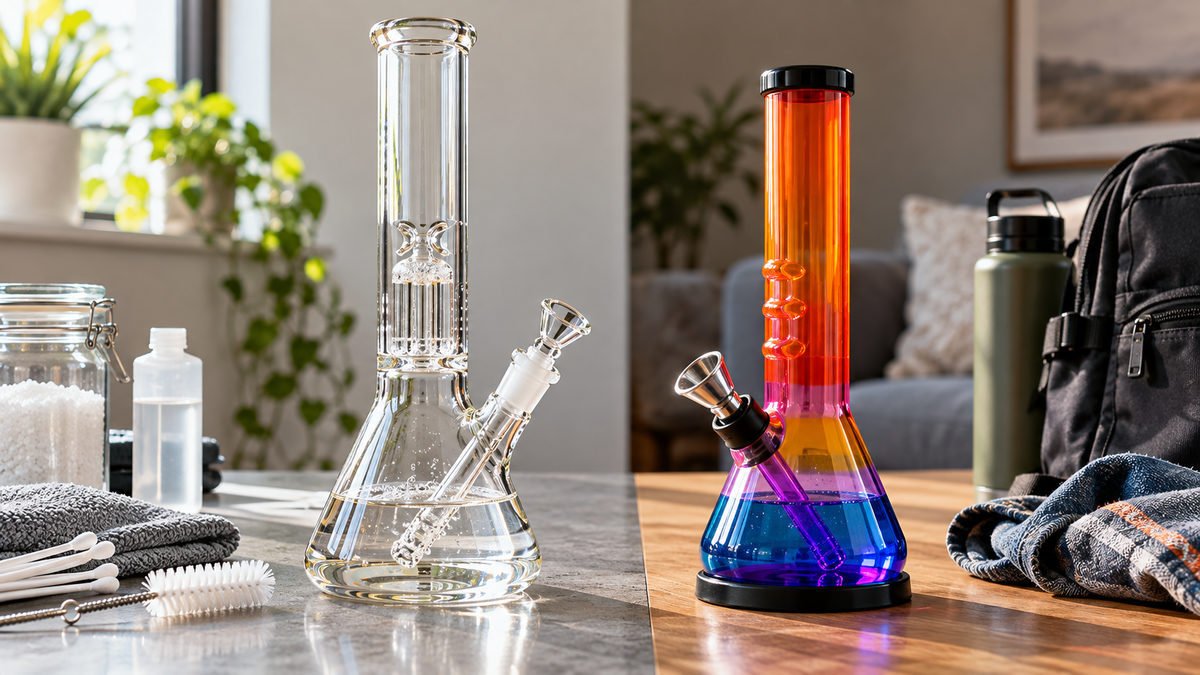
Choosing between a sleek glass bong and a tough acrylic bong can change your daily routine. The material affects flavour, cleaning, breakage risk, portability, and long-term value. Therefore, understanding glass vs acrylic bongs helps you choose with confidence. Glass usually suits users who want clean flavour and premium filtration. Acrylic often suits beginners, travellers, and anyone worried about accidental drops.
1. Glass vs Acrylic Bongs: Key Differences at a Glance
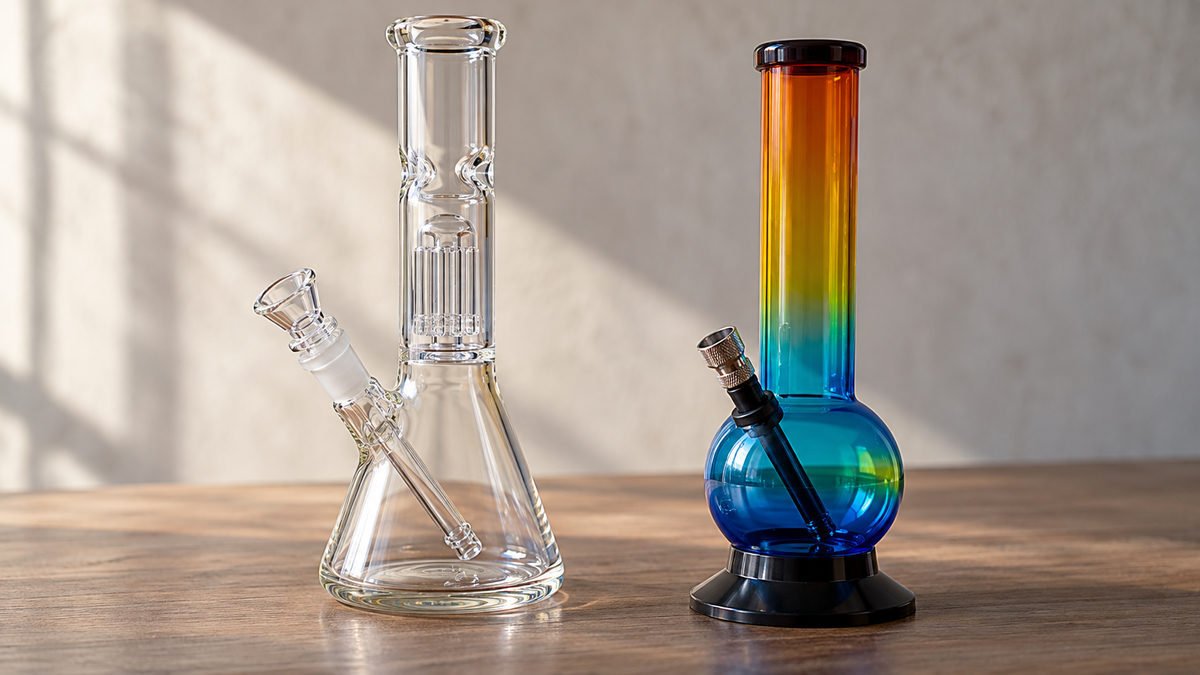
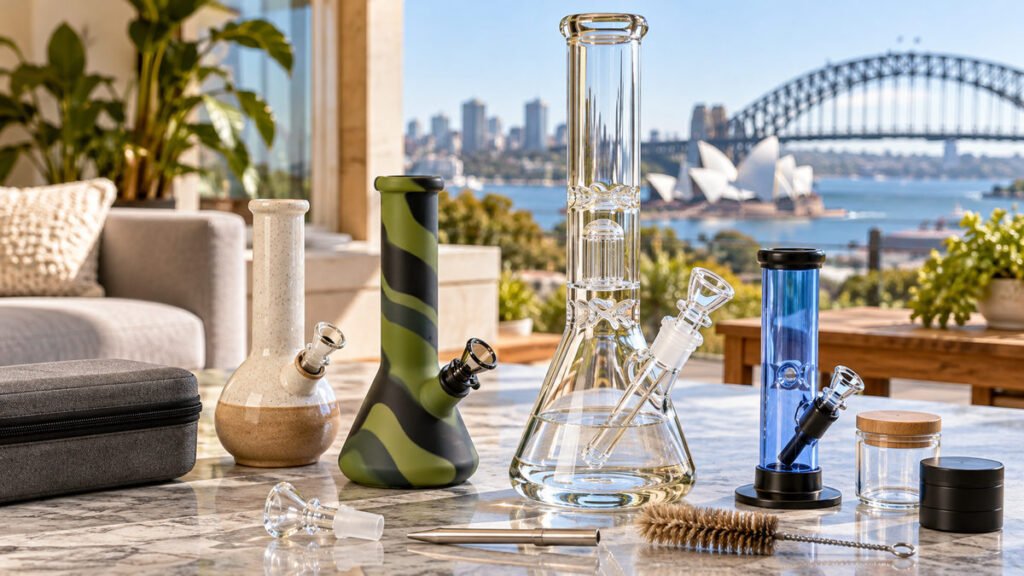
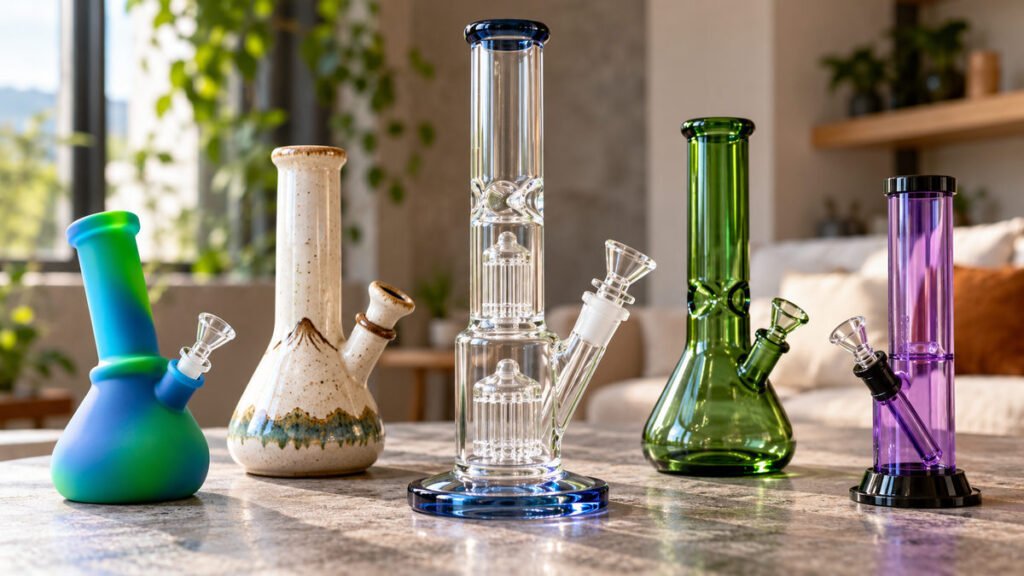
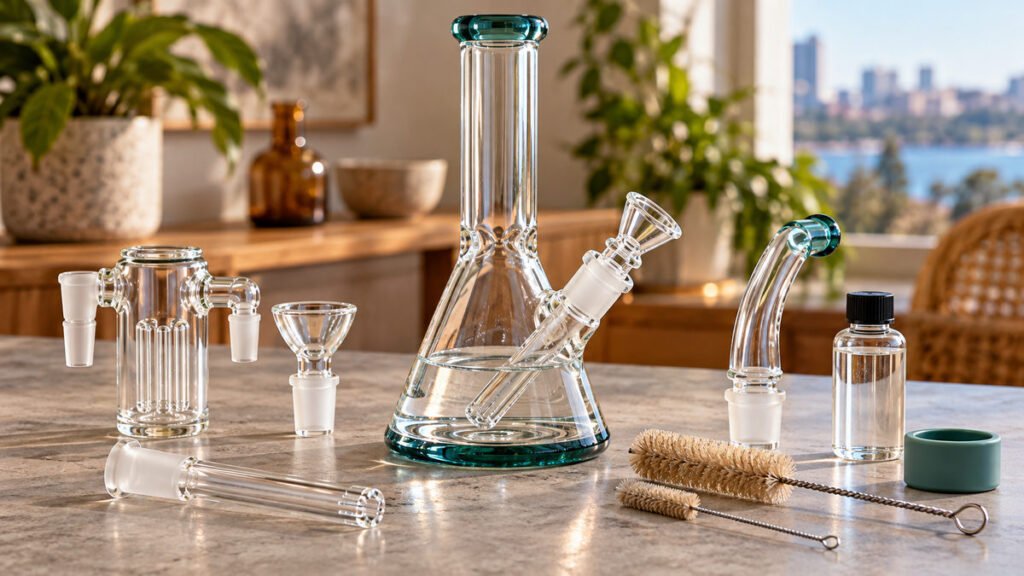
Glass bongs typically use a main chamber, downstem, bowl, mouthpiece, and stable base. Many models also include percolators, ice catchers, splash guards, or removable ash catchers. Acrylic bongs use similar parts, but the body usually comes from moulded acrylic plastic. For Australian prices, read glass bongs vs acrylic bongs.
Most quality glass bongs use borosilicate glass. This material handles heat changes better than ordinary glass because it expands less quickly. You can learn more about borosilicate glass and its heat-resistant properties through this reference.
However, material alone does not determine performance. Percolator design, water level, chamber volume, airflow, joint quality, and manufacturing accuracy matter just as much. A well-designed acrylic bong can outperform a poorly made glass bong in several everyday situations.
| Feature | Glass bong | Acrylic bong |
|---|---|---|
| Durability | Strong, but vulnerable to hard impacts | Highly impact-resistant |
| Price | Usually moderate to premium | Usually cheaper |
| Flavour | Neutral and clean | Can retain odours over time |
| Smoothness | Excellent with quality filtration | Depends mainly on design |
| Filtration | Broad range of advanced options | Usually simpler options |
| Cleaning | Easy to inspect and deep-clean | Needs gentler cleaners |
| Portability | Heavier and breakable | Lightweight and travel-friendly |
| Appearance | Clear, artistic, and premium | Colourful and practical |
| Heat resistance | High, especially with borosilicate glass | Limited |
| Safety | No plastic near the bowl | Needs careful heat management |
| Lifespan | Can last years with careful handling | Can last years, but may age visibly |
| Recyclability | Generally broader recycling options | More limited recycling access |
In simple terms, choose glass for performance, flavour purity, and customisation. Choose acrylic for affordability, portability, and impact resistance. The right choice depends on where and how you plan to use your bong.
2. Performance, Flavor, Smoothness, and Filtration
Glass remains popular because it adds very little flavour to the experience. Its smooth surface does not usually retain strong odours when cleaned properly. As a result, users can notice the natural character of their material more clearly.
Acrylic can also provide an enjoyable experience, especially when the bong has a good chamber and downstem. However, lower-quality plastic may retain odours after repeated use. Poor cleaning can also leave residue that affects flavour and makes the bong smell stale.
Flavour depends on more than the bong body. Fresh water, clean glass, a clear bowl, and a suitable downstem all make a noticeable difference. Additionally, stale water can affect flavour more than the difference between acrylic and glass.
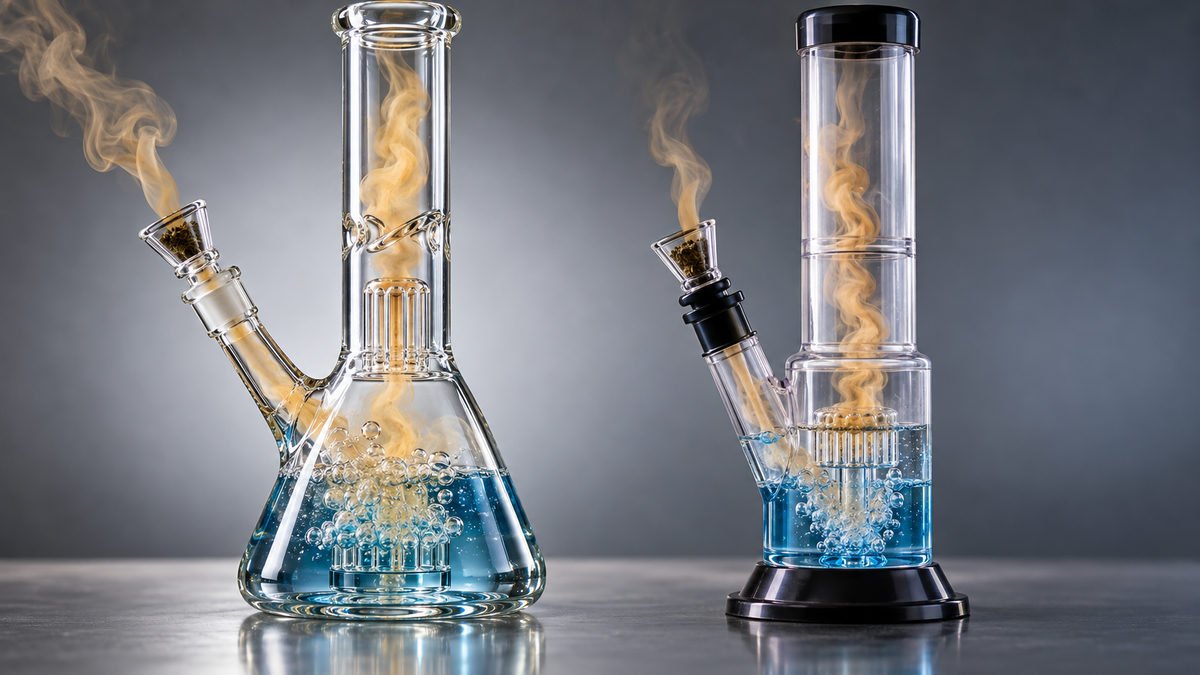
Smoothness mainly comes from filtration and airflow. A percolator breaks smoke into smaller bubbles, increasing contact with the water. This process can cool the smoke and reduce harshness before it reaches the mouthpiece.
- Water volume: More water can improve cooling, but excessive water may restrict airflow.
- Percolator design: Showerhead, honeycomb, tree, and inline styles create different diffusion patterns.
- Chamber size: Larger chambers can hold more smoke, but they may require stronger airflow.
- Ice catchers: These can cool the smoke further when used correctly.
- Airflow: A clear, well-sized path often matters more than extra accessories.
Therefore, bong material does not create filtration by itself. Water contact, diffusion, chamber design, and airflow perform that work. Nevertheless, glass manufacturers generally offer more advanced percolator shapes and interchangeable components.
For large, powerful hits, a stable glass bong often provides the best platform. Thick glass, a wide base, and effective filtration help manage larger smoke volumes. However, the bong still needs suitable airflow and enough water for its design.
Heat resistance creates another important difference. Borosilicate glass handles high temperatures better and remains stable during normal use. Acrylic can warp, discolour, crack, or produce unpleasant fumes if exposed to excessive heat or direct flame.
Most importantly, never allow a flame to contact an acrylic body or plastic component. Keep the heat source near the bowl only, and inspect the bong before each session. Choose glass if flavour purity, smoothness, customisation, and premium performance matter most.
3. Durability, Breakage Risk, and Long-Term Lifespan
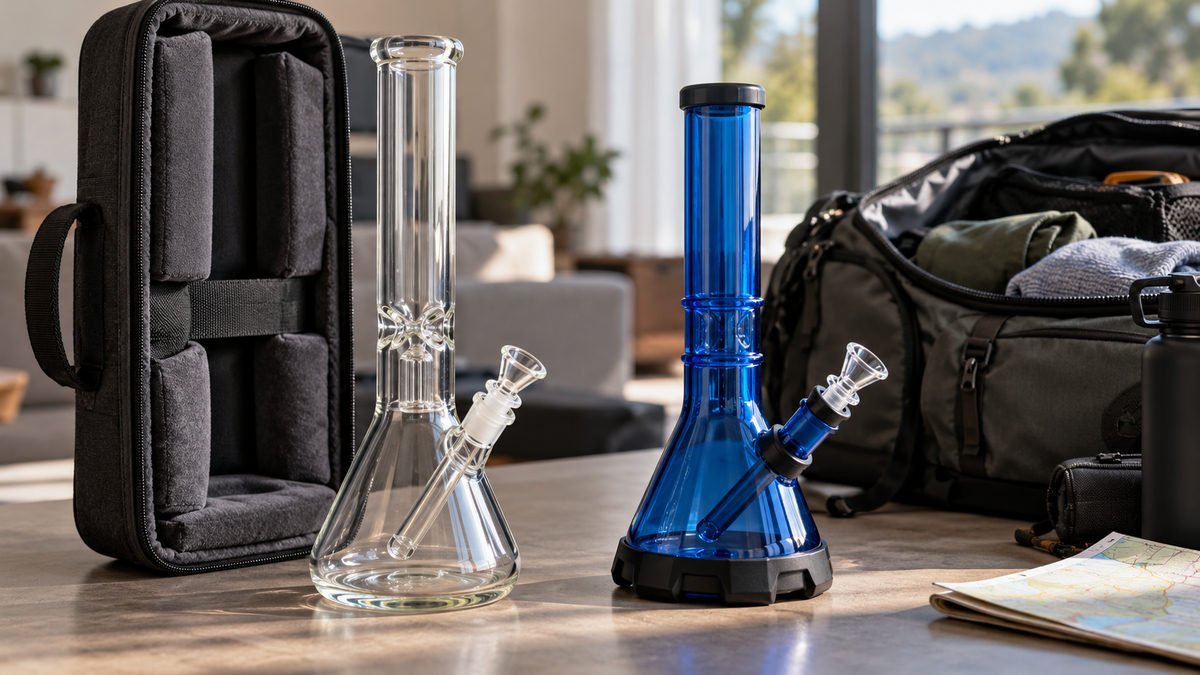
Acrylic bongs usually handle drops, knocks, and rough transport better than glass. This makes them useful in busy homes, shared spaces, outdoor settings, and travel bags. A lightweight acrylic bong also creates less concern when you move it between rooms. Durable glass pieces are usually borosilicate glass bongs.
Glass offers a different type of durability. Quality borosilicate glass resists heat stress and everyday wear, but it can still break after a hard impact. Thin necks, narrow joints, decorative sections, and unstable bases increase that risk.
Therefore, construction quality matters greatly when choosing glass. Look for a thick base, reinforced joints, strong welds, and a body that sits firmly on a flat surface. A heavier bong often feels more stable, although extra weight can reduce portability.
Acrylic can survive impacts, but it does not remain perfect forever. Scratches may build up on the surface, while cloudy areas can develop after harsh cleaning. Additionally, acrylic may discolour, crack from long-term stress, or lose its clear appearance.
Glass usually remains easier to inspect throughout its lifespan. You can see water levels, residue, cracks, and blocked downstems immediately. This visibility helps you maintain the bong before small problems become expensive replacements.
With careful handling, a quality glass bong can last for many years. It may need replacement bowls, downstems, seals, or percolator parts over time. However, the main body can remain functional if you store it safely.
Acrylic may last longer in rough conditions because it resists accidental impacts. Nevertheless, its surface and colour can age faster. In practice, glass often offers the longer premium lifespan, while acrylic offers the stronger survival rate during careless handling.
Beginners often find acrylic less stressful. A first bong can be difficult to position, clean, and transport without accidents. Therefore, acrylic provides a lower replacement risk while new users learn proper handling and maintenance.
4. Price, Cleaning, Safety, and Maintenance
Acrylic usually wins on purchase price. Entry-level models can provide a basic water-filtered experience without requiring a large initial spend. This makes acrylic attractive for beginners, occasional users, and anyone building a simple setup. Follow our guide on how to clean a glass bong.
Glass costs more because it requires specialised shaping, heat-resistant material, and more precise construction. However, the higher price can bring better flavour, clearer visibility, stronger filtration, and wider accessory compatibility.
Long-term value depends on more than the shelf price. Consider replacement costs, cleaning supplies, broken parts, storage, accessories, and how often you will use the bong. A cheap acrylic bong may offer excellent value if portability matters most.
Cleaning a Glass Bong
Glass is usually easier to deep-clean because it tolerates stronger cleaning methods. First, empty the old water and rinse the bong with warm water. Then add isopropyl alcohol and coarse salt before covering the openings securely.
Shake the bong gently to loosen residue inside the chamber. Use pipe cleaners or suitable brushes for the downstem, bowl, and narrow openings. Finally, rinse everything thoroughly with warm water until no alcohol smell remains.
Regular cleaning protects flavour and keeps airflow open. Additionally, cleaning the bowl and changing the water often prevents heavy residue from forming. Avoid sudden temperature changes, such as adding boiling water to a cold bong.
Cleaning an Acrylic Bong
Acrylic needs a gentler routine. Use warm water, mild dish soap, and non-abrasive tools that will not scratch the surface. Follow the manufacturer’s instructions when it recommends a specific cleaner.
Avoid acetone, strong solvents, boiling water, abrasive powders, and aggressive scrubbing. These products can cloud acrylic, weaken the plastic, or create fine scratches that hold residue. Therefore, patience matters more than force when cleaning acrylic.
Safety and Material Quality
Safe use starts with stable placement and sensible heat control. Keep the bong away from edges, children, pets, and flammable materials. Always check for cracks, loose joints, sharp edges, or damaged seals before use.
Quality acrylic intended for smoking accessories should use suitable, non-toxic materials. However, buyers should avoid unknown plastics, strong chemical odours, and products with poor labelling. If the material or construction seems questionable, choose a reputable alternative.
Glass is generally easier to inspect for cleanliness and damage. Acrylic requires more care because scratches, clouding, and hidden residue can be harder to judge. Therefore, glass usually offers the simpler deep-cleaning experience.
5. Portability, Appearance, Customization, and Environmental Impact
Acrylic is usually the better bong for travel. It weighs less, resists shattering, and can handle movement inside a padded bag. This makes it practical for outdoor sessions, festivals, road trips, and shared accommodation.
Glass can travel safely with the right preparation. Use a padded case, protective sleeve, or sturdy storage box with separate sections for removable parts. Empty the water first, remove the bowl and downstem, and prevent the body from moving inside the case.
Appearance also separates these materials. Clear glass shows the water level, filtration action, and residue clearly. Artistic glass can include coloured sections, sculpted shapes, intricate percolators, and distinctive hand-finished details.
Acrylic offers a different visual style. It often comes in bright colours, bold patterns, glow effects, and playful shapes. Additionally, its lightweight construction allows larger designs without making the bong difficult to carry.
Glass usually provides broader customisation. Many models accept interchangeable bowls, downstems, ash catchers, adapters, and percolators. Replacement parts also tend to follow common joint sizes, which makes future upgrades easier.
Acrylic models may use proprietary parts or less widely available fittings. Before buying, check whether the bowl, downstem, seals, and mouthpiece can be replaced. A low purchase price becomes less attractive if one small part makes the whole bong unusable.
Glass is generally easier to recycle through suitable waste streams, although local rules vary. Acrylic recycling remains more limited because many facilities do not accept every type of plastic. Therefore, material lifespan, repairability, packaging, and responsible disposal all affect environmental value.
The most sustainable choice is often the bong you can use for years. A repairable glass bong may create less waste over time, while a durable acrylic bong may avoid breakage and frequent replacement. Consider the complete product lifecycle instead of focusing only on the body material.
6. Which Bong Is Best for Your Budget and Lifestyle?
Choose glass if you use your bong mainly at home and prioritise flavour, smoothness, heat resistance, and easy inspection. Glass also suits users who want advanced filtration or plan to customise their setup later. Also compare glass vs silicone bongs.
Choose acrylic if you want an affordable, lightweight, impact-resistant introduction to water pipes. It works well for beginners who are still learning cleaning routines and safe storage habits. Acrylic also reduces stress in busy households.
For travel, outdoor use, festivals, and shared spaces, acrylic usually offers the practical advantage. It is easier to carry and less likely to shatter after an accidental knock. However, protect it from direct heat and harsh chemical cleaners.
Occasional users may prefer glass because premium flavour and appearance matter more than maximum impact resistance. A smaller, thick-walled glass bong can provide strong performance without becoming difficult to store. Keep it in a padded location between uses.
For large, powerful hits, a stable glass bong usually performs best. A wide base, strong joint, generous chamber, and effective percolator can manage higher smoke volume comfortably. Still, choose a design that matches your airflow and cleaning preferences.
- Basic budget: Choose acrylic for low-cost, lightweight practicality.
- Mid-range budget: Choose entry-level thick glass for better flavour and visibility.
- Premium budget: Choose quality glass with advanced filtration and replaceable parts.
- Travel priority: Choose acrylic or a compact glass bong with serious protective storage.
- Home performance: Choose glass with a stable base and accessible filtration chambers.
Practical Buying Checklist
- Confirm the material quality and look for clear product information.
- Choose a stable base that sits firmly on a flat surface.
- Check the joint size and bowl compatibility before buying accessories.
- Inspect the downstem design and ensure replacement parts exist.
- Consider whether the percolator offers useful filtration without difficult cleaning.
- Check whether you can reach every chamber and opening during cleaning.
- Keep acrylic away from direct flame and excessive heat.
- Review the return policy before purchasing an expensive or fragile bong.
So, which bong should you choose? Pick glass for performance, flavour purity, heat resistance, and customisation. Pick acrylic for affordability, portability, and impact resistance.
Conclusion
Glass bongs generally deliver cleaner flavour, stronger heat resistance, easier inspection, broader customisation, and more advanced filtration options. Acrylic bongs provide excellent impact resistance, lower prices, lighter portability, and beginner-friendly practicality.
Ultimately, the best choice depends on your daily environment and priorities. Use the buying checklist to compare construction quality, filtration, cleaning needs, replacement parts, and intended use. Then choose a reputable glass or acrylic bong that suits your budget and lifestyle.
For Australian shoppers comparing reliable options, Sweet Puff Australia offers a useful place to explore water pipes, glass bongs, accessories, and practical designs. Compare materials carefully, consider how you will use the bong, and select a setup you can maintain comfortably.