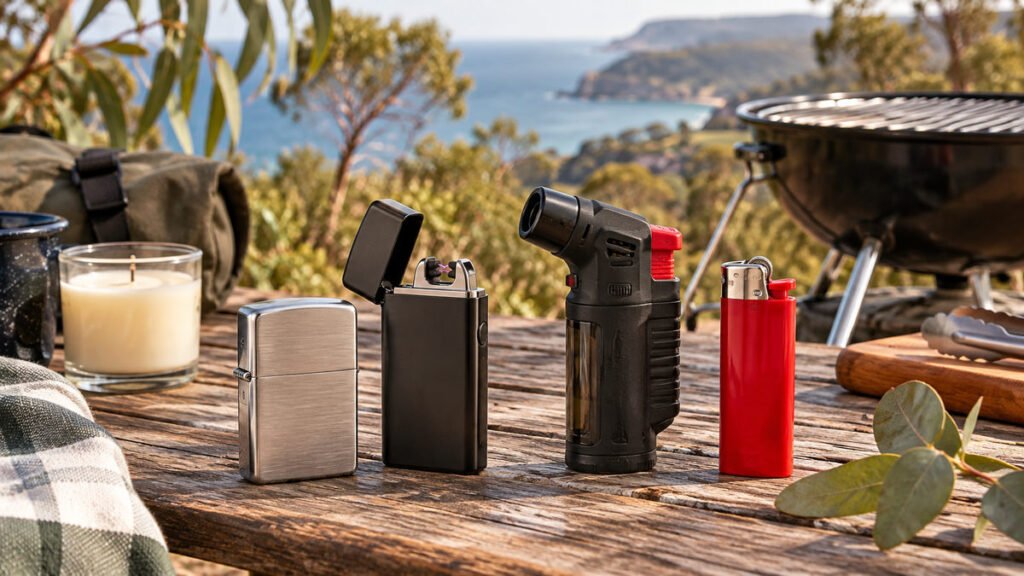
Choosing between a powerful jet flame and a familiar soft flame can change how easily you light a cigar, candle, campfire or cigarette. The torch lighter vs regular lighter decision depends on heat, wind resistance, fuel use, safety, cost and maintenance. This guide compares both lighter types, so you can choose confidently.
Torch Lighter vs Regular Lighter: What Is the Difference?
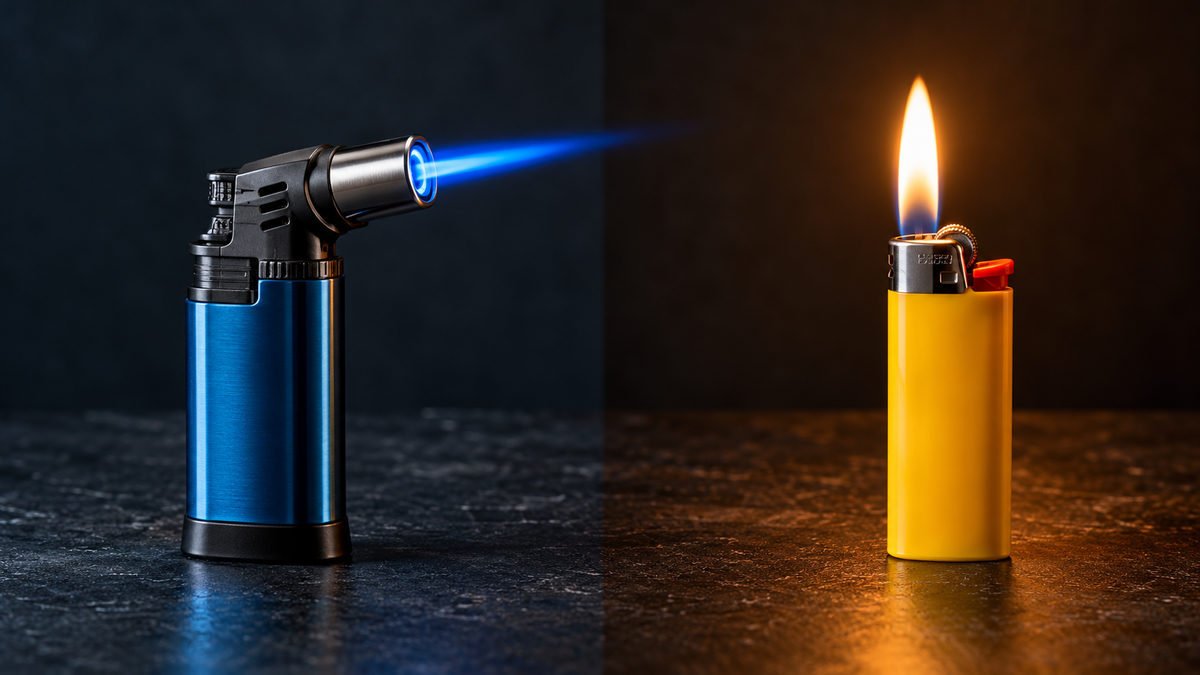
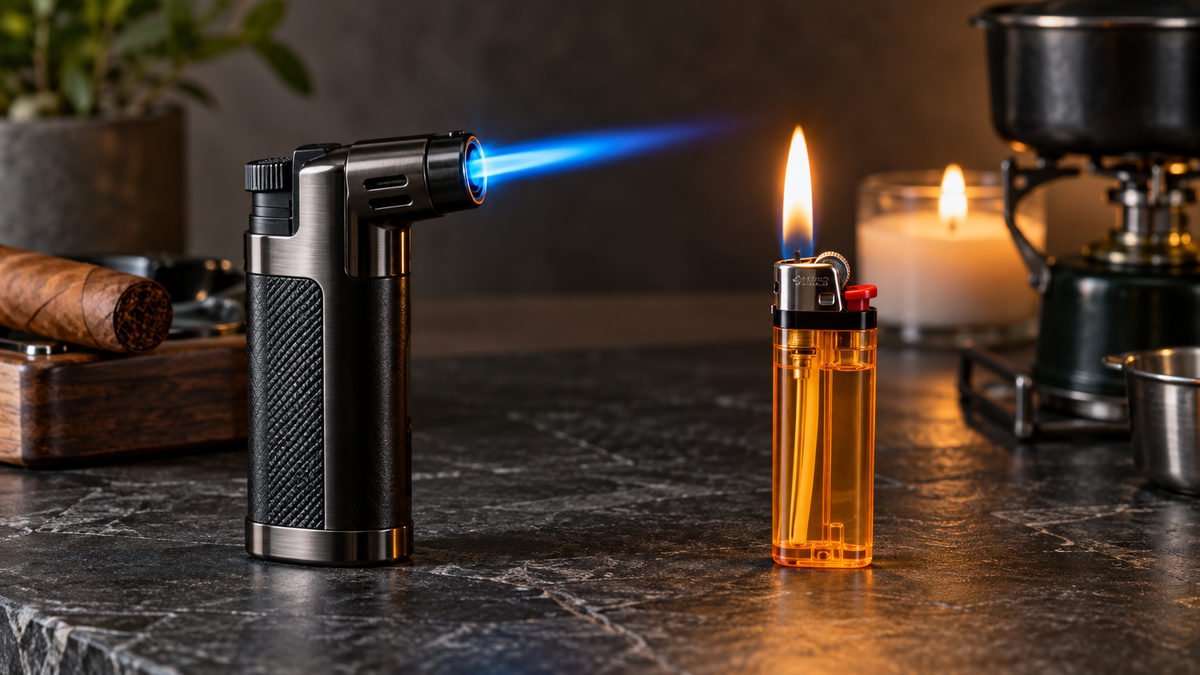
A torch lighter, also called a jet flame or butane torch lighter, uses pressurised butane. The fuel passes through a narrow jet and creates a blue, concentrated flame. This design produces fast ignition and directs heat towards a small target.
In contrast, a regular soft-flame lighter creates a broader yellow flame. Disposable lighters and refillable models commonly use this design. The flame feels gentler and spreads heat across a wider area.
Flame Characteristics
A torch flame looks narrow, blue and sharply defined. It often works well in daylight because its heat matters more than its visibility. Meanwhile, a soft flame appears larger and brighter, but it can move more easily in light wind.
Moreover, torch lighters offer better precision. You can aim the jet at a cigar foot, camping stove or candle wick. A soft flame suits general lighting, but it offers less directional control.
Temperature and Intensity
A torch lighter produces a hotter and more concentrated flame than a regular lighter. The narrow jet mixes fuel and air efficiently, creating intense heat in one small area. Therefore, it can ignite materials quickly.
A soft flame remains less directional and usually feels more forgiving. It gives you more time to position a candle wick or tobacco without scorching nearby materials. However, the flame may struggle in breezy conditions.
A Bic-style disposable lighter normally uses a soft flame and a pre-filled fuel reservoir. It offers convenience, low cost and easy replacement. A torch lighter usually costs more, but it may provide better wind performance and control.
Torch models also come with different jet counts:
- Single-flame torches: precise, compact and generally more fuel-efficient.
- Double-flame torches: faster and broader, especially useful for cigars.
- Triple-flame torches: powerful and quick, but usually hotter and less economical.
| Feature | Torch lighter | Regular soft-flame lighter |
|---|---|---|
| Flame type | Narrow blue jet | Broad yellow flame |
| Approximate heat | Higher and concentrated | Lower and gentler |
| Wind resistance | Generally strong | Usually limited |
| Fuel | Pressurised butane | Butane, liquid fuel or pre-filled fuel |
| Refillability | Usually refillable | Disposable or refillable |
| Price | Moderate to high | Low to moderate |
| Portability | Compact, but sometimes heavier | Usually very compact |
| Precision | Excellent | Basic |
| Typical applications | Cigars, camping, cooking and crafts | Candles, cigarettes and everyday use |
Performance Comparison: Heat, Wind Resistance, and Precision
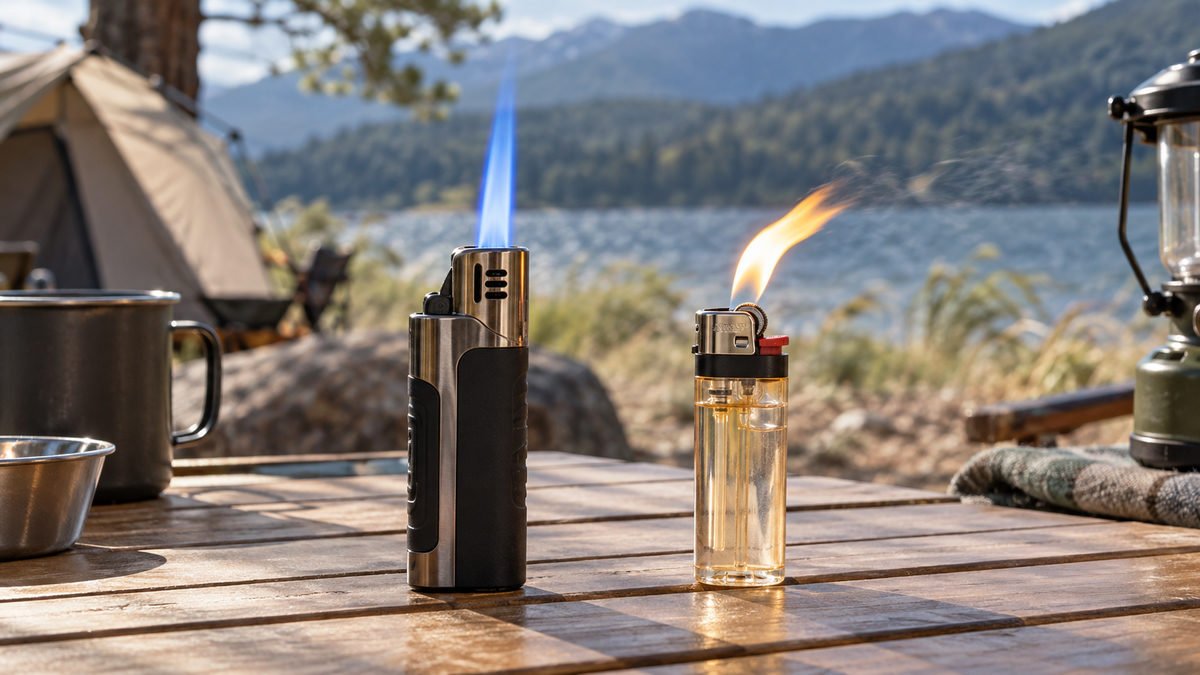
Wind performance creates the biggest practical difference between these lighter types. A torch lighter directs fuel through a focused jet, so the flame remains more stable outdoors. Consequently, it suits camping, travel and breezy patios. Learn more in windproof lighters explained.
Regular soft flames can flicker, lean sideways or extinguish in wind. You may need to shield the flame with your hand. However, never wrap your hand around a flame or hold flammable clothing nearby.
Cold weather can affect both lighter designs. Lower temperatures reduce butane pressure and may make ignition slower. Therefore, keep a lighter warm in your pocket before use, but never heat it with a flame, heater or hot surface.
Which Lighter Is Hotter?
A torch lighter is hotter at the point of contact. Its narrow blue flame transfers intense heat quickly. As a result, it can light a cigar, gas burner or fire starter with fewer attempts.
That extra heat also increases the chance of scorching. Holding a torch too close to a cigar wrapper can create a harsh burn. It may also blacken a candle wick, melt wax unevenly or damage a delicate container.
Precision for Everyday Tasks
Torch lighters provide quick ignition and accurate flame placement. They work well for cooking burners, controlled spot heating, heat-shrink work and some craft tasks. However, they are not a replacement for proper soldering equipment or specialist tools.
Soft flames remain preferable for many candles. Their gentler heat reduces the chance of scorching the wick or heating a glass container too quickly. A long-neck soft-flame lighter also keeps your fingers further from the flame.
You can use a torch lighter for candles, but use a careful technique. Hold the jet slightly away from the wick, ignite briefly and avoid touching the wax. Meanwhile, a soft flame offers better control for candles with narrow or recessed wicks.
For outdoor activities, a torch lighter is usually the better choice. It handles wind more effectively and ignites fuel quickly. For indoor candles, cigarettes or gentle household lighting, a regular lighter remains simpler.
Which Lighter Is Best for Cigars, Tobacco, Candles, and Cooking?
Cigars and Tobacco
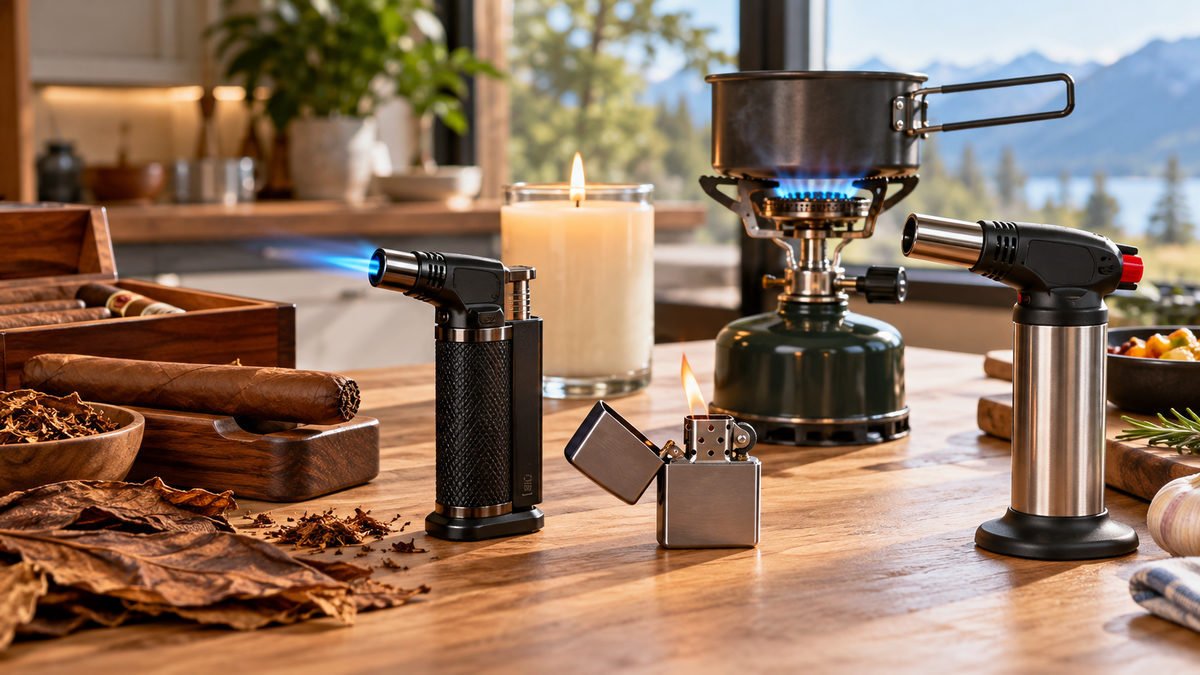
Many cigar smokers choose a torch lighter because it gives precise heat and fast ignition. A single flame can toast the cigar foot gradually. Double and triple flames cover more area and reduce lighting time. For pipe smokers, see smoking pipes in Australia.
However, speed does not always equal better flavour. A torch held too close can overheat tobacco and create an uneven burn. Therefore, keep the flame just above the cigar and rotate the cigar slowly.
Many users prefer a soft flame for gradual toasting. It gives a gentler start and makes it easier to avoid direct contact. In contrast, a torch performs better outdoors when wind makes a soft flame unreliable.
So, are torch lighters better for cigars? They suit windy conditions, large cigars and users who value precision. A soft flame suits relaxed indoor smoking and anyone who prefers slower, controlled lighting.
Candles and Household Use
A regular lighter is usually the best choice for candles. Its broad flame lights the wick gently and avoids unnecessary heat around the wax. Long-neck models also provide safer reach for deep jars and tall candles.
Additionally, a soft flame works well for gas hobs, incense and occasional household tasks. Choose a lighter with a reliable ignition and a stable flame. Avoid novelty designs that resemble toys or attractive objects.
Cooking and Crafts
A torch lighter can help ignite camping burners, kitchen burners and some culinary tools. A culinary torch may also suit crème brûlée, but follow the equipment instructions carefully. Never use an unapproved lighter near food, oil or enclosed heat.
Small torches can provide controlled spot heating for heat-shrink tubing and selected craft tasks. However, they can damage plastics, fabrics, wood and finishes quickly. Use protective surfaces, ventilation and suitable eye protection.
Camping and Everyday Carry
For camping, a torch lighter usually offers better reliability in wind. A compact single-flame design balances portability, control and fuel use. Keep it protected from rain, heat and accidental activation inside a bag.
- Best for cigars: single-flame for control, double-flame for speed.
- Best for candles: long-neck soft-flame lighter.
- Best for cooking: purpose-built culinary torch or approved utility lighter.
- Best for camping: wind-resistant refillable torch lighter.
- Best for smoking: soft flame indoors or torch flame outdoors.
- Best for everyday carry: compact single-flame torch or simple disposable lighter.
Fuel, Refillability, Burn Time, and Long-Term Cost
Torch lighters normally use pressurised butane stored inside a refillable tank. Traditional refillable lighters may use liquid fuel, while disposable models contain a sealed pre-filled fuel cell. Each system offers different convenience and maintenance needs. See our guide to refillable lighters in Australia.
Most torch lighters are refillable. Use only the correct lighter butane and a compatible nozzle. Refill the lighter outdoors or in a well-ventilated area, away from flames, sparks and hot surfaces.
Follow these basic refill steps:
- Turn the flame adjustment to its lowest setting.
- Bleed remaining gas from the tank in a ventilated area.
- Hold the lighter and fuel canister away from your face.
- Press the refill nozzle firmly into the valve.
- Allow the lighter to rest before testing it.
- Adjust the flame gradually and test it away from your face.
Fuel efficiency depends on flame size, jet count and ignition time. A single-flame torch often uses less fuel than a triple-flame design. However, repeated short ignitions can still consume fuel quickly.
There is no universal burn-time figure for every lighter. A small torch may last through many brief lighting sessions, while long flames drain the tank faster. Disposable lighters offer simple replacement, but frequent users create more waste.
Refillable lighters usually cost more initially. Nevertheless, durable construction can reduce replacement frequency over time. Occasional users may find a low-cost regular lighter more convenient.
Environmental value also depends on product lifespan and repairability. Refillable bodies can reduce disposable waste, but empty fuel canisters still need responsible disposal. Choose reliable construction and avoid replacing a lighter unnecessarily.
For occasional users, a regular lighter often provides the best value. Frequent cigar smokers and outdoor enthusiasts may gain better long-term value from a refillable torch. Compare the initial price, fuel cost, durability and maintenance before buying.
Safety, Durability, and Maintenance Considerations
Both lighter types can cause serious burns, fires and property damage. However, torch lighters require extra caution because their concentrated flame ignites materials quickly. The flame may also reach further than expected. Follow our lighter maintenance tips.
Inspect the lighter before every use. Stop immediately if you notice leaks, cracks, unusual odour, damaged seals or unreliable ignition. Do not attempt to repair a damaged fuel tank with tape or glue.
Never allow children to handle either lighter type. Store every lighter locked, cool, dry and out of sight. The Australian product safety guidance for cigarette lighters highlights risks from leaks, unsafe flames and accidental ignition.
Keep lighters away from direct sunlight, hot vehicles and open flames. Avoid storing them near heaters, ovens or pressurised containers. Additionally, protect the ignition button from accidental activation inside pockets and bags.
When lighting candles, keep the lighter away from hair, sleeves and loose clothing. For camping stoves and grills, follow the appliance instructions and light from the recommended distance. Never lean over a burner while igniting it.
Durability depends on the ignition mechanism, valve quality, protective cover and resistance to drops. Windproof claims also vary between models. A better-built lighter should still receive regular inspection and careful storage.
- Clogged jets or a weak torch flame.
- Failed ignition or inconsistent fuel flow.
- Flame sputtering after incorrect refilling.
- Leaks caused by damaged seals or valves.
- Unexpected flame height or poor adjustment control.
Do not continue using a lighter that leaks, spits fuel or produces an unstable flame. Dispose of it according to local requirements. Safety matters more than recovering the remaining fuel.
Pros, Cons, and Buying Recommendations by User Need
Torch Lighter Benefits and Drawbacks
Torch lighters offer strong wind resistance, fast ignition, high heat and precise flame control. Therefore, they suit cigars, camping, cooking burners and specialised spot-heating tasks. Compare every type in our guide to lighters in Australia.
However, they often cost more and require more maintenance. Their intense flame can scorch cigars, burn skin quickly and consume fuel faster. Triple-flame models produce the greatest heat and usually use the most fuel.
Regular Lighter Benefits and Drawbacks
Regular lighters offer low upfront cost, simple operation and wide availability. Their gentle flame suits candles, cigarettes and occasional household lighting. Disposable models also require no refill routine.
On the other hand, soft flames perform poorly in wind. They offer less precision and may require several ignition attempts outdoors. Frequent replacement also creates more waste than a durable refillable model.
Use this quick decision guide:
- Choose a single-flame torch for precision, everyday carry, moderate fuel use and smaller cigars.
- Choose a double-flame torch for faster cigar lighting and balanced wind resistance.
- Choose a triple-flame torch for large cigars and strong outdoor conditions.
- Choose a regular soft-flame lighter for candles, low cost and occasional use.
- Choose a long-neck lighter when you need extra reach for household candles.
Are torch lighters better overall? They are better for wind, speed and precision. Regular lighters remain better for affordability, simplicity and gentle everyday lighting.
Conclusion
Torch lighters deliver a hotter, narrower and more wind-resistant flame. They work well for cigars, camping, cooking burners and precision tasks. Regular soft-flame lighters usually cost less and suit candles, cigarettes and occasional household use.
The best choice depends on wind exposure, desired control, fuel preferences, safety requirements and long-term value. Choose a refillable torch lighter for frequent outdoor, cigar or precision use. Choose a regular soft-flame lighter for inexpensive household, candle or occasional lighting.
Compare refillable torch and regular lighters by flame type, safety features, fuel cost and intended use. Then choose the model that best matches your daily needs.
For practical lighter options and related smoking accessories, explore Sweet Puff Australia. Compare designs carefully, consider how you will use the lighter, and select a product that fits your routine and safety needs.