
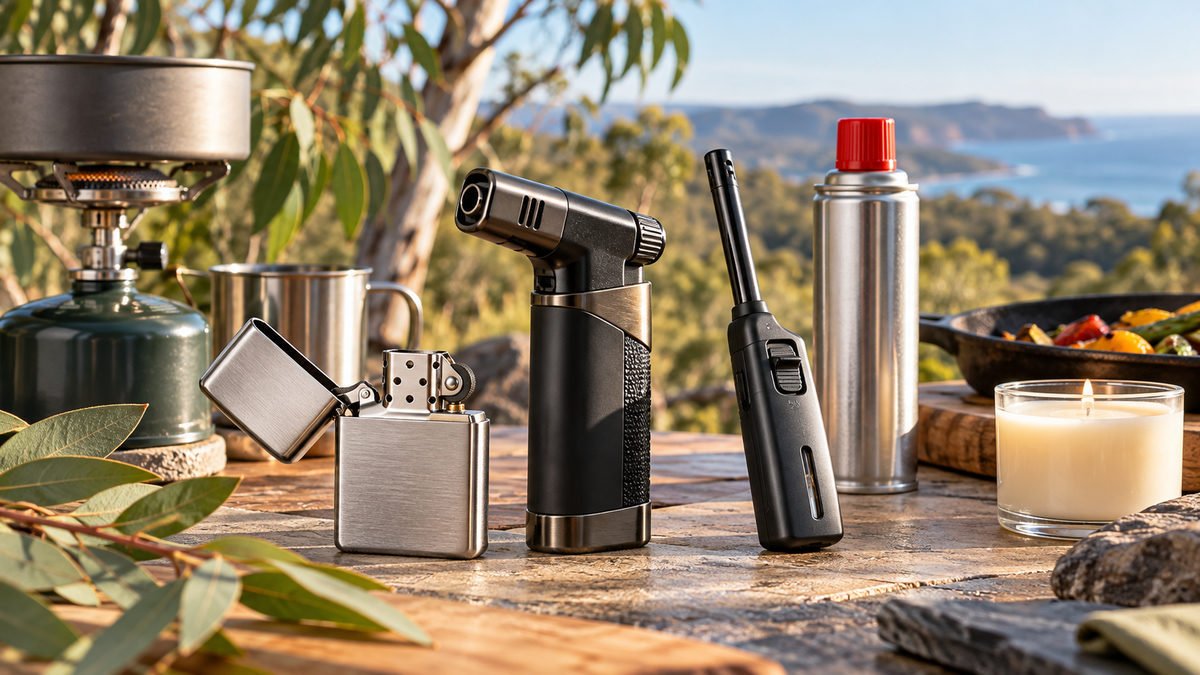
Need a lighter that works reliably, costs less over time and refills easily in Australia? Disposable lighters seem convenient, yet they can become wasteful, unreliable in wind and costly to replace. This guide compares refillable lighters Australia shoppers can buy for smoking, candles, camping, barbecues and cooking.
You will learn how butane, petrol, electric arc and torch models differ. We also cover prices, safety, maintenance, travel rules and the features worth paying for.
1. Refillable Lighters Australia: What to Know Before Buying
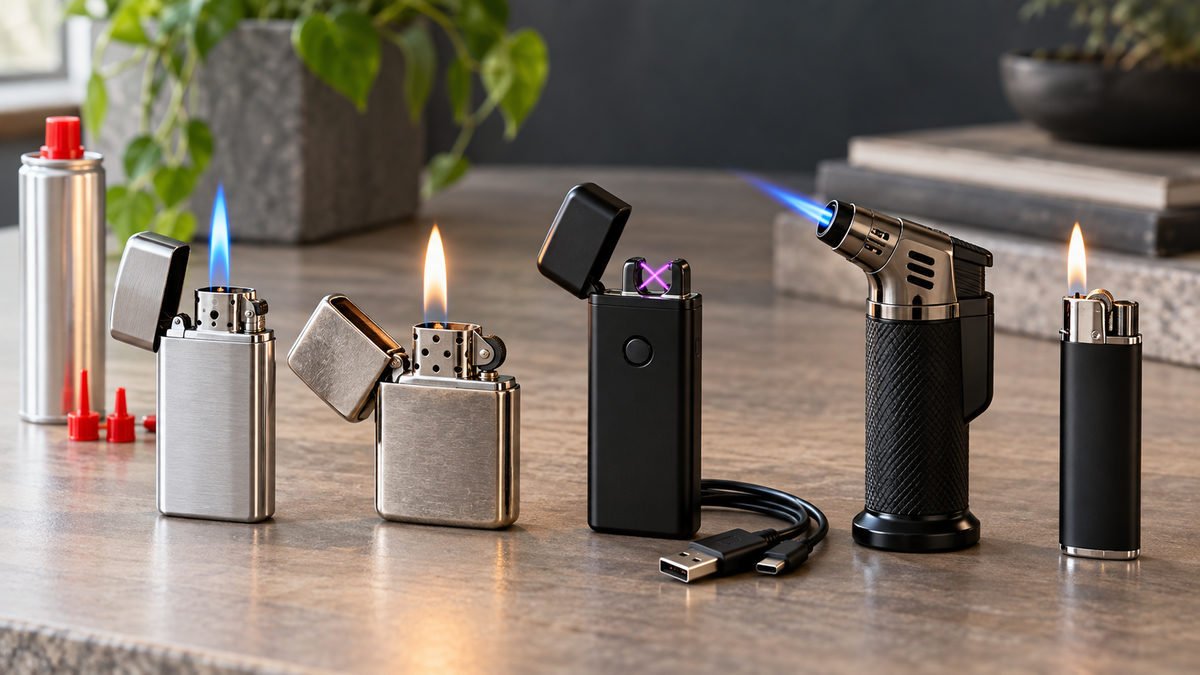
A refillable lighter uses fuel or rechargeable power instead of being discarded after one use. You refill the tank, replace a worn part or recharge the battery when required. Therefore, one well-built lighter can serve you for years.
Disposable lighters usually contain a sealed fuel supply. Once empty, you throw the entire product away. Refillable designs reduce repeat purchases, although they still require fuel, replacement parts or electricity.
Most refillable lighters use one of four systems:
- Butane: Uses pressurised gas and usually creates a soft or jet flame.
- Petrol: Uses liquid lighter fuel, a wick and a replaceable flint.
- USB rechargeable: Uses a battery and an electric heating element.
- Electric arc: Creates a spark between electrodes instead of burning fuel.
Additionally, buyers may need to purchase butane gas, petrol fuel, flints, wicks or charging cables separately. Always check the product inclusions before ordering.
Your intended use should guide the decision. Consider flame type, wind resistance, fuel capacity, size, weight, grip and build quality. Safety locks, protective caps and automatic shut-off features also matter.
Australian availability deserves attention too. Some fuel products have shipping restrictions, while imported models may lack local warranty support. Therefore, check replacement parts, delivery conditions and retailer policies before paying.
2. Compare the Best Refillable Lighter Types in Australia
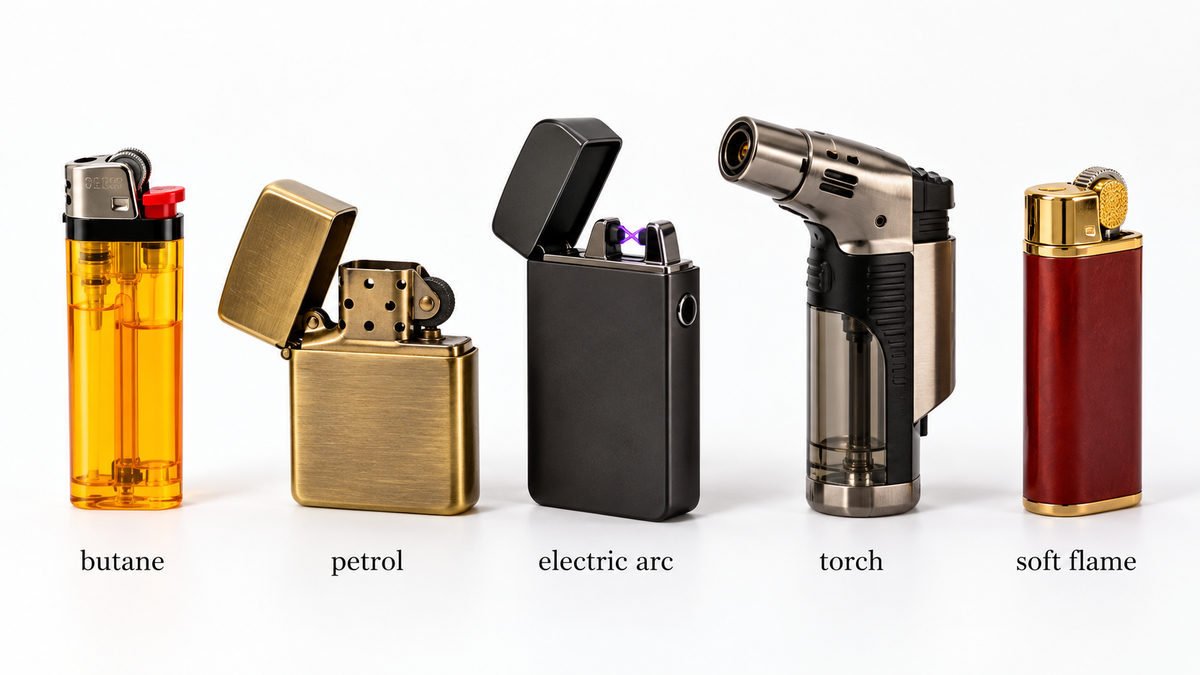
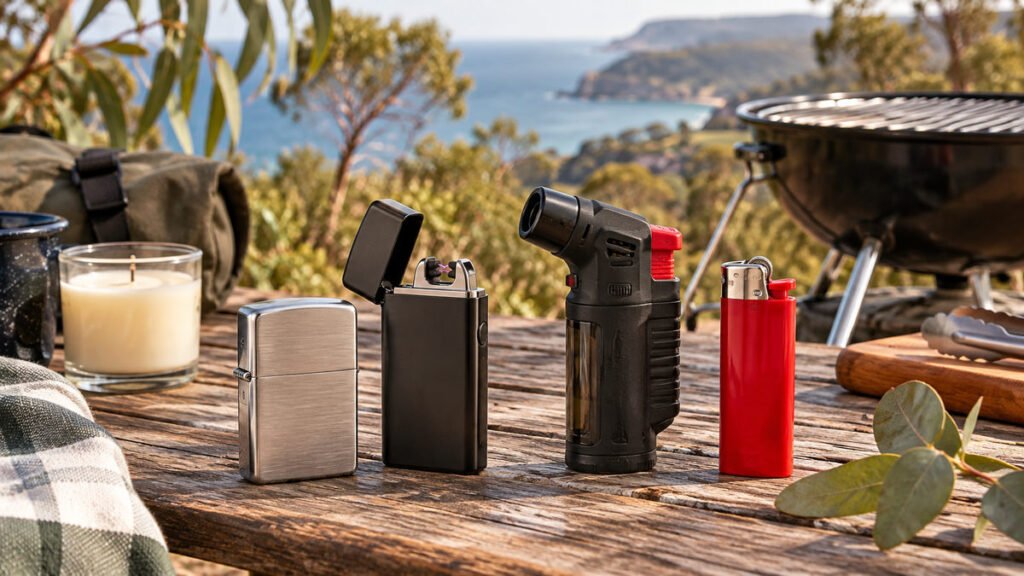
Each lighter type suits different situations. A soft flame works well for everyday tasks, while a jet flame handles wind and concentrated heat more effectively. Learn more in our butane lighters guide.
| Lighter type | Fuel or charging method | Best use | Advantages | Drawbacks | Typical Australian price |
|---|---|---|---|---|---|
| Butane soft flame | Refillable butane gas | Smoking and household tasks | Adjustable, familiar flame and simple operation | Less wind resistant | $10–$40 |
| Jet flame or torch | Refillable butane gas | Camping, barbecues and cooking | Powerful, precise and wind resistant | Uses fuel quickly and produces intense heat | $15–$60 |
| Petrol refillable | Liquid lighter fuel | Classic everyday carry | Metal construction, replaceable flints and wicks | Fuel smell and evaporation | $20–$100+ |
| Electric arc | USB rechargeable battery | Indoor use and moderate wind | No liquid fuel and easy recharging | Needs charging and may struggle with wet conditions | $15–$70 |
| Long-neck candle lighter | Butane or rechargeable battery | Candles, fireplaces and burners | Creates distance between your hand and flame | Larger and less pocket friendly | $10–$45 |
Butane Soft-Flame Lighters
Butane soft-flame lighters create the traditional yellow flame many people recognise. Their adjustable controls let you increase or reduce flame height for different tasks. They suit smoking, candles and general household use.
However, soft flames can go out quickly in strong wind. They also require regular refilling, especially when used at a high flame setting.
Jet Flame and Torch Lighters
Jet lighters create a narrow blue flame with intense, concentrated heat. They work well outdoors because their flame resists ordinary wind better than soft-flame designs.
For instance, a jet lighter can help ignite a barbecue burner or camping stove. Nevertheless, the flame reaches higher temperatures, so careful handling remains essential.
Petrol Refillable Lighters
Petrol models often feature a sturdy metal body, a wick and a replaceable flint. Their distinctive fuel smell appeals to some users, while others prefer odourless butane or electric models.
Petrol evaporates over time, even when the lighter receives little use. Therefore, you may need to refill it before use. A correct wick, flint and fuel insert keep maintenance straightforward.
Electric, Candle and Metal Designs
USB rechargeable lighters use an electric arc instead of a visible fuel flame. They can work in moderate wind and avoid carrying liquid fuel. However, they need regular charging and should stay dry.
Long-neck candle lighters improve reach around jars, fireplaces and barbecue burners. Their extended handle keeps fingers farther from heat. Safety locks also help prevent accidental activation.
Metal refillable lighters usually resist everyday knocks better than lightweight plastic models. They can feel more substantial, although extra weight may matter when carrying one outdoors.
In short, soft flame offers gentle control, while torch flame provides heat and precision. Choose the flame that matches the task rather than selecting the most powerful model.
3. Match a Refillable Lighter to Your Intended Use
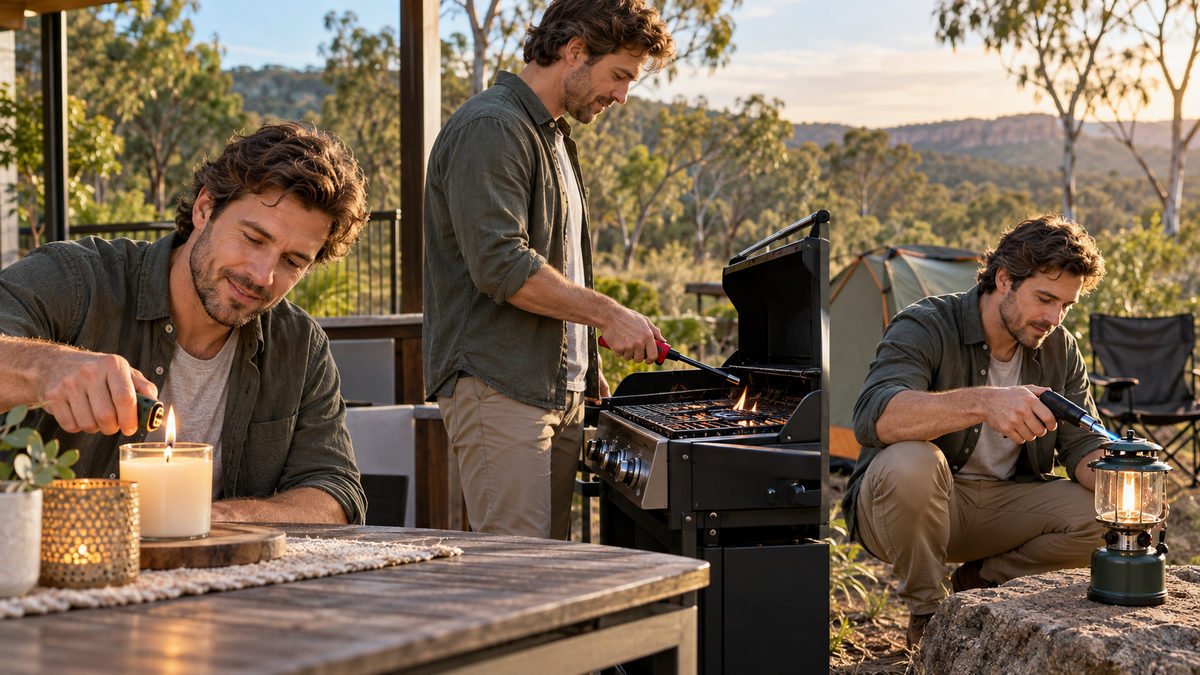
The best lighter depends on where and how often you use it. A compact everyday lighter may not suit camping, while a large torch model can feel awkward indoors. Read our guide on how to choose a lighter.
Everyday Use
Choose a compact butane lighter or electric arc model for routine tasks. Look for dependable ignition, an adjustable output and a comfortable grip.
Additionally, a visible fuel window helps you avoid unexpected empty tanks. A protective cap can also reduce dust entering the burner.
Smoking
Soft-flame butane and petrol models suit users who prefer a controlled, traditional flame. Soft flame usually gives more gentle heat than a torch design.
Fuel taste can matter when the flame approaches smoking materials. Therefore, use clean, compatible fuel and allow any excess vapour to clear before ignition.
Candles and Fireplaces
Long-reach candle lighters provide safer distance from candle jars and fireplace openings. Choose a model with a safety lock and a stable ignition mechanism.
Meanwhile, a flexible neck can help you reach awkward angles. Avoid models that feel loose, flimsy or difficult to switch off.
Barbecues and Cooking
Long-neck butane lighters make it easier to reach burners without placing your hand above the heat. Jet flame models can ignite burners quickly and perform well outdoors.
However, never point a torch lighter toward food, clothing or people. Use the flame only near the intended ignition point.
Camping and Outdoor Activities
Camping lighters need wind resistance, rugged construction and easy fuel access. A jet flame model usually performs better than a soft flame in breezy conditions.
Store the lighter inside a waterproof pouch when possible. Also, keep spare fuel protected and follow storage instructions carefully.
Emergency Kits
For emergency kits, choose a compact lighter with dependable ignition and a long storage life. Petrol models can work well when maintained, while electric models need a charged battery.
Therefore, consider a backup option. Spare fuel, a charging cable or replacement flints can make the kit more dependable.
Budget and Premium Buyers
Budget buyers should prioritise reliable ignition, fuel compatibility, a stable flame and basic safety features. Decorative finishes, oversized branding and unnecessary accessories may not improve performance.
Premium buyers can justify higher prices through stronger construction, replaceable parts, warranty support and consistent flame control. A repairable lighter may offer better long-term value than a cheaper sealed model.
- Best budget choice: Compact refillable butane lighter with adjustable flame.
- Best premium choice: Metal model with replaceable parts and warranty support.
- Best outdoor choice: Wind-resistant jet flame lighter with a protective cap.
- Best candle choice: Long-neck lighter with safety lock.
- Best everyday choice: Small butane or USB rechargeable lighter with visible charge or fuel status.
4. Prices, Value and Where to Buy Refillable Lighters Online in Australia
Refillable lighter prices vary widely across Australia. Basic plastic butane models often cost around $10 to $20. Mid-range everyday models commonly sit between $20 and $50.
Premium metal, branded or specialised lighters can cost $60 to more than $100. However, the highest price does not always guarantee better performance.
Remember to include operating costs. Butane gas, petrol, flints and wicks add small expenses over time. USB models avoid fuel purchases, although their batteries may eventually lose capacity.
A more expensive lighter can offer better value when it includes stronger materials, reliable ignition and replaceable parts. Wind resistance also matters if you regularly use the lighter outdoors.
You can shop through specialist lighter retailers, outdoor stores, tobacconists, department stores and reputable Australian online sellers. Local retailers may provide faster delivery and simpler warranty support.
Before ordering online, check the following details:
- Whether the product ships from Australian stock.
- Expected delivery time and any regional restrictions.
- Return, refund and warranty conditions.
- Customer feedback about ignition and durability.
- Compatible fuel, charging cable and replacement parts.
Fuel may not come with the lighter. Some retailers also cannot send pressurised butane or petrol products through standard delivery services.
Additionally, check product authenticity and model specifications. A local purchase can reduce confusion when you need replacement flints, seals, wicks or compatible accessories.
5. Safe Refilling, Storage and Maintenance for Refillable Lighters
Always refill a butane lighter outdoors or in a well-ventilated area. Extinguish every nearby flame, allow the lighter to cool and follow the manufacturer’s instructions. Step-by-step instructions: how to refill a butane lighter.
Hold the lighter and refill canister away from your face. Use compatible, high-quality butane gas refill Australia products with the correct nozzle.
Nozzle compatibility prevents poor seals and fuel leakage. Cleaner fuel can also reduce burner blockages and inconsistent ignition.
For petrol models, use only the correct lighter fuel. Fill carefully, close the insert securely and allow excess vapour to dissipate before lighting.
Routine maintenance keeps a refillable lighter dependable. Clean the burner area, inspect seals and clear blocked jets only as the manufacturer recommends.
- Replace flints when the wheel no longer creates a reliable spark.
- Trim or replace petrol wicks when they become short, dirty or uneven.
- Keep burner openings free from dust and residue.
- Charge USB models with the correct cable and power source.
- Store electric lighters dry and protect their charging ports.
Weak flames can indicate low fuel, a blocked jet or a damaged seal. Fuel evaporation may affect petrol models, while clicking without ignition can indicate an empty tank or worn spark system.
For USB models, check the cable, charging port and battery indicator. Stop using the lighter if charging fails repeatedly.
Store lighters away from heat, direct sunlight, children and ignition sources. Keep fuel containers in a cool, ventilated location recommended by the label.
Never test for leaks with an open flame. Instead, stop using the lighter and follow the manufacturer’s safety advice.
Stop using any lighter with visible damage, persistent leaks or a cracked fuel chamber. Swollen batteries, damaged charging ports and loose components also require immediate replacement.
Safety locks, child-resistant mechanisms, protective caps and automatic shut-off features add useful protection. Fuel-level windows and battery indicators can also prevent unexpected failures.
6. Australian Safety, Travel Rules and Refillable Lighter FAQs
Are refillable lighters windproof?
Some jet flame lighters resist wind far better than soft-flame models. However, no lighter works reliably in every storm, rain shower or extreme condition. Read our guide to lighter safety and storage.
Can I carry a refillable lighter on an Australian flight?
Airline and aviation rules can change, so check your airline and current guidance before travelling. CASA states that permitted lighters generally travel on your person, not inside baggage.
Blue-flame lighters, lighter fuel and refill canisters may face separate restrictions. Read the current CASA dangerous goods guidance before departure.
How long does a refillable lighter last?
The product may last for years when maintained properly. Fuel can last days or weeks, depending on tank size and frequency of use.
Flints, wicks and batteries have shorter lifespans. Replace these components when ignition becomes unreliable or charging performance drops.
Which fuel works best in a butane lighter?
Use manufacturer-approved butane with a compatible nozzle. Suitable fuel reduces leakage, burner blockage and uneven flame performance.
Never mix incompatible fuels or force a nozzle into the valve. Check the product instructions before refilling.
Are refillable lighters better for the environment?
Reuse can reduce the number of disposable lighters sent to waste. However, fuel production, battery materials and eventual disposal still create environmental impacts.
Therefore, choose a durable model with replaceable parts. Responsible storage and correct disposal also matter.
Are replacement flints and wicks easy to find?
Common flints and wicks are widely available from lighter retailers and some tobacconists. Replacement timing depends on usage, lighter design and component quality.
Do refillable lighters arrive with fuel?
Many arrive empty for safety and shipping reasons. Always confirm whether fuel, flints, wicks, batteries or charging cables come with the product.
Buyer’s Checklist
- Choose the main use, such as smoking, candles, cooking or camping.
- Select a soft flame, jet flame, petrol or electric system.
- Confirm compatible fuel, charging requirements and replacement parts.
- Check safety locks, protective caps and automatic shut-off features.
- Compare the total cost, not only the purchase price.
- Verify Australian delivery, returns and warranty coverage.
Conclusion
The best refillable lighter depends on your intended use. Butane soft-flame models suit everyday tasks, while jet flame lighters perform better outdoors.
Petrol models offer classic metal durability, and USB rechargeable lighters avoid disposable fuel canisters. However, every option needs suitable storage, careful maintenance and responsible handling.
Compare reputable Australian retailers, select the lighter type matching your main use and confirm compatible fuel or charging accessories before ordering.
For related smoking accessories and practical product options, visit Sweet Puff Australia. Compare suitable lighter styles carefully, then choose an option that fits your routine, storage needs and preferred maintenance level.
Comment (1)
[…] Refillable butane lighters store liquid fuel inside a sealed tank under pressure. When you operate the lighter, the fuel changes into vapour and travels through the burner. The ignition system then lights that vapour at the outlet. Compare options in our guide to refillable lighters in Australia. […]