
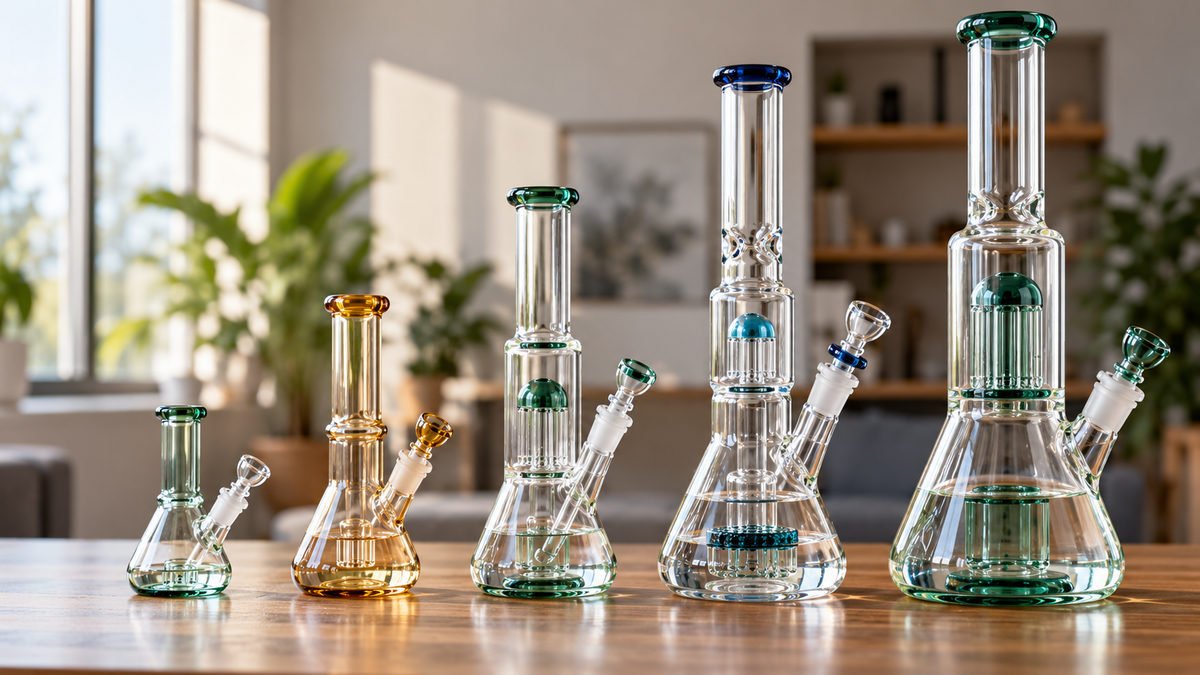
Choosing between a mini bong, compact water pipe, and tall beaker can change every session. This bong sizes guide compares smoothness, portability, cooling, cleaning, and daily comfort. Bong size depends on more than height, so chamber volume and shape matter too.
Water level, base width, filtration, and joint size also affect airflow and stability. Therefore, two bongs with similar heights can feel completely different. This guide explains common sizes clearly, helping you choose a water pipe that suits your space and preferences.
Bong Sizes Guide: What Size Really Means
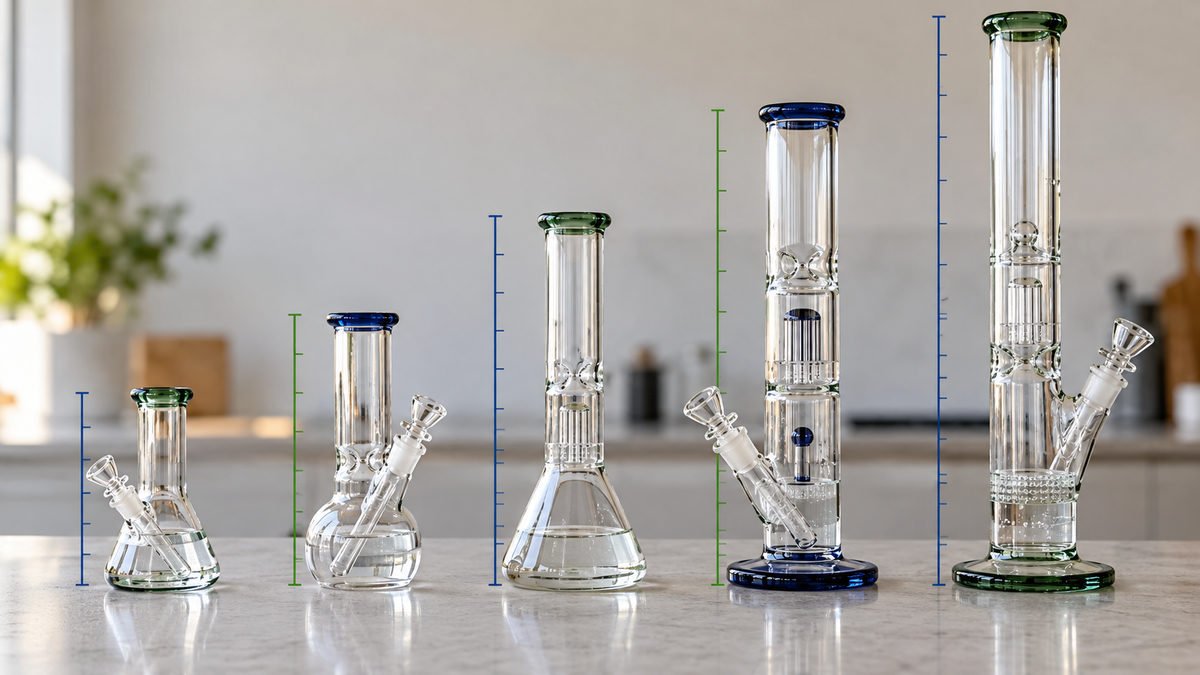
Bong size usually describes several measurements together. Height provides a quick reference, but it does not tell the whole story. Chamber volume, base diameter, joint size, and internal filtration all influence performance.
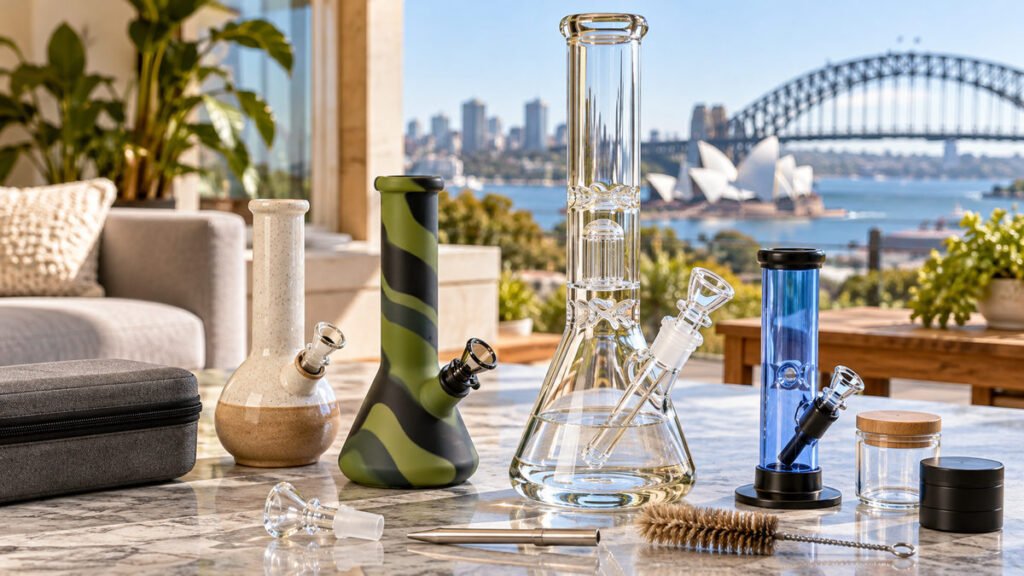
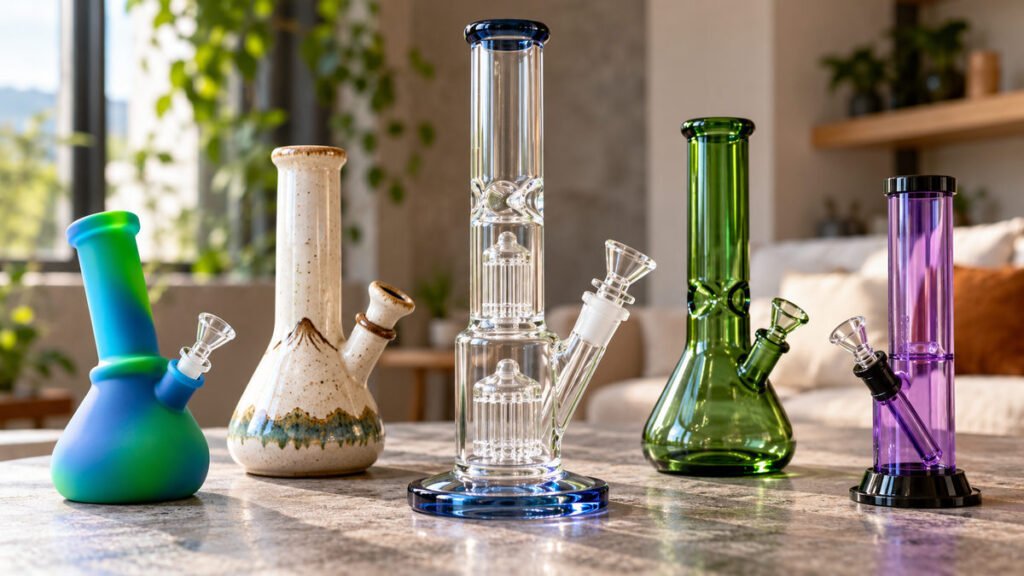
Manufacturers commonly group bongs into five broad height ranges:
- Mini: under 6 inches
- Small: around 6 to 10 inches
- Medium: around 10 to 14 inches
- Large: around 14 to 18 inches
- Extra-large: above 18 inches
These measurements offer a helpful starting point. However, a tall narrow bong may hold less water than a shorter beaker bong. Manufacturer measurements can also include the mouthpiece, base, or removable parts.
Chamber volume and smoke capacity
Chamber volume describes how much space sits inside the main body. A larger chamber can hold more smoke and provide a longer path for cooling. However, it may also require a deeper inhale and more time to clear.
Small chambers fill quickly and often feel more direct. They suit people who prefer shorter draws and less smoke volume. Meanwhile, larger chambers can create a fuller hit for experienced users with greater lung capacity.
Airflow also depends on the downstem, bowl, water level, and percolator. Therefore, chamber size alone cannot predict how easy or comfortable a bong feels.
Base width and joint size
A wider base improves stability and reduces the chance of tipping. It also makes storage easier on a desk, shelf, or coffee table. Straight tubes often use less bench space, but tall narrow designs may need extra care.
Joint size relates to bowl compatibility and available accessories. Common sizes include 10mm, 14mm, and 18mm, although designs vary. Importantly, joint size does not determine the bong’s overall height or chamber capacity.
Think of dimensions as your first filter. Then consider the percolator, ice catcher, base shape, and cleaning access. These features often change the experience more than a few extra inches of height.
Bong Size Chart: Mini, Small, Medium, Large, and Extra-Large
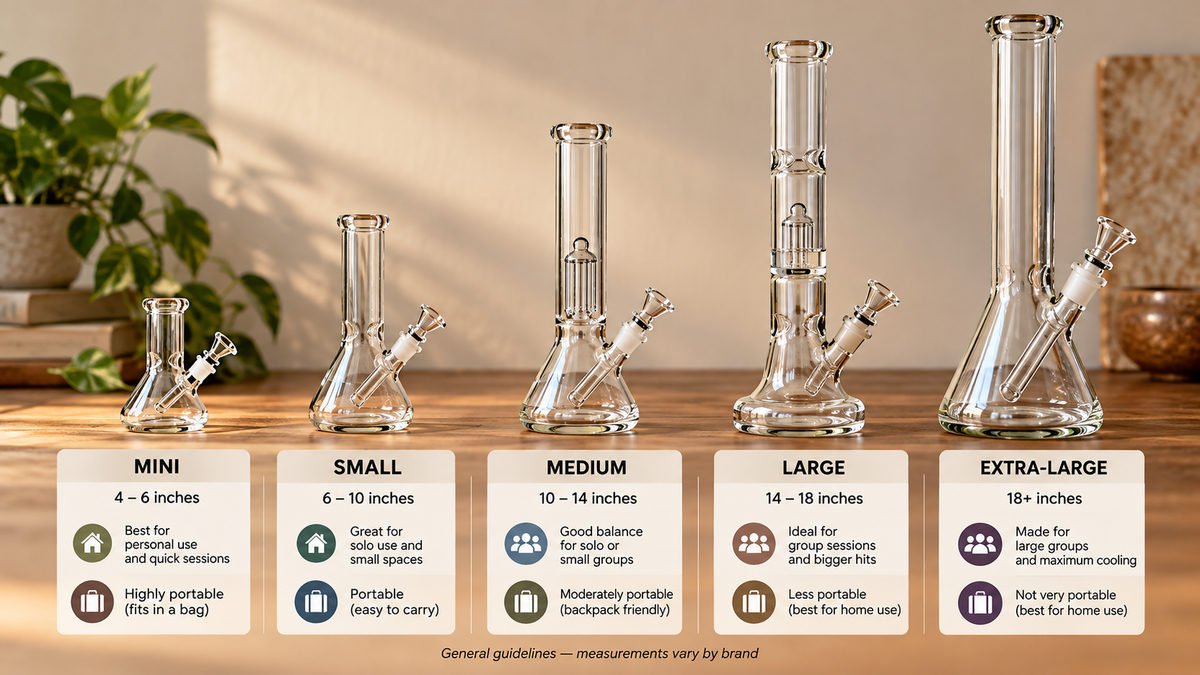
The chart below compares common bong sizes using practical factors. Measurements vary between brands, so treat them as general guidelines. A beaker bong may have excellent stability without looking especially tall. For the smallest options, see mini bongs in Australia.
| Size | Typical height | Portability | Smoke capacity | Cooling potential | Stability | Cleaning effort | Ideal use |
|---|---|---|---|---|---|---|---|
| Mini | Under 6 inches | Very high | Low | Limited | Varies | Low | Travel and compact spaces |
| Small | 6–10 inches | High | Low to moderate | Moderate | Good with a wide base | Low | Portable everyday use |
| Medium | 10–14 inches | Moderate | Moderate | Good | Generally good | Moderate | Beginners and daily use |
| Large | 14–18 inches | Low | High | Very good | Good with a broad base | Moderate to high | Home use and experienced users |
| Extra-large | Above 18 inches | Very low | Very high | High | Depends on design | High | Dedicated home setups |
Mini and small bongs
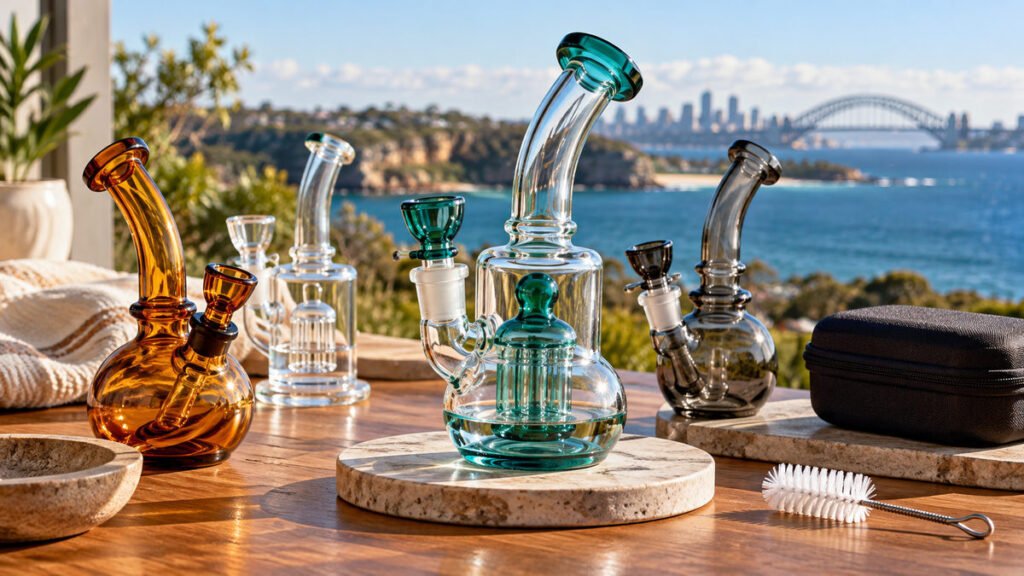
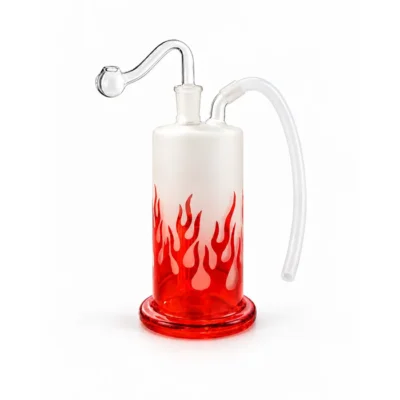
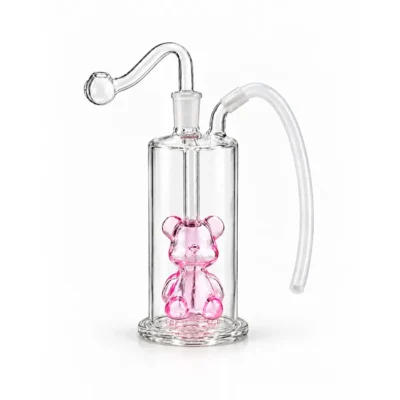
Mini bongs are usually under 6 inches tall. They fill quickly, need little water, and fit easily inside a small cupboard or protective case. However, they offer less room for smoke expansion and often support fewer accessories.
Small or compact bongs usually measure between 6 and 10 inches. They provide more cooling distance than mini models while remaining easy to store. As a result, they suit people who want a portable bong for regular use.
Medium bongs
Medium bongs offer one of the most useful all-round sizes. Their 10 to 14-inch height allows room for water, smoke travel, and simple filtration. They also remain manageable on a desk or shelf.
For many beginners, a medium bong provides enough cooling without demanding a very deep inhale. Additionally, medium designs often include stable bases and easier-to-clean chambers.
Large and extra-large bongs
Large bongs provide bigger chambers and longer smoke paths. They can deliver cooler, more substantial hits when the design includes suitable filtration. However, they require more storage space and cleaning solution.
Extra-large bongs usually suit dedicated home setups or group sessions. They may include multiple percolators and large bases. Nevertheless, their height can increase breakage risks, cleaning time, and storage challenges.
Remember that a beaker bong’s broad base may add stability without adding much height. Therefore, compare the full footprint rather than focusing only on the vertical measurement.
Small vs. Large Bongs: How Size Changes the Experience
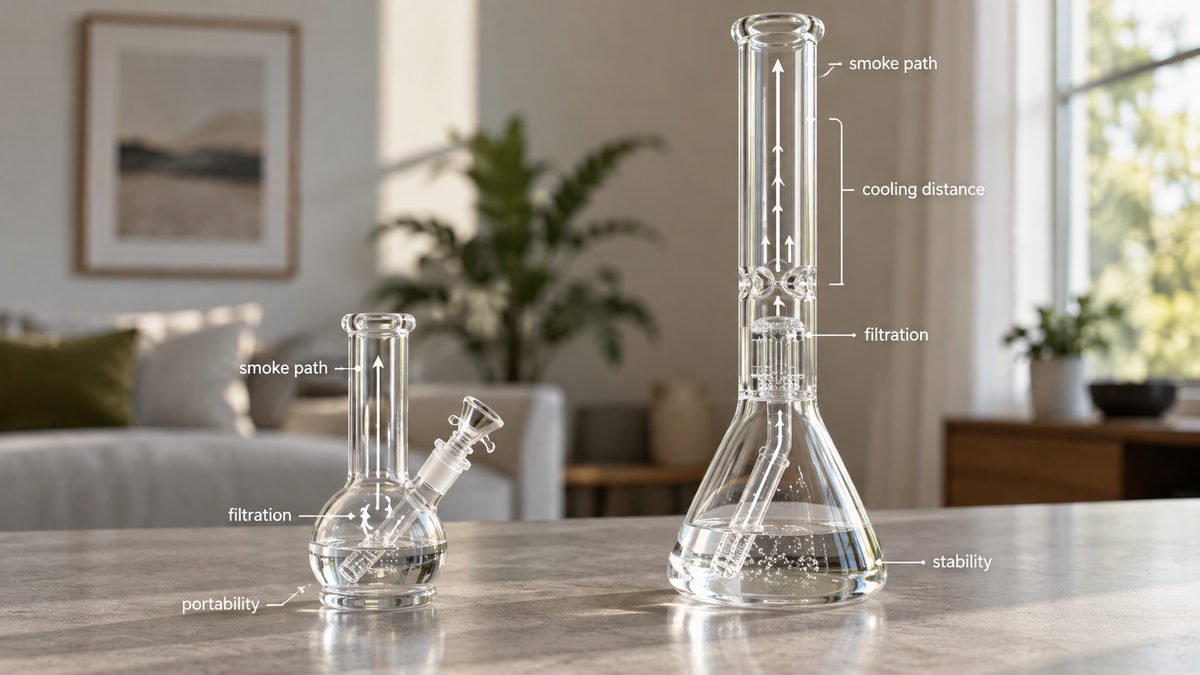
Small and large bongs can both work well, but they suit different habits. Small models prioritise convenience, quick cleaning, and easier storage. Large models prioritise chamber capacity, smoke travel, and a stronger home setup. Read our full mini bong vs large bong comparison.
Portability and storage
A small bong fits more easily into a cupboard, drawer, or protective case. It also suits a backpack-friendly setup when local rules and transport requirements allow it. Meanwhile, a large bong usually needs a permanent place at home.
Small models also weigh less and take less time to move. Large glass water pipes need more careful handling around shelves, benches, and pets. Therefore, your available storage space should influence your decision.
Cooling and smoothness
Larger chambers can hold more smoke and create a longer cooling path. They may also provide room for extra water and multiple filtration stages. However, bigger does not automatically mean smoother.
Percolator design, water contact, airflow, and draw technique matter just as much as height. A well-designed medium bong can feel smoother than a poorly designed large model. Additionally, too much filtration can increase draw resistance.
Small bongs often preserve a more direct flavour because smoke travels a shorter distance. Large bongs may diffuse smoke more extensively, which can soften the feel. Your preferred balance depends on taste, comfort, and hit strength.
Stability and hit intensity
A broad beaker base can make a large bong stable and reassuring on a table. In contrast, a tall, narrow straight tube may tip more easily despite its smaller footprint. Base width often matters more than height.
Large chambers can create a more substantial hit because they hold more smoke. They may require a larger inhale, which can feel uncomfortable for beginners. Small bongs can provide satisfying hits when their airflow and downstem work well.
Therefore, small bongs are not automatically less effective. They simply offer less capacity and a shorter smoke path. A compact design can still include effective water contact and useful filtration.
Does a larger bong provide better filtration?
Not necessarily. Filtration depends mainly on water contact, percolator design, airflow, and correct water levels. A larger chamber gives designers more space, but size alone does not filter smoke.
For example, a medium bong with a well-designed percolator may outperform a tall tube with minimal water contact. Choose the filtration style first, then select a size that supports comfortable airflow.
Choosing the Best Bong Size for Your Smoking Preferences
The best bong size depends on your routine, comfort, storage, and preferred hit strength. Start with where you will use it. Then consider how often you want to clean, move, and refill it.
Best bong size for beginners
A stable small-to-medium bong usually suits beginners best. Look for a design around 8 to 12 inches tall, with simple filtration and an accessible chamber. This size offers useful cooling without creating a demanding smoke volume.
Additionally, choose a wide base and removable parts. Simple designs are easier to understand, clean, and maintain. Avoid complicated multi-percolator setups until you know which features you prefer.
Best bong size for everyday use
A medium bong often provides the best daily balance. It can deliver comfortable cooling while remaining manageable on a desk or shelf. It also holds enough water for regular sessions without requiring excessive cleaning time.
For a daily-use desk setup, prioritise a stable base, durable glass, and easy access to the downstem. These details often matter more than decorative features.
Best size for travel
A mini or compact bong suits travel because it fits inside a protective case. Choose a stable base, removable parts, and a design that can empty safely. Always check local laws and transport requirements before carrying or using any accessory.
A backpack-friendly compact bong should also resist movement inside its case. Padding and separate storage for the bowl can help reduce accidental damage.
Best size for strong or smooth hits
A larger chamber can produce more smoke, but it does not suit everyone. Lung capacity, comfort, tolerance, and draw technique matter more than height alone. Start with a manageable size before moving to a larger design.
For smoother hits, consider a medium or large bong with sufficient water volume. A well-designed percolator and optional ice catcher can provide additional cooling. However, more parts also mean more cleaning.
Best size for group sessions and home use
Large beaker bongs and multi-stage designs can suit home-only setups. Their broad bases provide useful stability, while larger chambers support more smoke volume. Nevertheless, they require more storage space and careful handling.
Consider your smoking frequency, lung capacity, preferred hit strength, storage, and cleaning habits. A compact model may suit someone who moves often. A larger water pipe may suit an experienced user with a dedicated, secure space.
How Bong Shape, Percolators, and Water Levels Affect Size
Shape changes how a bong uses its height and width. Beaker bongs offer broad bases and often hold more water. Straight-tube bongs remain narrower, taller, and more space-efficient. Learn how percolator bongs change water levels.
Beaker versus straight-tube designs
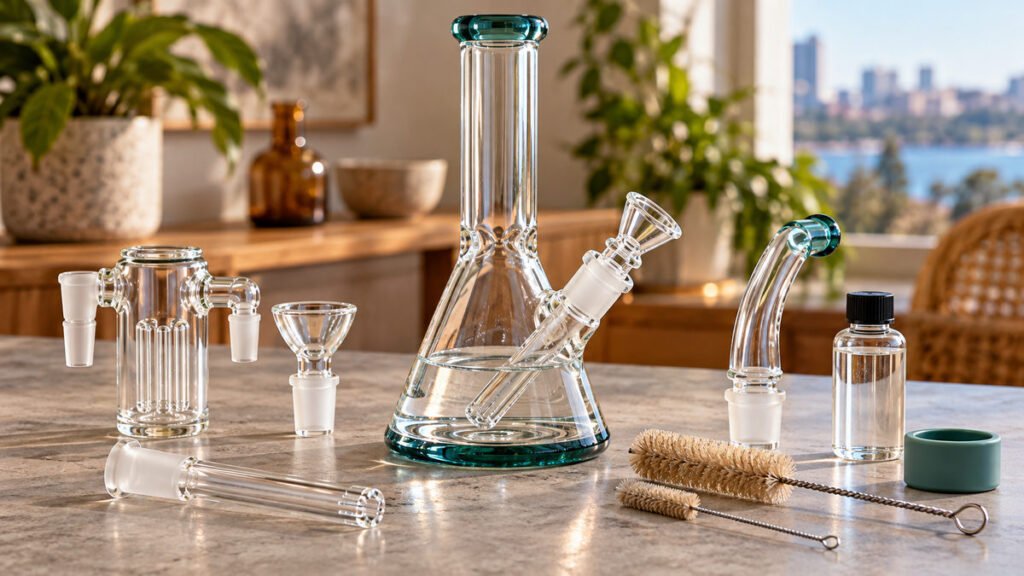
A beaker bong usually provides strong stability because of its wide lower section. It can also offer more chamber room without becoming extremely tall. This shape suits people who want capacity and a secure tabletop position.
Straight tubes use a simple vertical path. They often occupy less bench width, but their taller profile may increase tipping risks. They can also require a more deliberate inhale, depending on chamber volume.
Height, percolators, and ice catchers
Height affects smoke travel, cooling time, draw volume, and the physical effort needed for a comfortable inhale. However, added height cannot replace thoughtful internal design. A shorter bong may perform well with the right water contact.
Percolators break smoke into smaller bubbles and add water contact. They can improve diffusion, but they may also increase draw resistance and cleaning effort. Therefore, complex filtration works best when the chamber has enough space for steady airflow.
Ice catchers can cool smoke without requiring an extremely tall bong. They hold ice above the water line, creating another cooling stage. However, extra parts may trap residue and make cleaning more involved.
Multiple filtration stages can work well in a medium or large chamber. They need enough room for airflow without making the bong unnecessarily tall. More filtration is not always better if it makes the draw too restrictive.
How much water should you use?
Start by adding enough water to cover the downstem or percolator openings. Then check that the water does not reach the mouthpiece. Take a gentle test draw before use and watch for splashback.
Too little water reduces filtration and may create a harsh draw. Too much water can cause bubbling, splashback, or unwanted moisture near the mouthpiece. Adjust the level gradually because every model has different internal dimensions.
Mini bongs generally hold the least water, while large beaker and multi-stage designs hold more. However, there is no universal capacity for each size. Shape, downstem length, percolator design, and base width all change the final amount.
Bong Maintenance, Safety, and a Simple Buyer’s Checklist
Smaller bongs are usually easier to rinse, soak, inspect, and store. Larger models need more cleaning solution and may contain hard-to-reach chambers. Multi-percolator designs can take even longer to clean thoroughly. Follow our bong care and maintenance guide for any size.
Choose thicker glass, a wide base, protected joints, and accessible chambers when durability matters. Keep the bong away from bench edges, pets, children, and busy walkways. Store removable parts separately when possible.
For responsible use, start with a small amount and take comfortable draws. Avoid sharing mouthpieces without cleaning them. Never drive or operate equipment while impaired.
Australian laws vary by state and territory. Before purchasing, possessing, transporting, or using a bong, confirm local rules and age requirements. The Australian Government’s drug laws guidance explains why checking local requirements matters.
Use this checklist before choosing your water pipe:
- Intended location and available storage
- Portability and protective case requirements
- Height and chamber volume
- Base width and stability
- Filtration style and draw resistance
- Ice catcher or percolator needs
- Cleaning access and removable parts
- Joint size and accessory compatibility
- Budget and glass thickness
- Local legal and age requirements
Choose a mini bong for travel, a small bong for portability, and a medium bong for beginners or everyday use. Large models suit experienced home users, while extra-large designs suit dedicated setups.
Conclusion
Bong size affects portability, cooling, smoke volume, stability, cleaning, and storage. However, height is only one part of the decision. Chamber volume, shape, filtration, water level, base width, and personal comfort can change the experience just as much.
Mini and small bongs suit travel and convenience. Medium bongs offer the best all-round balance for many users. Large and extra-large models provide more chamber capacity and filtration potential, but they demand more space, care, and cleaning.
Use the buyer’s checklist to compare height, chamber capacity, filtration, portability, and maintenance needs. Then choose the smallest water pipe that delivers the comfort and experience you want.
When comparing water pipes, Sweet Puff Australia can help you explore designs, accessories, and care essentials that suit different spaces and routines. Always compare practical features first, including size, stability, cleaning access, and responsible-use requirements.
Comment (1)
[…] permanent attachments. Write down the measurements before shopping for a case. Measure first; our bong sizes guide […]