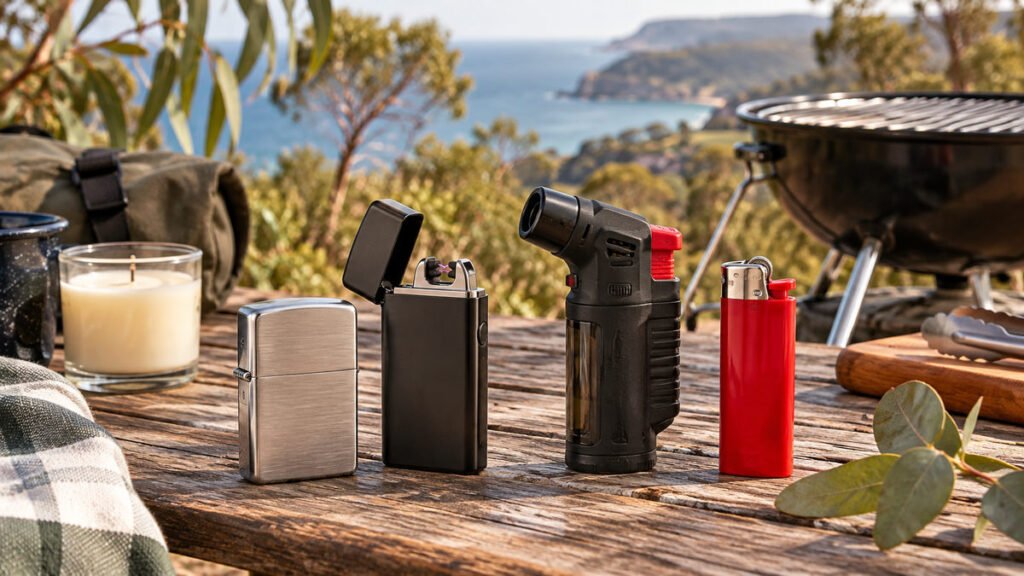
Ever tried lighting a candle, camp stove, or cigarette outdoors, only to watch an ordinary flame disappear in the wind? Windproof lighters explained simply, these models use focused flames, protective housings, or electric arcs to keep ignition more reliable. However, windproof does not always mean waterproof, indestructible, or effective in every weather condition. This guide compares flame types, fuel systems, charging, safety, maintenance, and buying considerations for Australian users.
Windproof Lighters Explained: What They Are and Why They Matter
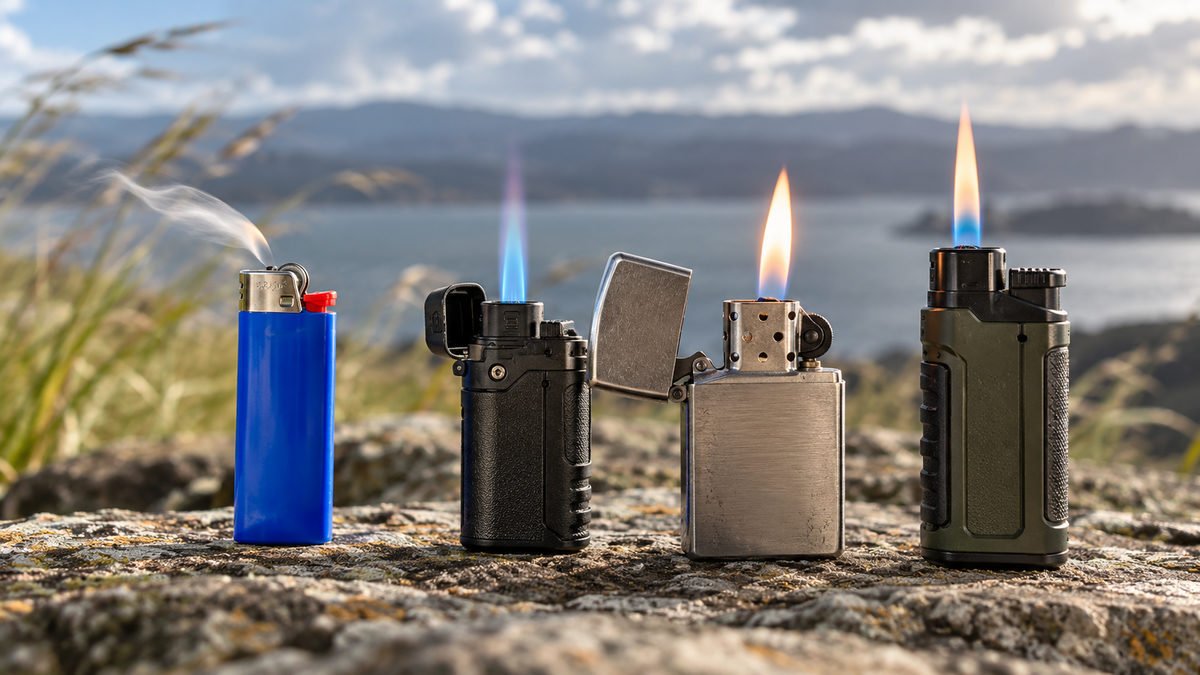
A windproof lighter is designed to maintain ignition or flame performance during stronger airflow than a conventional soft-flame lighter. Instead of relying on a broad yellow flame, it may use a concentrated jet, protective cover, or electrical arc. Therefore, it can offer more dependable lighting outdoors and in breezy areas.
People use windproof lighters for camping, hiking, smoking, cigars, candles, barbecues, fireplaces, fire starters, boating, and emergency kits. Additionally, they can help with household jobs when a standard lighter repeatedly goes out. Their design makes them useful wherever airflow creates an ignition problem.
However, “windproof” describes wind resistance, not complete weather protection. A lighter may resist ordinary breezes but fail during heavy gusts, driving rain, extreme cold, high altitude, or low fuel. Moreover, water can damage valves, ignition parts, electrodes, and electronic circuits.
Most windproof models resist wind or relight quickly after the flame goes out. They are not guaranteed to work in every environment. For example, strong airflow can cool a flame, disturb fuel delivery, or prevent an arc from forming between its electrodes.
The main technologies include butane jet flames, enclosed flames, protected soft flames, and rechargeable electric arcs. Each option suits different tasks. Outdoor enthusiasts may prefer a jet flame, while household users might value an enclosed flame or arc lighter.
How Windproof Lighter Technology Works
Jet and Torch Flames
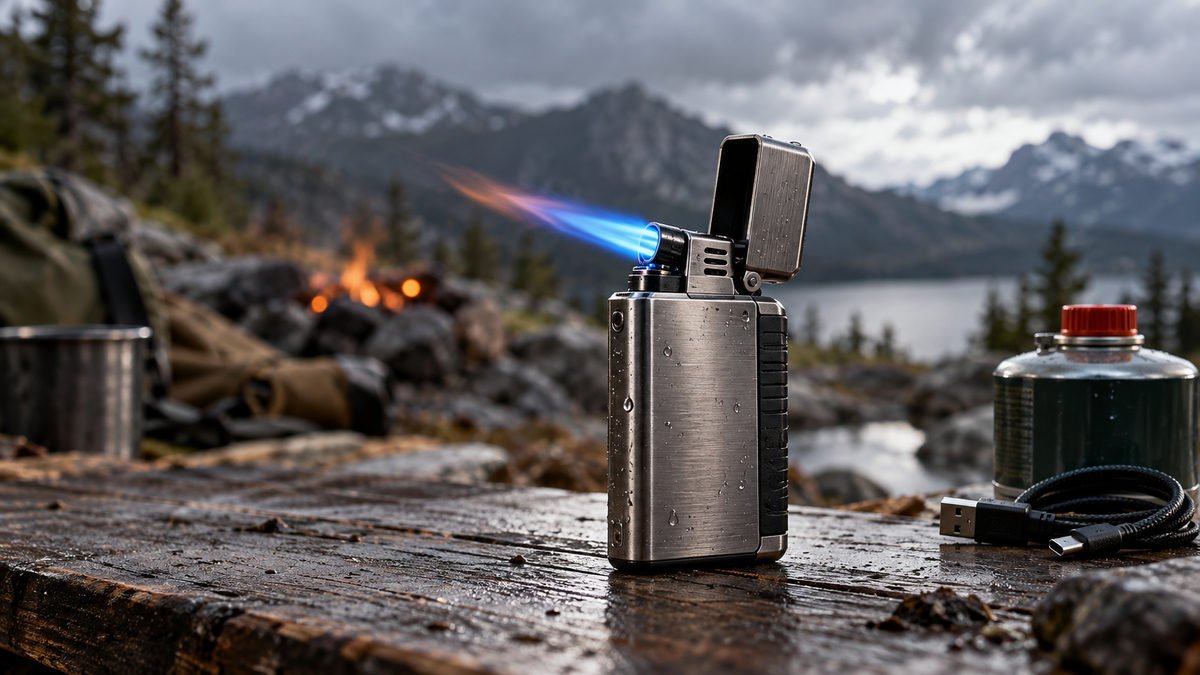
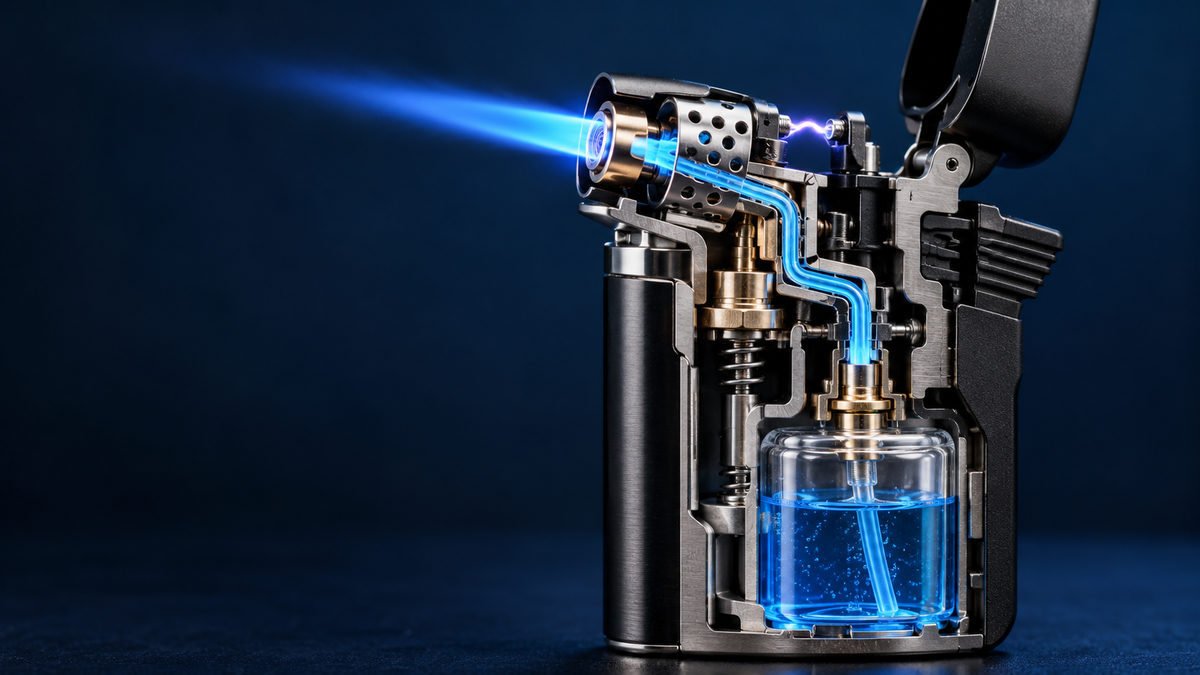
Jet and torch lighters use pressurised butane to create a narrow blue flame. The nozzle mixes fuel with air and directs the burning gas through a small opening. As a result, the flame becomes hotter, more focused, and less vulnerable to ordinary wind.
Unlike a broad yellow flame, a jet flame has a concentrated shape. Therefore, it can transfer heat quickly to a candle wick, fire starter, cigar, or camping material. However, its higher temperature can scorch paper, damage delicate surfaces, or overheat small objects.
A fuel valve controls the butane flow, while a flame adjustment wheel changes the flame height. Additionally, piezoelectric ignition creates a spark when you press the trigger. The spark ignites the fuel without requiring a separate match or flint.
Protective Housings
Some models protect the flame with a lid, wind guard, recessed burner, mesh screen, or enclosed combustion area. These parts reduce direct airflow around the ignition point. Consequently, the lighter can maintain a gentler flame in conditions that would extinguish an open soft flame.
Enclosed designs also improve handling around candles and household objects. Meanwhile, the wider flame remains easier to see than a tiny blue jet. This makes visual control simpler, especially when lighting a candle inside a jar.
Electric Arc Systems
Electric arc or plasma lighters create a high-voltage arc between two or more electrodes. They do not burn liquid fuel. Instead, the electrical discharge produces enough heat to ignite suitable materials placed within the arc.
Because wind cannot easily blow out an electrical arc, these lighters often perform well outdoors. However, they need a charged battery and suitable electrode spacing. Thick wicks, wide materials, or wet objects may not ignite easily.
Windproof technology differs from flame-resistant construction. Wind resistance concerns whether the lighter operates during airflow. In contrast, flame-resistant materials concern how the casing or nearby components react to heat or accidental flame exposure.
Therefore, a windproof lighter may still require brief protection from severe wind. Cupping your hand around the ignition area can improve reliability. Always keep the flame away from clothing, dry grass, tents, and other combustible materials.
Types of Windproof Lighters and Their Best Uses
Butane Torch and Jet Flame Lighters
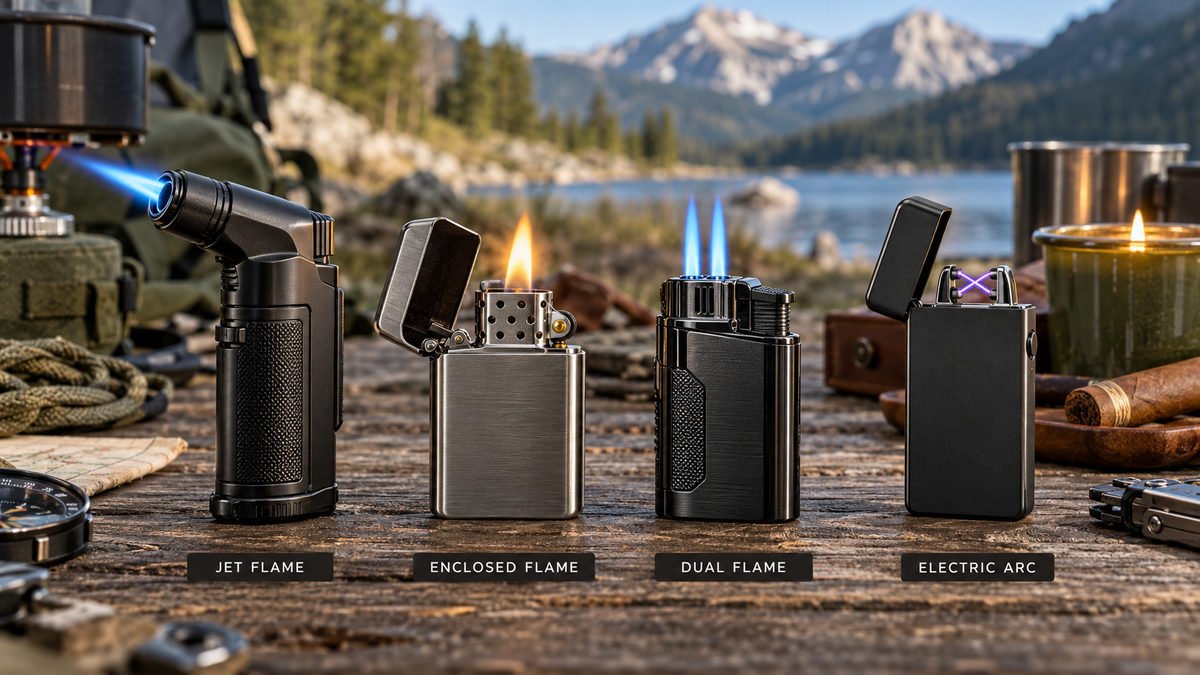
Butane torch lighters provide strong wind performance, fast ignition, and high heat. Many models offer refillable tanks and adjustable flames. Additionally, they work well for camping, cigars, candles, fire starters, barbecues, and household utility tasks. See our full torch lighter vs regular lighter comparison.
A single jet suits precise lighting, while a multi-jet burner spreads heat across a wider area. However, multiple jets usually consume fuel faster. They may also produce more heat than delicate materials can tolerate.
Enclosed-Flame and Protected Soft-Flame Lighters
Enclosed-flame lighters use a wider, gentler flame inside a protective housing. They offer easier visual control than blue jet flames. Therefore, they suit candles, pipes, fireplaces, and general household lighting.
These models may resist ordinary breezes, although they usually provide less heat than a torch. Their controlled flame can reduce the chance of scorching a candle rim or nearby surface. Nevertheless, heavy wind may still overwhelm the protected flame.
Electric Arc or Plasma Lighters
Electric arc lighters use rechargeable batteries rather than liquid fuel. They typically charge through USB and produce no open flame during operation. As a result, they appeal to people who prefer reduced fuel handling and smoke-free ignition.
Arc models suit candles, paper fire starters, and small household tasks. They can also help during low-fuel trips. However, battery dependence remains a limitation, especially when you forget the charging cable or travel for several days.
Dual-Flame and Multi-Function Models
Dual-flame lighters combine a soft flame with one or more jet flames. This arrangement provides flexibility for different materials and tasks. For instance, you might use the soft flame for a candle and the jet flame for a cigar.
However, combination models can cost more and require additional maintenance. They may also become larger and heavier than single-purpose lighters. Therefore, choose one only if you genuinely need both flame styles.
| Feature | Windproof model | Regular soft-flame lighter |
|---|---|---|
| Wind performance | Usually stronger in breezes | Often extinguishes quickly |
| Heat | Moderate to very high | Lower and broader |
| Fuel source | Butane or rechargeable battery | Usually butane or disposable fuel |
| Refillability | Common in premium models | Varies by design |
| Cost | Often higher | Usually lower |
For camping and hiking, a compact jet lighter offers quick ignition and strong heat. Meanwhile, an arc lighter can suit trips where carrying fuel feels inconvenient. Enclosed models work well for controlled household use.
Specialist tasks need extra care. A torch can light cigars, grills, and fire starters quickly. However, its intense heat may damage candle wax, thin paper, wood finishes, or other delicate materials.
Performance, Fuel, Charging, and Weather Resistance
Refillable torch lighters usually require refined butane made for lighter use. Compatible fuel helps reduce clogging and inconsistent flames. Additionally, a clean nozzle supports steady ignition and prevents uneven burning. Learn more in our butane lighters guide.
Always follow the manufacturer’s fuel instructions. Different valves and refill systems may require specific procedures. Using unsuitable fuel can increase leaks, clog the jet, or damage internal seals.
Electric lighters need regular USB charging and a suitable cable. Battery indicators can show when power is low. However, a drained battery may create a greater limitation than an empty fuel tank because you cannot restore operation instantly.
How long a windproof lighter lasts depends on several separate factors:
- Casing lifespan: Quality metal or reinforced plastic may last for years with careful handling.
- Ignition lifespan: Piezo systems and electrodes eventually wear through repeated use.
- Fuel duration: Flame height and ignition frequency determine how quickly butane disappears.
- Battery runtime: Arc models depend on battery capacity and charging habits.
Frequency of use, flame setting, fuel quality, storage temperature, seal condition, drops, dust, and moisture all affect performance. Therefore, a lightly used lighter may last far longer than one used dozens of times daily.
Wind resistance does not equal waterproofing. Water can affect ignition contacts, fuel pathways, valves, seals, and electronic boards. If the lighter becomes wet, dry it fully before testing or charging.
Cold weather can reduce butane pressure and battery performance. High altitude may also affect fuel delivery and ignition. Meanwhile, rain can extinguish open flames and wet the material you are trying to light.
Windproof lighters offer outdoor reliability, fast ignition, refillability, and useful durability. However, they can consume fuel quickly, produce intense heat, require maintenance, cost more, and create greater safety concerns than ordinary lighters.
Safe Use, Refilling, Storage, and Travel Rules
Safe Ignition
Point the flame away from your body, clothing, hair, and nearby people. Keep fingers clear of the burner and use the lowest practical flame height. Additionally, never ignite a lighter near petrol, solvents, aerosols, gas leaks, or other flammable vapours. Read our guide to lighter safety and storage.
Use extra care around tents, vehicles, dry grass, curtains, and bedding. Never leave a lit lighter unattended. Moreover, allow the casing to cool before placing it in a pocket, bag, drawer, or storage container.
Refilling a Butane Lighter
Let the lighter cool completely before refilling. Turn it off and move to a well-ventilated area away from ignition sources. Follow the manufacturer’s instructions, especially if the design requires bleeding residual gas.
- Check that the lighter is cool and switched off.
- Hold it away from your face and body.
- Use compatible butane and the correct refill nozzle.
- Refill upright or in the position specified by the manufacturer.
- Wait several minutes before testing the flame.
Never refill beside a candle, stove, barbecue, cigarette, or running engine. If fuel leaks or you smell strong butane, stop immediately and ventilate the area. Do not ignite the lighter until the vapour has dispersed.
Charging an Electric Arc Lighter
Use the supplied cable or a compatible replacement. Inspect the charging port for moisture, dust, bent contacts, or damage. Additionally, keep the lighter dry and stop charging if the casing becomes unusually hot.
Do not use damaged chargers, frayed cables, swollen batteries, or cracked casings. Allow a hot lighter to cool before charging. Keep charging away from bedding, paper, direct sunlight, and other combustible materials.
Storage and Travel
Store a windproof lighter away from children, pets, direct sunlight, heat sources, moisture, and combustible materials. Secure the safety lock when available. Furthermore, avoid leaving it inside a hot car, where pressure and battery risks can increase.
Airline rules vary by country, carrier, and lighter type. In Australia, the Civil Aviation Safety Authority’s lighter guidance states that some lighters may be carried on your person, not in checked baggage. Blue-flame lighters, torches, fuel, and refills may face stricter restrictions.
Always check the current airline and aviation authority requirements before travelling. Never pack fuel casually or assume an approved household lighter is automatically permitted on an aircraft.
Dispose of empty or damaged lighters according to local waste guidance. Rechargeable models may require battery recycling. Additionally, never puncture, burn, crush, or dismantle a lighter or lithium battery.
Maintenance, Troubleshooting, and Choosing the Right Model
Routine Maintenance
Wipe the casing with a dry or slightly damp cloth. Clear dust around the burner, lid, and protective cover. Additionally, inspect the nozzle, electrodes, seals, trigger, and flame adjustment control for visible damage. For a full checklist, read how to choose a lighter.
Follow the manufacturer’s cleaning instructions. Avoid sharp objects because they can damage jets, electrodes, and protective screens. After using cleaning products or releasing fuel, allow every residue to evaporate before ignition.
Common Troubleshooting Problems
A lighter that fails to ignite may have empty fuel, trapped air, a clogged jet, poor-quality butane, a weak battery, moisture, or incorrect flame adjustment. Therefore, check the simplest causes first.
- No flame: Check fuel level, battery charge, safety lock, and ignition sound.
- Weak flame: Inspect the nozzle, flame setting, fuel quality, and temperature.
- Uneven flame: Look for dirt, damaged seals, or a blocked burner.
- No arc: Charge the battery and inspect the electrodes for moisture or debris.
- Strong fuel smell: Stop using the lighter and check for leaks safely.
Do not keep clicking a faulty lighter near leaked fuel. Similarly, do not force a blocked jet with a needle or blade. Replace the lighter if the ignition system, tank, battery, or casing appears damaged.
Buying Checklist
Consider these points before choosing a windproof lighter:
- Flame type and heat level
- Realistic wind-resistance claims
- Butane fuel or rechargeable power
- Refillability and fuel availability
- Charging method and battery indicator
- Build quality, grip, size, and weight
- Lid design, safety lock, and flame adjustment
- Flame visibility and electrode spacing
- Warranty terms and overall price
Choose a jet flame when you need high heat, quick ignition, or longer trips without charging. It also suits situations where compatible butane is readily available. However, rain and fuel handling may reduce its convenience.
Choose an electric arc lighter for smoke-free operation, rechargeable convenience, and reduced fuel handling. It works particularly well for candles and small household tasks. Nevertheless, you must maintain battery charge and protect the electronics from water.
For camping and hiking, select a compact jet lighter. For candles and household use, choose a controlled enclosed flame. For cigars and high-heat tasks, choose a torch. Meanwhile, an arc lighter suits everyday rechargeable convenience.
Most importantly, no lighter is completely windproof or universally waterproof. Match the performance claim to your actual environment, task, fuel access, charging habits, and safety requirements.
Conclusion
Windproof lighters use concentrated flames, protective housings, or electric arcs to improve ignition reliability in moving air. Jet and torch models offer high heat and strong outdoor performance. Enclosed flames provide control, while arc lighters offer rechargeable convenience.
However, these products remain wind-resistant rather than completely windproof or waterproof. Safe use depends on compatible fuel, correct charging, careful storage, regular maintenance, and current travel compliance.
Choose the flame type and power source that match your main use. Then verify safety features, weather limitations, refill or charging requirements, and current travel rules before buying or carrying a windproof lighter.
For Australian shoppers comparing lighters and related accessories, Sweet Puff Australia provides a convenient place to explore options suited to everyday use, outdoor tasks, and personal preferences.