
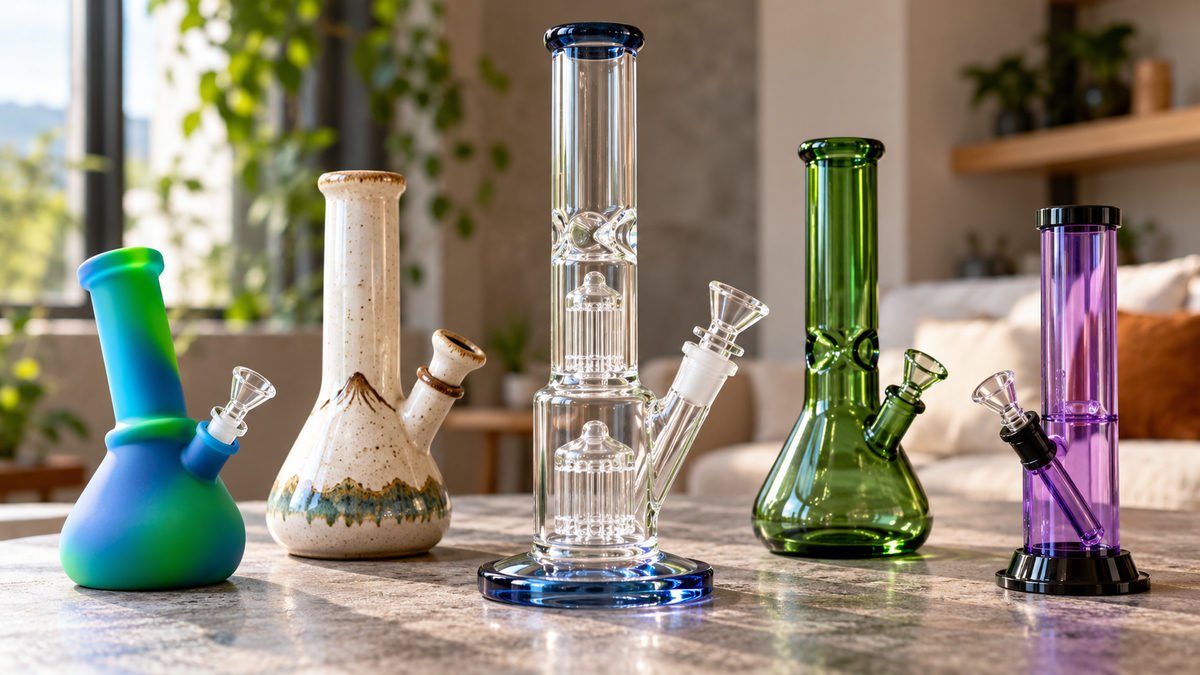
Wondering why bongs come in so many shapes, sizes, and materials? Bong types explained simply can make your first choice much easier. Straight tubes, beaker bongs, percolators, silicone designs, and specialty water pipes each suit different priorities.
However, appearance tells only part of the story. This guide compares airflow, filtration, portability, cleaning needs, durability, and safety. Therefore, you can choose a suitable water pipe with greater confidence.
Bong Types Explained: How Water Pipes Work
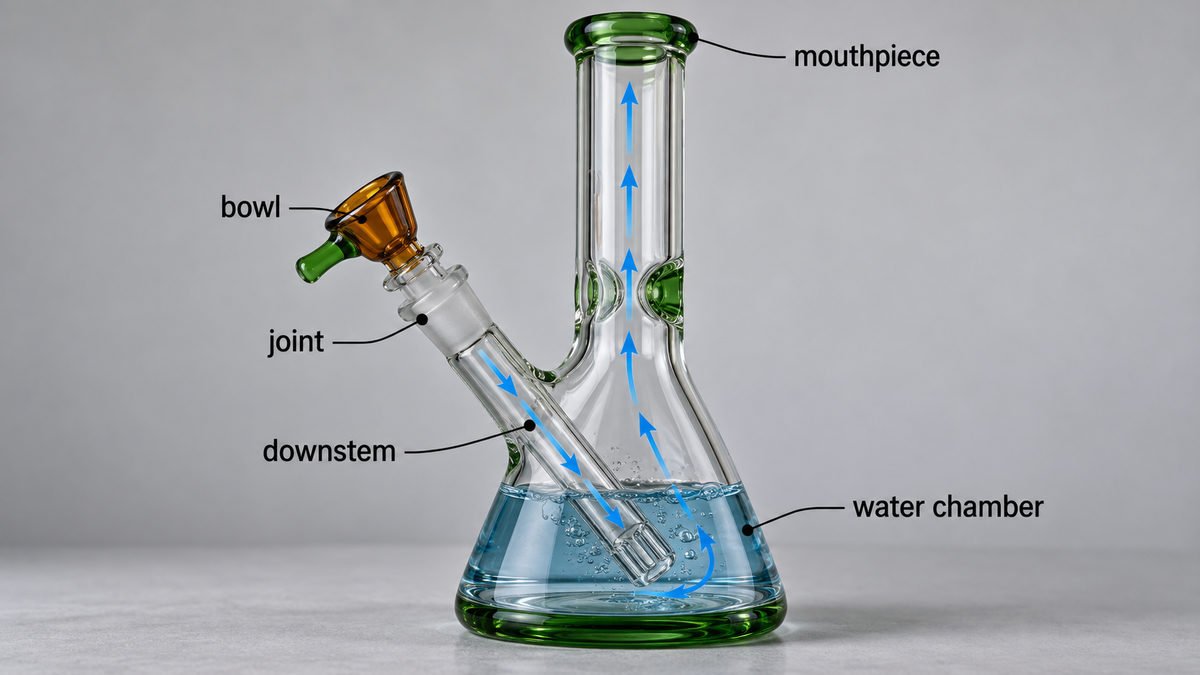
A bong is a water pipe designed to cool and filter inhaled smoke or vapor. Most models include a bowl, downstem, water chamber, joint, and mouthpiece. Together, these parts guide smoke through water before it reaches the user. New to buying? Start with our guide to bongs in Australia.
First, material sits inside the bowl and produces smoke when heated. The downstem directs that smoke into the water chamber. As you inhale through the mouthpiece, bubbles move through the water and travel towards the top chamber.
Water can reduce heat and catch some ash or larger particles. However, filtration does not make smoke harmless or remove every potentially harmful substance. Responsible use still matters, including ventilation and avoiding excessive exposure to smoke.
Beginners should understand several basic terms before comparing designs:
- Chamber: The section that holds water and collects smoke.
- Joint: The connection point for a bowl, downstem, or attachment.
- Bowl: The removable part that holds dry material.
- Downstem: The tube that carries smoke into the water.
- Percolator: An internal diffuser that creates smaller bubbles.
- Ice catcher: A glass pinch that holds ice above the water.
- Water level: The amount of water needed for bubbling without splashback.
Moreover, airflow changes how a bong feels to use. A larger chamber may provide more cooling space, while a narrow tube often feels more direct. Meanwhile, too much water can create drag or reach the mouthpiece.
Always check local laws, adult-age requirements, and permitted uses before buying or using a water pipe. Australian drug laws differ between federal, state, and territory systems, so check the Australian Government drug laws guidance. Additionally, avoid sharing mouthpieces when hygiene presents a concern.
Main Bong Shapes and Different Bong Styles
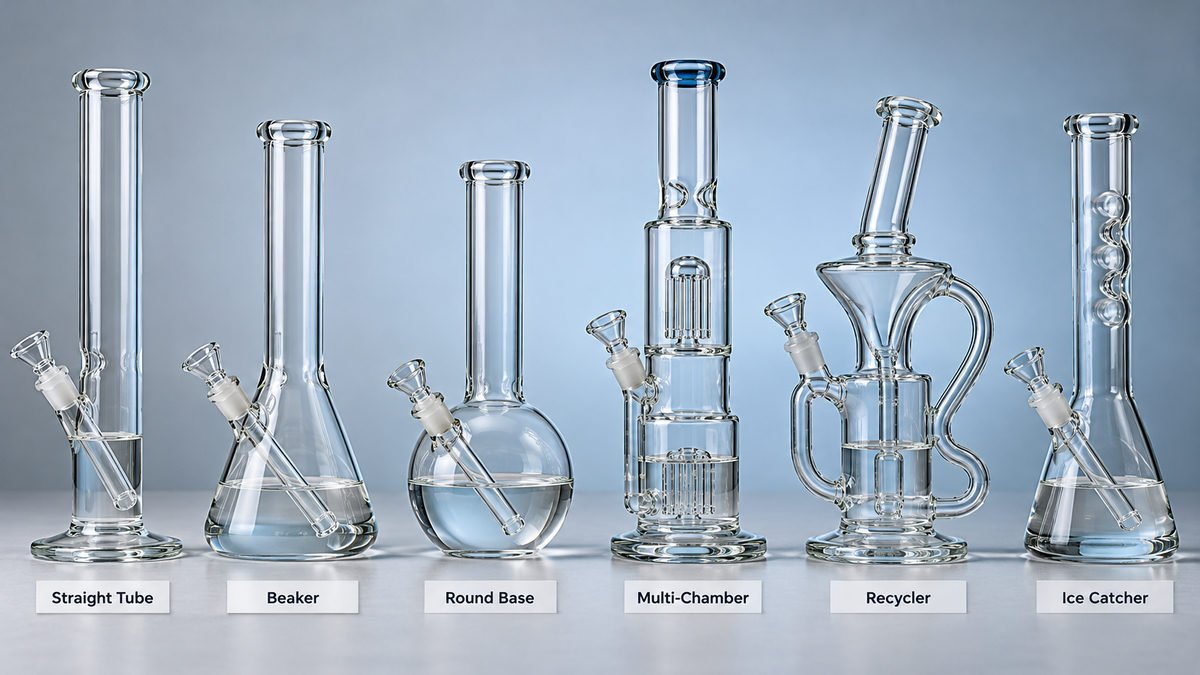
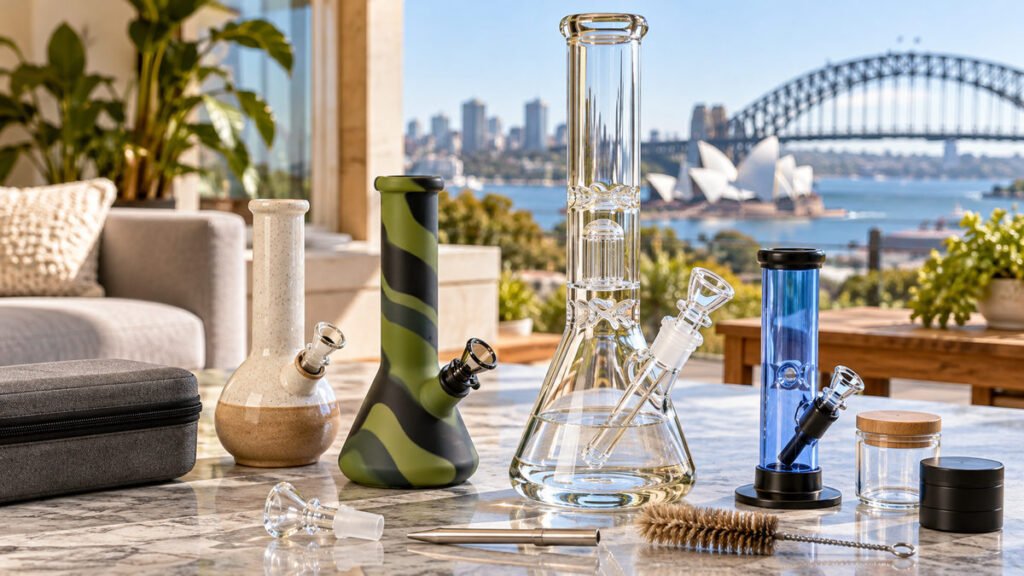
Bong shapes affect stability, airflow, water capacity, and cleaning effort. Therefore, the best design depends on where you use it and how much maintenance you accept. The two most common shapes are compared in beaker vs straight tube bong.
Straight Tube Bong
A straight tube bong uses one vertical cylinder with a bowl near the base. Its direct airflow creates a simple, familiar experience. Additionally, the narrow footprint suits desks, shelves, and smaller rooms.
These bongs usually contain fewer parts, so cleaning takes less time. They often cost less than complex designs. However, their tall, narrow shape may tip more easily, especially on uneven surfaces.
Beaker Bong
A beaker bong has a wide, angled base that resembles laboratory glassware. The broad base improves stability and holds more water than many straight tubes. As a result, beaker designs offer a practical balance between filtration and portability.
They also provide more chamber space for bubbles and cooling. However, the wider base needs extra storage room. A beaker bong suits regular home use when stability matters.
Round Base Bong
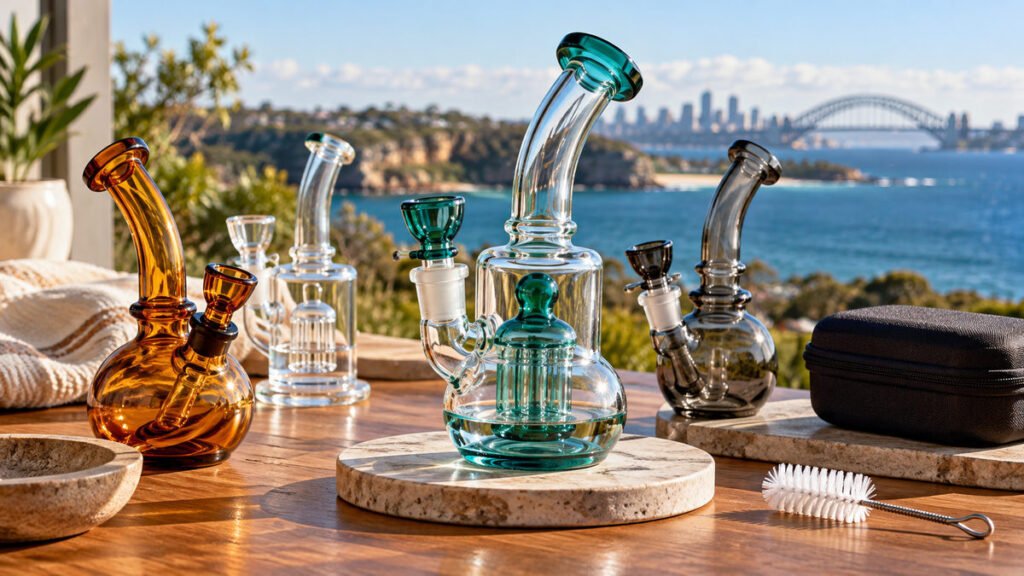
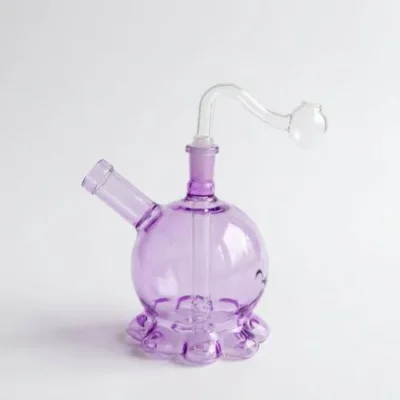
A round base bong uses a rounded chamber beneath the main tube. This classic shape creates a stable footprint and moderate water capacity. Meanwhile, its curved body often feels less bulky than a large beaker design.
Round base models can suit beginners who want stability without excessive size. Their internal shape may make some areas harder to reach while cleaning. Therefore, removable parts remain especially useful.
Multi-Chamber Bong
A multi-chamber bong sends smoke through two or more connected chambers. Some models add percolators or separate water sections for extra diffusion. This design can create a visually interesting bubbling path.
However, extra chambers increase height, weight, and cleaning effort. They also add more joints that may require careful handling. Therefore, multi-chamber bongs usually suit experienced users who value complex filtration.
Recycler Bong
A recycler bong continuously moves water through connected chambers. This circulation increases contact between water and smoke or vapor. As a result, recyclers can offer efficient cooling with a distinctive bubbling motion.
However, their tubes and pathways require more attention during cleaning. They may also cost more than simple single-chamber designs. A recycler makes sense when advanced water movement matters more than simplicity.
Ice Catcher Bong
An ice catcher uses a glass pinch to hold ice cubes above the water line. The ice cools smoke as it travels through the upper chamber. However, melting ice can raise the water level and increase splash risk.
Use only enough ice to leave comfortable space below the mouthpiece. Additionally, check the water level after the ice melts. Never force large cubes into a narrow chamber.
In general, each shape offers a different compromise:
- Straight tube: Simple airflow, small footprint, easy cleaning, and moderate stability.
- Beaker: Strong stability, greater water capacity, and balanced portability.
- Round base: Classic appearance, stable placement, and moderate filtration.
- Multi-chamber: More filtration potential, but greater size and maintenance.
Bong Materials: Glass, Silicone, Ceramic, and Acrylic
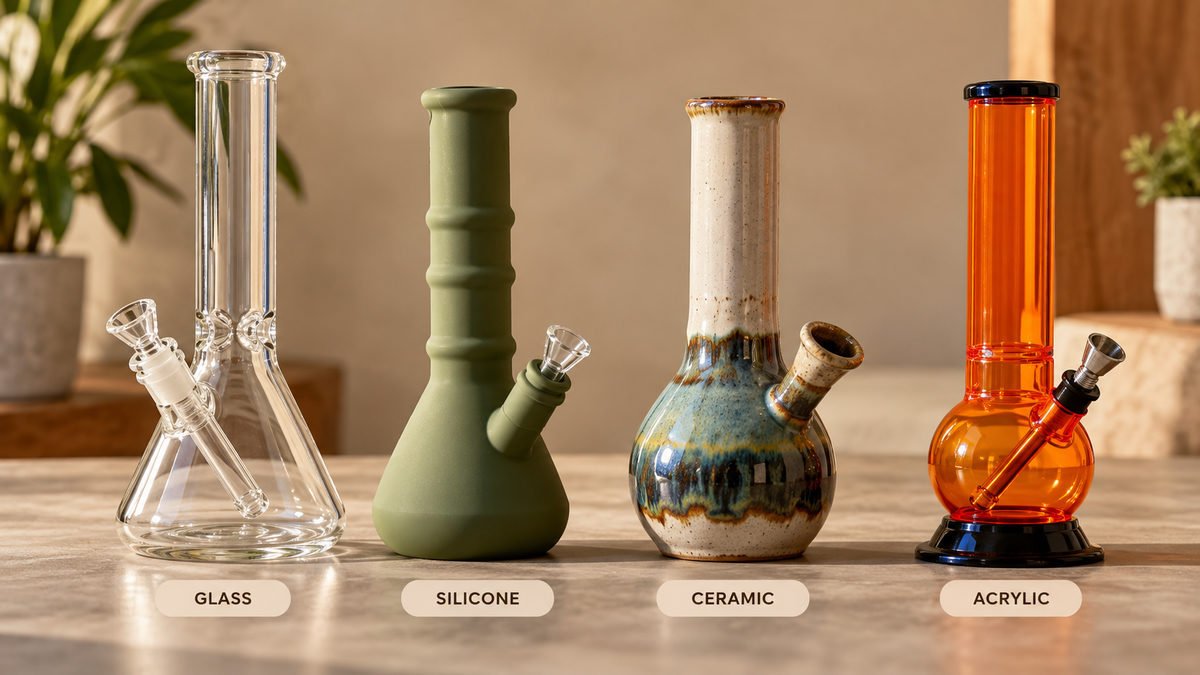
Material affects flavour, durability, appearance, price, and cleaning. Therefore, choose construction quality rather than selecting a bong based only on its colour or shape. Read our comparison of glass vs silicone bongs.
Borosilicate Glass
Borosilicate glass resists heat better than ordinary glass and usually provides clean flavour. It also supports countless shapes, colours, percolators, and artistic designs. However, even strong glass can break after a drop or sudden temperature change.
Glass makes residue easier to see, which helps you recognise when cleaning is due. However, transparent sections also show water marks and buildup quickly. Handle glass carefully and avoid thermal shock from sudden hot-to-cold changes.
Silicone
Silicone bongs flex instead of shattering, making them useful for travel or unpredictable storage. They usually weigh less and cost less than comparable glass models. Additionally, many designs can handle occasional knocks more easily.
However, silicone may retain odours or flavours after repeated use. Some flexible pieces also feel less refined than rigid glass. Choose food-safe, heat-resistant silicone with secure seals and a stable base.
Ceramic
Ceramic bongs often feature detailed artwork, heavier bodies, and strong visual character. Their weight creates excellent stability on a flat surface. Furthermore, ceramic can retain heat longer than glass.
However, ceramic can crack or chip after impact. Opaque bodies may also hide residue inside the chamber. Therefore, cleaning can prove more difficult when internal pathways are narrow.
Acrylic
Acrylic bongs offer low prices, light weight, and good resistance to impact. They can suit occasional users who want an inexpensive option. However, scratches, clouding, and flavour retention may affect long-term enjoyment.
Material comparison becomes easier when you focus on practical priorities:
- Best flavour: Quality glass usually offers the cleanest taste.
- Best durability: Silicone generally handles drops better.
- Best artwork: Ceramic often provides the most decorative finish.
- Lowest cost: Acrylic and basic silicone often cost less.
- Easiest cleaning: Simple glass designs with removable parts are usually straightforward.
Most importantly, inspect airtight seals, joint fit, wall thickness, and construction quality. A beautiful bong may still perform poorly if parts fit loosely. Therefore, appearance should support function rather than replace it.
Bong Percolators Explained: Types, Benefits, and Tradeoffs
A percolator is an internal diffuser that breaks smoke into smaller bubbles. Smaller bubbles create more contact between smoke and water. As a result, percolators can change cooling, airflow, and overall smoothness. Learn more in percolator bongs explained.
Common Percolator Types
Tree percolators use several arms with openings along their lengths. They create multiple bubbling paths and increase diffusion. However, those arms can trap residue and require careful cleaning.
Honeycomb percolators use a flat disc filled with tiny holes. They produce strong, even bubbling across the water surface. However, the small holes can collect residue quickly and restrict airflow when dirty.
Showerhead percolators use a central tube that distributes smoke through a wider spray pattern. They balance effective bubbling with a relatively simple structure. Therefore, they can suit users who want diffusion without many delicate arms.
Inline percolators use horizontal slits along a tube. They provide smooth airflow and often fit compact water pipes. However, their narrow slits need regular rinsing to prevent buildup.
Turbine percolators use angled slots to create a swirling water motion. The movement looks striking and spreads smoke around the chamber. Meanwhile, the internal slots can make cleaning more involved.
More percolators do not always create a smoother experience. Excessive diffusion can increase drag, splashback, reclaim, and cleaning time. Additionally, every extra chamber creates another area where residue can collect.
Use this simple comparison when choosing diffusion:
- Standard bong: Direct airflow, strong durability, low maintenance, and modest filtration.
- Single-percolator bong: Better diffusion with manageable cleaning.
- Multi-percolator bong: Greater bubbling potential, but more drag and maintenance.
- Recycler: Advanced water circulation, distinctive airflow, and complex cleaning.
For beginners, one well-designed percolator often provides enough filtration. However, experienced enthusiasts may prefer more complex designs. Choose a percolator that matches your cleaning habits, not only its visual appeal.
Specialty Water Pipes and Bong Alternatives
Some water pipes use different methods to deliver smoke or vapor. These designs can feel very different from a standard bong. Therefore, beginners should understand their purpose before choosing one. See how a bubbler compares in bubbler vs bong.
Gravity Bong
A gravity bong uses water displacement or air pressure to draw smoke into a chamber. The method can deliver a dense amount quickly. However, it usually offers less control and remains less portable than a standard bong.
Hot materials, open flames, plastic components, and unstable containers create additional risks. Therefore, use extreme care around heat and avoid improvised setups that can collapse or spill.
Dab Rig Versus Bong
A dab rig is designed mainly for concentrates rather than dry material. It usually uses a heated nail or banger instead of a traditional bowl. Meanwhile, a bong normally uses a dry-herb bowl and may support a wider range of attachments.
Heated nails and torches can burn skin, damage surfaces, or crack glass. Always allow components to cool fully before touching or storing them. Additionally, maintain strong ventilation and keep flames away from children, pets, and flammable materials.
Nectar Collector
A nectar collector is a compact concentrate-focused device. It commonly uses a heated tip that contacts concentrate directly. Therefore, it differs from both a bong and a dab rig in size, handling, and heating method.
Some products act as hybrids and support different bowls, attachments, or water filtration systems. However, compatibility varies between models. Check joint sizes, included parts, and manufacturer guidance before combining components.
Product legality and permitted use vary across Australia. Always check current federal, state, and territory requirements before buying or using specialty equipment.
How to Choose a Bong: Size, Features, Accessories, and Care
For most beginners, a stable, medium-sized glass bong offers the easiest starting point. Choose a single chamber, simple downstem, and removable bowl. This setup provides useful filtration without creating difficult cleaning pathways. For a full checklist, read how to choose a bong.
Choose the Right Size
Small bongs improve portability and need less water. However, they may provide less cooling space and can feel less stable. Medium bongs usually balance portability, filtration, stability, and storage.
Large bongs may offer more cooling and a bigger chamber. Nevertheless, they require more water, space, and careful handling. Choose a size that fits your storage area and cleaning routine.
Check the Chamber and Joint
Direct airflow keeps the design simple and easier to clean. Diffused airflow adds bubbling through a downstem or percolator. Multi-chamber and recycler designs add circulation, but they also increase complexity.
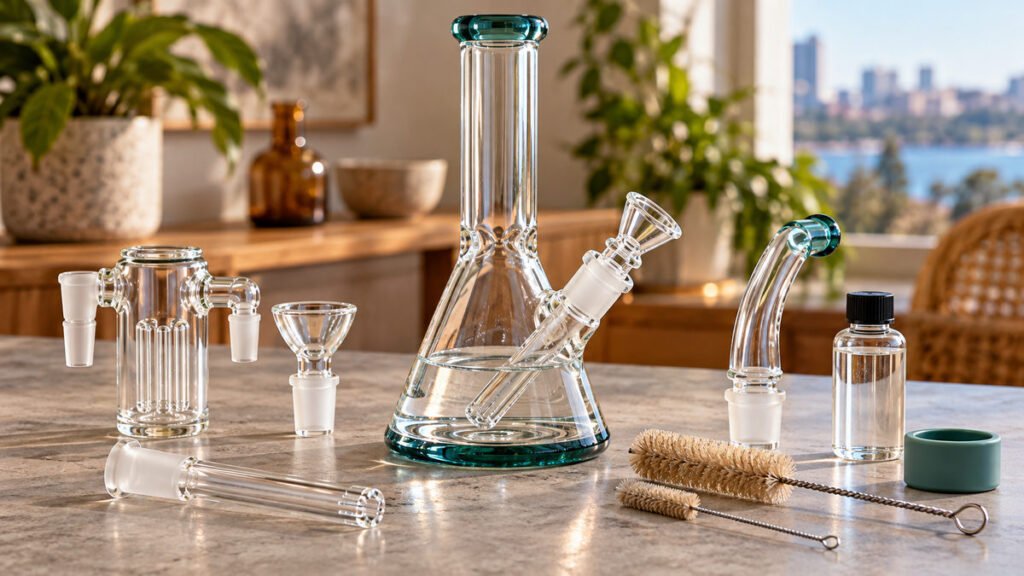
Joint diameter affects compatibility with bowls, downstems, ash catchers, and adapters. Common sizes vary, so check measurements before buying accessories. Also confirm whether the joint sits at the required angle.
Useful Accessories
Accessories can improve maintenance, compatibility, and storage. Consider the following items based on your setup:
- Replacement bowls and downstems.
- Ash catchers and screens where compatible.
- Reclaimers for concentrate-focused setups.
- Ice trays, carrying cases, brushes, and cleaning plugs.
- Isopropyl alcohol where legal and appropriate for the material.
Travellers may prefer compact silicone or small glass designs. Frequent home users often appreciate the stability of a beaker bong. Beginners should prioritise simple glass, while experienced enthusiasts may enjoy advanced percolators.
Cleaning and Maintenance
Change the water regularly and rinse the bong after use. Cleaning residue before it hardens usually requires less effort. Additionally, inspect seals, joints, and glass for cracks before each use.
Follow the manufacturer’s guidance for cleaning chemicals and materials. Avoid exposing glass to sudden temperature changes. Moreover, keep removable parts organised so you can replace them correctly.
Safety Essentials
Place the bong on a stable, level surface away from edges. Avoid overfilling the chamber, since excess water can cause splashback. Furthermore, maintain ventilation and keep all equipment away from children and pets.
| Bong type | Best for | Filtration | Portability | Durability | Price | Cleaning difficulty | Main drawback |
|---|---|---|---|---|---|---|---|
| Straight tube | Beginners and simple setups | Basic to moderate | Good | Moderate | Low to medium | Easy | Can tip easily |
| Beaker | Stable home use | Moderate | Moderate | Moderate | Medium | Easy to moderate | Needs more storage space |
| Round base | Classic stable designs | Moderate | Moderate | Moderate | Low to medium | Moderate | Curves can hide residue |
| Silicone | Travel and durability | Basic to moderate | Excellent | High | Low to medium | Moderate | May retain flavours |
| Percolator | More diffusion | High | Low to moderate | Moderate | Medium to high | Moderate to difficult | More residue and drag |
| Recycler | Advanced water circulation | High | Low | Moderate | High | Difficult | Complex pathways |
Conclusion
The best bong depends on your priorities, available space, and willingness to clean regularly. Straight tubes keep things simple, while beaker bongs offer a practical balance. Glass provides clean flavour and design variety, while silicone improves durability.
Percolators can increase diffusion, but they also add cleaning demands. Recycler designs offer advanced water circulation for experienced users. Therefore, shortlist two or three bong types before deciding.
Finally, check local laws, construction quality, size, cleaning needs, and accessory compatibility. Choose a stable design that suits your routine rather than buying the most complicated option. For quality-focused browsing, explore Sweet Puff Australia and compare designs that match your preferences.


Comment (1)
[…] Australian shoppers commonly find several glass water pipe designs online and in specialist stores. Each shape changes stability, water capacity, draw resistance, filtration, and cleaning effort. Therefore, your preferred routine matters more than choosing the most elaborate design. Each style is explained in bong types explained. […]