
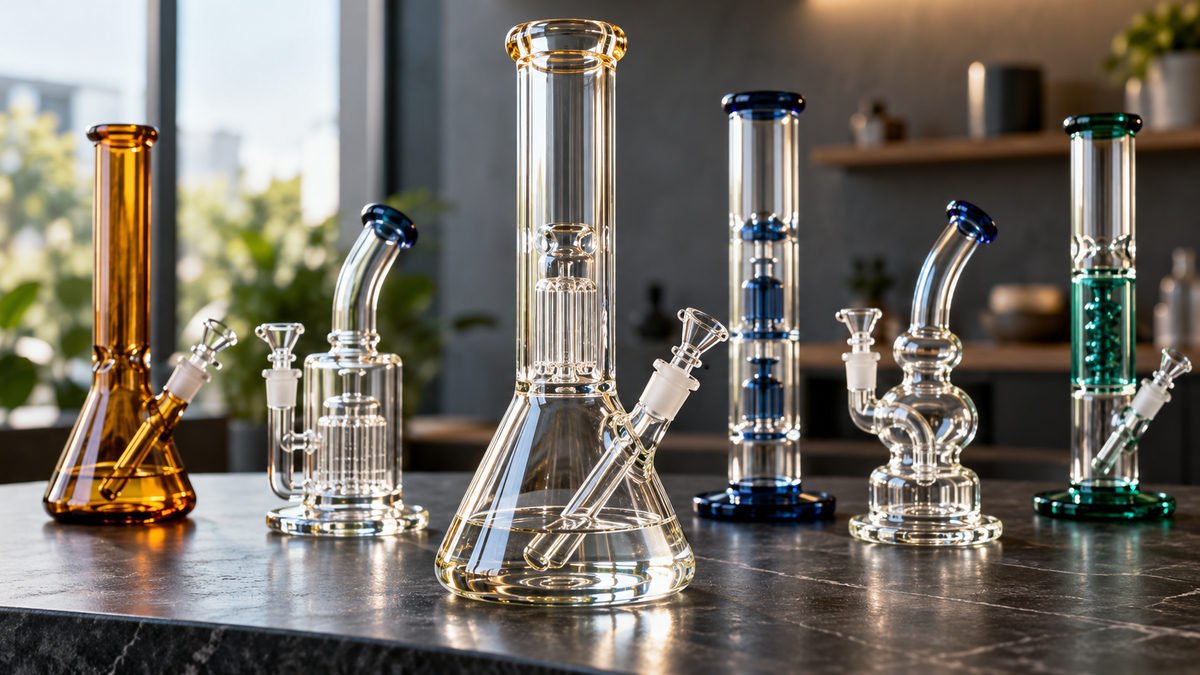
Choosing a bong can feel overwhelming when materials, sizes, filtration systems, designs, and prices all differ. Many buyers notice appearance first, then overlook durability, cleaning, storage, comfort, and replacement parts. Learning how to choose a bong helps you match the design to your budget, experience, available space, and maintenance preferences.
However, the best option rarely has the most features. A stable, well-made bong with manageable filtration often delivers a better long-term experience than a fragile showpiece. Use this step-by-step guide to compare the details that matter before buying.
1. How to Choose a Bong: Start With Your Priorities
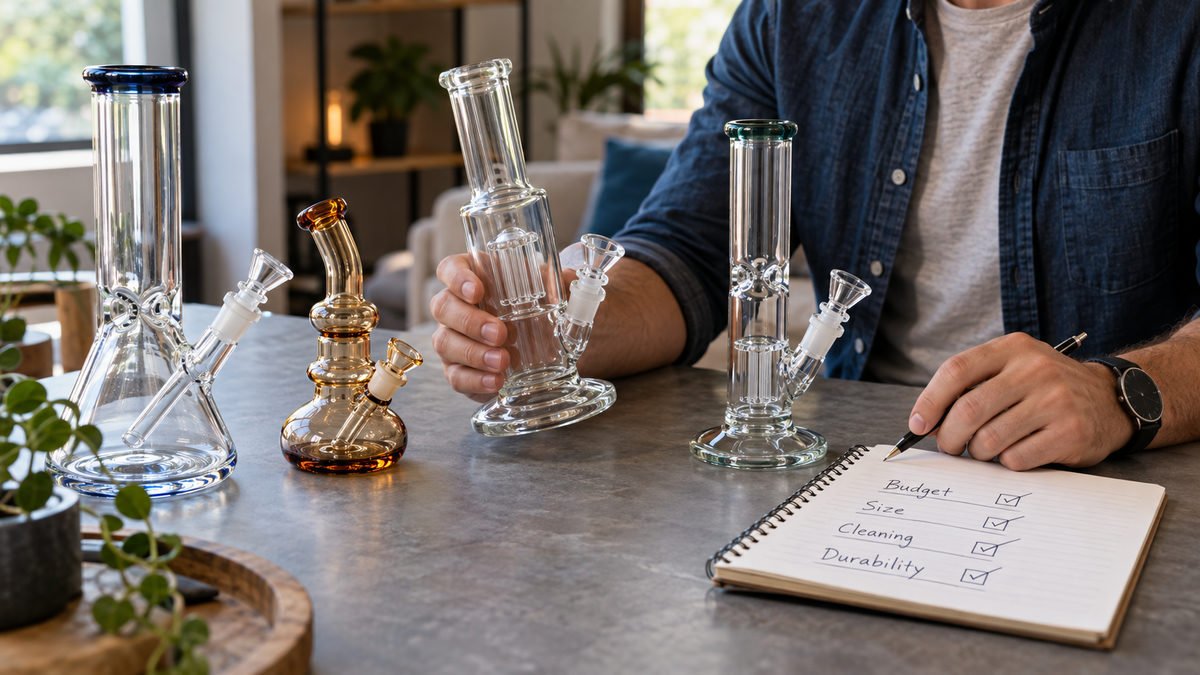
Start by deciding what matters most to you. Portability, durability, smoothness, simplicity, appearance, budget, and easy cleaning can all influence the right choice.
For example, an occasional user may prefer a compact design with simple airflow. Meanwhile, someone who uses a bong frequently at home may value thicker glass, stronger stability, and replaceable parts.
Consider how and where you plan to use it. Your intended use might include:
- Occasional personal use at home.
- Frequent use with a dedicated storage area.
- Shared use with trusted adults.
- Travel-friendly use where legally permitted.
Before buying, check the laws that apply in your Australian state or territory. Age restrictions, retailer requirements, possession rules, and use restrictions can vary by location.
Australian drug laws cover federal, state, and territory requirements. Read the Australian Government guide to drug laws and confirm current local rules before purchasing or using any product.
Responsible handling matters at home, too. Keep glass products away from children and pets, store them securely, and avoid sharing equipment without proper cleaning.
As a quick decision framework, beginners usually benefit from a stable, medium-sized bong. Choose a simple chamber, accessible cleaning openings, and common replacement parts.
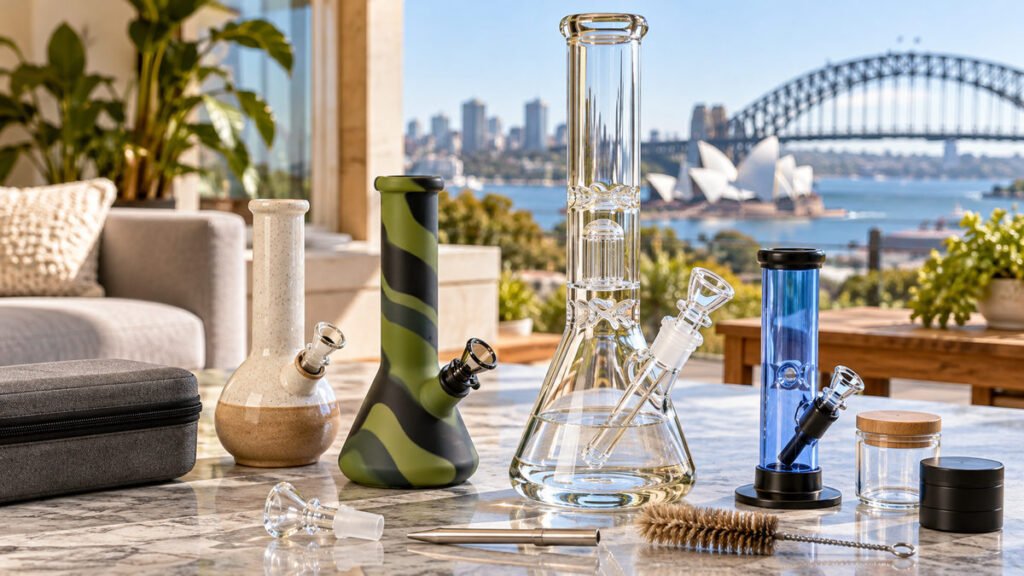
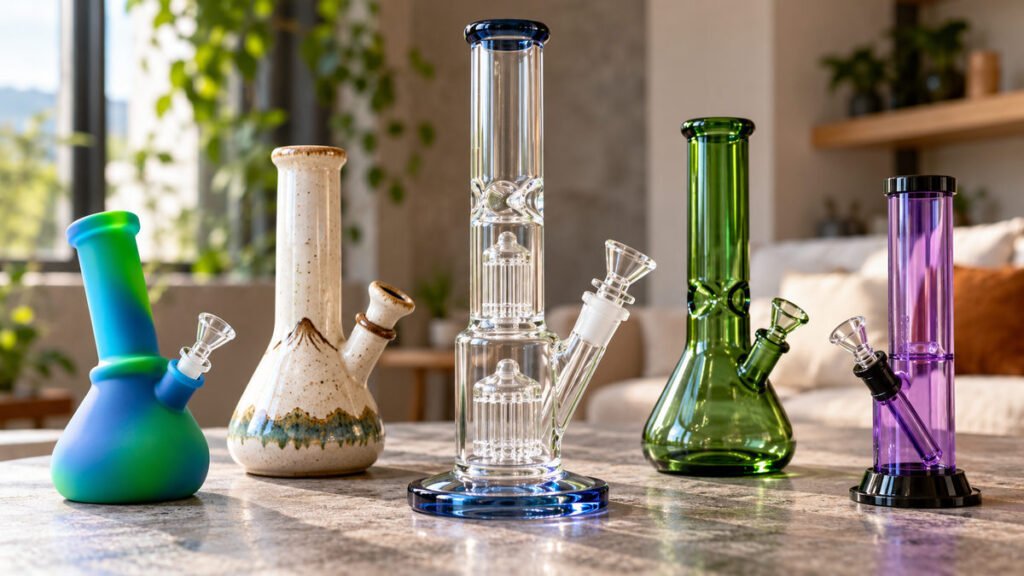
2. Compare Bong Materials: Glass, Silicone, Ceramic, and Acrylic
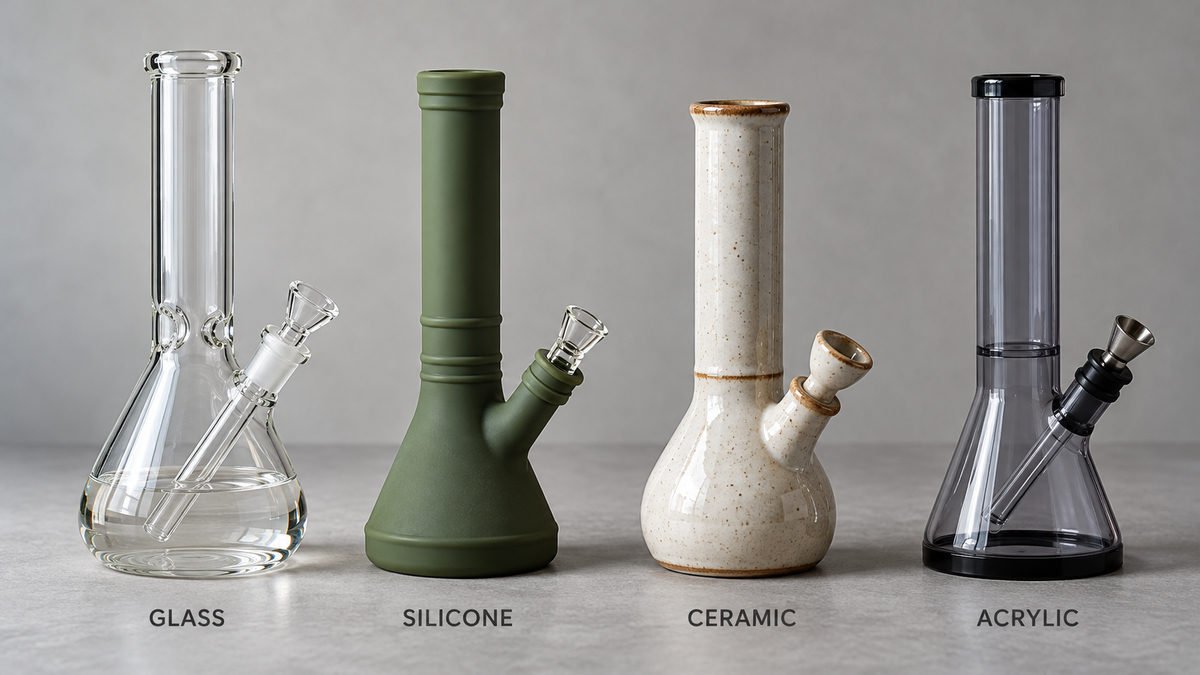
The material affects flavour, durability, weight, appearance, cleaning effort, and long-term cost. Therefore, compare materials before focusing on colours or decorative details. Budget buyers should also compare glass vs acrylic bongs.
Glass bongs
Borosilicate glass remains popular because it offers clear flavour and a refined appearance. Its transparency also lets you inspect water levels, residue, cracks, and internal pathways easily.
Additionally, glass bongs often support common bowls, downstems, adapters, and replacement accessories. That compatibility can extend the product’s useful life and simplify future repairs.
However, glass can break when dropped, knocked against a bench, or stored carelessly. Thicker construction improves confidence, but it does not make glass unbreakable.
Silicone bongs
Silicone provides flexibility and strong impact resistance. It suits buyers who worry about accidental drops, limited storage, or transport where lawful.
Furthermore, silicone models are usually lighter and easier to pack than larger glass designs. Look for food-safe, heat-resistant silicone from a reputable retailer.
Some silicone may retain odours, especially when residue remains inside folds or narrow passages. The material can also look less refined and may offer fewer compatible replacement parts.
Ceramic bongs
Ceramic bongs often stand out through artistic shapes, detailed finishes, and substantial weight. Their heavy bases can provide excellent stability on a desk or shelf.
They also handle heat well and can become attractive display pieces. However, ceramic may crack from impact, sudden temperature changes, or rough handling.
Opaque ceramic makes internal inspection more difficult. Cleaning and repairs can also prove harder when the design includes narrow or enclosed chambers.
Acrylic bongs
Acrylic offers an affordable and impact-resistant option for buyers with a limited budget. It suits practical users who prioritise low replacement costs.
However, acrylic can scratch more easily than glass and may show wear sooner. Lower-quality construction can also affect airflow, seals, heat resistance, and flavour clarity.
Compare materials by priority:
- Glass: best for flavour clarity, appearance, inspection, and accessory compatibility.
- Silicone: best for flexibility, portability, and impact resistance.
- Ceramic: best for artistic design, weight, and stability.
- Acrylic: best for low-cost practicality and everyday toughness.
Ultimately, material affects more than first impressions. It influences cleaning time, storage needs, breakage risk, replacement costs, and how long the bong remains useful.
3. Understand Bong Types, Size, and Stability
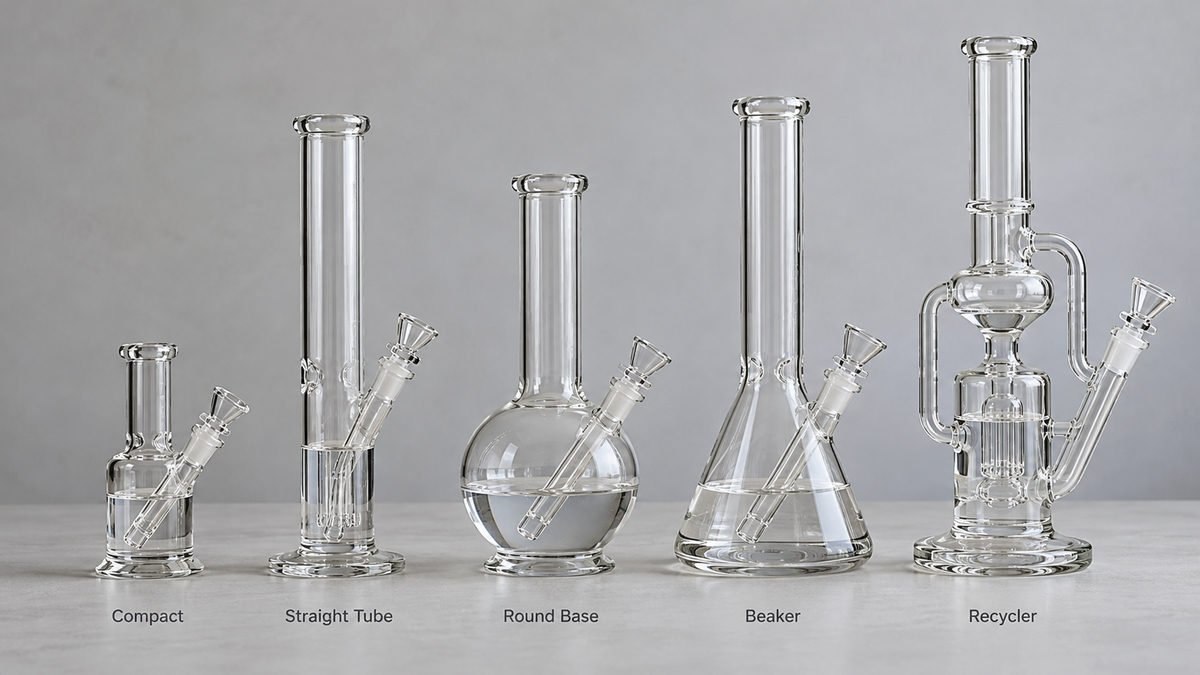
Bong shape affects stability, water capacity, airflow, portability, and cleaning access. Choose the structure that suits your space and handling preferences. Our bong sizes guide explains each height range.
Straight tube bongs
A straight tube bong uses a compact vertical chamber with direct airflow. Its simple structure usually makes cleaning straightforward and storage easy.
However, a narrow base may feel less stable than wider designs. Check the base carefully, especially if the bong will sit near the edge of a bench.
Beaker bongs
A beaker bong has a wider base that improves stability and provides more water capacity. Its angled chamber often feels comfortable for regular home use.
Moreover, the larger base reduces the chance of tipping during careful handling. However, the angled shape creates more surface area and may require additional cleaning.
Round base bongs
Round base models offer balanced proportions without the larger shape of a beaker. They suit buyers who want stability while keeping the overall footprint moderate.
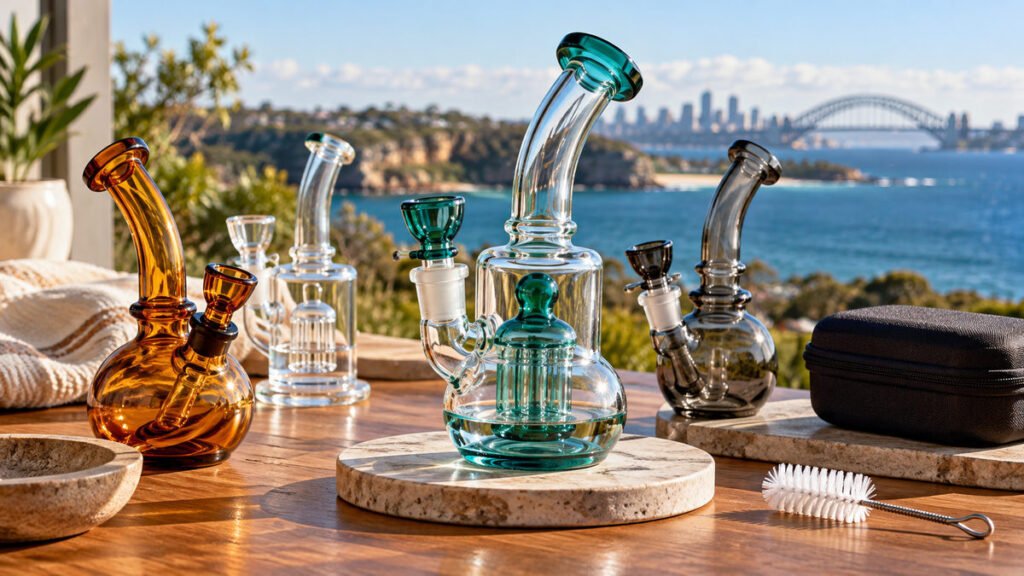
Recycler bongs
A recycler bong moves water through multiple chambers and pathways. This circulation can increase cooling and filtration across the draw.
However, recyclers introduce more components, water movement, and cleaning challenges. They require careful water management and may not suit someone seeking simple maintenance.
Choosing the right size
Small models suit limited storage and portability where lawful. They weigh less, use less water, and often clean quickly.
Medium models usually provide the best balance for beginners. They offer useful chamber space without demanding excessive storage, water, or cleaning time.
Large models can provide longer pathways and greater water capacity. Nevertheless, a larger bong does not automatically produce a smoother draw.
Comfort depends on water level, chamber design, percolation, draw resistance, and personal preference. An oversized model may also feel awkward and harder to control.
Very large bongs can create several disadvantages:
- Greater breakage risk during handling.
- More difficult cleaning and storage.
- Higher water consumption.
- Increased weight and awkward movement.
- More challenging replacement-part matching.
4. Evaluate Bong Filtration, Percolators, and Cooling Features
Water filtration can cool and filter smoke, but the result depends on several design details. Chamber size, water level, airflow, diffusion, and draw style all matter. Learn more in percolator bongs explained.
A percolator, or perc, breaks smoke into smaller bubbles. This increases contact between smoke and water, which can create a cooler and more diffused draw.
Common percolator designs
- Tree percolators: use several arms to split airflow and increase diffusion, but narrow branches can collect residue.
- Honeycomb percolators: create many small bubbles through multiple openings, although they may increase draw resistance.
- Showerhead percolators: direct airflow through a wider diffuser and often balance cooling with manageable cleaning.
- Inline percolators: use slits along a horizontal tube, offering effective diffusion when positioned correctly.
- Matrix percolators: produce extensive bubbling, but their internal openings can make deep cleaning more demanding.
Each design involves trade-offs. More bubbles may improve diffusion, yet they can increase splashback, resistance, residue buildup, and maintenance time.
One well-designed percolator often proves more practical than several poorly designed percolators. Beginners generally benefit from one accessible perc with clear cleaning access.
Advanced users may prefer multiple percolators for stronger diffusion and more complex water movement. However, extra chambers also create more places for residue to collect.
Ice catchers and other cooling features
An ice catcher lets you place ice above the water chamber. The chilled pathway may make the draw feel cooler and more comfortable.
However, an ice catcher does not replace good filtration or careful water control. Ice can also increase splashback, condensation, and cleaning requirements.
Other cooling features include extended mouthpieces, diffused downstems, and recycler pathways. These features may improve comfort, but none removes every source of irritation.
Therefore, balance smoothness against maintenance. More diffusion often means more parts, more residue, and harder cleaning.
5. Check Joints, Bowls, Downstems, and Build Quality
Joint size determines which bowls, adapters, downstems, and attachments will fit. Common formats include 10 mm, 14 mm, and 18 mm joints. Check our guide to bong joint sizes before buying parts.
Always check both joint size and joint gender before buying accessories. An incorrect match can cause poor seals, unstable attachments, or complete incompatibility.
Bowl size also affects convenience. Smaller bowls may suit solo use and conserve material, while larger bowls can suit sharing among trusted adults.
However, larger bowls often require more frequent cleaning. They can also produce more residue when used regularly.
A downstem carries airflow from the bowl into the water chamber. Fixed downstems offer simplicity, while removable downstems generally make cleaning and replacement easier.
Look for these build-quality indicators:
- Even glass thickness and clean welds.
- Sturdy connectors and airtight joints.
- A stable base and straight alignment.
- A secure mouthpiece with smooth edges.
- Well-finished openings without sharp points.
Before purchasing, check for wobbling, chips, cracks, sharp edges, loose parts, poor seals, and difficult-to-reach chambers. These issues can affect safety and long-term value.
Replaceable downstems, bowls, grommets, and adapters can extend product life. They may also reduce costs when one small component wears out.
Use this pre-purchase checklist:
- Confirm the overall dimensions and storage requirements.
- Match the joint size and gender with available accessories.
- Check bowl compatibility and downstem access.
- Review water capacity and base stability.
- Inspect cleaning openings and internal pathways.
- Confirm replacement-part availability.
- Review retailer support and product specifications.
6. Balance Price, Cleaning, Accessories, and Long-Term Use
Price usually reflects material, craftsmanship, filtration, fittings, and brand positioning. Entry-level models focus on basic use and simple construction. Keep it in shape with our bong care and maintenance guide.
Mid-range models often provide stronger materials, improved stability, and useful filtration. Premium models may include intricate craftsmanship, advanced percolation, and specialised designs.
However, a higher price does not guarantee a better match. Prioritise airflow, material quality, stability, cleaning access, and replacement availability before decorative features.
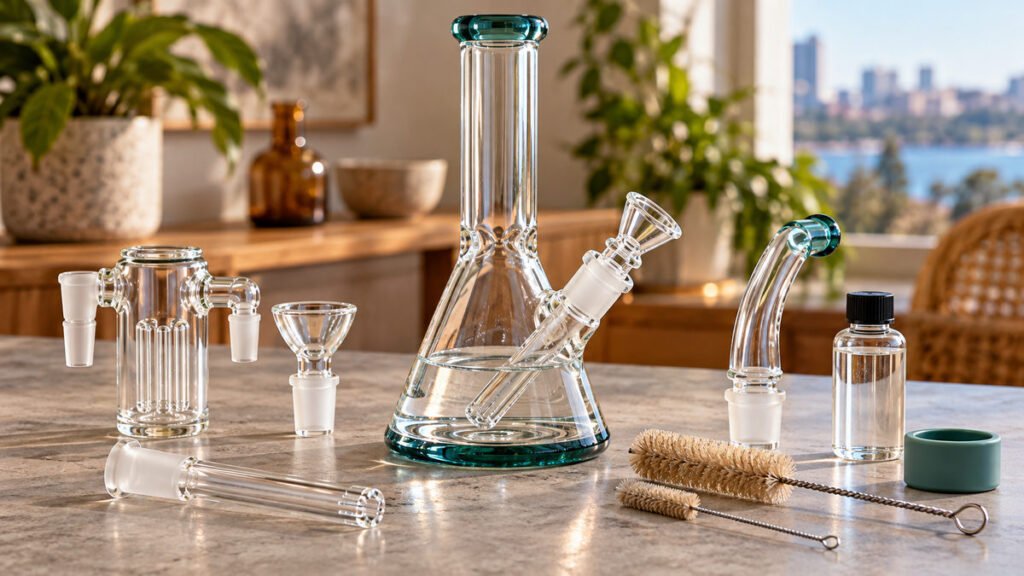
Essential accessories may include:
- A compatible bowl and removable downstem.
- A cleaning brush and suitable cleaning solution.
- Spare seals, grommets, or adapters.
- Protective storage for transport or long-term keeping.
Simple straight tubes and basic beakers usually offer the easiest cleaning. Removable downstems and wide openings make residue easier to reach.
Residue commonly builds inside bowls, downstems, percolators, and water chambers. Multi-percolator models take longer because each pathway needs careful attention.
Refresh the water frequently and rinse the bong after use when practical. Perform a deeper clean whenever you notice residue, odour, discolouration, or restricted airflow.
Common buying mistakes include choosing a fragile oversized model, prioritising appearance, adding too many percolators, and ignoring joint compatibility. Buyers also underestimate storage space, cleaning effort, and replacement costs.
As a priority-based recommendation, choose glass for flavour and refinement. Choose silicone for impact resistance, a medium beaker or straight tube for beginners, and simple filtration for easier maintenance.
Choose advanced filtration only when you accept the extra cleaning and water management it requires. A practical design usually delivers better long-term value than unnecessary complexity.
Conclusion
The best bong depends on your experience level, budget, available space, durability needs, preferred smoothness, and willingness to clean regularly. Material, size, stability, joint compatibility, filtration, and replacement parts all deserve attention.
For most beginners, a stable medium-sized design with quality construction offers a strong starting point. Simple airflow, accessible cleaning, manageable filtration, and common parts can make ownership easier.
Use the checklist to compare your preferred material, size, joint, filtration, price, and maintenance needs. Then verify local laws and choose a reputable retailer with clear specifications and replacement-part support.
For Australian shoppers, Sweet Puff Australia provides a relevant place to compare water pipes, glass bongs, accessories, and care essentials. Review each product’s specifications carefully, then choose equipment that suits your space, handling habits, and maintenance routine.

Comments (2)
[…] Silicone can be a practical choice for beginners who want affordability, simple handling, and lower breakage risk. It also makes transport less stressful when storage space is limited. However, beginners who care strongly about flavour may prefer glass from the beginning. For a full checklist, read how to choose a bong. […]
[…] listings make it difficult to judge compatibility, storage needs or long-term value. Our guide on how to choose a bong walks through each […]