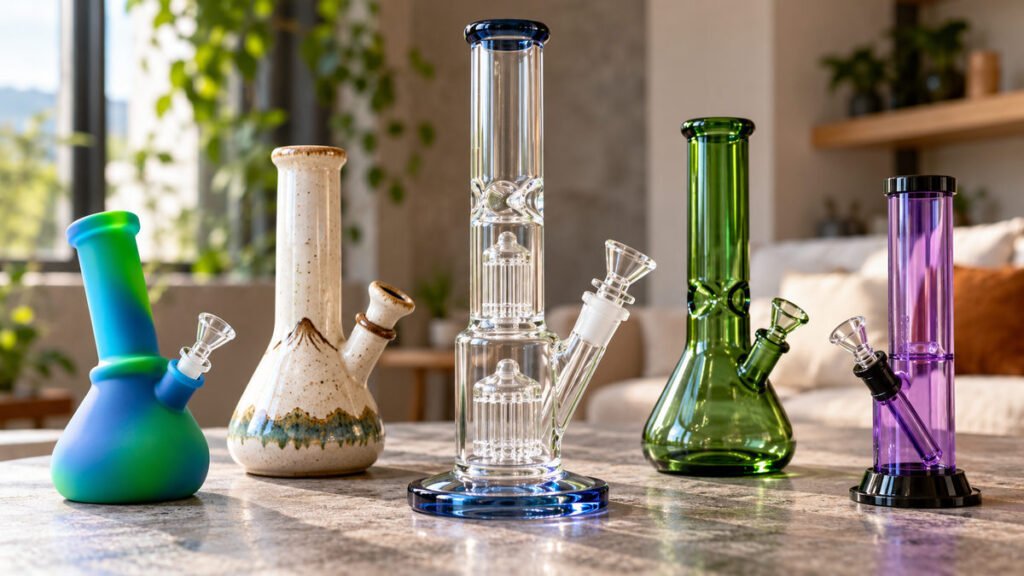
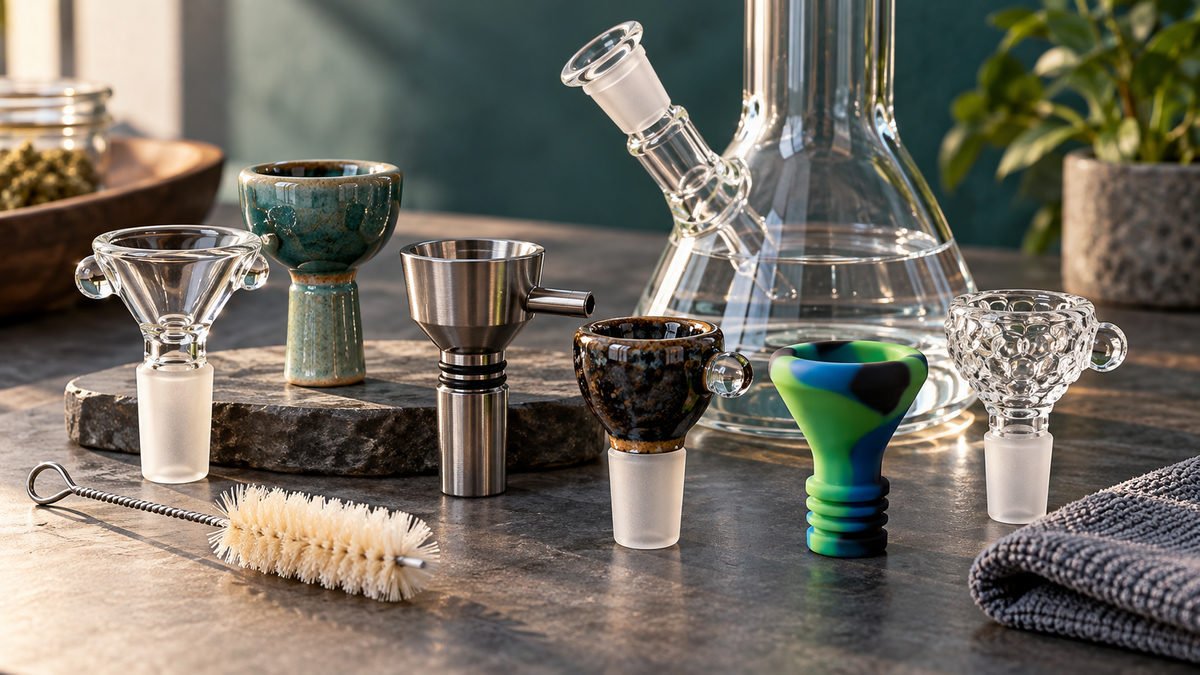
Ever bought a bong bowl that looked right, then discovered it wobbled or leaked? Bong bowls explained clearly can save you from poor airflow, clogging, herb loss, leaks, and broken glass.
Choosing the right bowl means checking its material, joint size, joint gender, angle, and design. This guide explains how bong bowls work, compares common materials, and covers fitting, packing, cleaning, troubleshooting, and replacement.
Bong Bowls Explained: What They Are and How They Work
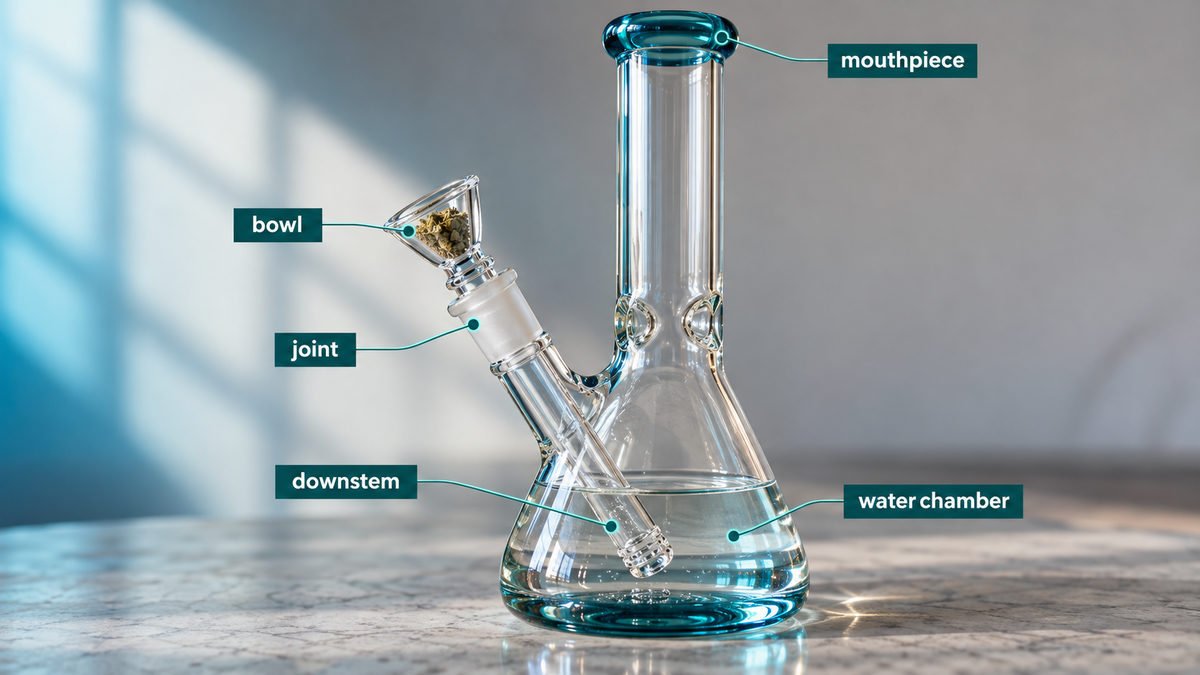
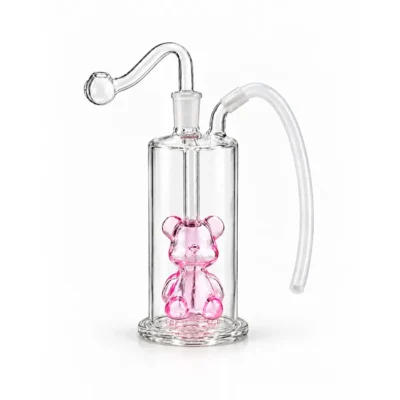
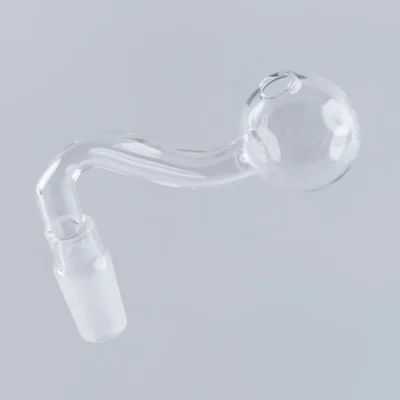
A bong bowl is the part that holds dry herb above a water pipe. You may also hear it called a bowl piece or a bowl for bong use.
When you inhale, air moves through the bowl, joint, and downstem. It then travels through the water chamber before reaching the mouthpiece.
Therefore, the bowl holds and heats the material, while the water chamber cools and filters the smoke. The bong does not remove every harmful substance from smoke, however.
[IMAGE_1]
Terminology to Know
People often use “bong bowl” and “bowl piece” interchangeably. A “slide” usually means a removable bowl-and-stem assembly that lifts from the bong.
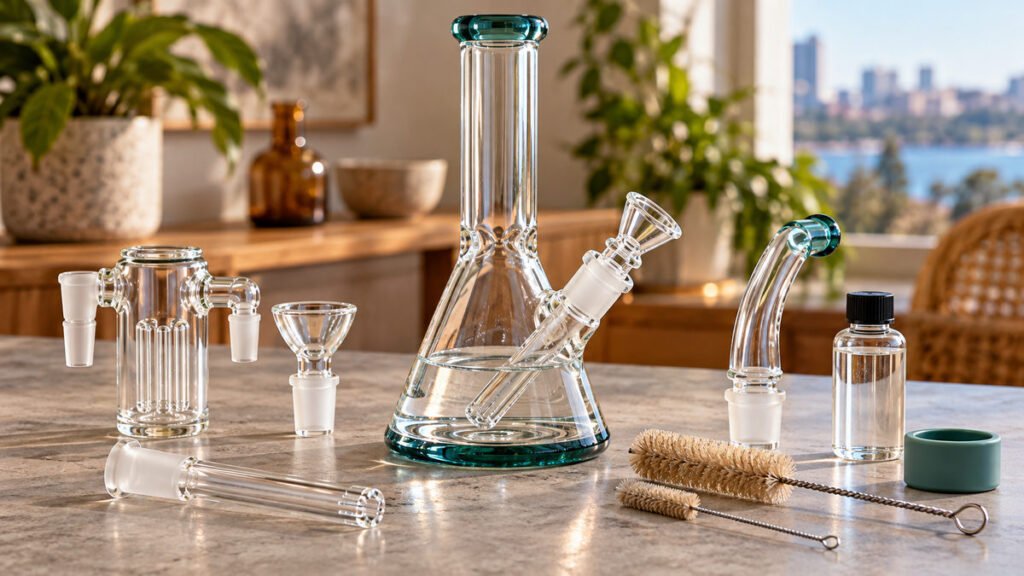
Meanwhile, the downstem is the tube that carries smoke from the bowl into the water. It may be removable or built into the bong.
A removable slide makes cleaning and swapping easier. In contrast, a fixed bowl forms part of the bong and usually requires more careful cleaning.
Design and Airflow Basics
Airflow depends on several connected parts. These include the bowl opening, joint seal, downstem, water level, and packing density.
For example, an overpacked bowl can restrict air before smoke reaches the water. A loose fit can also draw outside air through the joint.
Adults should avoid damaged bowls, sharp edges, and excessive heat. Additionally, let hot glass or metal cool before handling it.
Types of Bong Bowls and Common Bowl Designs
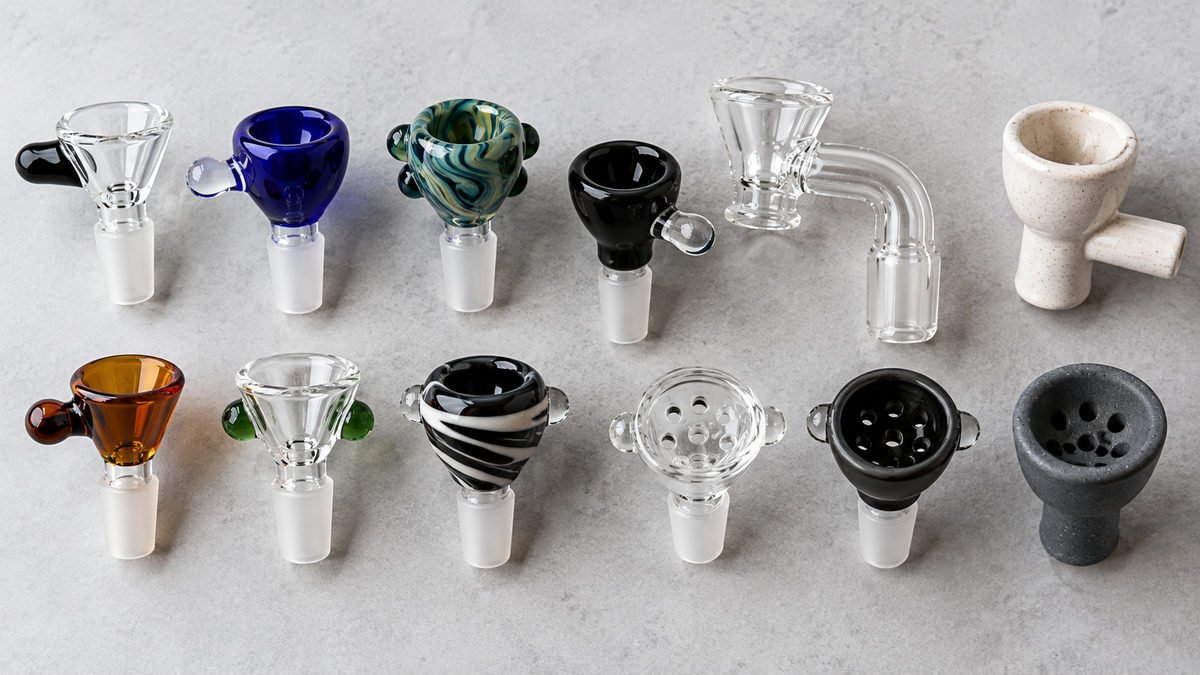
Removable bong slides remain popular because they offer flexibility. You can remove them for cleaning, replace them easily, or swap compatible designs. The bowl sits in the downstem; see our bong downstem guide.
However, the slide must match the bong’s joint size and gender. A bowl that almost fits can still leak or sit at an unsafe angle.
Common Bowl Designs
Fixed bong bowls connect directly to the bong’s body. Their stable design reduces loose connections, although cleaning often takes more time.
Dry herb bowls use a standard chamber for loose, dry material. A deeper chamber usually holds more, while a shallow bowl clears more quickly.
Multi-hole and diffused bowls contain extra openings beneath the material. These holes can spread airflow and distribute smoke before it reaches the downstem.
Single-hole bowls use one main opening and offer a simple, traditional design. Screened bowls use a barrier that helps stop small pieces entering the downstem.
Some bowls include built-in ash catchers or splash-reducing features. These additions may improve cleanliness, but they can also add parts to maintain.
Moreover, rim width affects loading and cleaning. A wider rim gives you more room, while a narrow opening can trap residue.
Handle design matters too. A handle can make a hot or removable bowl easier to lift, provided you let it cool first.
Bong Bowls Compared With Hand-Pipe Bowls
A traditional hand-pipe bowl usually connects to a simple pipe body. A bong bowl must match a water pipe’s joint and airflow system.
Therefore, bong bowls support water filtration, while hand-pipe bowls prioritise portability. Bong pieces often provide more airflow options but require accurate fitting.
Useful accessories include screens, ash catchers, replacement downstems, joint adapters, and cleaning brushes. Always confirm compatibility before buying accessories.
Bong Bowl Materials: Glass, Ceramic, Metal, and Silicone
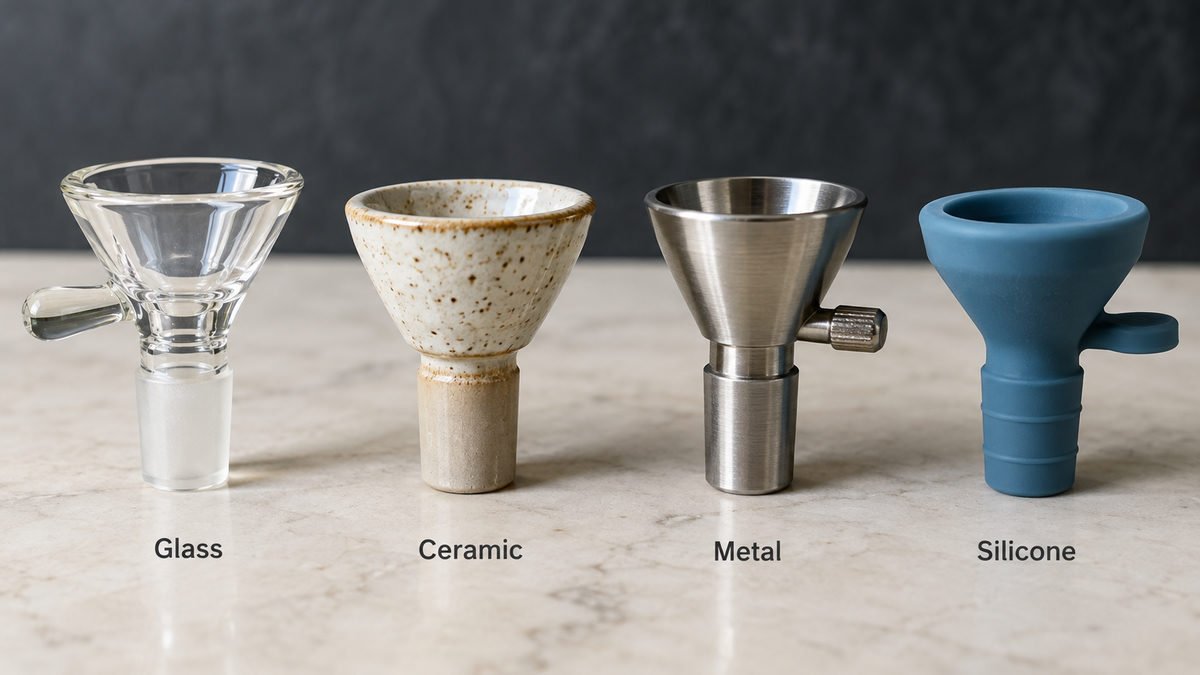
Material affects flavour, heat behaviour, durability, visibility, cleaning, and replacement cost. No single option suits every adult user.
Borosilicate Glass Bong Bowls
Borosilicate glass offers a neutral flavour and clear visibility. You can inspect residue, cracks, and airflow openings without guessing.
It also handles temperature changes better than ordinary glass. However, sudden temperature changes or impacts can still cause cracks or breakage.
Glass usually cleans easily because residue remains visible. The main drawback involves careful handling during transport, cleaning, and storage.
Ceramic Bong Bowls
Ceramic bowls feel heavier and often retain heat for longer. Their opaque surfaces can hide residue, making regular cleaning more important.
Additionally, ceramic can chip or crack after impact. Inspect the rim and underside closely before use.
Metal Bong Bowls
Metal bowls suit people who prioritise portability and durability. They generally tolerate knocks better than glass or ceramic.
However, metal transfers heat quickly and may affect flavour. Quality matters, so avoid unknown materials, loose coatings, or poorly finished edges.
Silicone Bong Bowls
Silicone offers flexibility and strong impact resistance. It can suit travel or storage situations where glass feels vulnerable.
However, silicone may retain odours more readily. Keep it away from excessive heat, and follow the manufacturer’s cleaning instructions.
| Material | Main strength | Common consideration |
|---|---|---|
| Glass | Neutral flavour and clear inspection | Can break from impact |
| Ceramic | Heat retention and solid feel | Can chip or hide residue |
| Metal | Durability and portability | May transfer heat or affect flavour |
| Silicone | Flexibility and impact resistance | May retain odours |
Are glass bong bowls better than metal or ceramic bowls? Glass often suits beginners who value visibility and neutral flavour.
Meanwhile, metal suits rugged portability, ceramic suits heat retention, and silicone suits impact resistance. The best choice depends on your priorities.
Before use, inspect the bowl for cracks, sharp edges, loose parts, discolouration, and overheating marks. Replace any piece that could cut you, leak, or fail under heat.
For general information about cannabis risks and Australian restrictions, read Healthdirect’s cannabis information.
Bong Bowl Sizes, Joints, and Compatibility
Joint size describes the connection between the bowl and bong. The most common bong bowl sizes include 14mm and 18mm. Learn more in bong joint sizes explained.
A 14mm bowl is smaller and widely used on compact or medium-sized bongs. An 18mm bowl offers a larger connection and may support greater airflow.
However, joint size does not directly measure herb capacity. A deep 14mm bowl may hold more than a shallow 18mm bowl.
Measuring the Joint
First, check the bong or accessory specifications. If those details are missing, compare the existing bowl with a known 14mm or 18mm accessory.
Additionally, measure carefully with a ruler or calliper. Measure the relevant inner or outer diameter, depending on whether the bong uses a female or male joint.
Male and female describe how the parts connect. A male bowl or adapter inserts into a female joint, while a female bowl fits over a male joint.
Both diameter and gender must match. A correct diameter with the wrong gender still creates a poor or impossible connection.
Compatibility Checklist
- Measure or confirm the bong’s joint diameter.
- Identify whether the bong joint is male or female.
- Confirm the bowl’s opposite connection type.
- Check the bowl angle and connection style.
- Confirm whether an adapter or downstem is required.
- Compare the bowl’s depth, handle, and screen design.
Can you use a bowl from another bong? Yes, but only when the size, gender, angle, and connection style match securely.
Signs of incompatibility include wobbling, air leaks, excessive force, and an unsafe angle. A bowl that almost fits should not become a permanent solution.
Residue can also affect fitting. Clean the joint gently, then check whether the bowl seats evenly without forcing it.
How to Pack, Use, and Maintain a Bong Bowl
Start by inspecting the bowl and checking its airflow path. Remove visible residue, then use a suitable amount of clean, dry material. Browse other bong accessories in Australia.
A loose, even pack usually allows air to pass more easily. Avoid compressing the material tightly, especially in a narrow chamber.
Screens and Herb Control
A bowl screen can help stop small pieces from falling into the downstem. Choose a screen that fits securely without blocking the entire opening.
Built-in screens form part of the bowl itself. Removable screens offer easier replacement, but they can shift during cleaning or handling.
Fine, wet, or overpacked material can restrict airflow. A blocked screen may also create a weak pull and encourage excessive heat.
Therefore, prepare the material evenly and avoid filling beyond the bowl’s rim. The right amount depends on the chamber depth and your preferred session size.
Basic Responsible Use
Check the water level before using the bong. Then seat the bowl gently and confirm that the connection feels stable.
Use controlled heat and inhale gently. Avoid overheating the bowl, especially when using glass, ceramic, or silicone components.
Never force a stuck bowl or handle hot glass with bare fingers. Also, stop using any bowl with cracks, chips, sharp edges, or persistent leaks.
After use, empty loose residue when the bowl has cooled. Rinse suitable components, allow them to dry fully, and store the bowl somewhere secure.
Additionally, follow local laws and age restrictions when purchasing or using cannabis-related accessories. Australian rules vary by state and territory.
Cleaning, Troubleshooting, and Replacing a Bong Bowl
Clean the bowl when resin builds up or airflow becomes restricted. Sticky movement, unpleasant taste, visible residue, and persistent odour also signal a cleaning need. Find a matching bowl among bong replacement parts.
Use a suitable cleaning product with warm water, soaking, gentle agitation, and non-abrasive tools. Always follow the cleaner’s instructions and avoid aggressive scraping.
Sudden temperature changes can crack glass. Therefore, let hot parts cool before rinsing, and avoid using compromised pieces during cleaning.
Clearing Clogs Safely
For a light clog, soak the bowl and loosen residue gradually. Do not force tools through delicate openings or damage a built-in screen.
Poor airflow can result from several causes. Check for an overpacked bowl, blocked screen, clogged downstem, low water level, or air leak.
Meanwhile, loose fittings may indicate the wrong joint size, worn accessories, residue, or a damaged connection. Clean the joint and reassess the fit before replacing parts.
When to Replace the Bowl
Replace the bowl when you find chips, cracks, sharp edges, persistent leaks, or severe discolouration. These issues can affect safety, airflow, and cleaning.
There is no fixed replacement schedule. Base the decision on condition, cleanliness, fit, material wear, and frequency of use.
Before buying, review this beginner checklist:
- Choose glass, ceramic, metal, or silicone based on your priorities.
- Confirm whether you need a 14mm or 18mm joint.
- Match the correct male or female connection.
- Compare bowl depth, rim width, and handle design.
- Check screen compatibility and cleaning access.
- Choose a well-finished piece without sharp edges or loose parts.
Conclusion
A bong bowl holds the material and works with the joint, downstem, water chamber, and mouthpiece. The most important buying decisions involve material, joint size, joint gender, design, and compatibility.
Proper packing, optional screen use, regular cleaning, careful handling, and timely replacement support better airflow and easier maintenance. Always check your bong’s joint size and gender first.
Then compare compatible bowl materials and designs before choosing a replacement or accessory. For related glassware and accessory options, visit Sweet Puff Australia and review each product’s specifications carefully.