
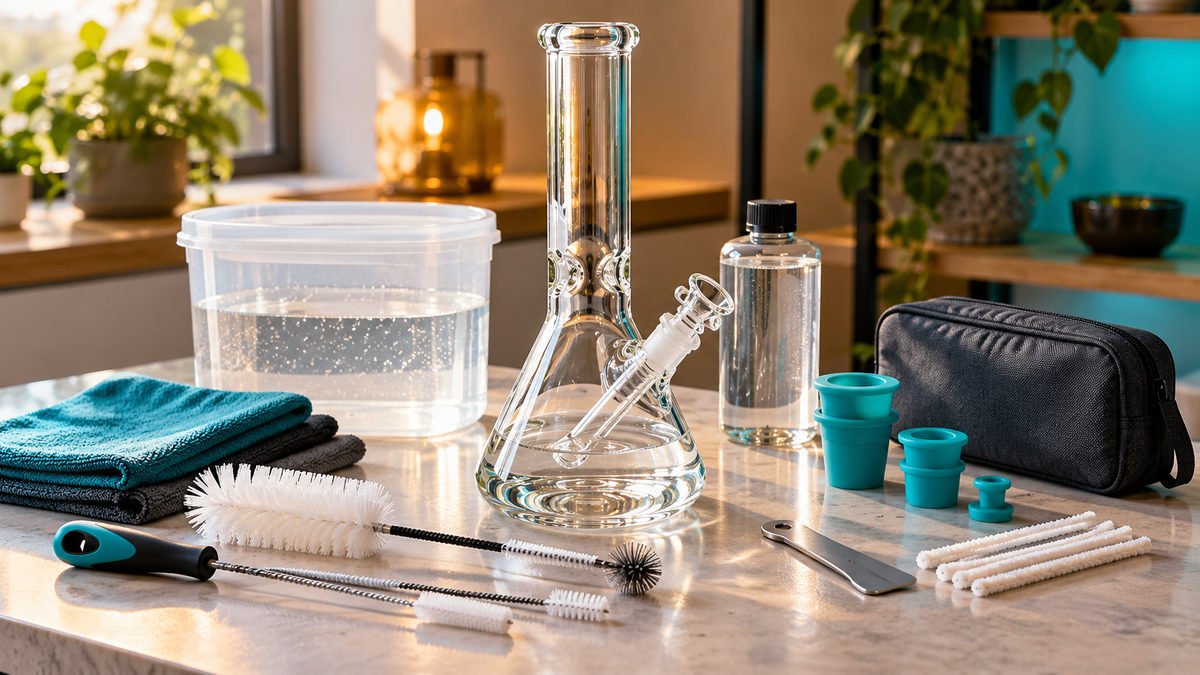
Does your bong taste harsh, draw slowly, or develop stubborn resin after only a few sessions? The right bong cleaning accessories can make maintenance faster, safer, and far more effective. Without them, buildup hides inside downstems, percolators, chambers, and narrow joints. This guide explains which brushes, solutions, scrapers, plugs, caps, and soaking containers suit your piece.
1. Why Regular Bong Cleaning Matters
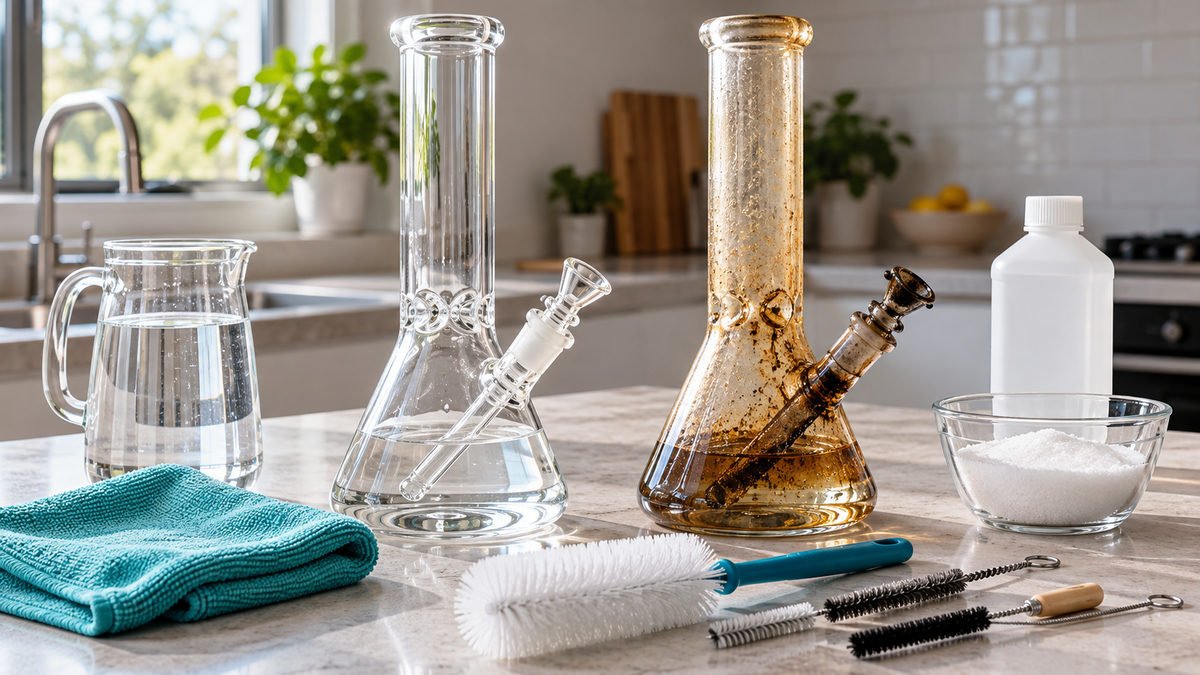
Fresh water and clean surfaces help your bong deliver a cleaner, more consistent experience. Stale water can hold ash, resin, plant particles, and unpleasant odours after only one session. Therefore, changing the water regularly protects flavour and keeps old residue from circulating through the chamber. For the full routine, see our bong care and maintenance guide.
Clean pathways also support better airflow. Resin can narrow downstems, clog percolator holes, and restrict the neck. As a result, your bong may feel harder to draw and produce less consistent filtration. A clean chamber usually responds more predictably.
Hygiene matters as well. Warm, dirty bong water creates a damp environment where bacteria, mould, and odour can develop. However, regular cleaning does not replace safe handling or proper drying. Always empty used water promptly and rinse removable parts thoroughly.
Routine maintenance also helps protect glass, silicone, acrylic, and ceramic surfaces. Hardened residue becomes more difficult to remove over time. In contrast, frequent light cleaning prevents thick layers from bonding to joints, bowls, and percolators.
Your cleaning schedule should match your usage pattern:
- Daily users: Change water after every session and complete a deeper clean weekly.
- Occasional users: Empty the chamber after use and clean the bong before storage.
- Heavy resin producers: Rinse often and deep-clean every few sessions.
Clean your bong immediately when the water looks cloudy, airflow feels restricted, or the piece develops a strong smell. Sticky joints, dark percolators, and visible resin also signal that routine cleaning cannot wait.
2. 10 Essential Bong Cleaning Accessories to Buy
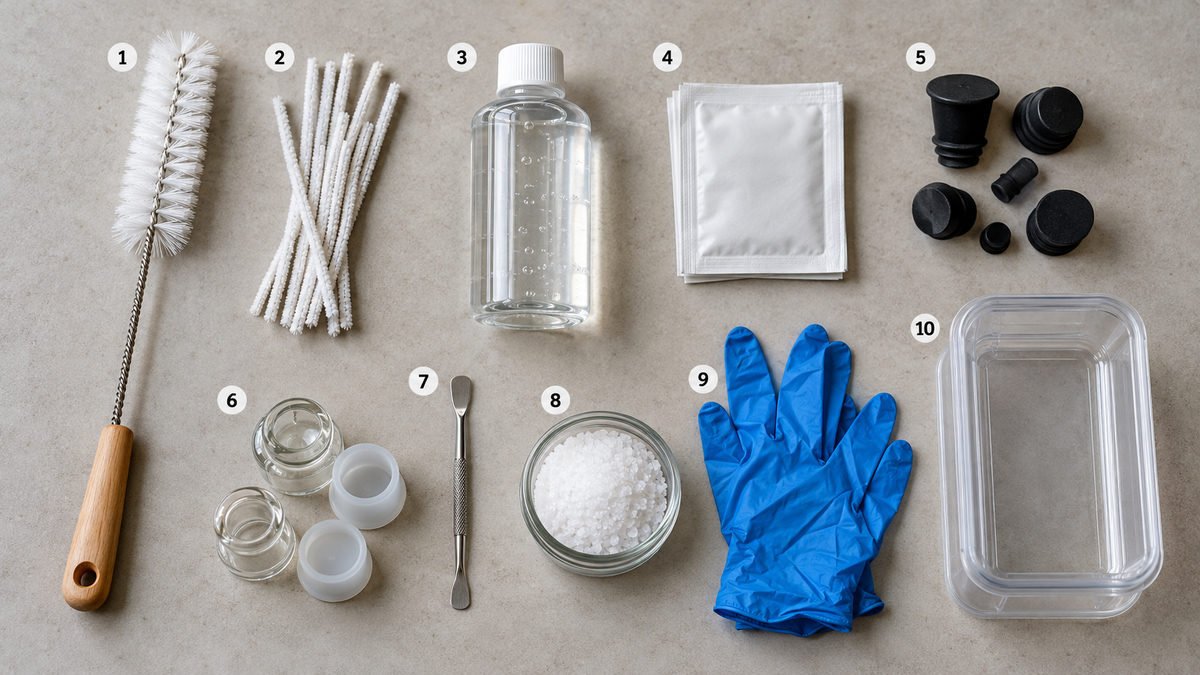
Brushes and Flexible Tools
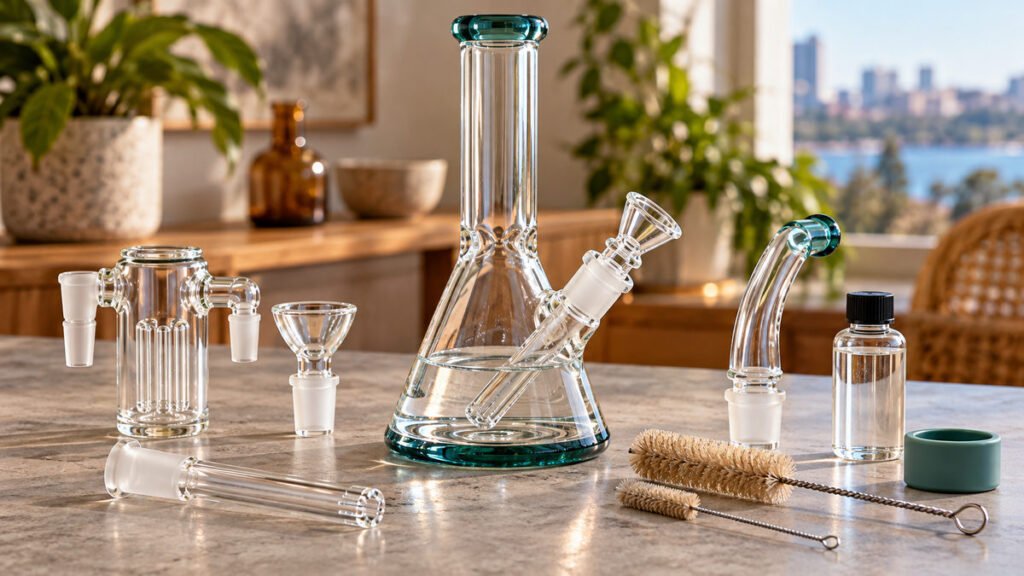
- Glass bong cleaning brush: Choose a long-handled brush with soft, non-shedding bristles. It should reach the chamber, base, and lower walls without scratching the glass.
- Bong brush set: Multiple sizes help clean downstems, percolators, necks, joints, and narrow openings. A set usually offers better value than one oversized brush.
- Pipe cleaners: Flexible cleaners reach small airways and awkward passages. Reusable versions reduce waste, while disposable cleaners offer quick hygiene between deeper cleans.
Solutions and Residue Removal
- Bong cleaning solution: Purpose-made formulas target resin and sticky residue. Choose a product that rinses clean and suits your bong’s material.
- Isopropyl alcohol for bong cleaning: High-percentage alcohol often works well on compatible glass components. Use it carefully, ventilate the area, and follow the product label.
- Coarse salt or abrasive cleaning media: Salt adds controlled abrasion when combined with a cleaning solution. Avoid excessive force, especially around thin glass and delicate percolators.
- Bong scraper tool: A durable scraper helps remove stubborn residue from bowls, joints, and downstems. Choose a tool with a controlled edge and comfortable grip.
Sealing and Soaking Accessories
- Bong cleaning plugs and caps: These accessories seal openings during shaking or soaking. They help keep cleaner inside the bong and reduce spills.
- Bong soaking container: Select a stable, leak-resistant container with enough space to submerge removable parts. A secure lid can also reduce odours during soaking.
- Alcohol wipes and cleaning cloths: Use them for mouthpieces, exteriors, removable parts, and final touch-ups. Choose lint-free cloths that do not leave fibres behind.
A practical bong cleaning supplies checklist should include the following: See more in our guide to bong maintenance tools.
- Soft glass bong cleaning brush
- Multi-size brush set
- Flexible pipe cleaners
- Compatible bong cleaning solution
- Coarse salt or suitable cleaning media
- Resin scraper tool
- Bong cleaning plugs and caps
- Nitrile gloves
- Stable soaking container
- Lint-free drying cloths
3. Compare the Best Bong Cleaning Brushes and Tools
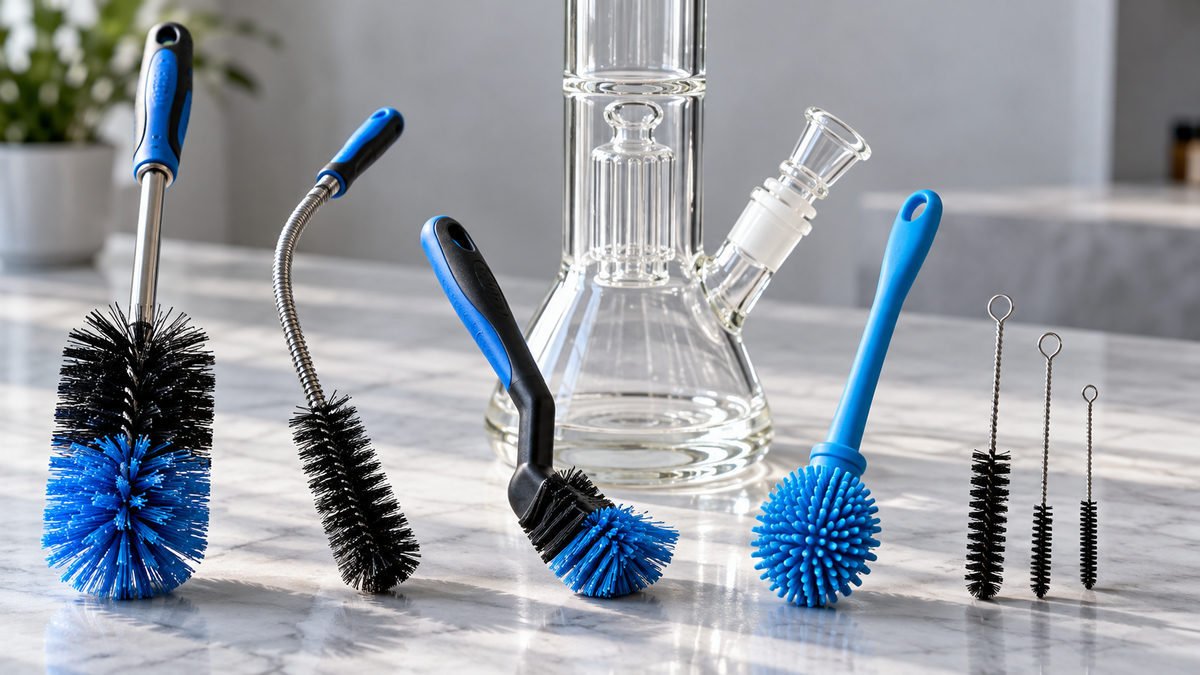
Straight brushes work well for open chambers and broad bases. Their rigid handles provide control, especially when cleaning a tall glass bong. However, they may struggle with curved necks, angled joints, and complex percolators.
Flexible brushes follow curved interiors more easily. Therefore, they suit narrow-neck pieces, recycler designs, and awkward downstems. Angled brushes add reach around corners, while cotton swabs handle small exterior details and joint edges.
Pipe cleaners remain useful for tiny airways and narrow percolator openings. Meanwhile, small detail brushes can loosen residue around diffuser holes without forcing a large brush into delicate glass. Use gentle movements rather than repeated pushing.
For a standard glass bong, choose one long soft brush for the main chamber. Add a slim flexible brush for the downstem and a small detail tool for the percolator. This combination covers most cleaning tasks.
Match brush dimensions to your bong’s design:
- Deep water chambers: Choose a longer handle with a broad but flexible head.
- Narrow openings: Select slim brushes that fit without bending the joint.
- Complex percolators: Use thin flexible brushes and soft detail cleaners.
- Small travel pieces: Choose compact brushes with shorter handles.
Nylon bristles offer durability and strong scrubbing performance. Silicone bristles feel gentler and resist moisture, while foam heads clean smooth surfaces softly. Microfibre heads can lift residue, but they may hold odours if stored damp.
Natural fibres can feel effective, yet they may shed or absorb cleaning chemicals. Therefore, non-shedding nylon or silicone often provides a more dependable choice. Rust-resistant handles also matter when tools contact water and alcohol repeatedly.
Look for ergonomic grips and secure brush heads. A loose head can detach inside the chamber and create a difficult recovery problem. Additionally, rounded edges reduce the chance of chipping delicate glass.
Scraper tools remove thick resin from bowls, joints, and downstems. Use controlled pressure and scrape softened residue gradually. Avoid metal edges on fragile glass unless the manufacturer specifically confirms compatibility.
Reusable tools cost more initially, but frequent users often recover that cost quickly. Disposable pipe cleaners offer convenience and easier hygiene between deep cleans. However, reusable brushes create less waste when you sanitise and dry them properly.
Are reusable bong cleaning brushes worth buying? For daily or heavy users, they usually are. Occasional users may prefer a small brush set with disposable pipe cleaners for flexibility and lower storage needs.
4. Choose the Right Bong Cleaner, Solution, Plugs, and Soaking Setup
Commercial bong cleaner offers convenience and a formulation designed for resin. Isopropyl alcohol can work effectively on compatible glass, especially at a high concentration. Coarse salt adds abrasion, while detergent-based formulas may help with lighter organic residue.
Non-toxic alternatives can suit users who dislike strong fumes. However, always check material compatibility before applying any product. A cleaner designed for glass may damage silicone, acrylic, rubber seals, or decorative coatings.
Purpose-made bong cleaner and rubbing alcohol are not identical. Commercial formulas may include surfactants, fragrances, or rinsing agents. Rubbing alcohol has a simpler solvent base, a sharper odour, and faster evaporation.
For glass parts, high-percentage isopropyl alcohol often loosens resin efficiently. However, alcohol can damage some plastics, silicone, rubber, and adhesives. The CDC notes that alcohol may affect silicone and rubber, while also remaining flammable. Read its chemical disinfectant safety guidance before using alcohol-based products.
Cleaning plugs and caps create a temporary seal around the mouthpiece, downstem opening, carb hole, or bowl joint. Therefore, cleaner can contact more of the interior during gentle shaking. Choose flexible, chemical-resistant seals that fit snugly without forcing the glass.
Check opening sizes before buying plugs. Some kits include several diameters for bowls, mouthpieces, carb openings, and custom glass designs. A loose plug leaks, while an oversized plug may stress the joint.
Your bong soaking container should remain stable during use. Choose a leak-resistant tub with enough height to submerge removable parts fully. A lid can reduce splashes, contain odours, and keep the cleaning area organised.
Odour-free or low-odour cleaners suit shared homes and enclosed spaces. They may require longer soaking or more brushing than alcohol. Therefore, compare smell, rinsing effort, residue, and material compatibility before choosing.
Wear gloves when handling alcohol or resin-heavy solutions. Keep windows open, avoid flames, and label any transferred product clearly. Store chemicals upright in sealed containers, away from heat, children, pets, and direct sunlight.
5. How to Clean a Bong with the Right Accessories
- Empty the bong: Remove used water, the bowl, downstem, ash catcher, and other detachable parts.
- Rinse with warm water: Use warm water to loosen residue. Avoid boiling water and sudden temperature changes that can crack glass.
- Add cleaner: Apply bong cleaning solution or a compatible alcohol-based cleaner to the chamber and removable parts.
- Add coarse salt: Use salt when suitable for the material. It provides controlled abrasion against sticky buildup.
- Seal the openings: Fit bong cleaning plugs and caps over the mouthpiece, joints, and carb openings.
- Shake gently: Rotate the bong slowly so cleaner reaches the interior. Avoid forceful shaking with delicate glass.
- Brush the chamber: Use the correct glass bong cleaning brush for the base, walls, neck, and water chamber.
- Clean narrow areas: Use pipe cleaners, detail brushes, and a resin removal tool for stubborn spots.
- Soak removable parts: Place bowls, downstems, and ash catchers inside a suitable soaking container.
- Rinse and dry: Rinse until no cleaner, salt, alcohol, or loosened residue remains. Allow every part to dry completely.
Hard-to-reach areas often need a combination of tools. Start with soaking, then use a flexible brush that follows the interior shape. For tiny diffuser holes, work carefully with pipe cleaners or soft detail brushes. Follow our guide on how to clean a glass bong.
Repeat the rinse and brush process when residue remains. In fact, several gentle passes usually work better than one aggressive scrape. Inspect the inside under bright light before reassembling the bong.
Avoid common cleaning mistakes that can damage your piece:
- Do not pour boiling water into cold or room-temperature glass.
- Do not mix alcohol, bleach, detergents, or other chemicals.
- Do not scrape aggressively around thin joints or percolators.
- Do not leave alcohol or cleaning solution inside the bong.
- Do not reassemble damp parts, because trapped moisture encourages odours.
After rinsing, place parts in a clean, ventilated area. Airflow helps remove remaining moisture from downstems and percolators. Reassemble only when the bong and accessories feel completely dry.
6. Bong Cleaning Accessories for Different Materials and Buying Needs
Glass bongs benefit from soft nylon brushes, compatible alcohol-based cleaners, fitted plugs, and careful temperature control. Avoid sudden heat changes, especially with thin or decorated glass. Glass and silicone need different care; compare glass vs silicone bongs.
Silicone bongs need flexible brushes and manufacturer-compatible cleaners. However, strong solvents may discolour or weaken silicone. Check the product instructions before using alcohol or abrasive media.
Acrylic bongs require non-abrasive accessories. Some alcohol products can cloud or damage acrylic, so test compatibility first. Ceramic bongs usually suit soft brushes, gentle soaking, and careful handling around glazed or porous areas.
Match your kit to the bong’s size, design, percolator type, and number of removable parts. Occasional users can choose a compact kit with one brush, pipe cleaners, solution, plugs, and cloths. Daily users should invest in a larger reusable set.
A complete bong cleaning kit offers convenience and coordinated accessories. Assembling individual tools provides more control over brush reach, cleaner type, and replacement costs. Therefore, frequent users may benefit from customising each part.
Before buying, compare these practical criteria:
- Material compatibility
- Brush reach and flexibility
- Non-shedding bristles
- Rust-resistant handles
- Leak-resistant plugs and caps
- Odour and rinsing effort
- Durability and replacement availability
- Overall value for money
Prevent bong odour by changing water after use and rinsing promptly. Schedule deeper cleaning before residue hardens. Additionally, store the bong dry and keep removable parts separated until they finish drying.
Sanitise brushes after use and allow them to air-dry. Replace worn bristles, cracked handles, or damaged seals. Store every tool in a clean, ventilated container rather than leaving it beside damp accessories.
Your final purchase checklist should include a cleaner, brush set, pipe cleaners, scraper, plugs, caps, soaking container, gloves, wipes, salt, and drying cloth.
Conclusion
The best bong cleaning accessories combine the right cleaner, brush sizes, flexible detail tools, resin scraper, sealing plugs, caps, and a safe soaking container. Match each accessory to your bong’s material, design, and cleaning frequency.
Then, use a consistent routine to protect taste, airflow, hygiene, and long-term condition. Build your bong cleaning kit with compatible brushes, solution, plugs, scrapers, and storage accessories. Choose the set that best matches your bong and maintenance routine.
For practical smoking accessories and care essentials, explore Sweet Puff Australia. Compare suitable products carefully, check material compatibility, and choose tools that make regular cleaning simple.
Comments (2)
[…] Gather your supplies before opening any cleaning solution. Having everything nearby reduces spills and prevents rushed handling. For most glass bubblers, you will need: See our list of the best bong cleaning accessories. […]
[…] A complete cleaning setup should match your bong’s size, shape, joint design, and internal features. The best bong maintenance tools reach difficult areas without forcing or scratching the glass. See our list of the best bong cleaning accessories. […]