

One loose downstem, trapped moisture, or an oversized box can turn a careful move into broken glass. Learning how to pack glass water pipes safely helps protect delicate joints, percolators, bases, and decorative details. Glass can suffer from impact, vibration, pressure, scratches, and leaks during travel or storage.
Therefore, careful preparation matters as much as the box itself. This guide explains how to clean, dry, cushion, pack, ship, transport, store, and unpack a glass water pipe. It also highlights the common mistakes that cause avoidable breakage.
How to Pack Glass Water Pipes Safely: Start With Preparation
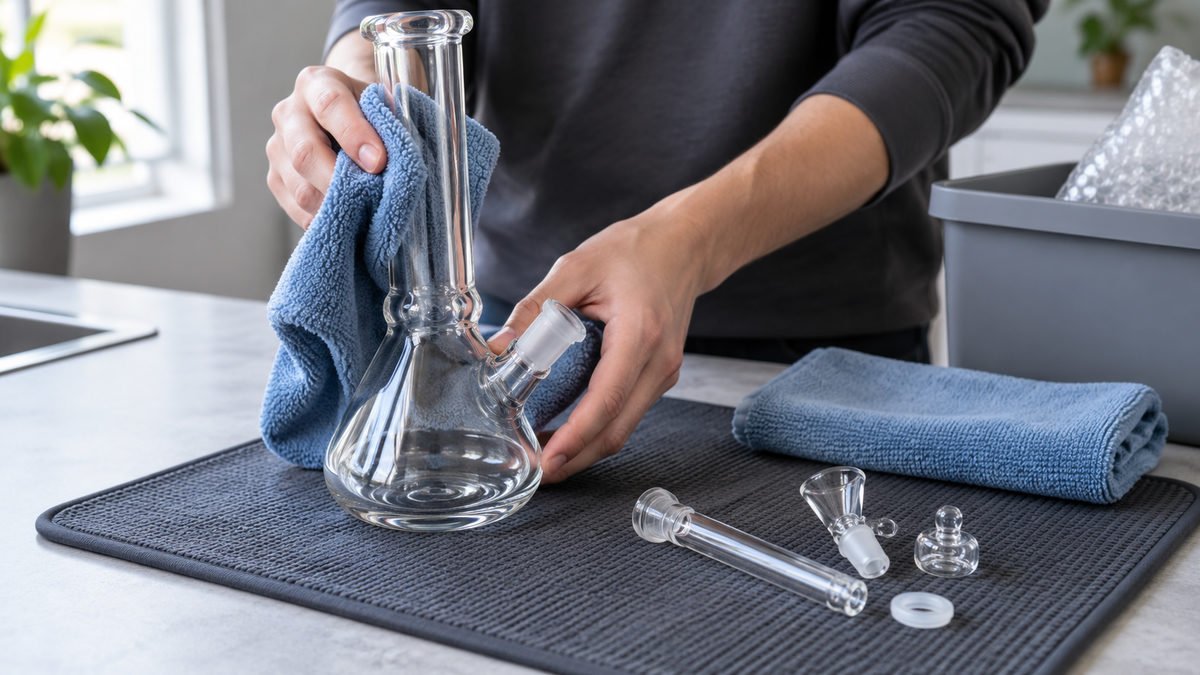
Always begin with a clean, empty, and completely dry pipe. Water left inside the chamber can leak into packaging, weaken paper padding, and create slippery surfaces around joints. Residue can also transfer onto wrapping materials or attract unwanted odours during storage. Start by learning how to clean a water pipe properly.
First, empty the chamber, base, downstem, joints, and percolators. Remove ice, water, loose debris, and any moisture trapped inside the glass. Additionally, check hidden areas where water may remain after rinsing, especially inside complex percolators.
Use a suitable cleaning process for the pipe’s material and construction. Rinse every component thoroughly afterwards, then allow the glass to air-dry completely. Gentle airflow can help, while absorbent swabs may work inside safe, accessible openings.
However, never force a swab into a narrow passage or delicate percolator. Fibres can snag, and pressure can stress thin glass. Do not wrap the entire pipe until you have checked that no moisture remains inside.
Next, inspect the piece under bright light. Look for chips, hairline cracks, loose joints, weakened decorative parts, or signs of previous repairs. Even a small existing flaw can worsen during vibration or pressure.
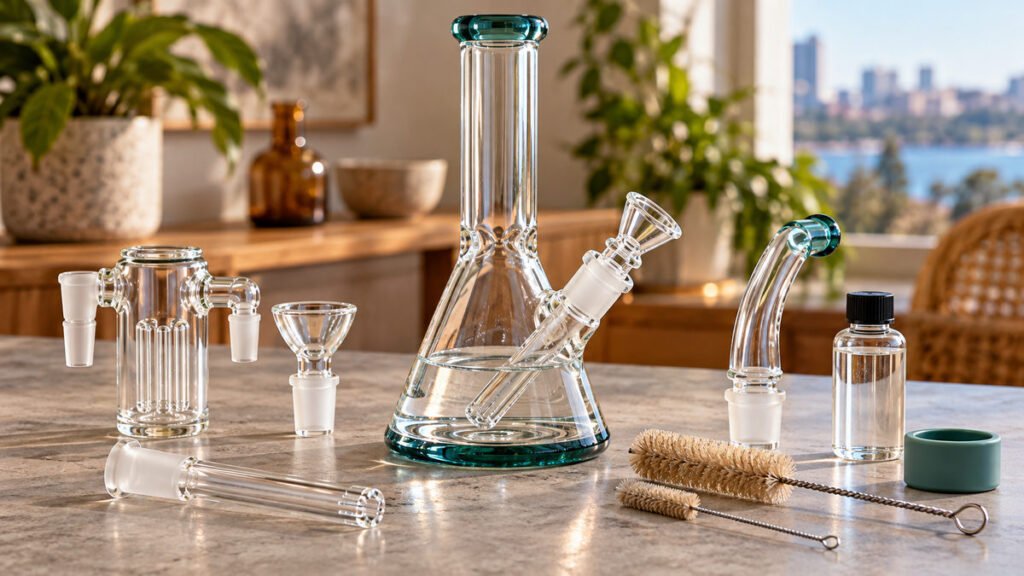
Remove every detachable component before wrapping the main body. This usually includes the downstem, bowl, ash catcher, mouthpiece attachment, clips, caps, and removable fittings. Separating these pieces prevents them from swinging into the pipe during movement.
Moreover, take clear photographs before disassembly. Capture how each removable part fits, including the direction of downstems and the position of seals. These photos make reassembly easier after transport and provide useful condition records.
- Clean the pipe and remove all residue.
- Drain every chamber, joint, stem, and percolator.
- Allow every part to dry fully.
- Inspect for chips, cracks, loose joints, and weak attachments.
- Separate removable components before wrapping.
- Photograph the assembled pipe for reference.
Never pack a wet pipe, force accessories into joints, or tape components together. These shortcuts create pressure points and often cause damage before the box even moves.
Choose Protective Packaging for Glass Water Pipes
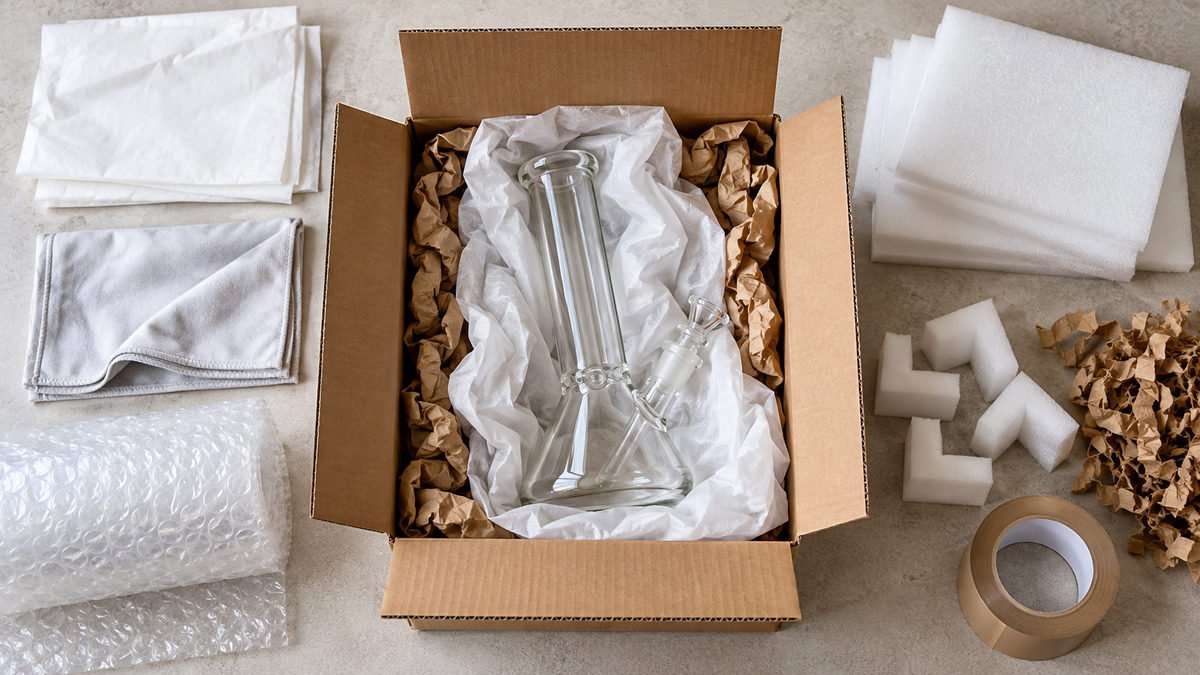
Good packaging uses several layers, with each layer serving a different purpose. Gather soft tissue paper, lint-free cloth, bubble wrap, foam sheets, corner protection, firm filler, packing tape, and sturdy corrugated boxes. Hard cases from our bong storage accessories guide make packing easier.
Start with tissue paper or a lint-free cloth against the clean glass. This soft layer helps prevent scratches from bubble wrap, cardboard edges, or foam seams. Avoid rough fabric, printed paper, and materials that shed fibres.
Foam sheets provide firm, even support around irregular shapes and delicate glasswork. Bubble wrap adds impact cushioning, particularly around the base and outer walls. Folded paper can fill spaces effectively when packed firmly.
Meanwhile, packing peanuts should only fill remaining voids. They shift, compress, and allow heavy glass to settle against the box. Peanuts alone rarely immobilise a water pipe safely.
Choose a snug inner box that leaves room for cushioning on every side. The wrapped pipe should not touch the cardboard walls. However, the box should not be so tight that padding presses against fragile joints or decorative parts.
Measure the wrapped pipe before choosing the box. Add enough cushioning space beneath, above, and around every side. A practical fit keeps the pipe centred without creating a large empty cavity.
Select a new, rigid box with intact corners and firm walls. Thin cartons, crushed corners, and oversized reused boxes offer weaker protection. If you reuse a box, remove old labels and check every seam carefully.
Additionally, discreet packaging can remain environmentally responsible. Recyclable paper padding, reusable foam sleeves, tissue paper, and correctly sized cartons can reduce waste. Effective packaging does not require excessive layers or unnecessary plastic.
For fragile glass, the best approach combines a soft surface layer, impact cushioning, firm support, and movement prevention. Each material should work together rather than replace the others.
Pack the Main Glass Body Step by Step
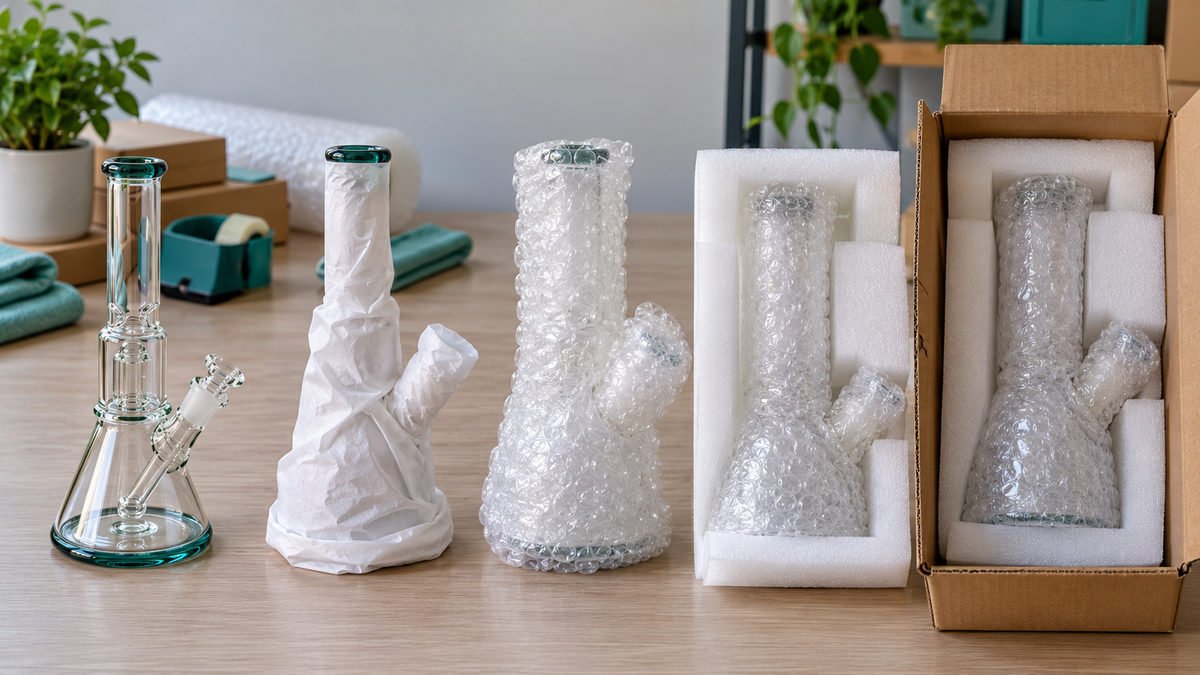
Wrap the clean, dry main body with tissue paper or a soft, non-abrasive cloth. Cover the surface evenly, including the base, mouthpiece, joints, and outer chambers. This first layer prevents direct contact with bubble wrap and other packaging materials.
Next, add several layers of bubble wrap around the body. Use additional cushioning around the base, mouthpiece, stems, joints, and other high-risk contact points. These areas often receive concentrated force when a box lands on an edge.
However, avoid wrapping so tightly that the bubble wrap presses against thin glass. The purpose is to absorb impact, not compress the pipe. Leave delicate protrusions supported without bending or pulling them sideways.
Use foam sheets around irregular shapes, intricate glasswork, and delicate percolators. Custom-cut foam can create better support than loosely folded material. Position it around the part rather than forcing it into openings.
Secure each wrapped layer with tape placed on the packaging material. Never apply adhesive directly to the glass. Tape residue can be difficult to remove, and pulling tape away may stress a weak surface.
Create a Stable Inner Box
Build a padded cradle or nest inside the inner box. Place firm cushioning beneath the base and around the lower body. The heaviest section needs strong support because concentrated impact often travels through the base first.
Where appropriate, keep the pipe upright inside the inner box. Upright positioning can reduce pressure on the mouthpiece and decorative attachments. Nevertheless, the correct position depends on the pipe’s shape and its strongest support points.
Fill the side gaps with firm, lightweight cushioning. Use folded paper, foam, or suitable void filler to stop movement. The material should hold the pipe in place without crushing or pressing against fragile components.
Do not leave empty pockets beneath the base. A pipe can drop into these spaces during handling, causing a sudden impact. Add layered support until the base remains level and stable.
Close the inner box temporarily and perform a gentle movement test. Carefully tilt it slightly and listen for rattling. If the pipe shifts or touches the walls, reopen the box and reposition the cushioning.
Repeat the test from several directions. A box that feels secure when flat may allow movement when tilted. Stop when the pipe remains centred and no hard contact sounds occur.
Protect Glass During Suitcase Transport
For suitcase travel, place the fully protected pipe in the centre of rigid luggage. Keep it away from edges, shoes, chargers, toiletries, and other hard objects. Surround the inner box with soft clothing only after the box has proper internal support.
Meanwhile, do not rely on clothing alone. Fabric compresses during handling and may leave the pipe exposed to pressure. A rigid inner container gives the glass a stable protective boundary.
Keep the protected pipe away from heavy items placed on top. Avoid forcing the suitcase closed, since lid pressure can transfer directly to the glass. If the case does not close naturally, use a larger case or repack the contents.
Protect Removable Parts and Use Double Boxing for Shipping
Wrap bowls, downstems, ash catchers, caps, clips, and other removable parts separately. Each piece needs its own soft layer and impact cushioning. Loose components can strike the main body even when the outer box appears stable. Remove the stem first; see our bong downstem guide.
Use small padded containers or individual foam compartments for narrow stems and protruding joints. These parts can catch on wrapping or snap when another item moves against them. Separate compartments keep hard edges from meeting.
Never place loose accessories inside the pipe. They can swing, scrape internal surfaces, or strike delicate percolators. This mistake is especially risky when the accessory has a narrow stem or heavy fitting.
For courier shipping, long-distance moves, or rough handling, use a double-boxing method. First, pack the pipe securely inside a snug inner box. Then place that box inside a larger outer box with cushioning on every side.
Build the Outer Box
The outer box should leave a substantial cushioning layer beneath, above, and around the inner box. Use dense, evenly distributed filler rather than loose pockets of material. The inner box must not slide when the outer box moves.
Check the bottom first because it receives significant impact during lifting and setting down. Add a firm cushioning layer before placing the inner box inside. Then fill the side spaces evenly, without pushing the inner box against one wall.
Finally, add cushioning over the inner box before sealing the outer carton. The top layer should prevent downward movement without crushing the inner packaging. A stable box-in-box arrangement offers stronger protection than one oversized carton.
Australia Post’s packaging guidance recommends individual wrapping, snug rigid containers, cushioning, and inner-and-outer packaging for fragile items. It also notes that a fragile label does not replace proper internal protection. Review the Australia Post prohibited and restricted items guide before posting.
Match the Method to the Journey
- Short car trips: Immobilise the pipe inside a padded rigid container.
- Suitcase travel: Centre the protected box away from edges and hard objects.
- Storage: Use dust protection, moisture control, and stable support.
- Courier shipping: Use double boxing and stronger impact cushioning.
Intricate pieces may need custom foam, moulded inserts, rigid dividers, or professional packing assistance. Double boxing reduces risk, but it cannot fix wet components, weak boxes, poor sealing, or exposed protrusions.
Seal, Label, Transport, and Avoid Common Packing Mistakes
Seal every box seam with strong packing tape. Use overlapping strips across the top, bottom, and major edges. Reinforce areas where the cardboard folds or where the box carries extra weight. Shipping lighters too? Check lighter safety and storage rules.
Mark the outer package as fragile and indicate an upright orientation when useful. However, labels cannot control every handling position. Internal cushioning must protect the glass even if the parcel turns upside down.
Use a complete and discreet shipping label with accurate sender and recipient details. Consider tracking and available cover for valuable items. Where permitted, arrange delivery to a responsible adult and confirm the recipient can accept it safely.
Before shipping or travelling, check carrier policies, airline baggage rules, customs requirements, and local regulations. Requirements can vary between domestic and international transport. The Australian Border Force explains that travellers and senders remain responsible for checking prohibited goods rules.
Never ship or carry a pipe with water, residue, prohibited contents, or accessories that breach applicable rules. Pack only clean, dry, empty equipment intended for lawful use. If any part appears restricted, seek official guidance before transport.
Common Mistakes That Cause Breakage
- Using an oversized box with large empty spaces.
- Leaving the base without firm cushioning.
- Relying on loose packing peanuts alone.
- Applying tape directly onto the glass.
- Packing components while they remain wet.
- Wrapping delicate parts too tightly.
- Leaving downstems or joints unprotected.
- Allowing accessories to move inside the pipe.
- Placing heavy objects on top of the package.
Pressure and vibration can damage glass without one obvious large impact. Repeated movement may stress joints, weaken repaired areas, or loosen decorative attachments. Therefore, stopping movement remains one of the most important packing steps.
Keep packed glass away from heat, direct sunlight, heavy objects, and damp storage areas. Temperature changes can affect packaging materials and may worsen existing flaws. Store the box on a stable surface rather than beneath stacked belongings.
Risk Warning for Delicate or Repaired Pieces
Use extra caution with intricate percolators, thin walls, repaired glass, unsupported decorations, and unusual shapes. These pieces may need custom support because standard bubble wrap cannot distribute pressure evenly.
If you cannot create stable support without pressing on a fragile feature, pause the packing process. A professional packing service may offer safer materials and better-fitted inserts. Do not risk a valuable or irreplaceable piece with improvised padding.
Unpack Safely and Use the Final Pre-Transport Checklist
Open the package on a clear, stable surface away from children, pets, clutter, and hard edges. Cut the tape carefully and remove the outer cushioning first. Keep blades away from the glass and never cut deeply into the box. After unpacking, learn how to store glass bongs safely.
Inspect the inner packaging before removing the pipe. Check the base, joints, mouthpiece, downstem, percolators, and every removable part. Look for chips, cracks, shifted foam, pressure marks, or unexpected movement.
Do not force pieces apart if they appear stuck. Check for adhesive, shifted padding, or damage before applying any pressure. If you find a crack or sharp edge, stop handling the piece and place it somewhere secure.
Final Pre-Transport Checklist
- Pipe cleaned and residue removed.
- All water, ice, and moisture removed.
- Every component fully dry.
- Removable parts separated and individually wrapped.
- Vulnerable joints, bases, and protrusions padded.
- Inner box snug and properly cushioned.
- Empty spaces filled without crushing the glass.
- Outer box rigid, reinforced, and securely sealed.
- Carrier, airline, customs, and local rules checked.
- Package labelled discreetly with accurate details.
Retain photographs of the pipe, packed inner box, and sealed outer carton. These records can help document condition before shipping or support an eligible transport claim.
For storage, keep the dry pipe upright or securely supported inside a padded container. Choose a cool, dry place away from temperature extremes, falling objects, and heavy boxes.
Conclusion
Safe glass water pipe packaging depends on thorough cleaning, complete drying, separate protection, snug cushioning, and movement prevention. Shipping requires stronger protection, so double boxing offers an additional barrier against drops, vibration, and pressure.
Avoid wet packing, loose filler, oversized cartons, direct tape on glass, unsupported bases, and pressure on delicate attachments. Use the checklist before handing over, storing, or travelling with the package. Finally, verify carrier, airline, customs, and local regulations before transport.
For more practical care and packing guidance, Sweet Puff Australia offers a range of glass water pipe information and accessories for Australian readers. Always choose products and transport methods that suit your needs, storage space, and lawful use.


Comments (2)
[…] Travel storage needs more protection than ordinary cupboard storage. Use a rigid, padded, well-fitted bong carrying case instead of a loose tote bag, thin box, or unpadded backpack. Moving? Here is how to pack glass water pipes safely. […]
[…] Empty all water after use and rinse away residue before placing the bong in a case. Dirty water can create strong odours and leave moisture inside the storage compartment. Additionally, residue may transfer onto foam, fabric, or internal pockets. For trips, learn how to pack glass water pipes safely. […]