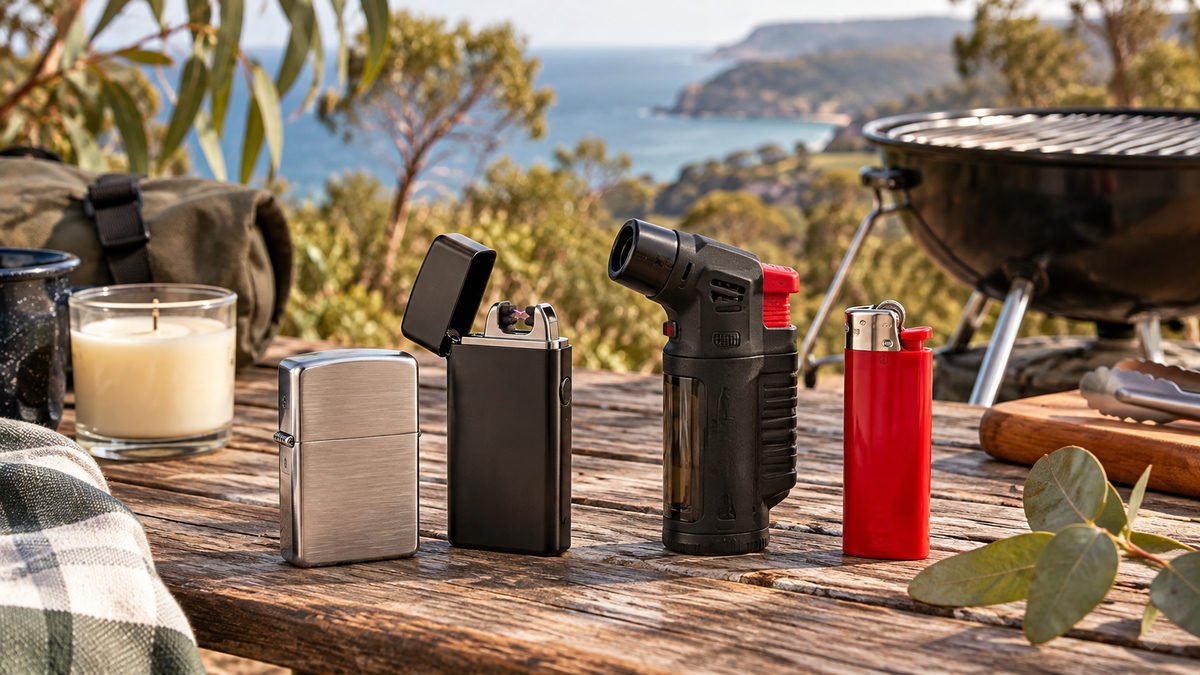
Need a lighter that works in strong wind, lights candles safely, or handles weekend camping trips? Lighters Australia shoppers can buy range from cheap disposable models to rechargeable plasma devices. Each option differs in fuel needs, safety features, delivery rules and long-term value.
Therefore, choosing the right model starts with its intended use. This guide compares lighter types, costs, maintenance and safety considerations for smoking, candles, barbecues, camping, emergencies and collecting.
Lighters Australia Buyers Can Choose From
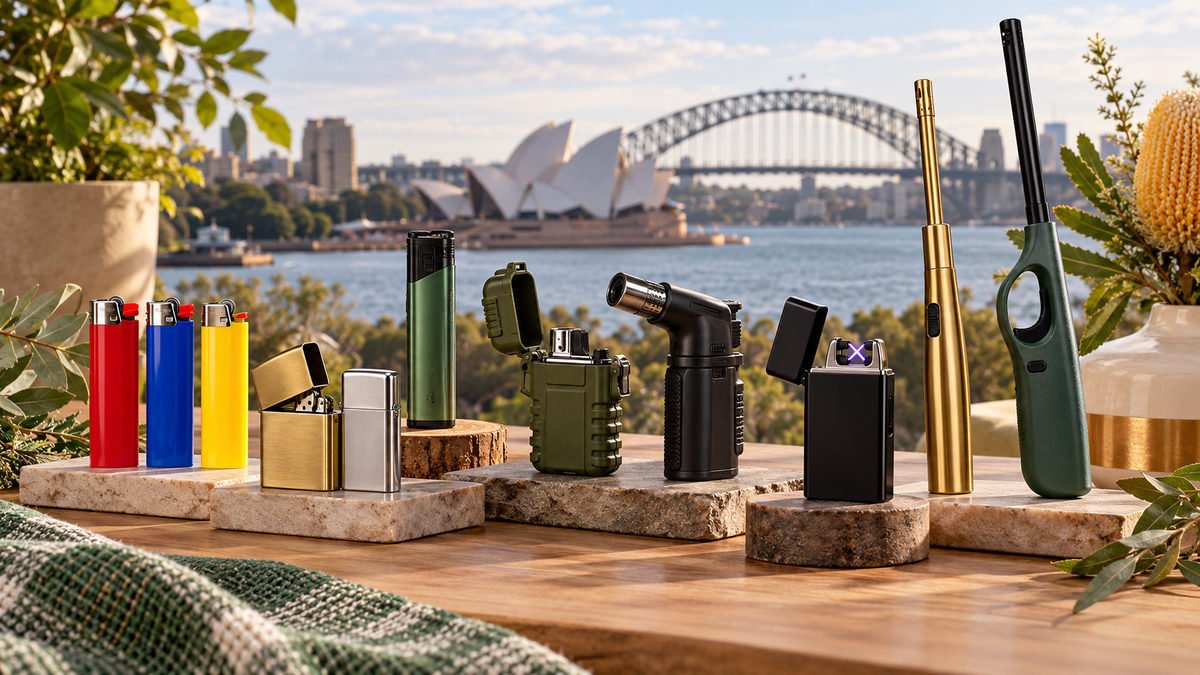
Australian shoppers can choose from disposable, refillable, traditional flint, windproof, torch, electric, plasma, candle and barbecue lighters. Each type solves a different problem. A small disposable lighter suits occasional use, while a refillable model may offer better value over time. Not sure where to start? Read how to choose a lighter.
Disposable lighters usually contain butane and operate with a spark wheel or push-button igniter. They cost little upfront, but you replace them once the fuel runs out. Refillable models use butane or lighter fluid, depending on their design.
Traditional flint lighters create a spark against a wick or fuel vapour. Zippo-style models remain popular because users can replace the flint, wick and fuel. However, their open flame can struggle in strong wind unless the design includes a protective chimney.
Windproof lighters often use a shielded flame or focused torch jet. They can resist breezes better than standard flames, especially outdoors. However, wind-resistant does not mean waterproof, and many models cannot survive prolonged immersion.
Torch lighters use pressurised butane to create a narrow blue flame. This focused flame reaches higher temperatures and works well for cigars, camping stoves and outdoor cooking. It also consumes fuel faster than a basic soft-flame lighter.
Electric and plasma lighters use rechargeable batteries to create an electrical arc. They do not need liquid fuel, and many charge through USB. Nevertheless, you must recharge them regularly and keep their charging ports dry.
Candle and barbecue lighters usually include long-reach handles. This design keeps your fingers farther from jars, burners and hot grill surfaces. Some models also include safety locks, adjustable flames and automatic shut-off features.
- Fuel: Butane, lighter fluid or no liquid fuel.
- Power: Disposable ignition, flint, battery or USB charging.
- Controls: Flame adjustment, safety locks and ignition buttons.
- Maintenance: Replacement flints, wicks, fuel, seals or charging cables.
- Convenience: Fuel gauges, charging indicators and protective covers.
Popular choices include generic disposable lighters, premium refillable models, Zippo lighters and rechargeable electric lighters. Therefore, compare the complete ownership cost rather than focusing only on the purchase price.
Best Lighters for Smoking, Candles, BBQs and Camping
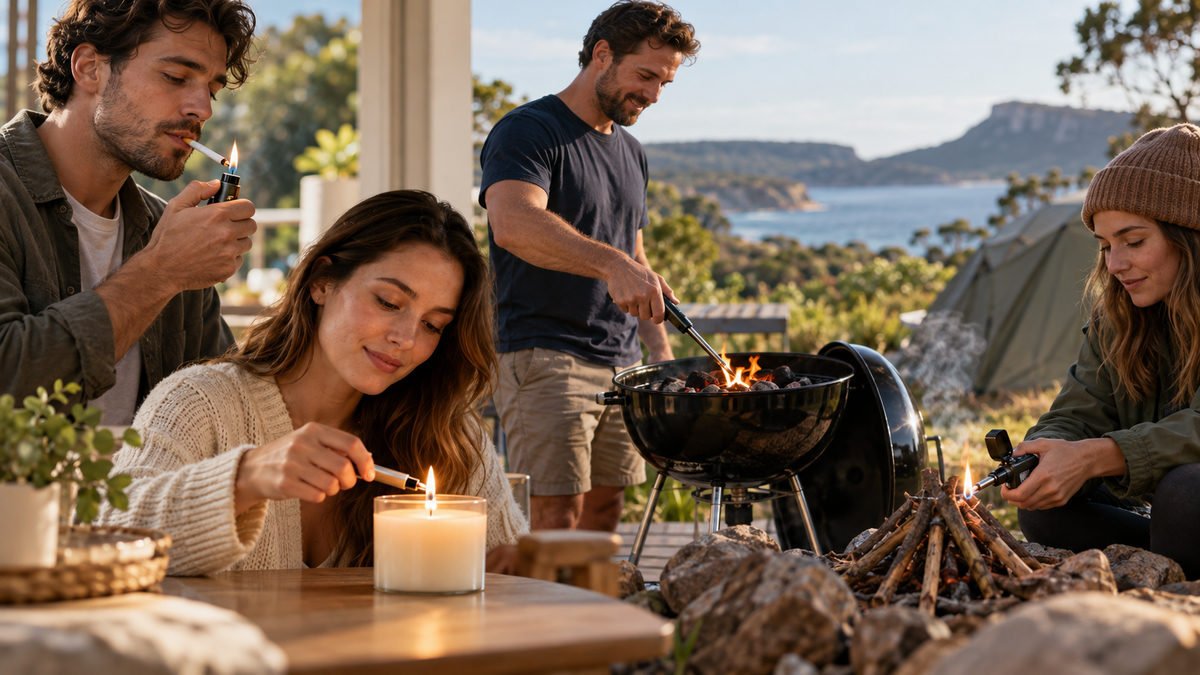
For smoking, a compact traditional or refillable lighter usually offers the best balance. It fits easily into a pocket and provides a familiar flame. Adjustable models give you better control when lighting cigarettes, cigars or pipes. Check the best lighter features before buying.
Refillable lighters suit frequent users because you replace fuel rather than the entire device. Moreover, many models allow you to replace worn flints or wicks. A sturdy metal case can also handle daily carrying better than thin plastic.
For household candles, choose a long-reach candle lighter. Its extended handle helps you reach deep jars without placing your fingers near the flame. Additionally, a safety lock can reduce accidental ignition during storage.
Long-reach models also work well for fireplaces and oil burners. However, never leave a candle or fireplace unattended after lighting it. Keep curtains, paper, clothing and other combustible items away from the flame.
BBQ lighters need a longer handle and reliable ignition. A barbecue lighter with a shielded flame can reach between grill bars more safely. Torch-style versions work well outdoors, but their intense flame requires careful control.
For camping, consider a windproof torch, survival lighter or plasma lighter. Torch models perform well in breezy conditions, while plasma models avoid liquid fuel. However, rain, extreme cold and high humidity can affect every lighter.
Plasma lighters may struggle when water covers the arc area. Likewise, butane pressure can drop in cold weather. Therefore, campers should carry a backup method, such as waterproof matches or a second lighter.
Collectors and gift shoppers may prefer engraved, vintage-style or premium-finish lighters. These models often emphasise appearance, materials and presentation. Nevertheless, decorative value should never replace reliable ignition and safe construction.
Use these simple recommendations when narrowing your choices:
- Occasional users: Choose a compliant disposable lighter or basic long-reach model.
- Frequent users: Consider a refillable lighter with accessible fuel and replacement parts.
- Outdoor enthusiasts: Select a wind-resistant torch or plasma lighter with backup options.
- Gift shoppers: Look for engraving, premium finishes and attractive storage cases.
- Lowest upfront cost: Choose a reputable disposable model, not an unverified bargain.
Electric, Plasma, Torch and Traditional Lighters Compared
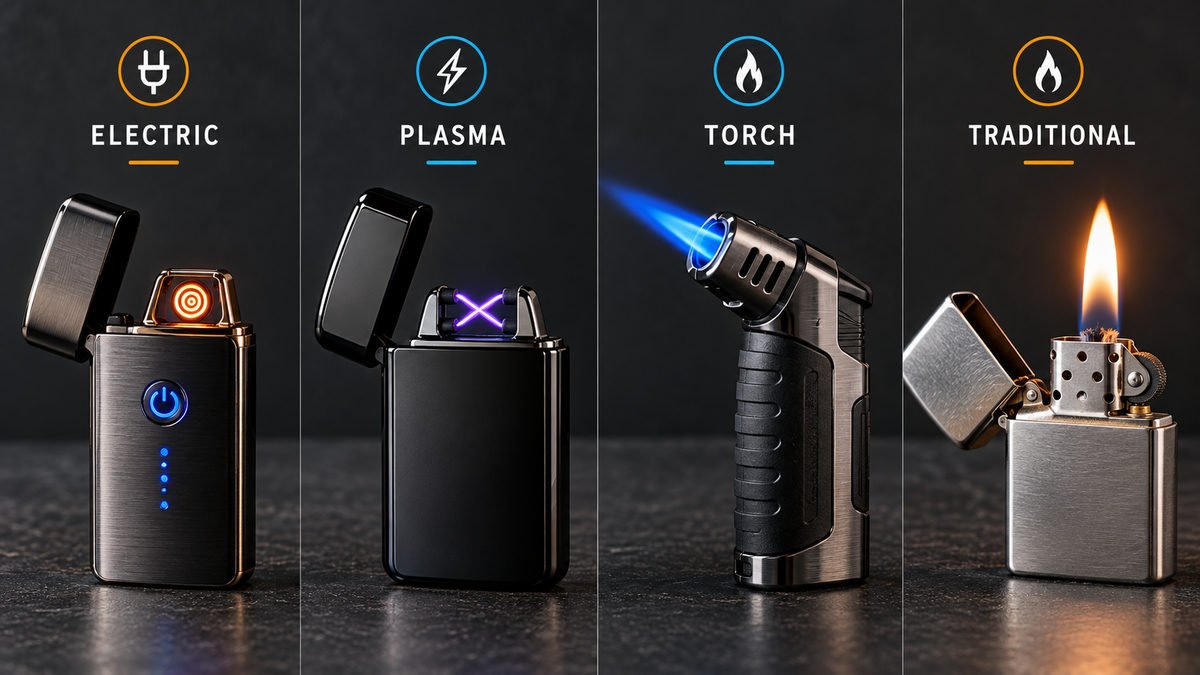
Traditional flame lighters remain popular because they are simple and portable. A spark ignites butane vapour or lighter fluid at the wick. They are easy to understand, but they may need fuel, flints or wick replacement. See our full torch lighter vs regular lighter comparison.
Torch lighters produce a narrow butane flame instead of a broad soft flame. This design delivers strong heat and better wind performance. However, torch flames consume fuel quickly and can damage delicate materials.
Electric and plasma lighters create an arc between electrical contacts. The arc provides an ignition point without liquid fuel. They suit users who prefer USB charging and fewer fuel-related accessories.
Disposable lighters cost the least initially, but they create more waste. Refillable models cost more upfront and usually need fuel. Electric models can reduce liquid-fuel use, although their batteries eventually lose capacity.
| Type | Best use | Fuel or charging | Wind performance | Expected lifespan | Typical price | Main drawback |
|---|---|---|---|---|---|---|
| Disposable | Occasional everyday use | Pre-filled butane | Low to moderate | Short to medium | Low | More waste and limited repairs |
| Refillable flint | Regular everyday use | Fuel and replacement flints | Moderate | Long with care | Low to premium | Needs routine maintenance |
| Torch | Cigars, cooking and camping | Butane refill | High | Medium to long | Mid-range | Uses fuel quickly |
| Electric or plasma | Home use and light outdoor use | Rechargeable battery | Moderate to high | Battery-dependent | Mid-range | Needs charging and dry storage |
| Long-reach | Candles, fireplaces and BBQs | Butane or battery | Low to moderate | Medium | Low to mid-range | Less pocket-friendly |
Therefore, choose traditional designs for simplicity, torch models for concentrated heat, and plasma models for rechargeable convenience. Your best option depends on how often you use it and where you use it.
Buying Lighters Online or In-Store in Australia
You can buy lighters online from specialist lighter retailers, tobacconists, camping stores, hardware stores, department stores and marketplace platforms. Local shops let you inspect the build quality before paying. Online stores usually offer more styles, finishes and replacement accessories. Compare options in our guide to refillable lighters in Australia.
However, online listings require closer inspection. Check product dimensions, fuel type, flame adjustment, warranty terms and customer feedback. Also confirm whether the listing describes genuine wind resistance or simply uses broad marketing language.
Look for clear information about safety locks, charging indicators and refill compatibility. A product page should explain whether the lighter uses standard butane, lighter fluid, USB charging or proprietary parts. Avoid listings that omit basic specifications.
Local purchasing offers faster access and easier product inspection. You can test the button movement, check the case for damage and ask staff about fuel. Online purchasing offers convenience, but returns may become harder when fuel or batteries are involved.
Prices generally fall into three groups:
- Cheap lighters Australia shoppers buy occasionally: Basic disposable models with limited long-term value.
- Mid-range options: Refillable, electric, plasma and long-reach lighters with better features.
- Premium lighters Australia collectors choose: Branded, engraved, vintage-style or highly finished models.
Lighter delivery Australia shoppers should also check retailer policies before ordering. Fuel, gas canisters and some battery products may have separate transport restrictions. Packaging rules, carrier policies and destination restrictions can affect delivery times.
Some retailers may ship an empty refillable lighter but exclude fuel from the same order. Therefore, check whether fuel must come from a local supplier. This approach can also simplify storage and transport.
Useful accessories include lighter fuel, charging cables, protective cases, replacement flints, wicks, fuel caps and storage tins. Compare cheap models with premium alternatives by considering frequency of use. A slightly higher purchase price may make sense when replacement costs add up.
Refilling, Charging and Maintaining a Lighter
Refillable lighters can last from several days to several weeks between refills. Usage frequency, flame size, fuel capacity and weather all affect performance. Torch models often need refilling sooner because their flames consume more fuel. Follow our lighter maintenance tips.
Refill butane and lighter-fluid models only in a well-ventilated area. Follow the manufacturer’s instructions, keep the lighter away from flames and allow spilled fuel to evaporate. Never smoke or operate electrical switches while handling fuel.
Electric and plasma lighters should use the supplied charging cable whenever possible. Keep the device dry, avoid damaged cables and stop charging if the battery becomes unusually hot. Additionally, do not charge a damaged lighter on a bed, sofa or other flammable surface.
Routine maintenance helps prevent weak flames and failed ignition. Clean debris from the nozzle, replace worn flints and trim or replace damaged wicks. Also check seals, fuel caps and casing joints for cracks.
Common problems include blocked jets, leaking fuel, short battery life and inconsistent charging. A weak flame may indicate low fuel, a blocked nozzle or poor-quality fuel. Repeated ignition faults usually mean the lighter needs repair or replacement.
Replace the lighter when it shows structural damage, fuel leakage, a swollen battery or repeated ignition failures. Repairs may not be worthwhile when the casing or fuel system no longer remains secure.
Lighter Safety, Australian Rules and Responsible Disposal
Store lighters away from children, heat sources and direct sunlight. Never leave one inside a vehicle, glovebox or other enclosed hot space. High temperatures can increase pressure inside fuel containers. Read our guide to lighter safety and storage.
Never test a suspected leak with a flame. Instead, move away from ignition sources and follow the manufacturer’s disposal guidance. Also avoid modifying safety mechanisms or leaving an active lighter unattended.
For candles, BBQs and fireplaces, use long-reach models where practical. Keep your hand away from hot surfaces and allow metal parts to cool before storage. Most importantly, supervise flames continuously.
Australian lighter laws and age restrictions can depend on the product, seller and location. Check current federal, state and territory requirements before buying or carrying a lighter. Retailer policies may also impose additional age checks or sales restrictions.
Buyers should confirm whether they can legally purchase, carry or transport a lighter in their particular situation. Travel rules may differ for aircraft, public venues, workplaces and outdoor areas. For example, the ACCC lighter safety standard covers child resistance, labelling and performance requirements for many disposable lighters.
Air travel also creates extra restrictions. Lighter fluid and blue-flame lighters may face specific airline or aviation rules. Check the current guidance from your airline and the relevant Australian aviation authority before travelling.
Durable refillable and rechargeable lighters can reduce waste compared with repeatedly buying disposables. However, choose longevity only when the device remains safe and repairable. A worn or leaking refillable lighter should not remain in use.
Disposable lighters may not belong in standard household recycling because they can contain residual fuel. Follow your local council or waste facility’s instructions. Never burn, crush or dismantle a lighter before disposal.
For household use, the safest choice usually combines a reliable safety lock, controlled flame, sturdy construction and suitable reach. Keep every lighter out of children’s reach, even when it includes child-resistant features.
Conclusion
The best lighter depends on its job. Disposable models suit occasional low-cost use, refillable lighters offer durability, torch lighters perform well outdoors, and long-reach models suit candles and BBQs.
Electric and plasma lighters reduce the need for liquid fuel, although they require charging and dry storage. Therefore, compare safety features, maintenance needs, delivery conditions, local rules and total long-term cost before buying.
Compare suitable lighters, fuel and accessories from reputable Australian retailers. Then choose the model that matches your intended use, budget and safety requirements.
For lighter accessories and related smoking products, explore Sweet Puff Australia and compare options suited to your everyday setup. Always review product details, usage instructions and local safety requirements before ordering.