
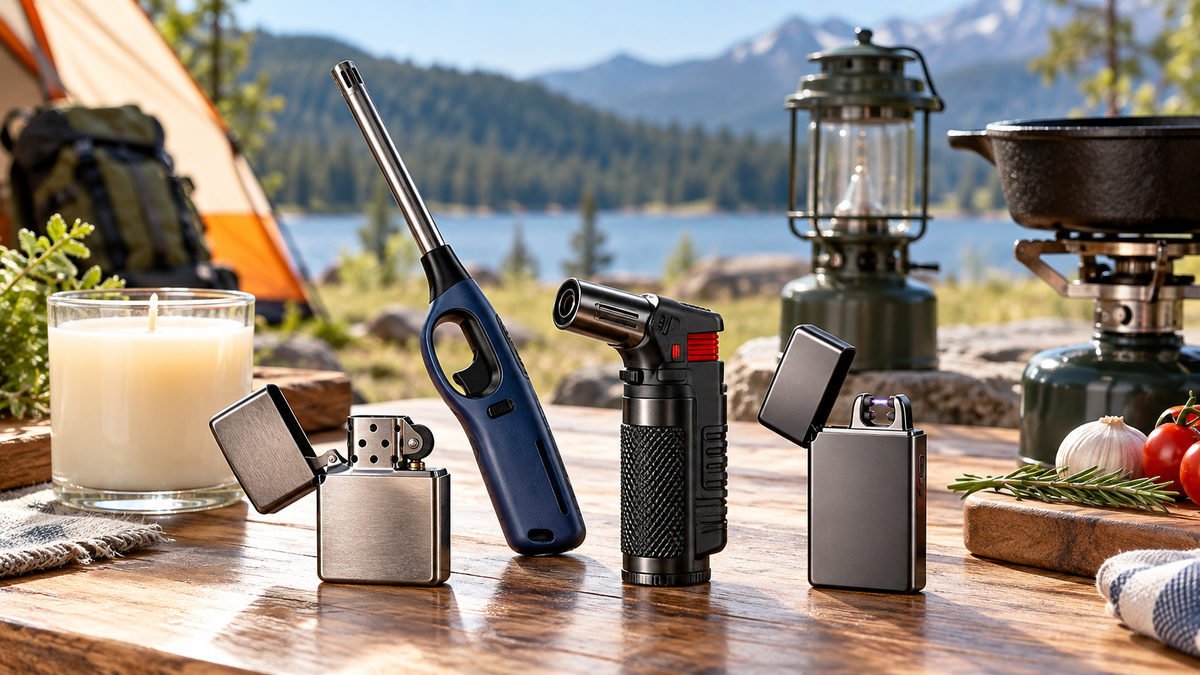
Choosing a lighter sounds simple until one fails beside a windy campsite or a deep fireplace. The best lighter for a cigarette may struggle with candles, barbecues, or wet conditions. With disposable, refillable, torch, electric arc, long-reach, waterproof, and stormproof designs available, the choice can feel confusing. This guide explains how to choose a lighter by comparing uses, flame styles, fuel, durability, safety, maintenance, and value.
1. How to Choose a Lighter Based on Your Main Use
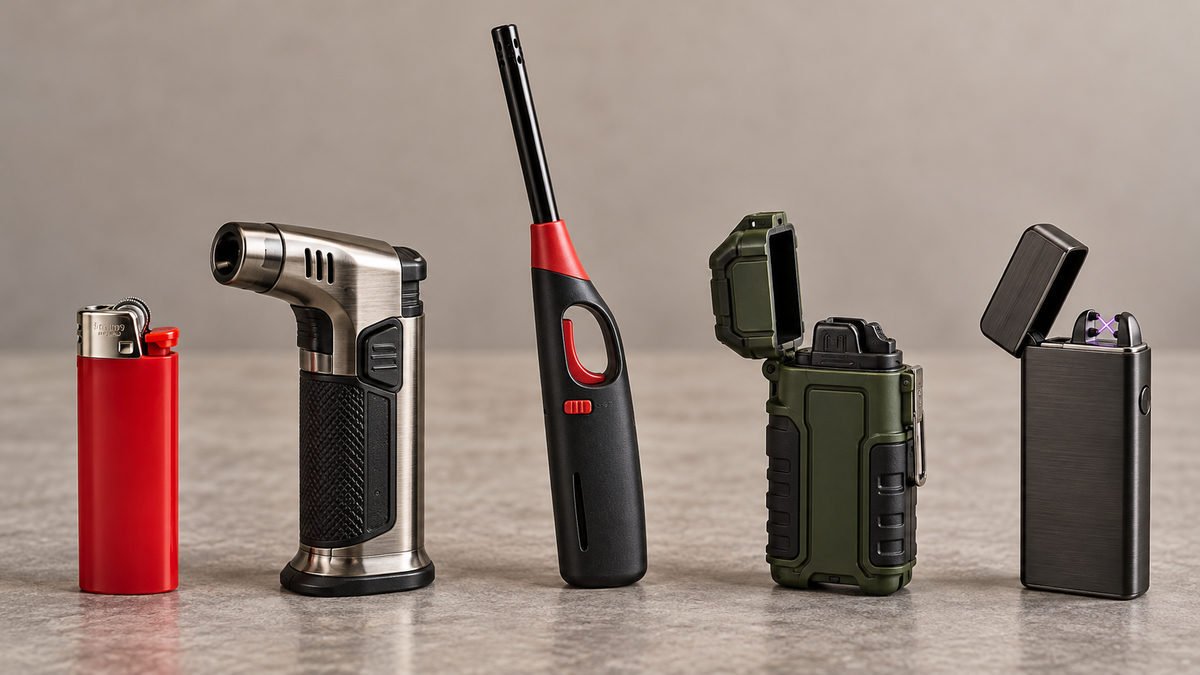
Start by identifying exactly where and why you will use the lighter. A compact pocket lighter suits occasional smoking, while a long-reach model works better around candles and fireplaces. Meanwhile, campers need wind resistance, strong construction, and dependable ignition.
For cigarettes, choose a compact soft-flame lighter with simple controls. Disposable models offer convenience, while refillable designs may provide better long-term value. However, avoid unnecessarily powerful flames because excess heat can scorch paper or tobacco.
Cigar smokers often prefer a precise torch flame. A single, double, or triple jet can provide focused heat across a larger cigar surface. Additionally, torch lighters usually perform better outdoors than ordinary soft-flame models.
Long-reach lighters suit candles, fireplaces, ovens, and barbecues. Their extended handle keeps your fingers farther from the flame. Therefore, look for a comfortable grip, controlled ignition button, stable body, and child-resistant mechanism.
For camping, hiking, boating, fishing, and emergency kits, prioritise windproof or stormproof construction. A secure lid, sealed casing, textured grip, and reliable ignition matter more than decorative finishes. Moreover, a waterproof design can protect the ignition system from rain and accidental splashes.
Electric arc or plasma lighters appeal to people who want rechargeable convenience. They produce an electric arc instead of a traditional flame and avoid carrying liquid fuel. However, they still need battery power and may struggle in heavy rain or after prolonged outdoor use.
Collectors may judge a lighter differently. Design, metalwork, brand heritage, finish, hinge quality, and craftsmanship can matter more than low operating cost. In contrast, everyday users usually benefit from practical features and easy maintenance.
Quick decision guide
- Cigarettes: compact soft-flame or disposable lighter with reliable ignition.
- Cigars: refillable butane torch with an adjustable flame.
- Candles: long-reach lighter with a secure grip and child-resistant control.
- Fireplaces and barbecues: long-reach torch or utility lighter with a stable handle.
- Camping and hiking: windproof or stormproof lighter with a protective lid.
- Emergency kits: waterproof fuel lighter, plus a backup ignition method.
- Rechargeable use: electric arc lighter with a visible battery indicator.
- Collecting: premium refillable lighter chosen for materials and craftsmanship.
2. Compare the Main Types of Lighters and Flame Styles
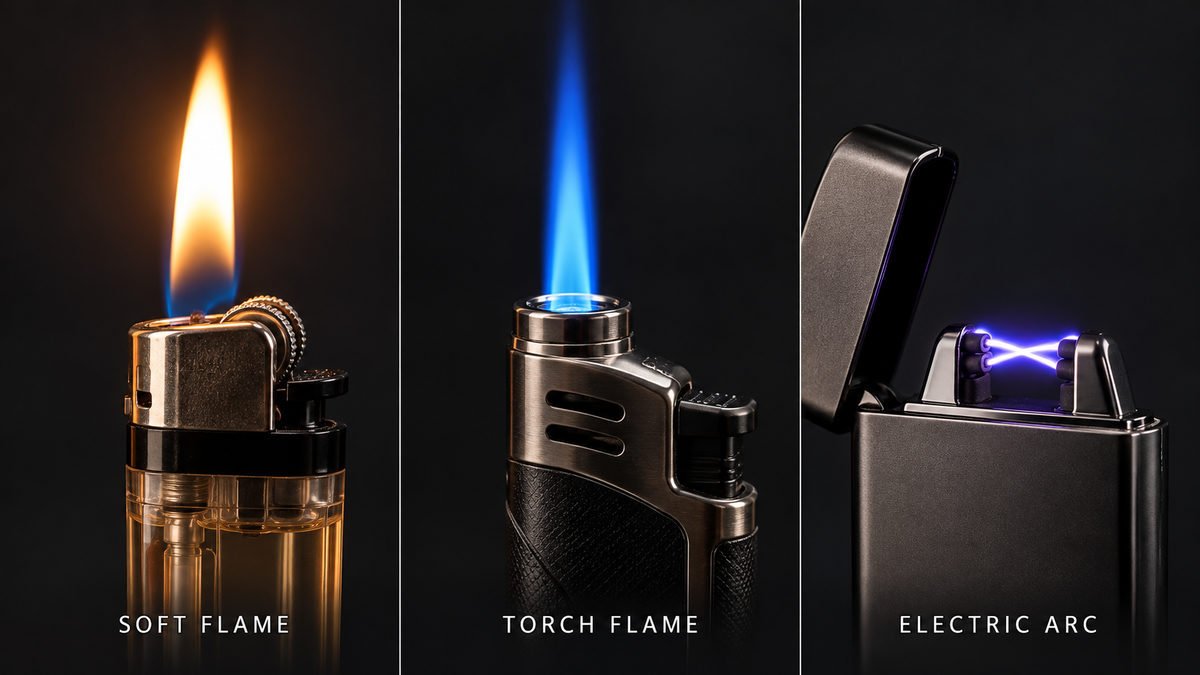
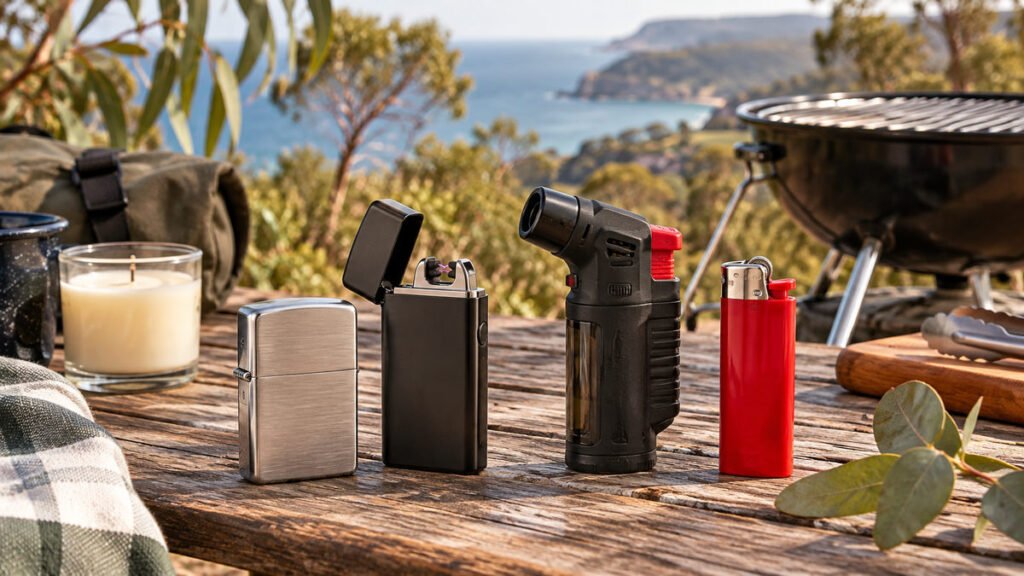
Disposable lighters have a low upfront cost and need almost no maintenance. They are easy to replace when empty and suit occasional, everyday use. However, their limited lifespan and reduced repairability create more waste over time. See our full torch lighter vs regular lighter comparison.
Refillable soft-flame lighters offer a more traditional experience. Classic metal designs may include adjustable flames, replaceable flints, and sturdy hinges. Depending on the model, they use lighter fluid or butane, so always follow the manufacturer’s fuel instructions.
Torch lighters create a focused blue flame with a higher temperature than a typical soft flame. This design offers precision and better wind resistance. Therefore, torch models suit cigars, outdoor lighting, crème brûlée, camping tasks, and some cooking applications.
Electric arc and plasma lighters use rechargeable batteries instead of liquid fuel. Some models create a single arc, while others use dual arcs across a wider gap. They ignite quickly, produce no conventional flame, and reduce the need to handle fuel.
However, arc lighters have practical limits. Strong wind can affect the arc, while rain and moisture can interrupt operation. Additionally, an empty battery leaves you without ignition until you can recharge it.
Long-reach lighters focus on distance and control. They help light candles, fireplaces, ovens, grills, and barbecues while keeping your hand away from the ignition point. Look for a comfortable handle, smooth trigger, protective cap, and automatic shutoff.
Flame style comparison
| Feature | Soft flame | Torch flame | Electric arc |
|---|---|---|---|
| Temperature | Lower and gentler | Higher and concentrated | Very localised heat |
| Ignition speed | Fast | Very fast | Fast after activation |
| Precision | Moderate | High | High |
| Fuel source | Butane or lighter fluid | Usually butane | Rechargeable battery |
| Wind resistance | Low to moderate | High | Moderate |
| Noise | Quiet | Often audible | May produce a faint buzz |
| Everyday comfort | Simple and familiar | Powerful but hotter | Clean and rechargeable |
A higher-temperature flame is not automatically better. For instance, a torch may be excessive for cigarettes, delicate materials, or small candle wicks. Therefore, match flame power with the task instead of choosing the strongest model available.
3. Choose the Right Fuel, Power Source, and Lifespan
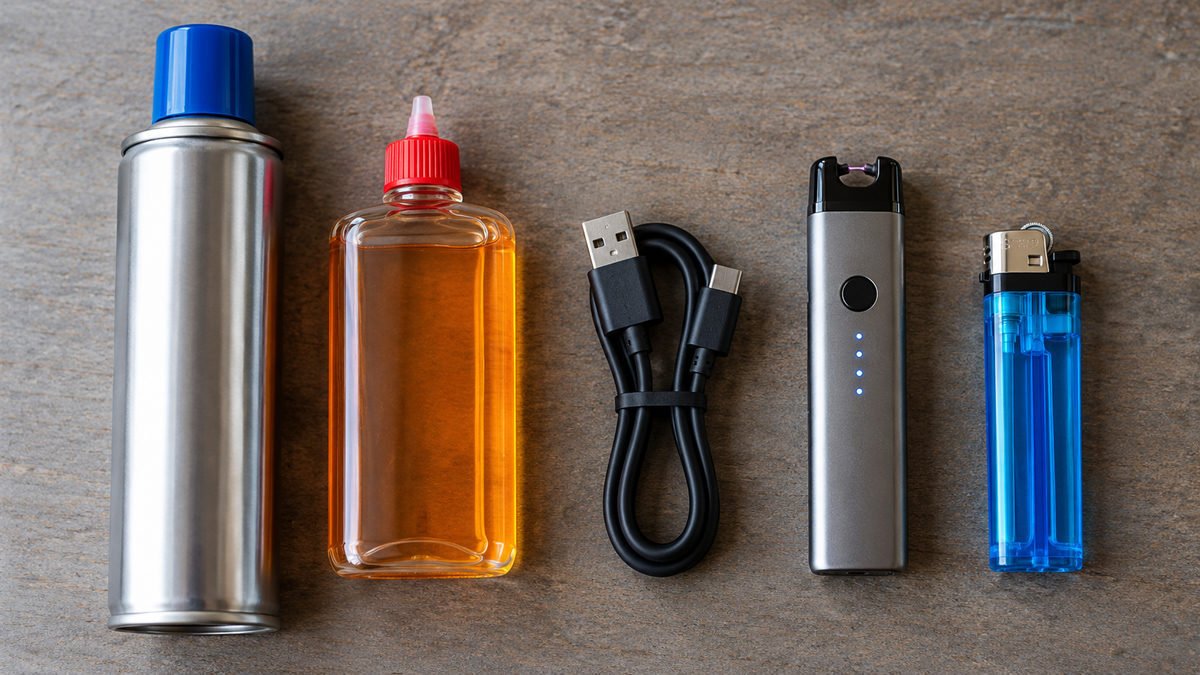
Fuel choice affects convenience, operating cost, storage, and maintenance. Common options include butane, lighter fluid, disposable fuel chambers, rechargeable batteries, and USB charging. Each option suits different habits and environments. Learn more in our butane lighters guide.
Butane burns cleanly and works especially well in torch lighters. It supports adjustable flames and remains widely available in refill canisters. Additionally, many refillable butane models offer a clear fuel window or gauge.
Lighter-fluid designs, such as classic wick lighters, offer refillability and a distinctive character. However, lighter fluid can evaporate when stored for long periods. It also has a noticeable odour and must match the lighter’s design.
Never add lighter fluid to a butane lighter. Likewise, never refill a lighter with an unapproved fuel or mix different fuel types. Always check the product instructions before refilling.
Rechargeable arc lighters remove the need for fuel canisters. Their convenience depends on battery capacity, charging time, and how frequently you use them. Therefore, choose a model with a clear charging indicator and a connector that suits your existing cables.
Disposable lighters usually cost less at purchase. However, refillable models may become more cost-effective when used frequently because you replace fuel rather than the entire lighter. The better value depends on purchase price, fuel costs, maintenance, and expected lifespan.
A lighter’s lifespan also depends on build quality and usage patterns. Frequent ignition, rough storage, heat exposure, blocked jets, damaged seals, and careless refilling can shorten service life. Meanwhile, careful storage and regular cleaning can help a reliable model last longer.
Environmental considerations matter as well. Single-use lighters create more discarded casings, while refillable designs can reduce replacement frequency. Rechargeable models avoid disposable fuel chambers, but batteries require responsible disposal at the end of their useful life.
- Use approved fuel for the specific lighter.
- Refill only in a well-ventilated area away from flames.
- Allow the lighter to settle before testing ignition.
- Dispose of empty fuel containers and batteries responsibly.
Before travelling, check Australian transport requirements and airline rules. The Australian Government provides current guidance on lighters and flammable items when flying.
4. Select a Lighter for Wind, Rain, Camping, and Outdoor Use
A windproof lighter is often enough for a beach walk, backyard barbecue, or short camping trip. It helps keep the flame burning when ordinary soft flames flicker. However, frequent rain, water crossings, or remote travel may require stronger protection. For outdoor use, read windproof lighters explained.
Windproof and waterproof describe different qualities. Wind resistance refers to how well the flame performs in moving air. Waterproofing refers to protection from moisture, rain, splashes, or temporary immersion.
For camping, hiking, boating, fishing, and emergency kits, consider a focused torch flame or protected stormproof flame. A stormproof design may continue burning after exposure to wind. Nevertheless, follow the product instructions because performance varies between models.
Useful outdoor features
- A secure lid that protects the ignition area.
- A waterproof seal around the casing.
- A lanyard, clip, or attachment point.
- A textured grip for wet hands or gloves.
- A fuel gauge or visible fuel window.
- Controls large enough to use with gloves.
- A flame adjustment that resists accidental movement.
Electric arc lighters offer attractive outdoor convenience because wind usually does not extinguish an arc as easily as a soft flame. However, rain, moisture, mud, and an empty battery can stop them working. Therefore, many campers carry a second ignition method for backup.
Size and weight also influence outdoor comfort. A small lighter suits a pocket or daypack, while a larger fuel capacity may suit longer trips. On the other hand, larger designs add bulk and may become inconvenient in compact emergency kits.
Store the lighter where it remains accessible but protected from heat. Keep it separate from fuel bottles, gas canisters, matches, and other flammable materials. Moreover, never leave a lighter in direct sunlight inside a hot vehicle.
When travelling, check local restrictions and transport rules before packing. Airline requirements can differ depending on the lighter, fuel type, baggage, and destination. Always confirm current rules with the relevant carrier or authority.
5. Evaluate Reliability, Build Quality, and Safety Features
Inspect a lighter before purchase, especially when buying a refillable or premium model. The casing should feel solid, while seams should look even and free from gaps. Additionally, the lid, hinge, grip, ignition button, and adjustment wheel should operate without excessive looseness. See our checklist of the best lighter features.
Reliable ignition should produce a consistent flame without repeated clicking. The flame should remain stable at its lowest useful setting. Furthermore, fuel seals should prevent leaks, and the lighter should not feel fragile during ordinary handling.
Important safety features include child-resistant mechanisms, automatic shutoff, protective caps, locking switches, and covered heating elements. In Australia, the ACCC provides guidance on safe cigarette lighter design and use.
Long-reach handles and stable bases matter most for candles, fireplaces, ovens, grills, and cooking tasks. They help you keep your hand away from heat and reduce awkward reaching. However, never treat a long handle as a replacement for careful supervision.
Torch lighters can work well for everyday use when you need precision or wind resistance. However, their higher heat can damage nearby surfaces, consume fuel faster, or cause burns if handled carelessly. Therefore, beginners should practise with controlled, uncomplicated tasks.
Keep all lighters away from children, pets, direct sunlight, high temperatures, open fuel containers, and flammable materials. Check for leaks before use and allow a hot lighter to cool completely. Moreover, store fuel separately when the product instructions recommend it.
Beginner-friendly budget guide
- Entry level: disposable models for occasional, simple use.
- Mid-range: refillable soft-flame, torch, or electric models for regular use.
- Premium: durable, carefully finished designs for frequent use or collecting.
Price alone does not prove quality. A modest lighter with a dependable ignition and suitable safety features may outperform an expensive model chosen for appearance alone. Therefore, compare construction, warranty information, maintenance needs, and replacement costs.
6. Maintain, Test, and Choose the Best Lighter for Your Needs
Test a lighter before relying on it outdoors or during an emergency. Check ignition consistency, flame stability, adjustment range, grip comfort, lid closure, and overall fit. For electric models, inspect the charging connection and battery indicator. Follow our lighter maintenance tips.
- Confirm fuel compatibility before every refill.
- Refill butane or lighter fluid only in a ventilated area.
- Clean residue around burners, jets, and ignition points.
- Replace worn flints according to the product instructions.
- Charge batteries before trips and inspect charging cables.
- Check seals, lids, and fuel windows for damage.
Test the lighter in a clear, controlled area away from flammable materials. Stop immediately if it smells strongly of fuel, leaks, sparks unusually, produces an unstable flame, or fails to shut off. Do not keep clicking a faulty lighter because repeated ignition can increase risk.
| Use case | Recommended lighter | Preferred fuel | Key benefit | Main limitation | Ideal buyer |
|---|---|---|---|---|---|
| Beginners | Simple soft-flame | Disposable or butane | Easy operation | Limited outdoor performance | First-time buyers |
| Cigarettes | Compact soft-flame | Disposable or butane | Gentle, convenient flame | Lower wind resistance | Everyday pocket users |
| Cigars | Adjustable torch | Butane | Precise, focused heat | Uses fuel quickly | Cigar smokers |
| Candles | Long-reach lighter | Butane or battery | Keeps hands farther away | Less pocket-friendly | Home users |
| Camping | Stormproof torch | Butane | Strong wind performance | Needs careful storage | Outdoor travellers |
| Emergency kits | Water-resistant lighter | Butane or arc battery | Useful in difficult conditions | Needs a backup option | Preparedness-focused buyers |
| Collectors | Premium refillable | Model-specific | Craftsmanship and character | Higher purchase cost | Design enthusiasts |
For most beginners, a compact soft-flame lighter offers the easiest starting point. Cigarette users need simplicity, while cigar users benefit from an adjustable torch. Candle and fireplace users should choose long-reach models, and campers should prioritise wind and water protection.
Before buying, check the intended use, flame type, fuel source, weather protection, build quality, safety features, maintenance needs, budget, and expected lifespan. Most importantly, verify fuel compatibility and read the product safety instructions before use.
Conclusion
The right lighter depends on the task, environment, flame style, fuel preference, durability expectations, safety features, and budget. Disposable models offer convenience, refillable lighters can provide better long-term value, torch designs deliver precision and wind resistance, and electric arc models offer rechargeable operation.
Use the comparison guide and buying checklist to choose a reliable lighter for your everyday needs. Then verify its fuel compatibility, transport requirements, and safety instructions before using it.
For practical accessories and lighter options suited to everyday use, explore Sweet Puff Australia. Compare designs carefully, choose features that match your routine, and prioritise safe storage and responsible handling.
Comment (1)
[…] Australian shoppers can choose from disposable, refillable, traditional flint, windproof, torch, electric, plasma, candle and barbecue lighters. Each type solves a different problem. A small disposable lighter suits occasional use, while a refillable model may offer better value over time. Not sure where to start? Read how to choose a lighter. […]